In recent years, the design requirements for corporate office spaces have become increasingly diverse. In this context, CUN faces new challenges.
Project Name: “conformity and intervention”- CUN Design Studio, Beijing
Studio Name: CUN Design
Project Address: 491 Space, Chaoyang District, Beijing, China
Design Time: 2023.06.08
Completion Time: 2023.11.01
Architectural Area: 600 Square Meters
Chief Designer: Cui Shu
Photographer: Eason He

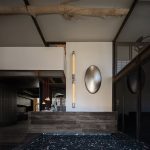
This design, led by Cui Shu, breaks through the previous aesthetic style of cun design. Within the speculative realm of contemporary architectural design, the binary dialectic of “conformity” and “intervention” serves as the foundational proposition for deconstructing the essence of space and inspiring innovative dimensions. In this field, which bears the wrinkles of time, a spiritual space connecting to the future has been crafted.
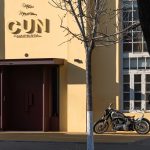
The new headquarters of Cun design is located in Beijing 491 Space. The project utilizes the former site of Beijing 491 Radio Station as a foundation to explore the philosophical logic behind the regeneration of industrial heritage spaces. The park has fully preserved the basic architectural layout of the original 491 Radio Station. This building, once a vital hub for information dissemination in New China, transmitted the passionate radio waves of the founding declaration and supported the urgent communication needs for earthquake relief.
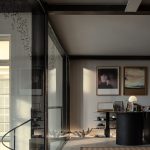
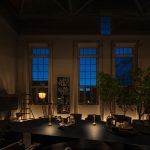
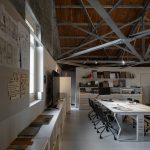
The original unique high ceiling of the building has brought new possibilities to the creative office area. With the core strategy of “conforming to the historical texture and intervening with contemporary language”, the design activates the spatial memory through modern technical means while retaining the rough characteristics of the original building structure.

Cui Shu creates a dialogue in the dimension of time through the collision of ideas and the new materials introduced in restorative intervention, making the space a spiritual container that connects the past and the future.
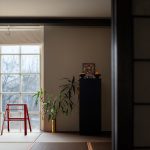
The design is ingeniously crafted. It adopts an open and fluid spatial layout, breaks the traditional functional partitions through borderless design, and guides the movement routes of people with the changes in furniture furnishings and floor materials, thus adapting to the diverse scenarios of modern social interaction.

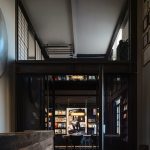
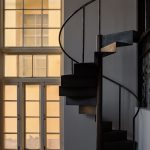
The exposed original structure retains a rough texture, and is paired with aged metal lines. Through artificial aging treatment, it simulates the traces of the erosion of time. Here, the mottled cement wall serves as a carrier for recording time, and the aged metal decorative lines outline the outline of industrial civilization.
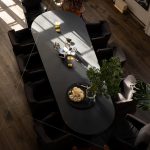
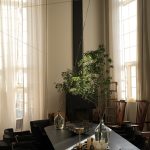
The atrium design focuses on the “spatiotemporal narrative of light”. It makes full use of the atrium skylight to introduce natural light. By cutting the shape of the skylight, it enables the natural light to form dynamic geometric light and shadow patterns on the ground, transforming the natural light into dynamic light and shadow patterns.

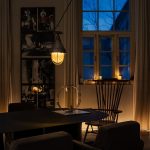
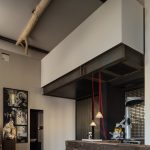
The artificial lighting system adopts a hierarchical and differentiated design strategy: The dynamics of the flames of the candlelight devices are optimized through fluid simulation, creating a color temperature contrast with the embedded cold light sources.
The electronic lighting devices are concealed. By enclosing them with glass materials, a “light container” is formed to control the projection range of the light. The deliberately reserved shadow areas echo Eastern philosophy.
Construct spatial tension with “material dialogue”: The glass curtain wall and the hand-made rammed earth wall are juxtaposed. The former introduces natural light, and the latter creates a private atmosphere through its rough texture and thermal inertia. A metal frame serves as a transition between the two, achieving a dual balance of visual and thermal performance.
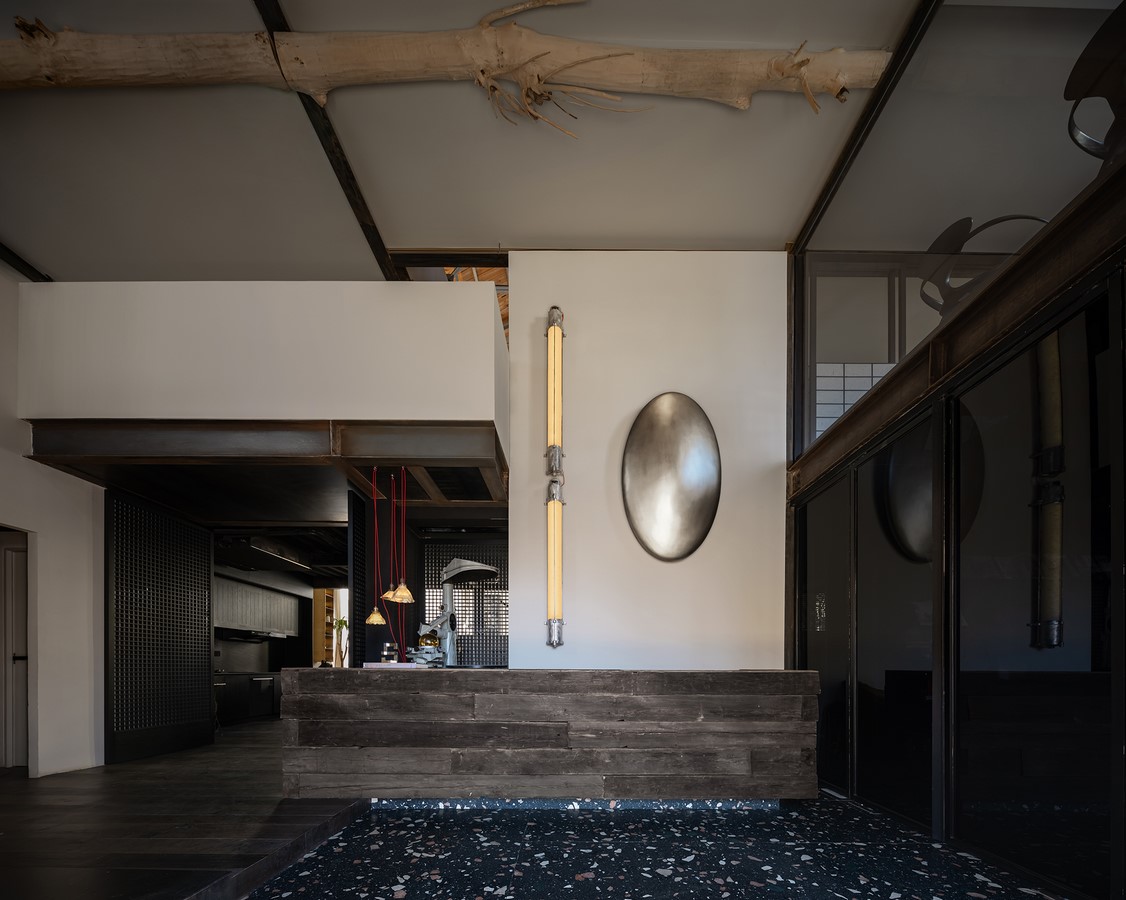
The exposed steel structure truss and the remnants of retro wooden structures achieve mechanical coordination through structural calculations. The coldness of the metal and the warmth of the wood enhance the tactile differences through surface treatment, achieving a harmonious coexistence of contradictory materials.
With “open collaboration” as the core, Cui Shu adopts a modular layout system: Movable partitions and ergonomic workbenches support flexible scene switching. The retro storage racks and numerically controlled cabinets are juxtaposed, interpreting the symbiosis of traditional craftsmanship and digital technology.
By controlling the scale of the skylight and overlapping the shadows of the rusted steel plates on the building’s facade, the changes in the solar altitude angle in different seasons are directly reflected as the morphological evolution of the light and shadow on the ground. This “de-mechanized” daylighting design transforms the natural rhythm into a perceivable spatiotemporal narrative, constructing a composite field that stimulates creativity.

This project does not pursue eternal perfection but embraces the growth potential that time bestows upon the space. The patina of copper slowly spreads in the monsoon, and the moss changes its growth form with humidity, recording the usage traces of the space—these dynamic changes together constitute the “vital signs” of the building.
When the morning sunlight passes through the diamond-shaped skylight and writes a new poem of light on the ground, and when the footsteps of visitors activate the dormant acoustic memory, this space has completed the ultimate interpretation of “conformity and intervention”.
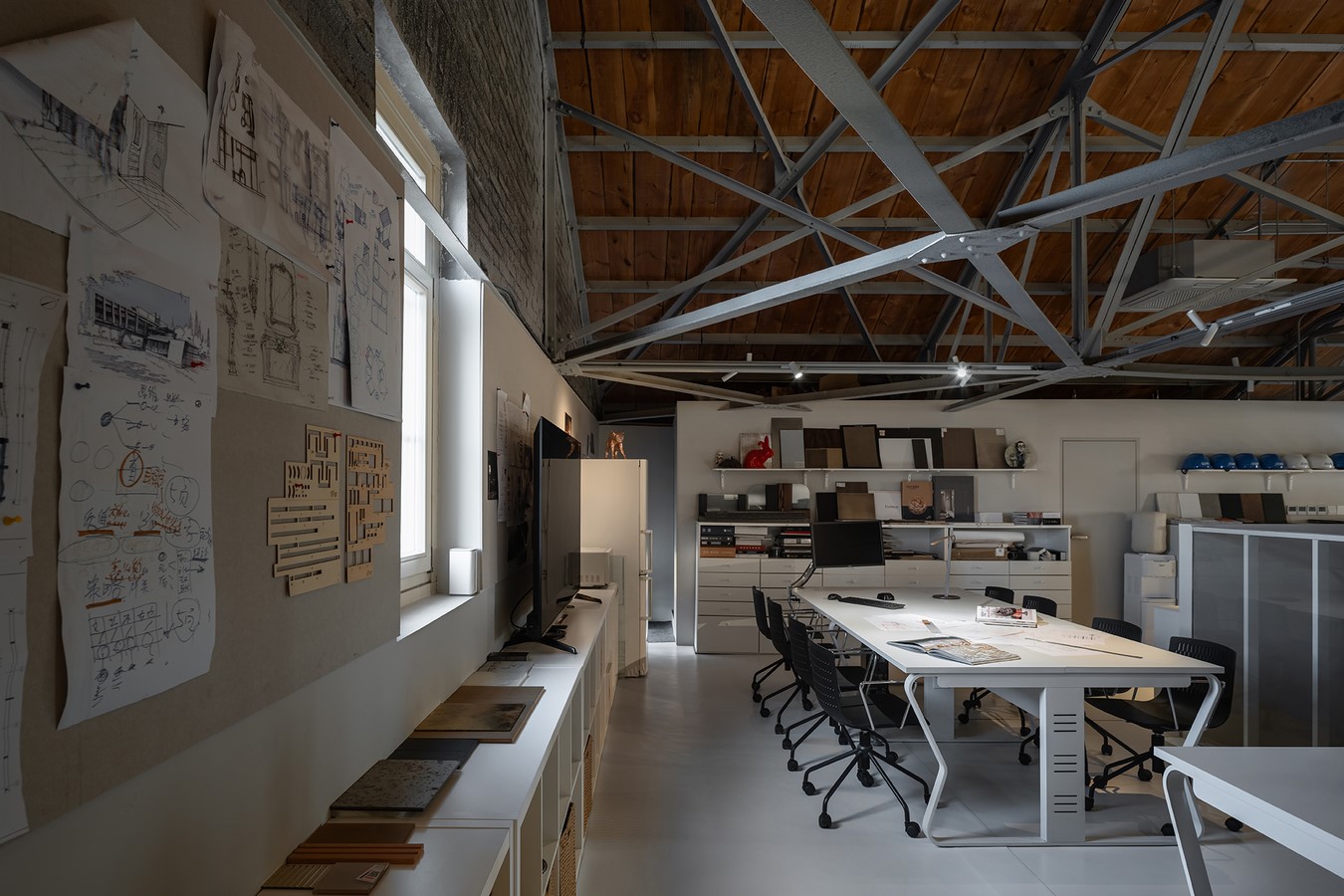
The recycled greenness is given a new texture. The worn edges have a hidden dialogue with the lines carved by numerical control—The collision between traditional craftsmanship and the digital age is not about replacement but about collaboration. The rusted steel plates record the passage of seasons with their oxidation marks, which is the honesty of time; the traces of time and the light spots cast by the steel bars share the same ground, where the boundary between nature and artificiality dissolves. Materials are no longer a silent background but become narrators.