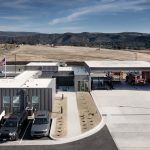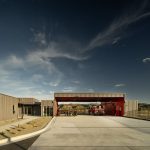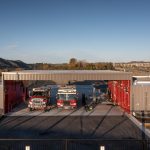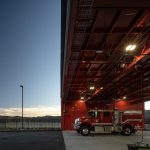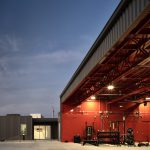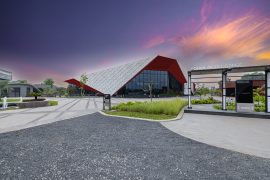
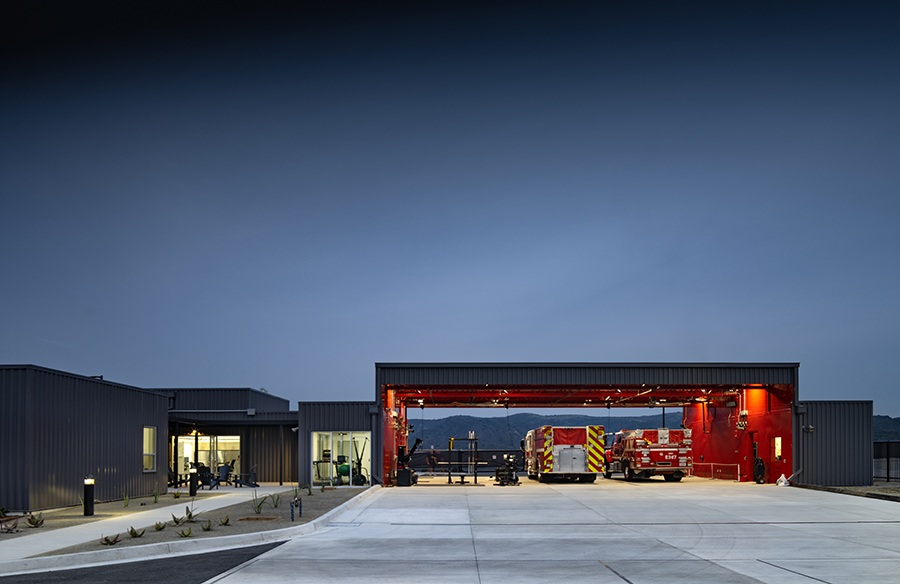
In response to California’s growing climate crisis and wildfire threats, Fire Station 67 reimagines emergency infrastructure through innovative modular design. This 4,667-square-foot facility, constructed from 10 prefabricated steel modules, serves the Rancho Mission Viejo community today while anticipating tomorrow’s needs through its reconfigurable architecture.
Project Name: Fire Station 67 in Orange County, California
Studio Name: Wittman Estes
Location: Rancho Mission Viejo, California
Photographer: Nic Lehoux

Responsive Design for a Changing Climate
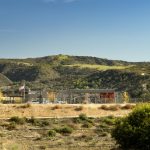
Fire Station 67 sits strategically on Cow Camp Road overlooking Trampas Canyon, positioned within Rancho Mission Viejo’s 23,000-acre property—17,000 acres of which are preserved as permanent open space watershed. The station’s location bridges California’s ranching heritage with urgent present-day needs, as devastating wildfires increasingly threaten the region.
Unlike typical interim fire stations—often generic boxes built with non-durable materials destined for landfills—Fire Station 67 breaks the mold through its adaptable design philosophy. “We wanted to break open the box and look beyond,” explains Matt Wittman, lead architect at Wittman Estes.
Engineering for Flexibility and Longevity
The station’s modular system features:
- Rigid structural steel frames with “pick pockets” enabling infinite reconfigurations
- 12-foot-wide modules and 30-foot-long steel trusses creating a rhythmic framework
- Non-combustible steel construction offering optimal strength-to-weight ratio
- Modules designed for rapid transport and assembly using mobile telescoping forklifts
This kit-of-parts approach accelerated the timeline dramatically—from design to completion in less than 18 months. The parallel processes of site development in California and factory construction in Nevada resulted in just six months of actual construction time. “This is the future, there is no doubt,” affirms Jim Holas, Director of Architecture for Rancho Mission Viejo.
Thoughtful Spatial Organization
The station’s layout creates distinct functional zones organized around a semi-protected central courtyard:
- North-facing public entry, captain’s office, and dispatch room oriented toward the community
- Eastern-facing active areas (break room, kitchen, fitness spaces) catching morning light
- Quiet sleeping rooms and bathrooms situated in the western zone
- Southern apparatus bay completing the courtyard configuration
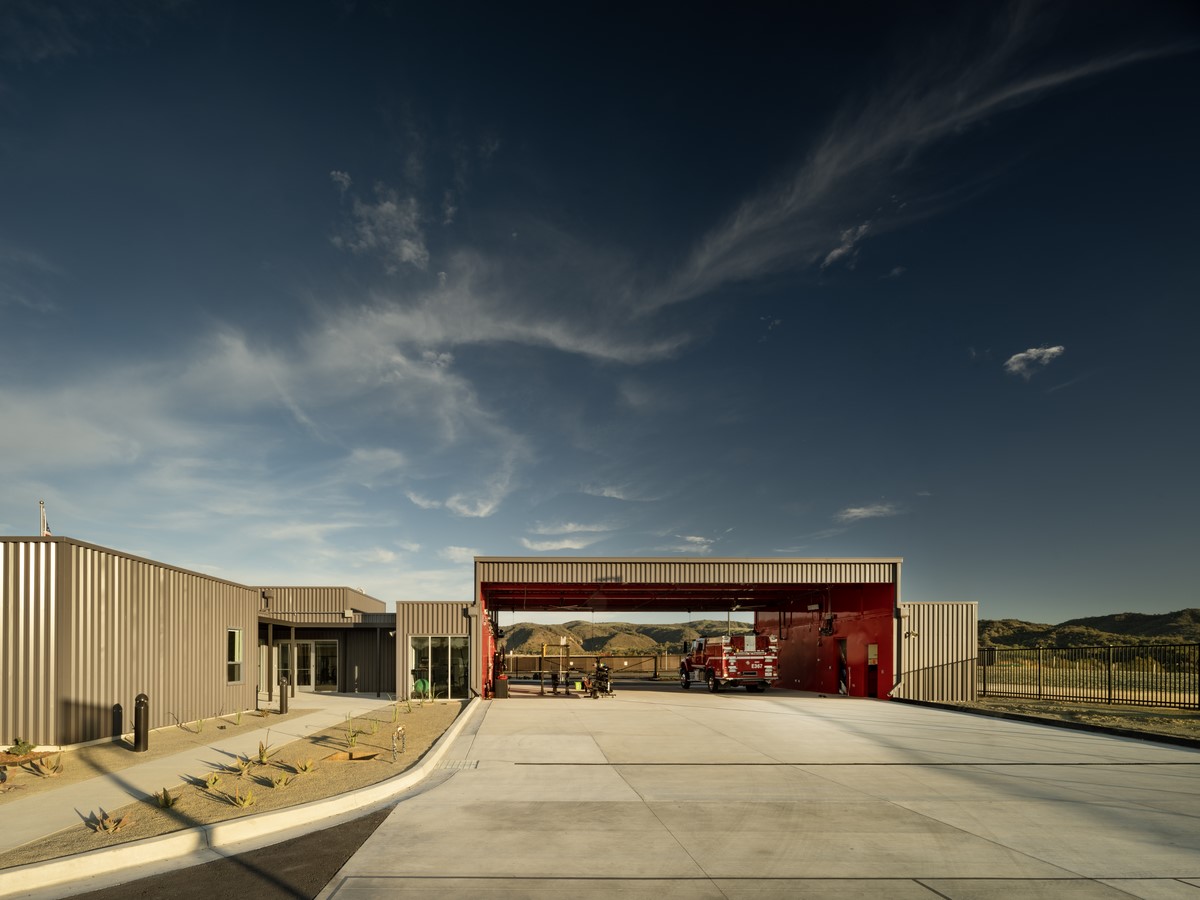
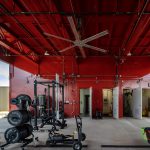
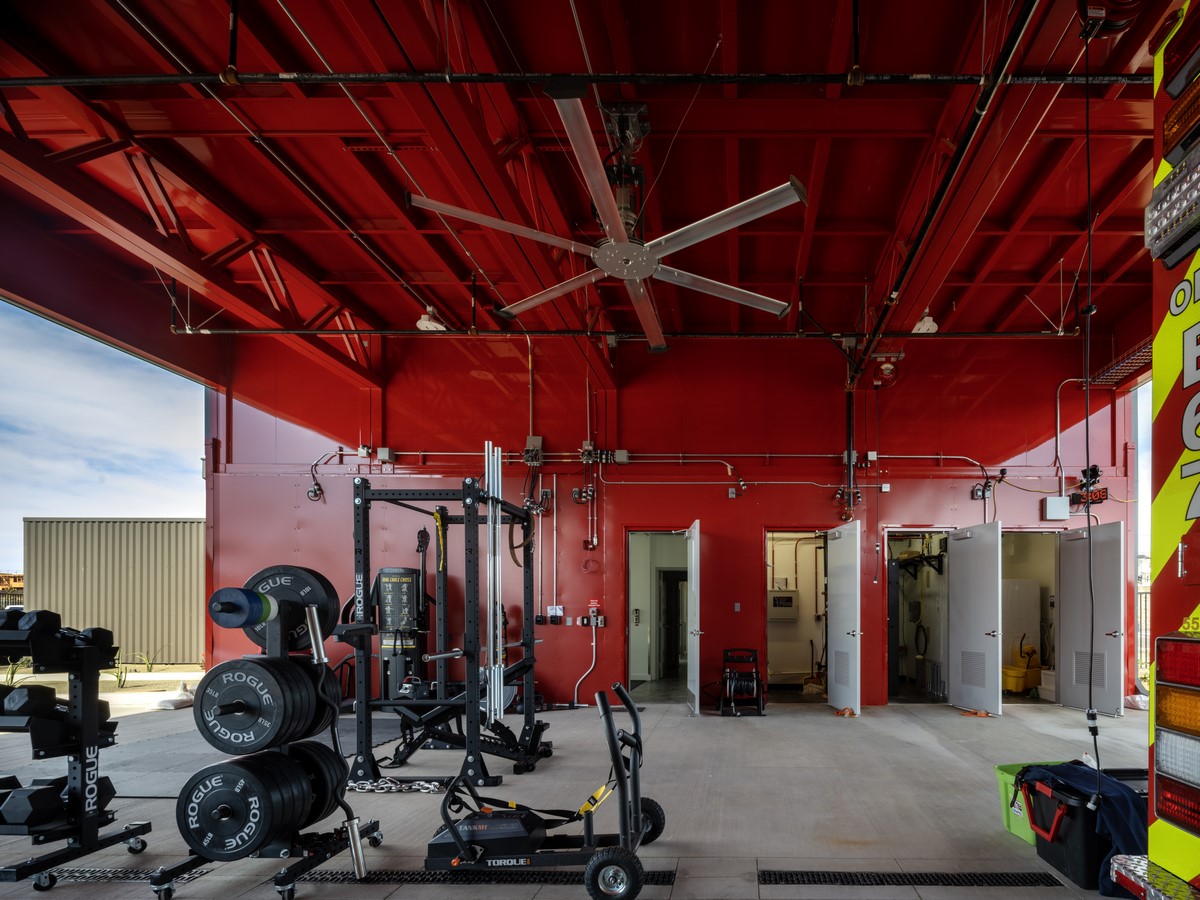
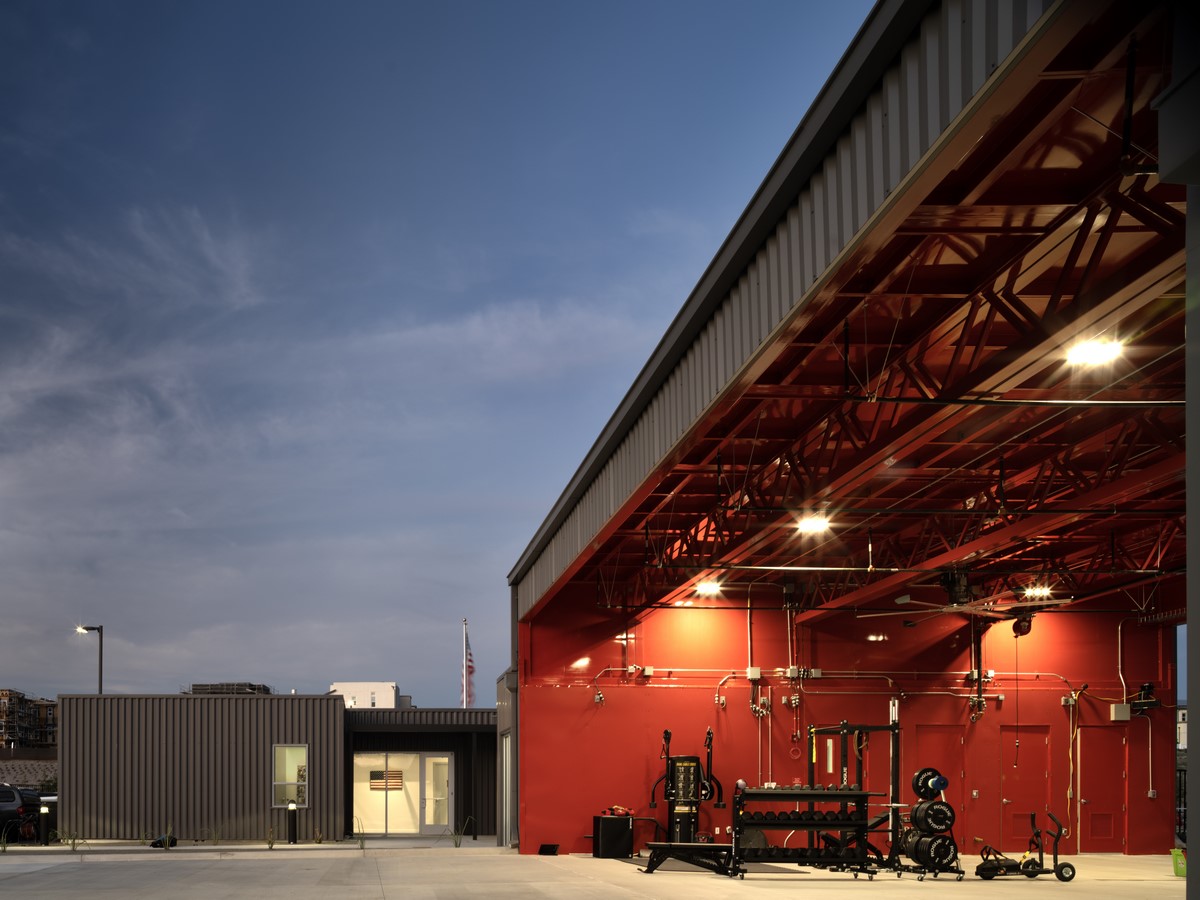
This arrangement follows the natural flow of firefighters’ daily routines—a literal embodiment of “form follows function.” Interior spaces feature a tranquil palette to help firefighters recharge, while the apparatus bay boldly showcases firetruck red, “signaling its function, accentuating its form, and serving as a beacon to the community,” notes Brandon Patterson of Wittman Estes. Innovative features include an open-air apparatus bay that eliminates the need for energy-intensive mechanical exhaust systems while creating a versatile space for exercise equipment and community events.

Designed for Multiple Lives
What truly distinguishes Fire Station 67 is its planned transformation. In approximately ten years, it will be reconfigured as an environmental learning center:
- Kitchen and break rooms will become public event spaces
- Sleeping rooms will transform into offices and research spaces
- The aluminum trellis will define a new outdoor terrace
The modules’ universal dimensions—based on fundamental elements of human routine—allow for virtually endless future adaptations. As Wittman asked during the design process: “How can we keep a building in use for as long as possible?”
Fire Station 67 represents the future of civic architecture—responsive to immediate community needs while building resilience through adaptability, embodying a sustainable approach to infrastructure in an era of climate uncertainty.