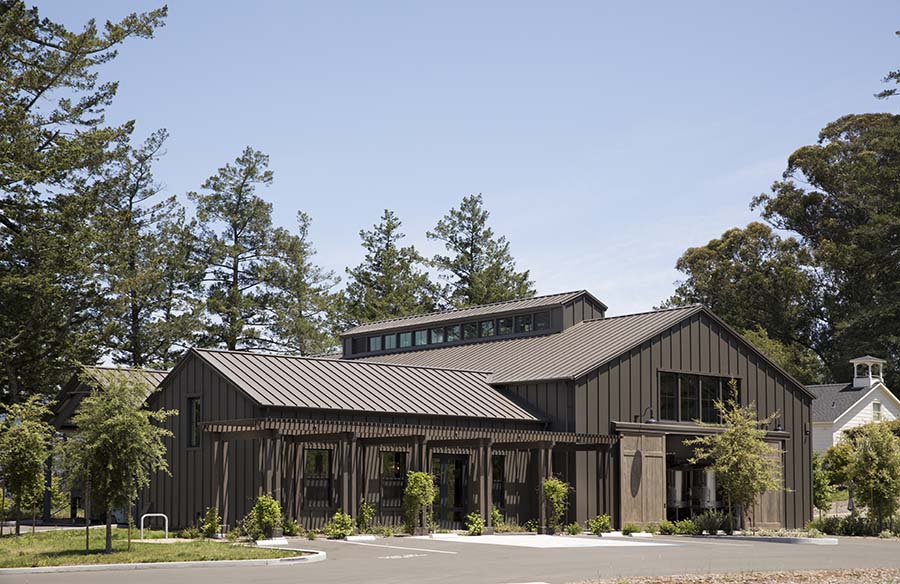
Situated just west of downtown Calistoga, California, Theorem Winery is set within the Diamond Mountain appellation of Napa Valley. Departing from the trend of large wineries catering to hundreds of visitors, Theorem offers an intimate, personalized experience where hospitality is paramount.
Project Name: Theorem Winery in Calistoga, California
Studio Name: Richard Beard Architects
Richard Beard Architects project team
Richard Beard, Principal
Katherine Schwertner, Project Manager
Bruno Lopez-Moncada, Project Architect
Project team
Richard Beard Architects (architecture and site master planning)
Nicholas Vincent Design (interior design)
Finley Construction (contractor)
Applied Civil Engineering (civil engineer)
Blasen Landscape Architecture (landscape architecture)
ZFA Structural Engineers (structural engineer)
TEP Engineers (mechanical and plumbing Engineers)
Refrigeration Technology Inc (refrigeration engineer)
Hiram Banks Lighting Design (lighting engineer)
Photography by: Paul Dyer

The 60-acre estate includes a collection of late-19th century buildings, originally constructed by Beverley Cole as a retreat from San Francisco’s fog. Cole is recognized for his role in establishing the precursor to the University of California/San Francisco Medical System. Among the property’s historic structures are a small schoolhouse and the Cole House, a Greek Revival cottage, which were restored and remodeled by architect Richard Beard before he developed the site for the winery.

The new winery was designed to harmonize with these historic buildings, drawing inspiration from local agricultural architecture. The dark-toned materials of the winery help it blend into the surrounding landscape, allowing the focus to remain on the stunning views of Mount St. Helena to the north and the vineyards to the south.

At 8,977 square feet, the winery is modest in scale but paired with a thoughtfully curated guest experience. Visitors are welcomed by an arbor/trellis that marks the beginning of their journey, where light and shadow are used to ease the transition into the world of the winery. As they pass through, their eyes adjust to lower light levels before descending a mirror-lined staircase to the darker, subterranean barrel room where the tasting begins. The room is wrapped in exposed, board-formed concrete walls, evoking the raw, unfinished nature of wine aging in barrels. A simple tasting table and a pair of bronze wings, popular for photos, adorn the space. Guests are then taken to various tasting locations across the estate, whether it’s by the schoolhouse, at a lookout point, under the barn trellis, or in the fermentation room.

The winery’s two-story structure, featuring dark roofing and siding, is built of steel with a cross-axis floor plan. This layout creates vistas that offer views both through and from the facility. Large oak barn doors can fully enclose the space, while steel-framed glass doors and windows invite ample natural light, minimizing the need for artificial lighting.

The fermentation room’s roof is designed with a continuous monitor to flood the space with daylight. Below-ground barrel storage not only maintains a cool, stable environment for the wine but also allows for at-grade access during production. Additional facilities include the crush pad, storage rooms, a full restroom, and a laboratory/office. With a production capacity of 8,412 cases, Theorem Winery limits tastings and tours to a small number of guests by appointment only, ensuring a refined, intimate experience. The focus on wine and landscape creates a setting that is both familiar and timeless.