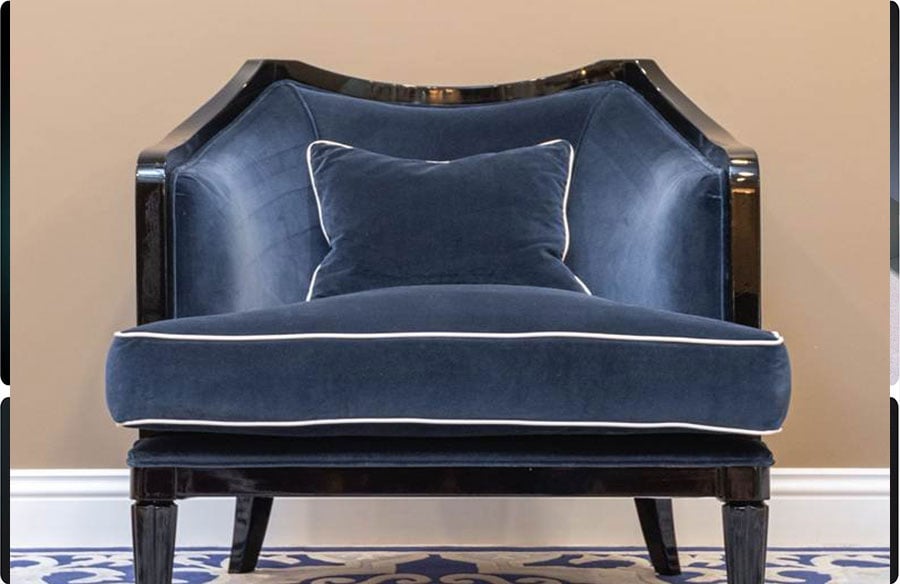
Few textiles carry as much visual authority as velvet. It softens a room, deepens color and changes with the light, and for centuries it has signaled status. Today it is also a working material for chairs, sofas and headboards, which makes the question of how it is built, and how well it wears, more than a matter of taste. A clear view of velvet’s structure helps designers separate what is decorative from what is durable.
A pile fabric with a long memory
The Metropolitan Museum of Art’s Heilbrunn Timeline essay on Renaissance velvet textiles, written by Melinda Watt in 2011, explains the structure. Velvet is a pile fabric. During weaving, warp threads are drawn up over rods or wires to form loops, and the rods are removed afterward. The loops can be cut for a dense pile or left uncut. The technique is slow and uses more warp thread than flat textiles, which helps explain why historic velvet was costly.
The essay places silk velvet’s probable origin in China, with development by at least the 13th century, and names Venice, Florence and Genoa as traditional centers of high-quality production. Its uses ranged from ecclesiastical vestments to dress, and to lengths of patterned velvet hung as a cloth of honor behind seated figures. Luxury silk and metal-thread fabrics, the essay says, expressed power, wealth and taste. Velvet entered interiors as a statement long before it became a sofa fabric.
From silk to polyester: what changed
Modern upholstery velvet keeps the pile construction but often swaps the fiber. Premier Table Linens, which sells fabric by the yard alongside its event linens, lists its velvet upholstery fabric as 100 percent high-grade polyester, available in 57-inch and 72-inch widths and in 30 colors. It is described as heavy weight and ultra soft, with soil-release properties, and it is made in the USA. The 72-inch listing names colors that include Smoke, Charcoal, Merlot, Grape, Lavender, Cream, Ivory, Cashmere and Taupe, so the palette runs well beyond jewel tones. Care instructions on the listing call for machine washing warm and tumble drying on low heat, which helps for covers and cushions that come off the frame.
The listing’s suggested uses are chairs, sofas, benches, other furniture, headboards, cases and displays. For designers working in hospitality or commercial settings, the commercial-grade designation noted on the listing is worth confirming against the project’s specification.
 Reading durability claims
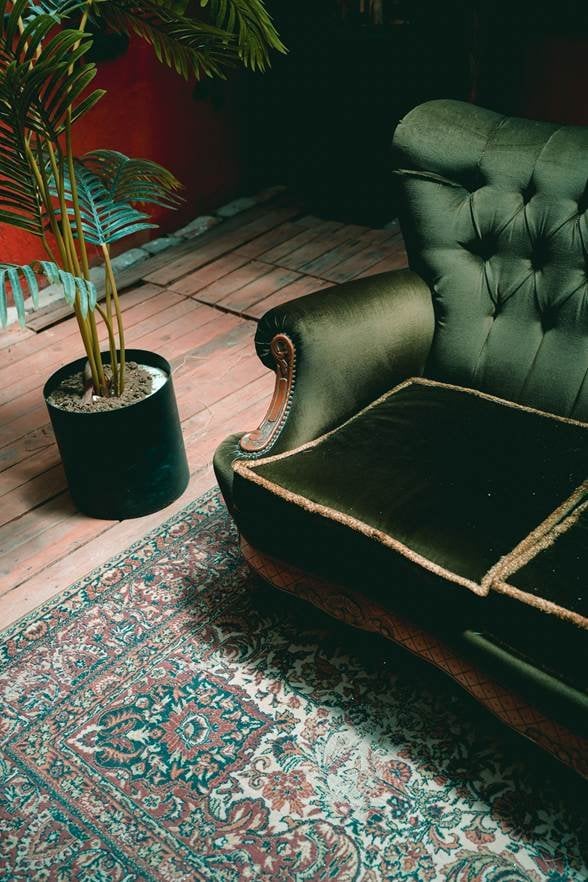
The listing also states a durability result: 105,000 cycles on a Wyzenbeek rub test, tested in February 2026. This is the seller’s own claim, and as with any such claim, the useful follow-up is to ask for the test report, confirm the method and the stopping point, and compare it with the demands of the piece being upholstered. A bench in a lobby faces different wear than a headboard.
Broader principles come from extension guidance. New Mexico State University Cooperative Extension’s guide to selecting fabrics for home furnishings advises checking that upholstery fabric is tightly woven, warns that loosely woven fabrics tend to show wear quickly, and lists nylon, polyester and olefin among the strong, abrasion-resistant fibers suited to high-wear items. It also recommends planning for cleaning and preshrinking fabrics before use, and it notes that finishes such as soil release ease care. The guide, last revised in 2003, does not discuss velvet or other pile fabrics, so its value here is the framework: fiber, weave, finish and cleaning plan.
Where velvet works in a room
Because velvet’s pile reflects light differently depending on the angle, it tends to read as a surface with depth rather than a flat color. That quality suits statement seating, headboards and banquettes, where one piece anchors a room. The Premier Table Linens listing sells the fabric by the yard in continuous uncut lengths, up to 35 yards per roll, which suits projects that need a seamless run of fabric. In busy rooms, the practical checklist is short: confirm the fiber content, look at how tightly the fabric is woven, ask for abrasion test results, and decide how the piece will be cleaned.
Practical questions about upholstery velvet
Is polyester velvet a reasonable choice for furniture? According to the extension guide, polyester is among the fibers considered strong and abrasion resistant, and the listing reports a rub-test result, so the claim is at least documented. Can the fabric be washed? The Premier Table Linens listing gives machine-wash instructions for the yardage, but a finished sofa has its own cleaning requirements, which should be confirmed with the upholsterer. How wide is the fabric? The listing offers 57-inch and 72-inch widths, which affects how much yardage a project needs.
Choosing with intent
Taken together, the history and the specification sheet tell a consistent story. Velvet earned its reputation through the labor of pile weaving and the prestige of its materials. In 2026, the same visual richness is available in a fiber built for use, and the useful questions have shifted from rarity to performance: how the fabric is made, how it has been tested, and how it will be cleaned. For designers specifying furniture, those answers matter more than the name on the roll, and a supplier such as Premier Table Linens that publishes fiber content, widths, care steps and a dated test result makes that comparison easier.