The outdoor spaces around a building deserve the same long-term consideration as the building itself. A courtyard, planted entrance, or communal garden should be designed not only for its appearance at completion, but also for how it will be cared for in the years ahead. Mulching a garden sits within that relationship between design and maintenance. For architects, landscape designers, and commercial property teams, it is worth considering as part of the planting specification rather than leaving it as a finishing touch.
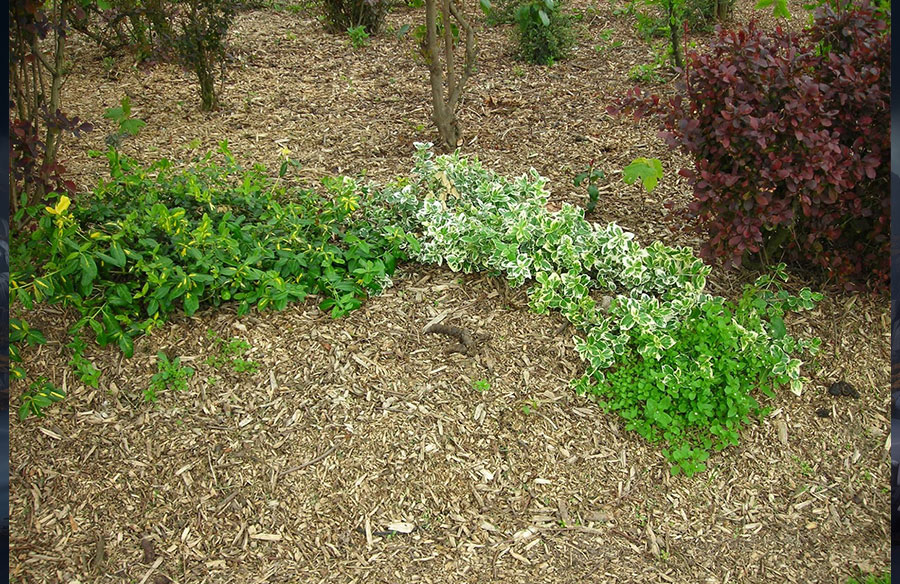
Woodchip mulch made from pruning waste in a public garden in Normandy. Photograph: Jmalo, via Wikimedia Commons, licensed under CC BY-SA 4.0. Image unchanged.
Bringing Mulching Into The Landscape Design Brief
Mulching involves covering the soil around plants with a layer of material, such as composted bark, woodchip, or well-rotted organic matter. On a commercial development, its application might extend across entrance beds, courtyard planting, car park borders, and communal grounds. Rather than specifying it solely by colour or appearance, the design team should establish what it needs to achieve in each location.
Planning commercial mulching alongside planting, irrigation, and maintenance access makes those requirements easier to coordinate. A formal entrance may need a consistent finish and carefully defined edges, while a larger shrub bed may call for a different material and inspection routine. Identifying these differences early gives the people maintaining the landscape a clearer brief than a general instruction to cover exposed soil.
Reducing Moisture Loss Around Planting
One of mulch’s practical benefits is its ability to reduce evaporation from the soil surface. Covering exposed ground helps moisture remain available for longer, while also moderating temperature extremes around plant roots. For managed landscapes, this can support more efficient watering, although the result depends on the planting, soil, weather, and material used. Mulch does not remove the need to monitor soil moisture or water plants during prolonged dry periods.
This makes mulching a supporting measure within a wider water-management plan, not a substitute for one. Designers and site managers still need to consider suitable planting, irrigation arrangements, and the condition of the ground. A covered bed should not be assumed to be adequately watered simply because its surface looks tidy. Routine checks should establish what is happening beneath the mulch and whether the planting is receiving the care it needs.
Choosing Materials For More Than Appearance
Organic and mineral mulches serve different purposes. Composted bark, woodchip, and other biodegradable materials gradually decompose, contributing organic matter to the soil. Gravel and decorative stone do not provide the same soil-conditioning effect, although they can conserve moisture, suppress weeds, and suit particular planting schemes. The decision should therefore reflect the needs of the plants as well as the intended visual character.
Sourcing also deserves attention. The production and transport of bought-in organic material carry environmental costs, so a specification should consider where the mulch comes from, how much is needed, and whether suitable material can be produced on site. Locally available material is worth investigating, but its suitability should still be assessed rather than assumed. The aim is to make an informed choice, not to treat every natural-looking product as equally sustainable.
Supporting The Soil Beneath The Planting
The value of organic mulch extends beyond its visible surface. As it decomposes and is incorporated into the ground by soil organisms, it can help improve soil structure. Keeping soil covered and avoiding unnecessary disturbance also supports the living processes beneath a planting scheme. These are useful considerations when designing landscapes intended to develop over many years rather than be repeatedly stripped back and replaced.
However, more mulch is not always better. Its type and depth should respond to soil conditions and the plants being grown. Poorly drained or compacted ground requires particular care, and some planting will not benefit from a thick organic covering. A landscape specification should allow for those differences instead of applying one treatment across every bed. That is especially important where a development combines formal ornamental planting with areas managed for different ecological objectives.
Getting Preparation And Application Right
Preparation determines whether mulching delivers more than a cosmetic improvement. Established perennial weeds should be dealt with before application, and work should take place when the soil is moist rather than frozen or waterlogged. In UK conditions, late winter or early spring is often suitable for applying organic matter, although ground conditions should guide the programme. RHS guidance recommends an organic mulch layer of at least 5cm, ideally 7.5cm, while the final specification must still suit the material and planting.
Existing mulch needs to be included when assessing that depth. Adding a fresh layer without checking what remains can lead to excessive build-up. Material should also be kept away from tree trunks, woody stems, and plant crowns, rather than heaped against them. Over-mulching can create unsuitable moisture and aeration conditions, undermining the planting that the work was intended to support. A consistent surface finish is useful, but it should never take priority over correct application.
Designing The Edges As Carefully As The Beds
Mulched planting does not sit in isolation. It meets paths, lawns, entrances, and drainage features, and these junctions deserve attention during both design and maintenance. The specification should leave sufficient space for the intended mulch layer without raising the finished surface above surrounding edges. It should also explain how displaced material will be managed around routes used by staff, visitors, and residents.
For example, a narrow planted strip beside a busy entrance may need a different edge detail from a broad shrub bed set back from pedestrian circulation. Thinking through those relationships helps turn a material choice into a workable landscape detail. It also gives maintenance teams a clear standard to follow when replenishing beds, rather than leaving them to resolve unsuitable levels or recurring spillages after completion.
Planning For The Landscape After Handover
Mulching should form part of the handover information, with the chosen material, application depth, and areas of use recorded. Bringing those details into the commercial grounds maintenance plan allows inspections to be coordinated with weeding, pruning, planting, and irrigation checks. Replenishment should follow the condition of the bed, rather than becoming an automatic exercise in adding more material for appearance alone.
Site teams can also record what the treatment is achieving. Useful observations include soil moisture, weed growth, plant condition, material displacement, and the amount of mulch added over time. These records provide a basis for adjusting the specification where necessary. They also encourage a more meaningful assessment of landscape performance than judging whether every bed looks freshly dressed at each visit.
A Small Detail With A Long-Term Role
Mulching a garden is not, by itself, proof of sustainable design. Its value depends on appropriate materials, suitable planting, careful application, and a realistic maintenance programme. For commercial landscapes, the opportunity is to connect those decisions from the outset. Treating mulch as part of the landscape’s long-term care, rather than its final decoration, gives architects and property teams another practical way to carry design intentions beyond completion and into everyday use.