Abstract wall art thrives in modern interiors because it is not bound by literal meaning or strict visual rules. Its strength lies in flexibility. Shapes, colors, and textures speak emotionally rather than descriptively, allowing each viewer to connect in a personal way. In contemporary homes with open layouts, clean lines, and abundant light, abstract compositions introduce character and depth without disrupting visual flow.
Instead of filling space, abstract artwork defines it. A well-chosen piece can anchor a room, guide the eye, and bring cohesion to interiors that might otherwise feel minimal to the point of being impersonal.
Why Abstract Art Fits Contemporary Design
Modern interiors rely on simplicity, balance, and clarity. Walls are often neutral, furniture is streamlined, and decorative elements are intentional rather than excessive. Abstract art complements this approach by adding visual interest without introducing narrative clutter.
Because abstract forms are open to interpretation, they adapt easily to different environments. One viewer may respond to energy and movement in bold gestures, while another connects with soft transitions and calm tones. This versatility makes abstract art especially effective in spaces designed for both function and atmosphere.
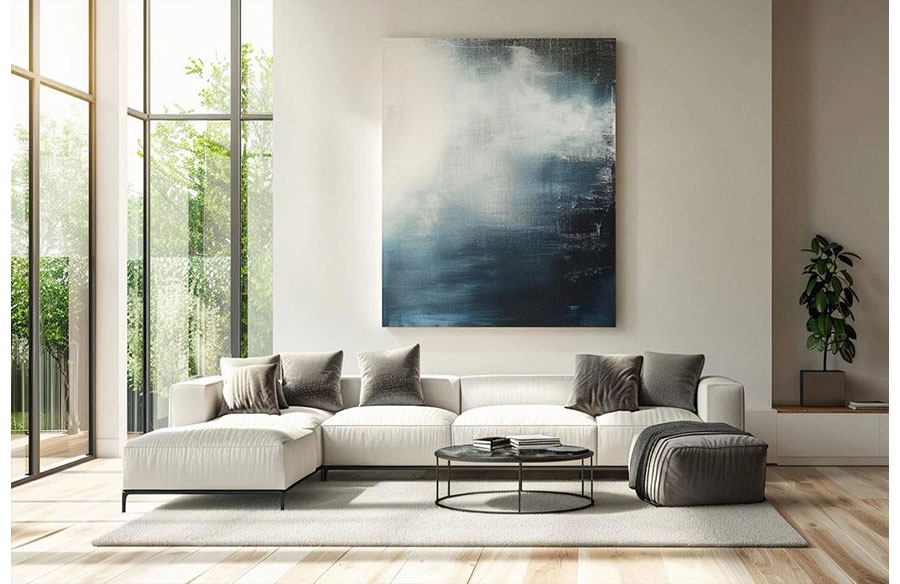
Large abstract paintings are particularly suited to open-plan living areas. They provide a sense of scale and presence that smaller decorative items cannot achieve alone. Instead of breaking a wall into fragments, one strong composition brings focus and balance, allowing furniture and architecture to work around it rather than compete with it.
Selecting the Right Artwork for Your Space
Read the Room Before You Choose
Before selecting a piece, evaluate the room as a whole. Consider light, proportions, and existing materials. Neutral interiors benefit from artworks that introduce color and movement, while already expressive spaces may require more restrained compositions to maintain balance.
Scale is critical. Oversized artwork in a small room can feel overwhelming, while a piece that is too small will disappear on a large wall. Abstract art is most effective when its size matches the visual weight of the space it occupies.
The Role of Material and Technique
Paintings with visible texture add depth that flat surfaces cannot replicate. Thick layers, subtle relief, and variation in finish interact with light throughout the day, giving the artwork a changing presence. This effect is especially noticeable in bright interiors, where natural light enhances surface detail and tonal variation.
Handcrafted artworks often bring an authenticity that printed decor lacks. Each mark contributes to a sense of originality and intention, making the piece feel integrated into the space rather than applied as an afterthought.
Styling Abstract Art with Intention
Create a Clear Focal Point
Choose one wall to carry visual authority. In living rooms, this is often the wall behind a sofa or opposite the main seating area. Hang the artwork at eye level, typically around 145 centimeters from the floor to the center of the piece. This height aligns with natural viewing angles and creates a comfortable visual relationship with the room.
Avoid surrounding the artwork with too many competing elements. Abstract art needs space to breathe. Minimal decor around it allows the composition to stand out and define the room.
Balance Energy and Restraint
Bold artwork should be balanced by calm surroundings. If the painting features strong colors or dynamic movement, pair it with understated furniture and neutral finishes. This contrast creates harmony rather than chaos.
In very minimal interiors, expressive abstract pieces prevent the space from feeling sterile. Soft transitions, layered tones, and organic forms introduce warmth while maintaining a modern aesthetic.
Using Texture to Add Dimension
Modern interiors benefit from tactile contrast. Smooth walls, polished floors, and clean-lined furniture can feel flat without variation. Abstract paintings often introduce texture through layered paint, subtle relief, or tonal depth, which adds richness without visual noise.
If you choose to create a gallery wall, limit variation carefully. Mix sizes, but maintain a consistent color palette or shared visual language. Cohesion is what turns multiple artworks into a curated composition rather than a collection of unrelated pieces.
Placement Ideas by Room
Living rooms can support larger, more dynamic artworks that encourage conversation and visual interest.
Home offices benefit from calmer compositions that support focus rather than distraction.
Bedrooms work best with soft palettes and gentle forms that promote rest.
Hallways are ideal for smaller pieces arranged to create rhythm and movement through the space.
Unconventional spots such as reading corners, above console tables, or near windows often provide opportunities for impactful placement. Treat artwork as part of the room’s overall structure, not simply decoration for empty walls.
Building a Meaningful Collection
Start with pieces that resonate on a personal level rather than trying to match furniture or follow trends. A thoughtful collection grows over time and reflects evolving taste. Quality matters more than quantity. One strong artwork can define a room more effectively than multiple generic pieces.
Abstract wall art allows modern interiors to feel both refined and human. It introduces emotion, texture, and individuality without compromising clarity or balance. When chosen and styled with intention, it becomes a central element of interior design rather than a finishing touch.
The result is a space that feels cohesive, expressive, and genuinely personal.