Architecture is often discussed in terms of grand gestures: soaring ceilings, dramatic facades, expansive windows and clever use of light and space. But the way people actually experience a building is shaped just as much by what’s inside it. Furniture determines how we move through a room, where we pause, how we interact with others and whether a space feels welcoming or intimidating.
An empty room can be architecturally beautiful, yet it often feels incomplete. Add furniture, and the space comes alive. A carefully placed sofa can create intimacy in a vast living area. A long communal table can turn a hall into a gathering place. Even a pair of sculptural lounge chairs positioned by a window can draw people towards the view and invite them to slow down. Furniture and architecture work together to shape our experience of space.
Furniture defines how space is used
Architecture creates the shell, but furniture defines function. In open-plan homes and offices, furniture often does the work that walls once did, creating zones for different activities without physically dividing the space.
A rug and a group of chairs can define a lounge area. A dining table establishes where meals happen. A bookshelf can act as a partition, separating a study nook from a living area while maintaining openness and light.
In commercial settings, furniture guides behaviour. Reception desks signal where visitors should go. Seating arrangements in lobbies and waiting rooms influence how long people stay and whether they interact. In libraries, cafés and co-working spaces, furniture choices can encourage quiet focus or social collaboration.
Scale, proportion and the human body
Architects think carefully about proportion and scale, and furniture has a big say in how those qualities are perceived. In a room with very high ceilings, low, wide furniture can make the space feel grounded and comfortable. Taller pieces, such as bookshelves or high-backed chairs, can help balance vertical volume.
In smaller spaces, oversized furniture can feel overwhelming, while slim, lightweight pieces can make rooms feel larger. Furniture with raised legs allows light and sightlines to pass underneath, enhancing a sense of openness.
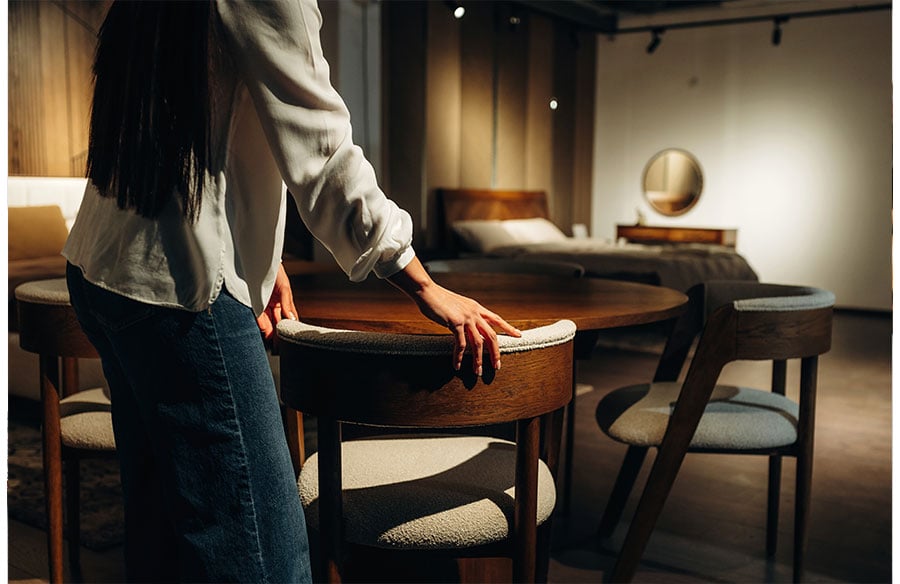
The relationship between furniture and the human body is fundamental. Furniture is the part of a building we physically touch and use every day. The height of a chair, the depth of a seat and the angle of a backrest affect comfort and how long we’re willing to stay in a space. A beautifully designed building with uncomfortable furniture may be admired but rarely enjoyed.
Movement, flow and atmosphere
Furniture shapes how people move through a building. Its placement can create clear pathways, encourage exploration or slow movement down. In galleries and museums, seating may be positioned to encourage visitors to pause and reflect on particular works. In hotel lobbies, furniture can create intimate pockets for conversation within a large, open space.
Poorly placed furniture can disrupt flow, creating bottlenecks or awkward circulation. Well-considered layouts make spaces feel intuitive and easy to navigate.
Furniture also influences atmosphere. Materials, colours and forms contribute to how a space feels emotionally. Natural timber and soft fabrics bring warmth and comfort. Steel and glass can feel sleek and modern. Curved forms soften architectural lines, while angular pieces reinforce geometric designs.
Architects and interior designers often choose furniture that responds to the architecture. A minimalist building may be complemented by clean-lined furniture that echoes its simplicity. A heritage building might feature a mix of classic and contemporary pieces that highlight its character. Iconic furniture designs can become part of a building’s identity. Many celebrated architects, from Mies van der Rohe to Le Corbusier, designed furniture for their buildings, recognising that the two are inseparable.
Furniture in public and commercial spaces
In public and commercial architecture, furniture has an even greater impact on experience. Airports, hospitals, schools, offices and hotels rely on furniture to support large numbers of people with different needs.
Durability, comfort, accessibility and flexibility are all important. Modular furniture allows spaces to adapt to changing uses. Inclusive design ensures people of different ages and abilities can use spaces comfortably.
Furniture in these settings also contributes to brand identity and user experience. A thoughtfully furnished hotel lobby can create a memorable first impression, while comfortable seating in a hospital waiting room can reduce stress for patients and families.
Furniture is far more than decoration. It shapes how we use, move through and feel about architectural spaces. When architecture and furniture are considered together, buildings become more functional, welcoming and meaningful. The most successful spaces are those where structure and furnishings work in harmony, creating environments that people don’t just admire, but genuinely enjoy inhabiting.