Every historic city was designed around how things got in and out of its buildings. Centuries later, that design still decides how a sofa reaches a living room. Seen through a remover’s eyes, Europe’s best-loved architecture is also a set of logistical puzzles.
Ask an architect to describe a building and they will talk about proportion, facade and light. Ask an international remover and the first questions are different: which floor, how big is the lift, how wide is the staircase, and how close can a van get to the door?
In much of Europe, the answers were settled long before anyone thought of a removal van. The width of a canal plot, the height of a Parisian ceiling and the angle of a Barcelona street corner were decisions made for trade, light and traffic in the seventeenth and nineteenth centuries. Today they decide how a move works, how long it takes and what equipment it needs. Three cities show how.
Amsterdam: why the furniture goes in through the window
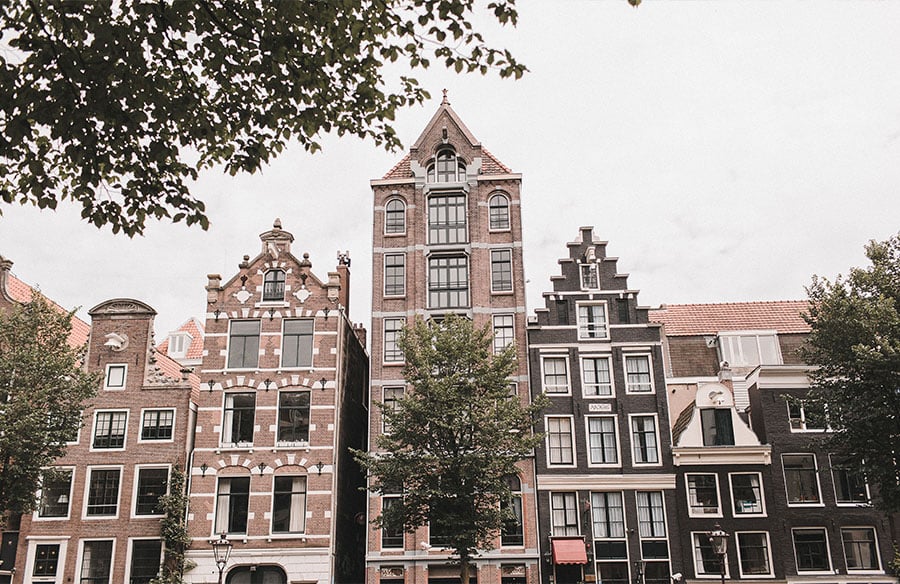
Amsterdam’s canal houses are famously narrow and deep. Frontage on the canals was valuable, so plots were thin, and the houses grew upwards and backwards instead of sideways. Inside, that left little room for stairs: the classic canal-house staircase is steep and tight, closer to a ladder than a flight.
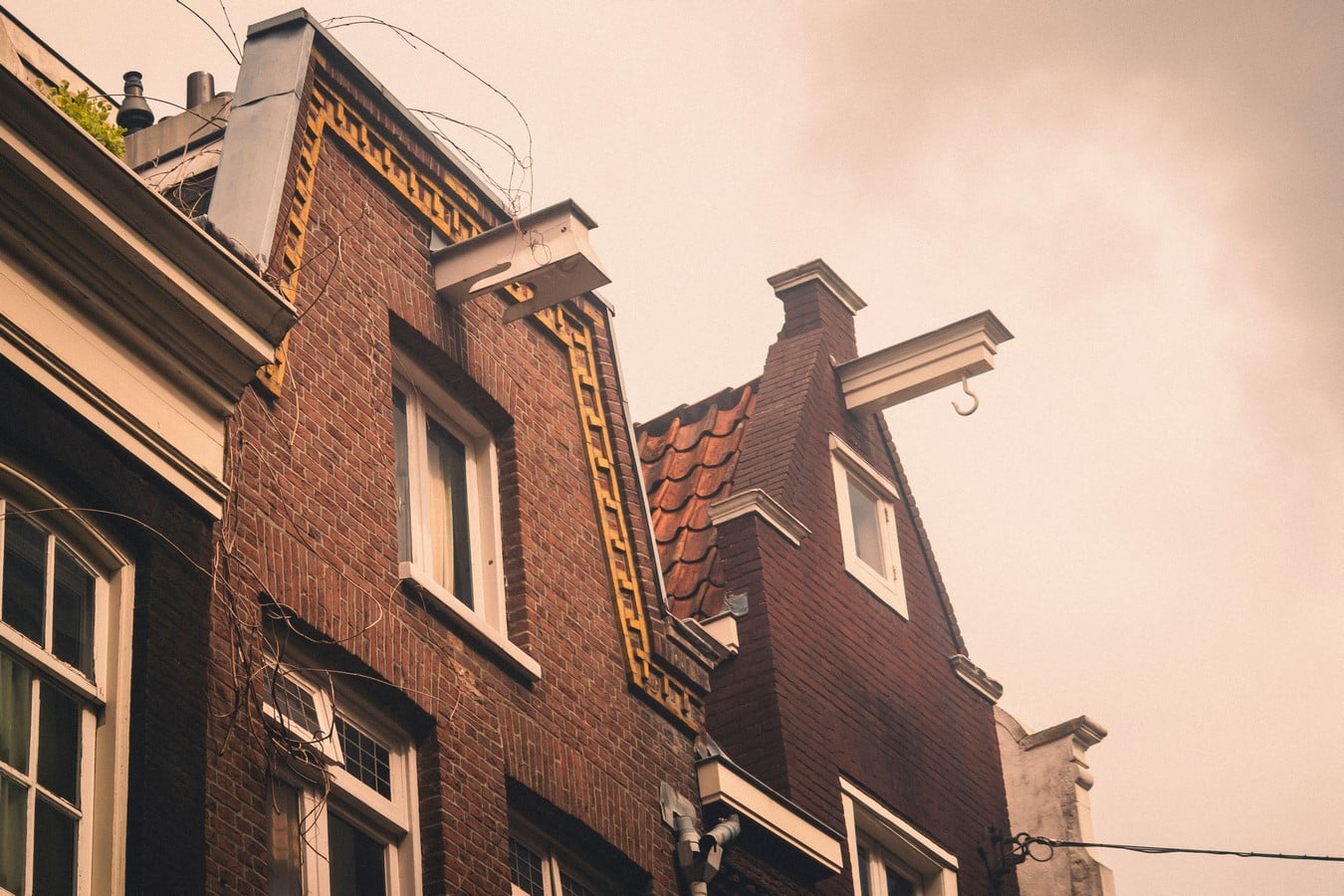 The builders’ answer is still visible on almost every gable: a beam projecting from the top of the facade, often with a hook. Goods were never meant to travel up those stairs. They were winched up the outside of the building and taken in through the large upper windows. The usual explanation for the forward lean of many canal-house facades is the same: tilting the front outwards kept the load clear of the brickwork on its way up. Other houses lean sideways for a less deliberate reason, settling on the timber piles driven into Amsterdam’s soft ground.
The logic has outlived the merchants. A wardrobe still does not turn on a canal-house staircase, so modern moves in the old centre often use a mechanical furniture lift set up against the facade, doing the hoist beam’s job with a motor. Anyone moving to the Netherlands from the UK into an older building should expect the window, not the front door, to be part of the plan.
Paris: the fifth floor, the tall ceilings and the lift that came later
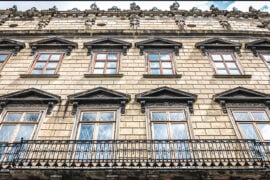
Baron Haussmann’s rebuilding of Paris under Napoleon III, from the 1850s, gave the city its signature apartment block: cream stone, continuous cornice lines, wrought-iron balconies on the second and fifth floors, and a mansard roof that once held servants’ rooms. Floors were ranked by status, with the grandest apartment on the second floor, high enough to escape the street’s noise and low enough to spare its residents too many stairs.
 Those generous ceilings are exactly what make a Haussmann building hard to move into. Tall floors mean more steps between each one, and most of these buildings were designed without lifts. The lifts that were added later had to fit wherever space allowed, and many are far smaller than the furniture people want to bring with them. A lift that holds three people rarely holds a wardrobe.
 MuveOne’s team saw this on one recent move from a fifth-floor Paris apartment with very tall floors. Carrying a whole household down that many stairs would have taken a very long time, so the move used an external lift: a platform raised to the apartment’s window from the street, with another arranged at the London end. As the team told the customer at the time, it is not an everyday tool, even in Paris. It also needs planning of its own: a second parking space beside the van, and permission to use the street.
For anyone moving to France from the UK into a period building, the floor number matters less than three other facts: the height of the floors, the internal size of the lift, and whether the windows open wide enough for a lift platform.
Barcelona: the corner Cerdà cut for a machine
 When Ildefons Cerdà planned the Eixample, Barcelona’s nineteenth-century extension, he cut the corners off every block. The chamfered corners, which give the district its octagonal blocks, were meant to improve visibility and help vehicles turn; Cerdà expected steam-powered transport to replace horses and carts.
Cerdà’s machines arrived as cars and vans instead, and the corners found a use he would recognise. Today the wide chamfers serve as parking and as loading and unloading space, which makes them where a removal van naturally stops. In a district of tall apartment buildings, that corner can be the difference between a short carry and a long one, and it is worth knowing which corner serves your building before moving day.
What your building tells your remover
The lesson from all three cities is that a good description of a building is the most useful thing a customer can give their remover. The details that matter are architectural:
- The floor, and the height of the floors. A third floor in a period building can mean more stairs than a fifth floor in a modern one.
- The lift’s internal size, measured, not described. “There is a lift” is not the same as “the sofa fits in the lift”.
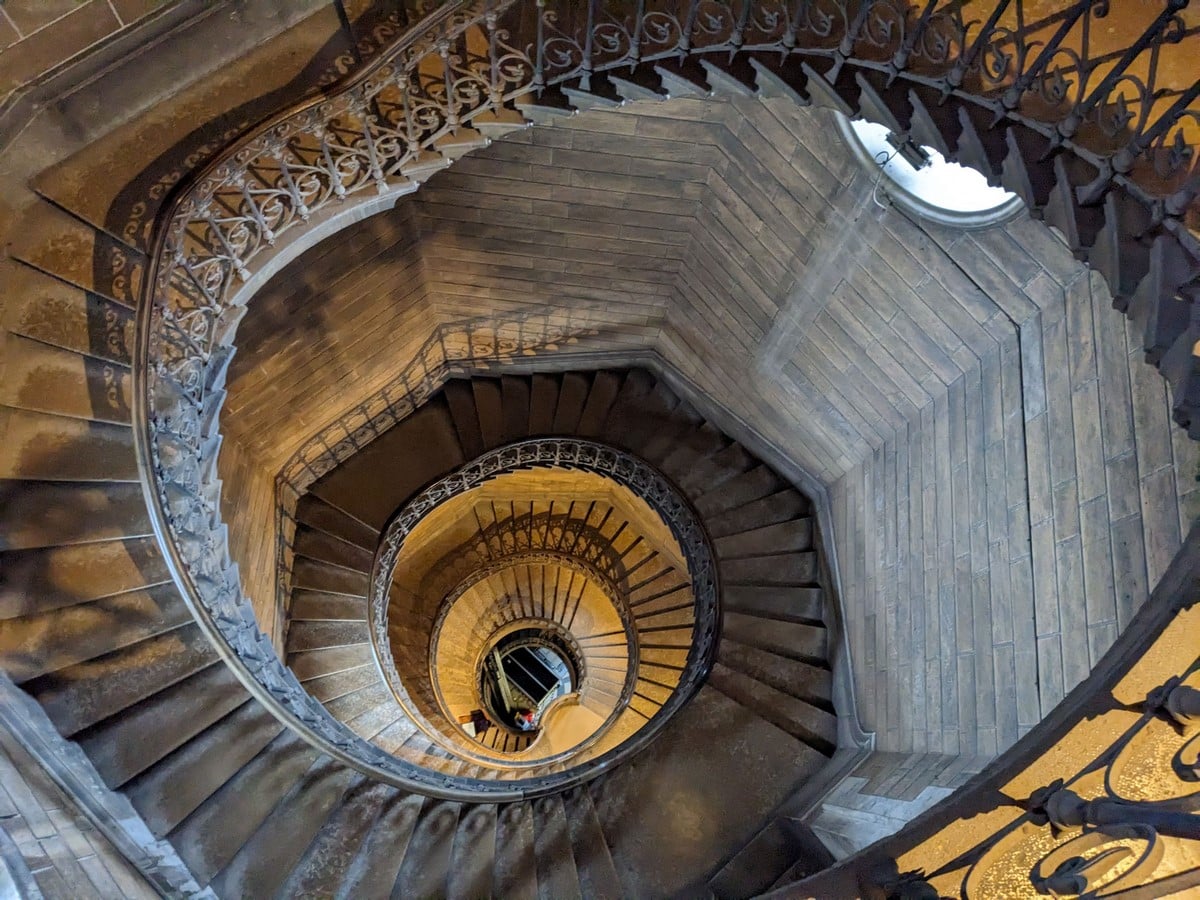
- The staircase: its width, its turns and whether it spirals.
- The windows, if an external lift might be needed: how wide they open and what lies beneath them.
- The distance from the door to where a van can stop, and whether parking needs a permit. In most cities that permit is the resident’s job, so it is worth applying early.
One MuveOne customer described their Paris apartment in a single line: second floor, wide lift, wide staircase, twenty metres from the road, with a garage nearby because the street is busy. It is exactly the description a remover hopes for, because every one of those facts changes the plan.
The building is part of the move
Architecture is usually discussed as something we look at. Moving house is a reminder that it is also something we carry things through. The canal house’s hoist beam, the Haussmann lift squeezed in a century later and the Eixample’s cut corners all record how their builders expected goods to arrive. Reading a building that way, before the van is booked, is the simplest way to make a move across Europe go smoothly.
MuveOne is a UK international removals company that moves homes between the UK and Europe.