Key Takeaways
- Climate‑responsive concrete tailors mix design, curing protocols, and surface treatment to site‑specific climatic conditions, including freeze‑thaw severity, thermal cycling, solar exposure, and precipitation patterns.
- Performance‑oriented mixes typically incorporate air entrainment (5–7% air), 4,000–4,500 psi strengths with low water‑to‑cement ratios (≤0.45), supplementary cementitious materials, and fiber reinforcement to resist scaling and early‑age cracking.
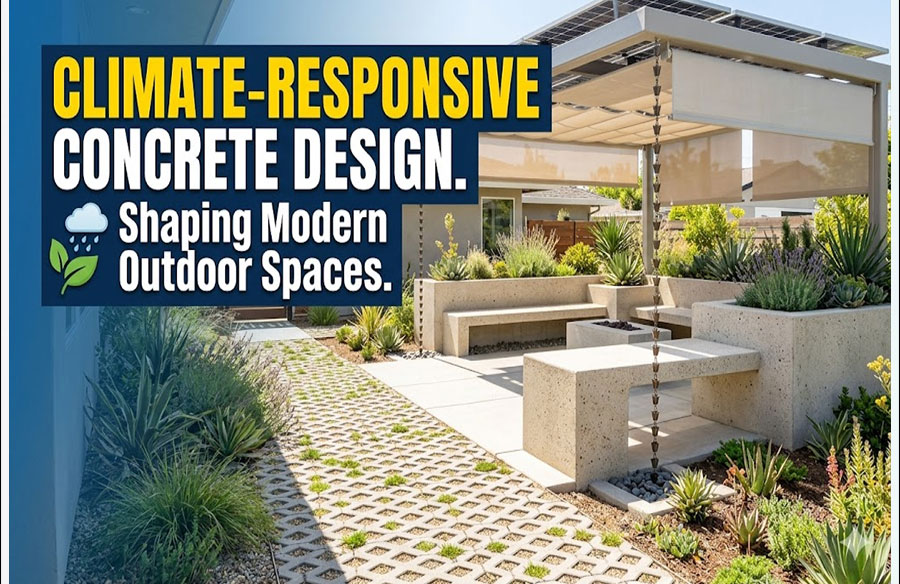
- Pervious (porous) concrete systems reduce surface runoff by routing water through a high‑void mix into a designed stone reservoir, providing localized stormwater management and groundwater recharge while complying with evolving municipal regulations.
- High‑SRI “cool” concrete surfaces reflect more solar radiation and re‑radiate less heat than dark asphalt, lowering local air temperatures, reducing building cooling loads, and improving thermal comfort in outdoor spaces.
- In extreme‑exposure climates like Colorado’s Front Range, resilient outdoor slabs integrate air‑entrained, integral‑colored concrete, robust subbase compaction, controlled drainage slopes, and durable penetrating sealers to extend realistic service life to 25–30 years.
- Lower‑carbon concrete technologies, Portland Limestone Cement (Type IL), supplementary cementitious materials, and carbon mineralization (e.g., CarbonCure) are now reaching residential projects, reducing embodied CO₂ without compromising strength or finish quality.
Concrete is no longer specified as a generic gray slab and poured the same way in San Diego, Minneapolis, and Colorado Springs. The last decade has produced a quiet revolution in how outdoor concrete is designed, mixed, and finished, with mix designs, surface treatments, and stormwater strategies tuned to the specific climate the slab has to live in. The result is patios that survive their first decade without scaling, driveways that drain instead of pond, and outdoor spaces that add less heat and carbon to their surroundings. For homeowners building a patio, walkway, or driveway today, the right questions are no longer just about color and stamp pattern but about how the slab will perform under the conditions it actually faces.
What “Climate-Responsive” Actually Means
Climate-responsive concrete works along two parallel tracks. The first is performance design: building each slab to handle the freeze-thaw cycles, temperature swings, UV exposure, and precipitation patterns of the site. The second is impact reduction: lowering the carbon footprint of the concrete itself through cement alternatives, supplementary cementitious materials, and emerging carbon-mineralization technologies. Both have moved from research papers and commercial specifications into mainstream residential work, driven by updated standards from the American Concrete Institute, ASTM International, the Portland Cement Association, and increasingly active municipal stormwater regulations.
Mix Design Tuned to Local Conditions
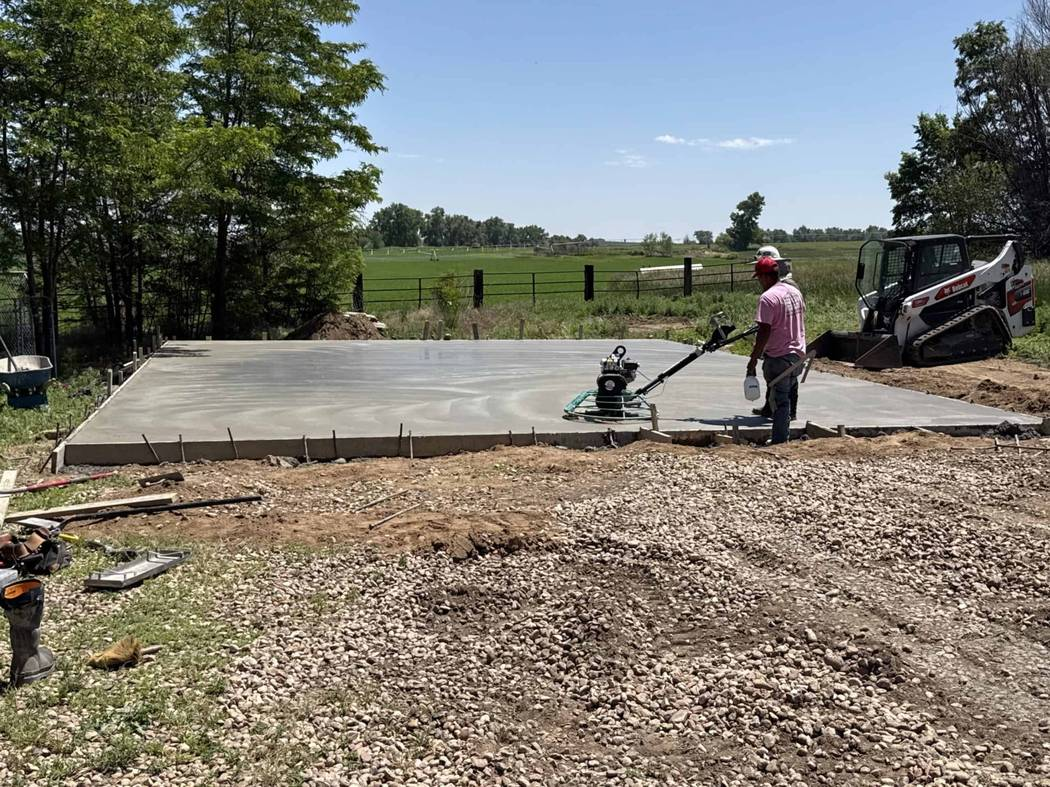 The single biggest shift in climate-responsive concrete is mix design matched to the site. For cold-climate residential work, that typically means:
- Air entrainment at roughly 5 to 7 percent air content per ACI 201.2R, creating microscopic voids that absorb the expansion of freezing water and prevent scaling.
- Higher strength in the 4,000 to 4,500 PSI range with a water-to-cement ratio at or below 0.45, which produces a denser, less permeable slab.
- Supplementary cementitious materials such as fly ash or ground granulated blast furnace slag, which improve long-term durability while reducing cement content.
- Fiber reinforcement alongside traditional rebar to control plastic shrinkage cracking during cure.
Each decision is climate-driven. None adds meaningful cost, and together they dramatically extend the realistic service life of the slab in a Front Range or other severe-exposure environment.
Pervious Concrete and Stormwater Response
Pervious concrete, sometimes called porous or permeable concrete, has moved from niche commercial application to viable residential option. The American Concrete Institute publishes ACI 522R as the comprehensive technical guide for pervious concrete design and installation. The mix is designed with most of the fines omitted and a much higher void content, allowing rainfall to pass directly through the slab into a designed stone reservoir beneath, where it infiltrates back into the ground. The result is dramatically reduced runoff, less surface ponding, and reduced load on municipal storm systems. In drier climates like Colorado’s Front Range, pervious surfaces also support groundwater recharge in a region where every gallon matters. Cold-climate pervious installations require deeper subbase reservoirs and careful subgrade drainage, but the technology has matured significantly in the past decade.
Cool Pavements and Heat Island Mitigation
Outdoor flooring is also being evaluated on how much heat it adds to its surroundings. The Solar Reflectance Index (SRI) measures a surface’s combined ability to reflect solar energy and re-radiate absorbed heat. Higher SRI values mean cooler surfaces. Light-gray concrete naturally carries an SRI in the 30 to 40 range, while standard black asphalt sits near 0. The LEED v4 green building rating system awards heat island reduction credit for paving with an aged SRI of 28 or higher (or an initial SRI of 33). Research from the Lawrence Berkeley National Laboratory Heat Island Group has documented how lighter pavement surfaces lower local air temperatures, reducing cooling loads on adjacent buildings and improving outdoor thermal comfort. Concrete is the most accessible cool-surface option for residential patios and driveways.
Designing for Front Range Conditions
Colorado’s Front Range presents a particularly demanding climate for outdoor concrete. The combination of aggressive freeze-thaw cycles, intense solar UV at elevation, temperature swings that routinely exceed 40 to 50 degrees in a single day, low humidity that complicates curing, and the regular use of deicing chemicals on driveways creates conditions where generic mix designs fail early. Climate-responsive specifications for Colorado outdoor work typically include 4,000 PSI air-entrained concrete, integral color rather than topical stain (which fades faster under high-altitude UV), penetrating silane or siloxane sealers reapplied on a maintenance schedule, drainage slope away from the foundation at a minimum of a quarter inch per foot, and a compacted gravel subbase sized for the load and the local frost depth.
Lower-Carbon Concrete Becoming Standard
Cement production accounts for an estimated 7 to 8 percent of global carbon dioxide emissions according to the International Energy Agency. The industry response, now reaching residential projects, includes Portland Limestone Cement (Type IL, defined under ASTM C595), which substitutes ground limestone for a portion of the clinker and reduces embodied carbon by roughly 10 percent at equivalent strength and performance. Supplementary cementitious materials cut cement content further. Carbon mineralization technologies such as CarbonCure inject captured carbon dioxide into ready-mix concrete during the mixing cycle, where it reacts with calcium ions and permanently bonds as calcium carbonate within the cement paste. None of these changes the look or feel of the finished slab, but together they meaningfully reduce the climate impact of the project.
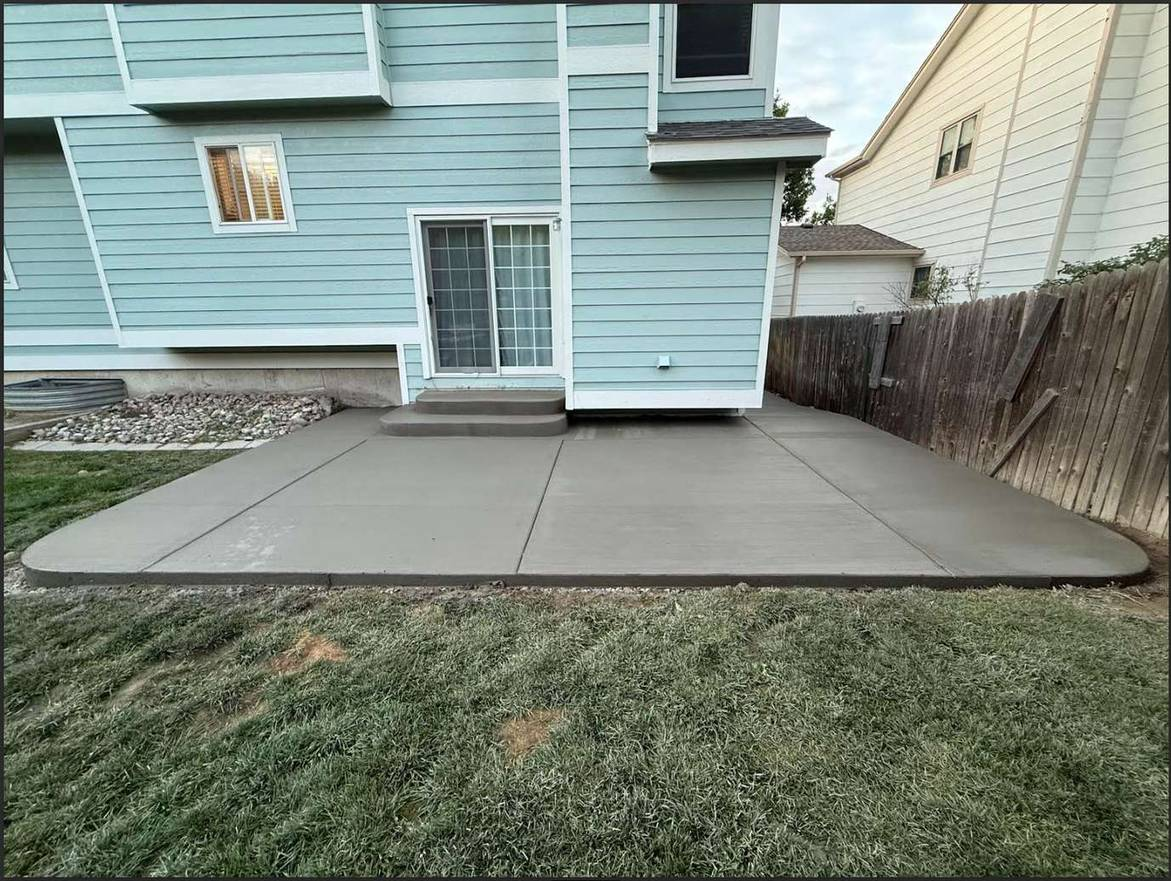 Modern outdoor concrete has caught up with the climate it has to perform in. A patio, driveway, or walkway specified and installed for the actual conditions of its site will outlast and outperform a generic pour by years, while contributing measurably less heat and carbon to its environment. When you are planning an outdoor project that should hold up to Front Range weather for the next 25 or 30 years, work with a licensed Colorado Springs Concrete contractor who specifies mix design, drainage, and finish for the climate, not just for the bid sheet.
FAQs
- What does “climate‑responsive concrete” mean in technical terms?
Climate‑responsive concrete refers to a design approach where mix proportions, air‑content, strength, reinforcement, and drainage details are calibrated to the site’s freeze‑thaw severity, temperature swing, UV exposure, and stormwater regime, rather than treating concrete as a one‑size‑fits‑all paving material. - How do air‑entrained, high‑strength mixes improve durability in cold climates?
Air‑entrained concrete (5–7% air per ACI 201.2R) provides a network of microscopic voids that accommodate expansion during freezing, while 4,000–4,500 psi strengths and low water‑to‑cement ratios produce a denser, less permeable matrix that resists chloride ingress, scaling, and freeze‑thaw damage. - What is the engineering role of pervious concrete in stormwater management?
Pervious concrete functions as a structural surface that allows rainfall to infiltrate through a high‑void matrix into an engineered stone reservoir, effectively reducing surface runoff volume, delaying peak flow, and supporting infiltration and groundwater recharge in line with ACI 522R guidance. - How do cool pavements with high SRI benefit the built environment?
High‑SRI concrete surfaces reflect more solar energy and emit less radiative heat than low‑SRI surfaces like black asphalt, lowering localized air temperatures, reducing building cooling loads, and contributing to LEED‑style heat‑island mitigation where aged SRI ≥28 meets typical credit thresholds. - Are lower‑carbon concrete technologies practical for residential projects today?
Yes. Portland Limestone Cement (Type IL per ASTM C595), supplementary cementitious materials, and carbon mineralization systems such as CarbonCure are now commercially available in many ready‑mix markets, offering meaningful reductions in embodied CO₂ while maintaining design‑strength and finish characteristics suitable for driveways, patios, and walkways.
John Richey
John Richey is the owner of Creststone Concrete, a residential concrete contractor serving Colorado’s Front Range from Colorado Springs to Castle Rock. Learn more at creststoneconcrete.com.