Every Generation Leaves Its Philosophy in Stone
Architecture has always been a reflection of civilisation.
The Gothic cathedrals of medieval Europe expressed faith. The factories of the Industrial Revolution embodied productivity. The glass towers of the late twentieth century symbolised ambition, commerce and globalisation.
The buildings created today will tell future generations what our society valued most.
Increasingly, those values are shifting away from scale and spectacle towards adaptability, sustainability and human experience. The defining question of contemporary architecture is no longer “How much can we build?” but “How intelligently can we design the space we already have?”
This transformation is influencing residential housing, hospitality architecture, urban planning and sustainable development alike. It challenges architects to rethink not only form and function, but the very relationship between people and the environments they inhabit.
The future may belong not to the tallest buildings, but to those that understand human life most profoundly.
Architecture Is Measured by Experience
For decades, success was often associated with larger homes and greater floor area.
Yet the most compelling architectural projects frequently demonstrate the opposite.
A carefully designed thirty-square-metre environment can feel more comfortable, functional and emotionally engaging than a poorly organised space twice its size.
The reason is simple.
Architecture is experienced psychologically before it is measured physically.
Natural light changes perception. Ceiling height influences emotion. Material continuity creates calm. Visual connections to nature expand the mind beyond the building envelope. Proportion often matters more than dimension.
The perception of space is shaped as much by psychology as by geometry. Carefully positioned windows, framed views and uninterrupted sightlines can make compact environments feel expansive, while poor planning can leave much larger interiors feeling constrained.
Great architecture therefore begins with human perception rather than floor area.
Human-Centred Design Is Becoming the New Standard
Buildings exist to improve people’s lives.
As lifestyles evolve, architecture must evolve alongside them.
Remote working, ageing populations, changing family structures and digital entrepreneurship have fundamentally altered how residential environments are used. Homes now function as workplaces, studios, wellness spaces, guest accommodation and creative environments.
This requires a design philosophy that places people at the centre of every decision.
Great architecture should not be judged by the amount of concrete it consumes but by the quality of life it enables.
Human-centred design asks different questions:
- Does the space encourage wellbeing?
- Does it adapt to changing needs?
- Does it create emotional comfort?
- Does it support everyday life naturally?
When these questions guide the design process, architecture becomes far more than shelter.
It becomes infrastructure for human flourishing.
Adaptive Architecture for a Changing World
Historically, buildings were designed for fixed purposes.
A house remained a house. An office remained an office.
Modern society demands greater flexibility.
An intelligently planned environment may operate as a home office during the week, guest accommodation at weekends and short-term hospitality accommodation during holiday periods.
Adaptive architecture recognises that people change faster than buildings.
Rather than forcing occupants to adapt to rigid spaces, architecture itself should evolve alongside changing lifestyles, technologies and economic realities.
This philosophy extends the useful life of buildings while reducing unnecessary redevelopment and material consumption.
The future of architecture lies not only in creating beautiful spaces but in creating spaces capable of continuous reinvention.
Sustainability Begins With the First Sketch
Conversations about sustainable architecture often focus on renewable energy technologies, yet sustainability begins long before solar panels or battery systems are installed.
It begins with design.
Every unnecessary corridor, oversized room or inefficient circulation route increases environmental impact before construction even starts.
Compact planning, intelligent orientation and efficient use of materials reduce embodied carbon while improving long-term operational performance.
Passive design strategies such as solar orientation, cross-ventilation, thermal mass and daylight optimisation demonstrate that sustainability often begins with architecture itself rather than mechanical systems. When buildings work with their environment rather than against it, long-term performance improves while operational energy demand falls.
Factory-built housing and precision-manufactured buildings reinforce these principles by reducing construction waste, improving quality control and enabling greater manufacturing efficiency.
The most sustainable building is often the one whose architecture already works intelligently.
Lifecycle Thinking Changes Everything
Modern architects increasingly evaluate projects across their entire lifespan rather than focusing solely on construction.
Embodied carbon, maintenance requirements, durability, adaptability and future reuse all influence environmental performance.
Circular design principles encourage buildings that evolve rather than become obsolete.
Materials are selected not only for appearance but for longevity and responsible sourcing.
This lifecycle approach represents one of the most significant shifts in contemporary architectural thinking.
Buildings become long-term systems rather than short-term products.
Small Spaces Can Create Extraordinary Places
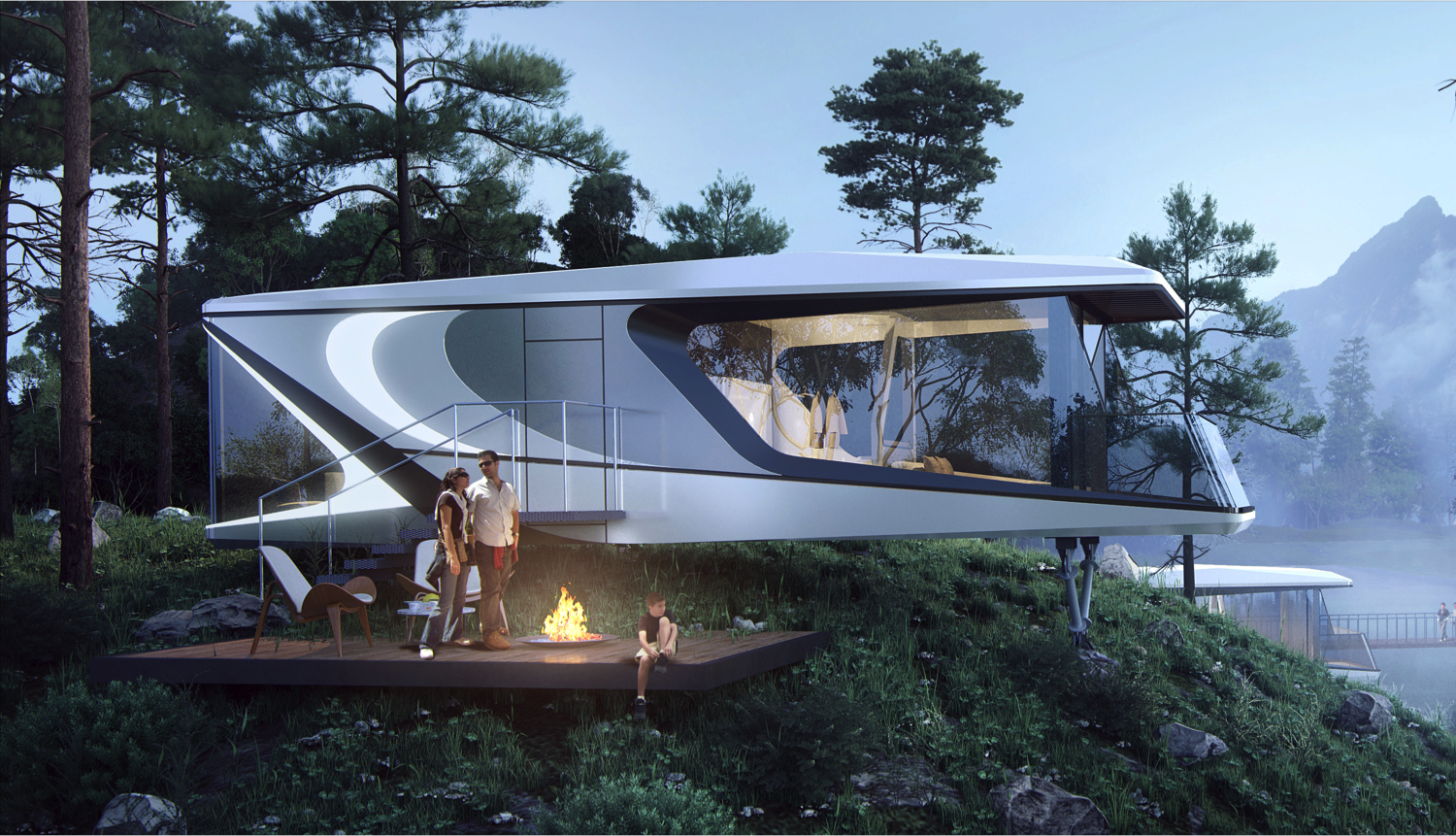 Compact architecture should never be mistaken for compromise.
Some of the world’s most memorable environments occupy remarkably modest footprints while delivering exceptional experiences through intelligent planning.
Imagine a retired couple creating an independent garden annexe surrounded by nature. Imagine an architect designing a woodland retreat where every window frames the landscape like a living artwork. Imagine a hospitality operator transforming underused land into sustainable accommodation powered by renewable energy and thoughtful design.
These are no longer speculative concepts.
They are increasingly realistic examples of how architecture can unlock value through intelligence rather than scale.
Space becomes meaningful not because of how much exists but because of how carefully it has been designed.
Materials Tell Stories
Architecture is also expressed through materiality.
Materials should not simply decorate buildings; they should communicate their purpose.
Timber conveys warmth and connection to nature. Steel expresses precision and innovation. Concrete provides permanence. Glass creates openness and visual continuity.
When materials are selected honestly and thoughtfully, they strengthen both environmental performance and emotional connection.
The best architecture allows materials to speak for themselves.
Technology Should Support Design, Not Replace It
Technology continues transforming the built environment.
Smart lighting, intelligent climate control, battery storage, renewable energy management and predictive maintenance systems all improve efficiency and comfort.
Yet technology should never become architecture’s primary objective.
Its role is to quietly enhance human experience.
The strongest projects integrate digital systems so seamlessly that occupants notice only the quality of the space itself.
Architecture remains the foundation.
Technology simply enables it to perform better.
Hospitality as an Architectural Experience
Hospitality increasingly demonstrates the commercial value of thoughtful design.
Travellers no longer seek accommodation alone.
They seek atmosphere, authenticity and memorable experiences.
Boutique hotels, eco-retreats and design-led hospitality projects succeed because they create emotional relationships between people and place.
Views, daylight, proportion, materials and transitions between interior and landscape often influence satisfaction more than physical size.
Architecture has become part of the product.
This trend is likely to accelerate as experiential travel continues to shape global tourism.
A Global Movement Towards Smarter Construction
Across Europe, Asia and North America, architects are embracing prefabricated construction, adaptive design and precision-manufactured buildings.
Educational facilities, healthcare infrastructure, hospitality projects and residential developments increasingly demonstrate that factory-built architecture can coexist with exceptional design quality.
Cities require greater efficiency.
Communities seek lower environmental impact.
Developers demand certainty.
Occupants expect flexibility.
Architecture is responding by becoming more intelligent rather than simply larger.
Simplicity Requires Discipline
Some of history’s most influential architectural movements share one characteristic.
They remove complexity instead of adding it.
Japanese spatial philosophy, Scandinavian design and modern minimalism all demonstrate that restraint often creates richer experiences than excess.
A carefully proportioned room with abundant daylight can feel more luxurious than an oversized interior filled with unnecessary features.
Architecture succeeds when every element serves a purpose.
Compact contemporary design embraces this discipline by replacing quantity with quality.
Resilience Is the Architecture of the Future
Climate uncertainty, changing energy markets and evolving patterns of work require buildings capable of adapting over decades.
Renewable integration, flexible layouts and efficient resource management all contribute towards long-term resilience.
Adaptive architecture allows buildings to remain relevant despite changing circumstances.
Resilience is therefore no longer solely an engineering challenge.
It has become an architectural responsibility.
Innovation in Practice
Only after understanding these broader principles does it become meaningful to examine companies applying them in practice.
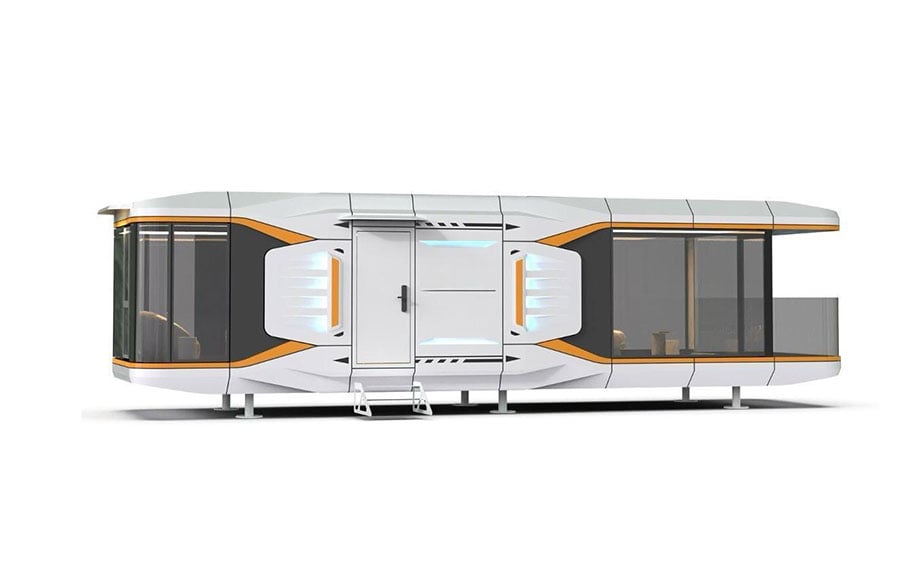
Among them is Capsule Whales, whose work demonstrates how contemporary architecture, adaptable planning and sustainable technologies can be integrated into compact environments without sacrificing quality or experience.
Rather than approaching factory-built housing as a compromise, Capsule Whales treats it as an opportunity to rethink how people inhabit space through intelligent residential design and environmental responsibility.
Its philosophy aligns closely with growing interest in off-grid living solutions, renewable energy integration and adaptable environments capable of supporting changing lifestyles.
For architects, developers and hospitality operators alike, modular capsule homes represent not merely additional accommodation but an opportunity to reconsider how thoughtful design can deliver greater value through smaller, smarter and more efficient footprints.
Architecture Must Ask Better Questions
The profession’s greatest challenge may not be technological.
It may be philosophical.
For too long, success has often been measured through size, height or spectacle.
The future demands different metrics.
Architecture should not ask how much space people occupy. It should ask how intelligently that space supports the lives they want to live.
That single principle has the potential to reshape residential design, hospitality architecture and sustainable development for generations to come.
Looking Towards the Next Chapter
The greatest buildings of the future may never be remembered for their height.
They may instead be remembered because they proved that thoughtful design, sustainability and human experience could coexist within spaces that were smaller, smarter and infinitely more adaptable than those that came before.
The question is no longer whether intelligent architecture has a place in modern development.
The question is how quickly the wider industry will embrace its potential.
As architects continue responding to environmental challenges, demographic change and technological innovation, the future of the built environment is likely to be defined not by expansion but by intelligence.
Ultimately, architecture has never been about constructing more.
It has always been about creating places where people can live better.
And that may prove to be the most important design principle of all.