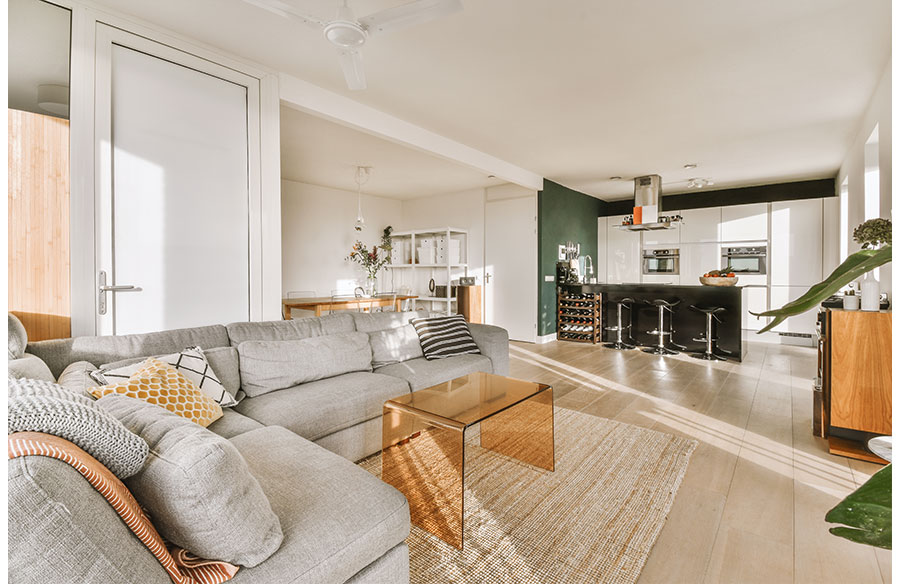
Living in an open floor plan gives you plenty of breathing room and glorious natural light. But without walls to dictate where the living room ends and the dining area begins, decorating can feel overwhelming. Figuring out how to arrange a massive empty box into cozy, functional spaces takes a bit of planning. The goal is to create distinct areas for eating, working, and relaxing while keeping a cohesive look throughout the entire space.
Designing an open concept room is all about giving the eye subtle cues. You do not need physical walls to create boundaries. With the right combination of furniture placement, area rugs, lighting, and clever storage solutions, you can effortlessly guide people through your home. Here is how to map out a beautiful, highly functional open floor plan that works for your everyday life.
The Power of Placement and Traffic Flow
Before buying any new items or moving heavy pieces across the room, grab a piece of paper and sketch out your floor plan. Thinking about traffic flow is the first step in successful open-concept design. You want to map out the main walking paths between the kitchen, the seating area, and any doors or hallways. Keep these paths clear to prevent the room from feeling cramped.
A good rule of thumb is to leave at least three feet of walking space in main thoroughfares. If you have kids or pets, you might want even more room to avoid tripping hazards. Once you know where people will naturally walk, you can start plotting out your separate rooms within the larger footprint.
Instead of pushing all your pieces against the outer walls, bring them into the center of the room to create intimate clusters. Floating your furniture is the best way to make a large room feel intentional. If you have a fireplace or a large window with a nice view, use that as the anchor point for your main seating group. Arrange the pieces so they face this focal point, which naturally turns the layout inward and away from the dining or kitchen zones.
Anchoring with Rugs and Large Seating
Area rugs are your best friends in an open layout. They act like visual islands, telling your eyes exactly where a specific zone begins and ends. Use a large, plush rug to define the main living area, making sure the front legs of your seating sit comfortably on the fabric. A common mistake is using a rug that is too small, which can make the seating area look disjointed. You can then use a different but complementary rug under the dining table. Choose a flatweave or low-pile option for the dining space so chairs slide easily and spills are easier to clean.
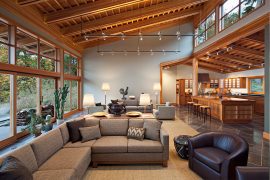
Large furniture pieces also do a lot of the heavy lifting when it comes to separating spaces. When delineating areas in an open floor plan, thoughtfully placed sectional couches can naturally create distinct zones for lounging and conversation. The back of the sofa acts as a soft barrier, signaling a transition from the kitchen or dining space into the living room.
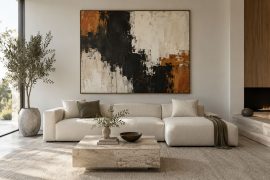
Pair your seating with an oversized coffee table to anchor the center of the room, giving the eye a focal point that grounds the entire arrangement. Adding an accent chair opposite the sofa completes the conversation circle and keeps the zone feeling enclosed, even in the middle of a massive room.
Using Lighting to Create Boundaries
Overhead lighting often comes standard in an open concept build, usually in the form of evenly spaced recessed lights. While great for general brightness, this type of lighting does nothing to separate your zones. To fix this, you need to layer your lighting. Hanging a statement pendant or a chandelier over the dining table instantly marks that spot as a designated eating area. Try to hang the fixture roughly thirty to thirty-six inches above the table surface to create a cozy glow during meals.
In the living room zone, skip the harsh overheads and opt for floor lamps, table lamps, and wall sconces. Puddles of warm light create an inviting atmosphere for the evening. If you have a reading nook in a corner, adding a dedicated task lamp will carve out that specific space without the need for physical barriers.
By controlling where the light falls, you guide the attention to specific parts of the room. You can also install dimmer switches for your main overhead lights so you can lower the brightness when moving from dinner time to movie time, instantly changing the mood of the entire floor plan.
Color Palettes That Connect and Divide
Choosing paint and fabric colors for a room without walls requires a delicate balance. If you paint every wall a different color, the space will feel chaotic. If everything is beige, it risks looking flat. The best approach is to pick a unifying neutral for the main walls, then use accent colors to give each zone its own personality.
The popular sixty, thirty, ten rule works perfectly here. Choose one dominant color for the walls, a secondary color for large furniture, and a bold accent color for accessories. For instance, your living room area might feature shades of navy and mustard in the pillows and curtains. Your adjoining dining area can echo those choices with navy upholstered chairs or a simple mustard table runner.
This strategy creates a visual thread that ties the whole house together, while still allowing each zone to have its own distinct flavor. Wood tones are another excellent way to add warmth and cohesion. Match the finish of your dining table to the legs of your armchairs or your coffee table to maintain a consistent aesthetic across the entire floor.
Strategic Storage and Shelving
Open floor plans often lack the built-in storage that traditional rooms offer because there are simply fewer walls to work with. Freestanding storage furniture becomes vital not just for hiding away clutter, but for acting as architectural dividers. A low bookshelf placed behind a floating sofa provides a spot for books and decorative objects while further separating the living area from a walkway. This creates a functional barrier that does not block sightlines.
Open-backed shelving units are incredibly popular for this exact reason. They offer a physical partition that still lets light pass through, maintaining that airy feel you want in an open concept layout. Fill the shelves with plants, woven baskets, and personal photos to add character.
If you need a makeshift entryway, a console table paired with a tall mirror or a potted plant can instantly carve out a drop zone for keys and mail right near the front door. You can also slide matching woven baskets under the console to keep shoes out of sight, helping the main living area stay tidy.
Taming the Echo: Adding Softness for Better Acoustics
One common complaint about open floor plans is the noise. Without walls to block sound, the clatter of pots and pans in the kitchen can easily drown out the television in the living room. Hardwood floors and tall ceilings look beautiful, but they cause sound to bounce around the house freely. To fix this, you need to introduce as many soft, sound-absorbing materials as possible.
Thick area rugs are a great starting point, but you should also look at your window treatments. Swapping out hard blinds for heavy fabric curtains will drastically reduce echoes. Upholstered dining chairs absorb more sound than solid wood or metal options.
Even tossing a few extra throw blankets and heavily textured pillows onto your seating will help soften the acoustics. Plants are another surprisingly effective way to dampen noise. Large, leafy houseplants placed in empty corners help break up sound waves before they travel across the room, quietly making the entire space more serene.
Bringing It All Together For Daily Life
Making a large, wall-less room work for your lifestyle comes down to trial and error. Do not be afraid to slide pieces around until the layout feels just right. Focus on how you actually use the room on a daily basis. If you love hosting movie nights, prioritize a comfortable seating arrangement that faces the television but still allows for easy conversation.
If you work from home, carve out a quiet corner near a window that feels separate from the weekend lounging spots. Adding a slender desk behind the sofa can even give you a dedicated workspace without eating up valuable square footage.
By using rugs, lighting, color, and clever furniture placement, you can build a home that is both expansive and deeply comfortable. Take your time selecting pieces that serve multiple purposes, and always keep your main traffic paths clear. With a little strategic planning, your open floor plan will easily support every part of your daily routine.
FAQ About Designing an Open-Concept Living Room
How do I arrange furniture in a large open space?
Float your furniture away from the walls and bring pieces into the center of the room to form distinct groups. Focus on creating conversational circles anchored by a large rug and a central focal point like a fireplace or a television.
Should all my flooring match in an open floor plan?
Keeping the same hard flooring throughout the entire space creates a seamless, visually expanding effect. You can then use large, textured area rugs to visually break up the room and define different functional zones.
How do I hide the back of my sofa?
If your sofa floats in the middle of the room, you can place a low console table or a bookshelf directly behind it. This covers the back of the piece while providing extra storage and a surface for table lamps or decorative items.
What is the best way to light an open concept room?
Layer your lighting rather than relying on a single overhead grid. Use pendant lights to highlight dining tables, floor lamps to warm up seating areas, and task lighting for reading nooks to draw attention to specific zones.
Can I mix decorating styles in different zones?
It is best to maintain a cohesive overall style, but you can give each zone its own unique twist through distinct accent colors or textures. Using a shared color palette or matching wood finishes will keep the different areas connected.