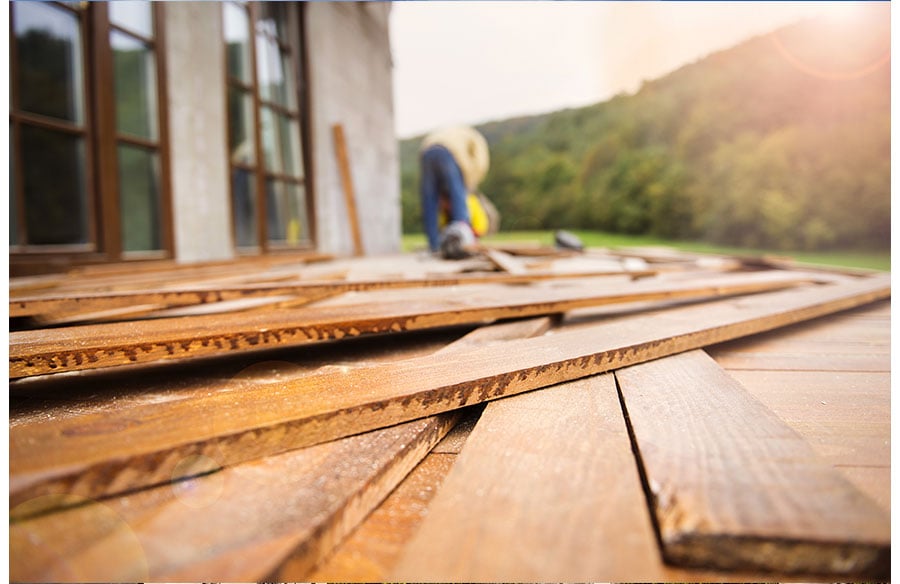
An aging deck presents homeowners with a genuine decision point: restore the existing structure or replace it entirely. Making the right call depends on a realistic assessment of the deck’s structural condition, not just its surface appearance.
Assessing the Structural Frame First
Before considering surface appearance, the deck’s structural frame — support posts, beams, and joists — needs assessment for rot, insect damage, or general deterioration. A deck with a sound structural frame is generally a strong candidate for restoration, regardless of how worn the surface boards look, while significant structural issues typically point toward replacement.
Checking for Rot in Key Connection Points
Areas where the deck attaches to the house, and where posts meet the ground or footings, are particularly important to check for rot or moisture damage, since these connection points bear significant structural load. Rot in these specific areas is a more serious concern than surface-level wear on decking boards.
Evaluating Decking Board Condition
Surface decking boards showing splintering, graying, or minor cracking are often good candidates for restoration through sanding, staining, and board replacement where needed, without requiring a full structural rebuild. Boards with significant rot or structural compromise, however, generally need replacement rather than restoration.
Considering Age and Building Code Changes
Older decks, particularly those built before more recent building code updates, may not meet current safety standards around railing height, spacing, or structural connections. A deck old enough to predate significant code changes is often a stronger candidate for replacement, both for safety and to ensure compliance with current standards.
Comparing Cost of Restoration vs Replacement
Restoration is generally less expensive than full replacement when the structural frame is sound, since the major cost of rebuilding the frame and support system is avoided. However, restoring a deck with underlying structural issues can end up costing more over time through repeated repairs, ultimately making replacement the more economical choice in that scenario.
Getting a Professional Structural Assessment
Given how much the right decision depends on structural condition that isn’t always visible from a casual inspection, getting a professional deck restoration Toronto assessment before deciding tends to result in a more accurate and cost-effective choice than guessing based on surface appearance alone. Companies like The Deck People can typically identify structural issues that aren’t obvious to an untrained eye, providing homeowners with a clearer picture before committing to either path.
A deck’s surface appearance can be deceiving in both directions — a rough-looking deck may have a perfectly sound structure, while a deck that looks fine on the surface may have hidden structural issues that only a thorough assessment would reveal.