Floating shelves have quietly become one of the most versatile design elements in contemporary interiors. Unlike traditional shelving units that sit on the floor and anchor a room with mass, floating shelves create the illusion of space while adding structure, warmth, and personality to any wall. Whether you’re working with a compact apartment or an open-plan living room, the right shelves can transform a blank wall into a focal point worth talking about.
Here are ten modern floating shelf ideas that balance form with function — and work in real homes, not just in showrooms.
1. Solid Wood in a Minimalist Living Room
The most enduring floating shelf material is solid wood. Walnut, oak, and mahogany all develop character over time, shifting with light and age in ways no manufactured material can replicate. In a minimalist living room, a pair of solid wooden floating shelves at staggered heights adds warmth without visual clutter. Keep styling simple: one or two ceramics, a small trailing plant, and a handful of books arranged horizontally rather than vertically.
The key to getting this right is proportion. A 24-inch shelf on a narrow wall feels intentional. The same shelf on a wide expanse of wall looks forgotten. When in doubt, go longer.
2. Corner Shelves for Awkward Spaces
Corners are the most underused real estate in any room. A floating corner shelf — particularly in solid oak or mahogany — turns an architectural dead zone into a display opportunity. These work especially well in hallways and home offices where wall space is limited but vertical space is abundant.
Stack two or three corner shelves at varying heights to create a vertical composition. The triangular shape naturally draws the eye upward, making low-ceilinged rooms feel taller.
3. Floating Kitchen Shelves Instead of Upper Cabinets
Open kitchen shelving has moved from trend to staple in contemporary kitchen design. Replacing one or two upper cabinet runs with wooden floating shelves opens up the kitchen visually and puts your most-used items within easy reach and on display.
The practical consideration here is material. Kitchens need shelves that can handle moisture, grease, and weight. Solid hardwood with a sealed finish outperforms MDF significantly in this environment. Oak and mahogany are both strong choices — dense enough to hold real weight without bowing over time. Style the shelves in zones: one section for glassware, one for ceramics, one for pantry items. Avoid overcrowding — the shelf should look curated, not cluttered.
4. Black Floating Shelves as a Design Statement
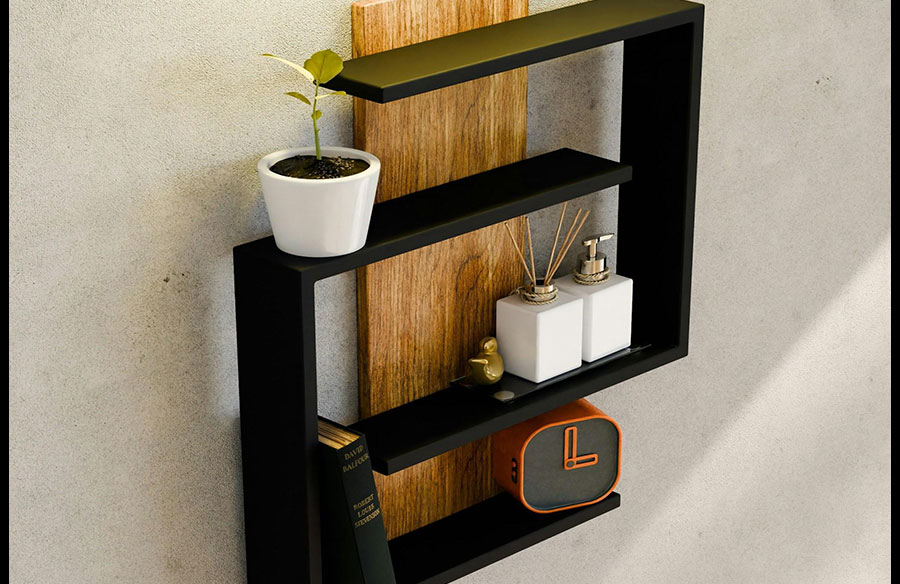
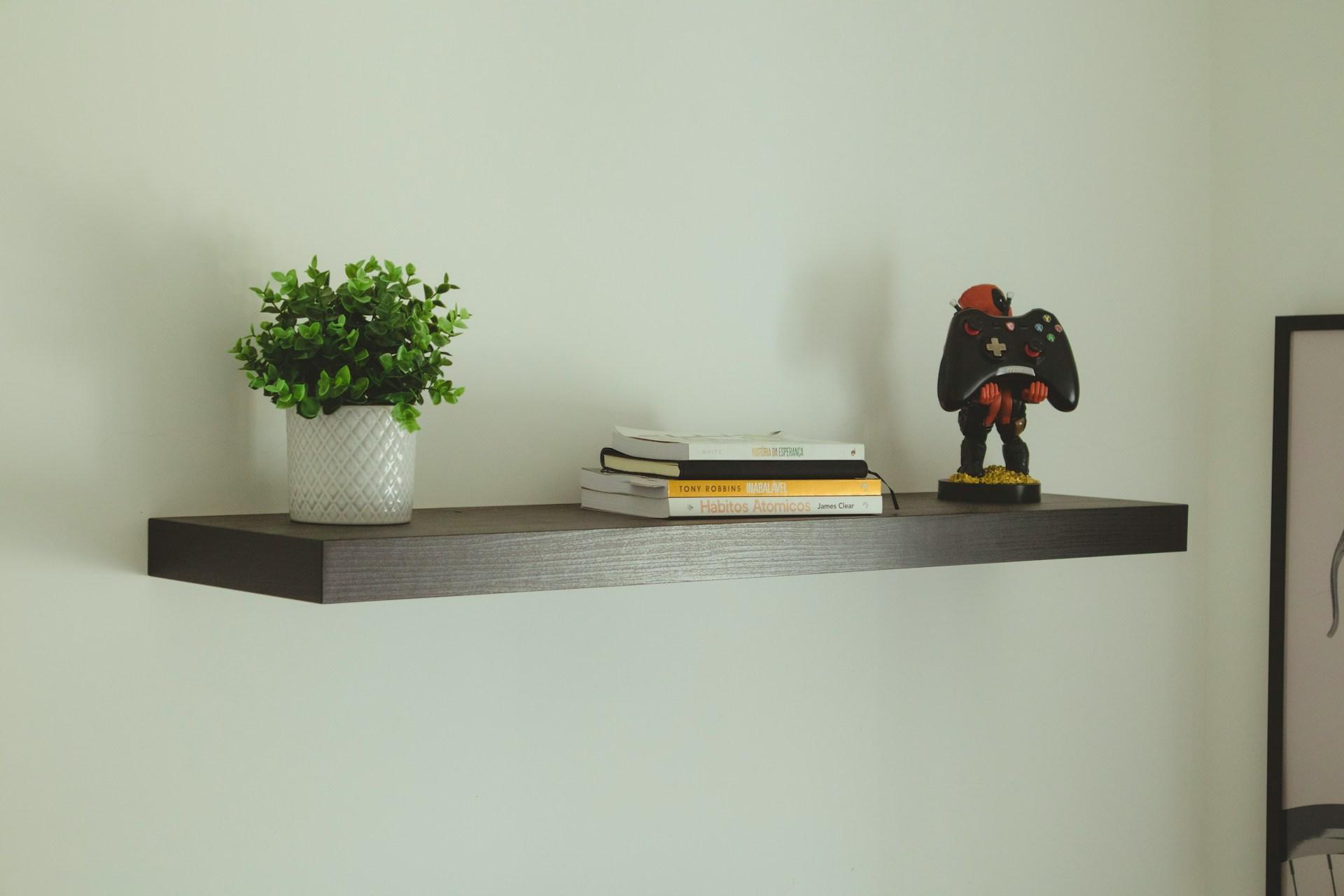 If your interior runs toward warm neutrals and natural materials, black floating shelves create a striking counterpoint. A matte black finish against a white or light grey wall reads as architectural rather than decorative — the shelf becomes a structural element, not just storage. This works particularly well in modern Scandinavian interiors where contrast is used deliberately. Keep displayed items simple: white ceramics, clear glass, natural wood objects. The shelf does the visual work.
5. Staggered Shelves in a Home Office
A single shelf above a desk is functional. A staggered arrangement of three shelves at different heights is a workspace that feels designed. The visual rhythm of offset shelves — one shorter, one longer, one at a different depth — creates interest without requiring expensive furniture. Floating shelves also solve a practical problem in home offices: they keep books, files, and equipment off the desk surface without requiring a separate bookcase that takes up floor space.
6. Bathroom Floating Shelves for a Spa Feel
The bathroom is often overlooked as a shelving opportunity. A pair of narrow floating shelves in natural wood — properly sealed against moisture — instantly elevates the room from functional to considered. Use them for folded towels, candles, small plants, and skincare displayed like objects rather than products. For bathrooms, choose shelves with a tighter wood grain. White oak and maple handle humidity better than more open-grained woods.
7. A Vinyl Record Display Shelf
For music lovers, a dedicated floating shelf designed to display vinyl records face-forward is both practical and genuinely decorative. A purpose-built oak record shelf turns a collection into a rotating gallery wall. Position it at eye level in a living room or bedroom. Rotate the front-facing record seasonally or whenever the mood changes. This is one of the few shelf styles that actively rewards regular interaction.
8. Pairing Floating Shelves with Lighting
One of the most overlooked aspects of floating shelf styling is how they interact with a room’s lighting. A shelf positioned near a floor lamp or pendant creates layered light — the shelf casts a subtle shadow that adds depth to the wall. When planning a shelf arrangement alongside lighting, it helps to consult a table lamp height guide to understand how lighting and shelf heights should relate to each other for balanced visual proportions.
A battery-powered LED strip underneath a shelf changes the entire mood of the wall after dark. Objects that look ordinary in daylight become focal points under directed light — particularly effective in living rooms where ambient lighting sets the tone for the whole room.
9. Floating Shelves as a Room Divider
In open-plan spaces where full walls are not an option, a back-to-back floating shelf arrangement mounted on a freestanding frame can define two zones without blocking light or sightlines. One side faces the living area, the other the dining zone — both sides functional, neither feeling like a barrier. This works best with longer shelves in a consistent material — solid wood throughout rather than mixing finishes.
10. The Complete Wall Display
The most ambitious floating shelf arrangement is a full wall composition: multiple shelves at varying heights, depths, and lengths, treating the entire wall as a single canvas. This requires planning — sketch the arrangement on paper before drilling a single hole — but the result is one of the most distinctive design features a room can have.
The rules: vary shelf heights by at least six inches between each level, mix lengths deliberately, and leave intentional negative space. A wall display that tries to use every inch looks anxious. One that leaves breathing room looks considered. Give the arrangement time to evolve — the best shelf displays are never finished on the first day.
About the Author
This article was contributed by Modern Home & Kitchen, a contemporary home decor store curating modern furniture, lighting, and living accessories for US homeowners. Visit modernhomekitchen.shop to explore the full collection.