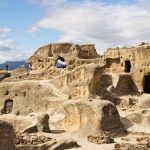
Archaeology is a way to unravel the mysteries of the past. It is a study to understand human history and its significance by unearthing materials and recovering them. In simpler words, it is the study of the material remains of past human life & activities. People who are entirely into this methodical process of excavating and studying ancient ruins, artifacts, etc. are archaeologists. Still, it is to be noted that doing a course in archaeology doesn’t entitle one to be known as an archaeologist. It is a profession out of many, which one can choose after studying archaeology.
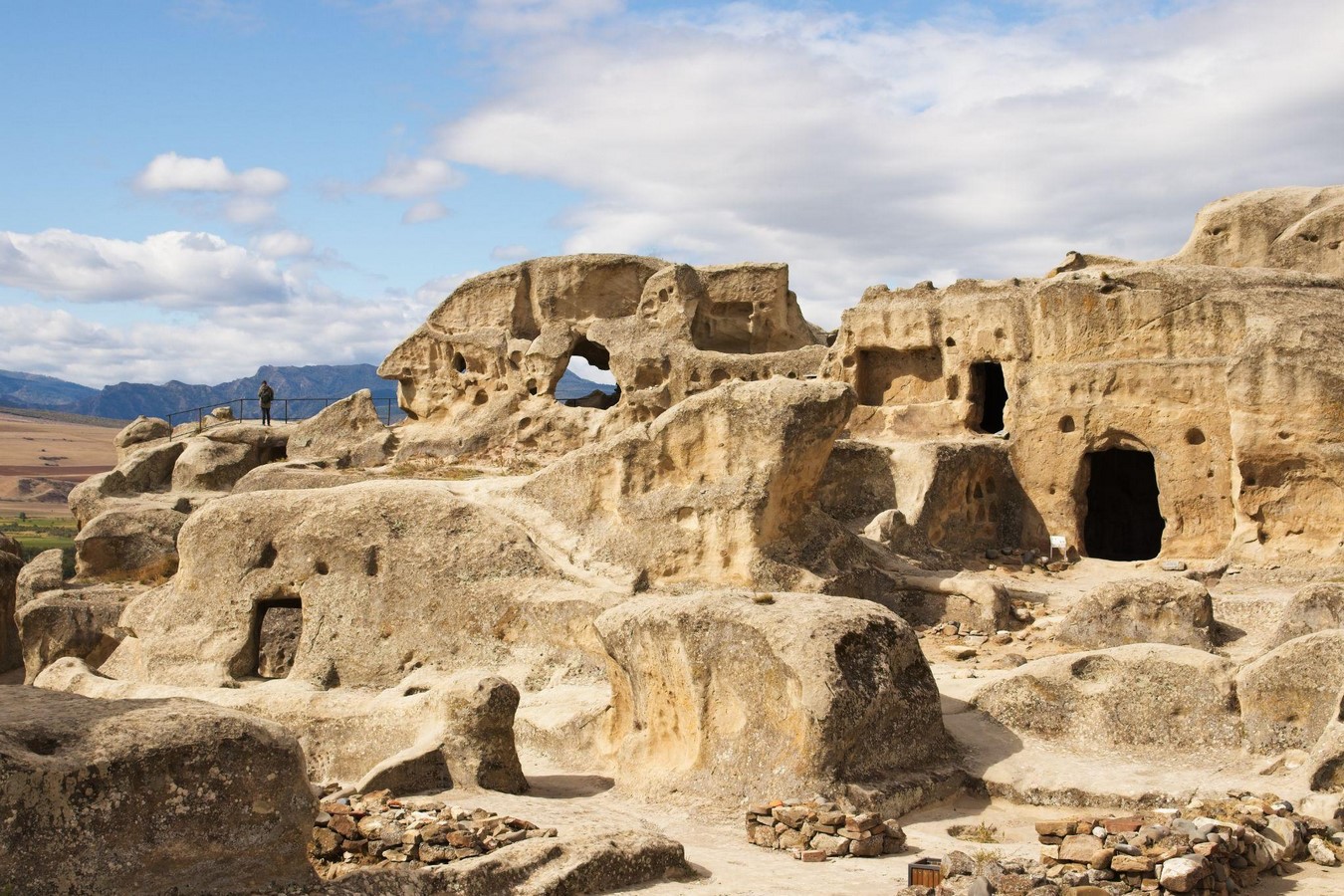
Evolution of Archaeology
Humans have come a long way from inhabiting caves to living in multi-story buildings that touch the clouds, an unimaginable feat in the ancient world. This progress has been made possible by the way history has shaped society. How this evolution took place was a mystery to many. People were curious to understand the root of it all, how past events shaped the modern world, and what more could be learned from them.
Over time, technological advancements made it easier to discover and decipher something new. The world is vast and the possibilities of unearthing something unique, unbeknownst to society limitless. Gradually, Archaeology spread its branches and the discipline was subdivided into numerous varied fields. To put it briefly, there is the study of human remains (bioarchaeology), a specific culture or settlement (e.g. Indology, Egyptology), geography or chronological focus (e.g. Islamic Archaeology, Medieval Archaeology), and many more.
Opportunities in Archaeology
As previously mentioned the world is vast, and not enough people to cover the whole range of human history. Furthermore, the distribution of Archaeology in sub-divisions has made the research and study far wider. Today doing a course in Archaeology doesn’t necessarily mean going out in the field and excavating on sites, some people may go into teaching and do the site work during their summer breaks while others see themselves working as Archivist, Professors, Museum Curator, Heritage manager and many more.
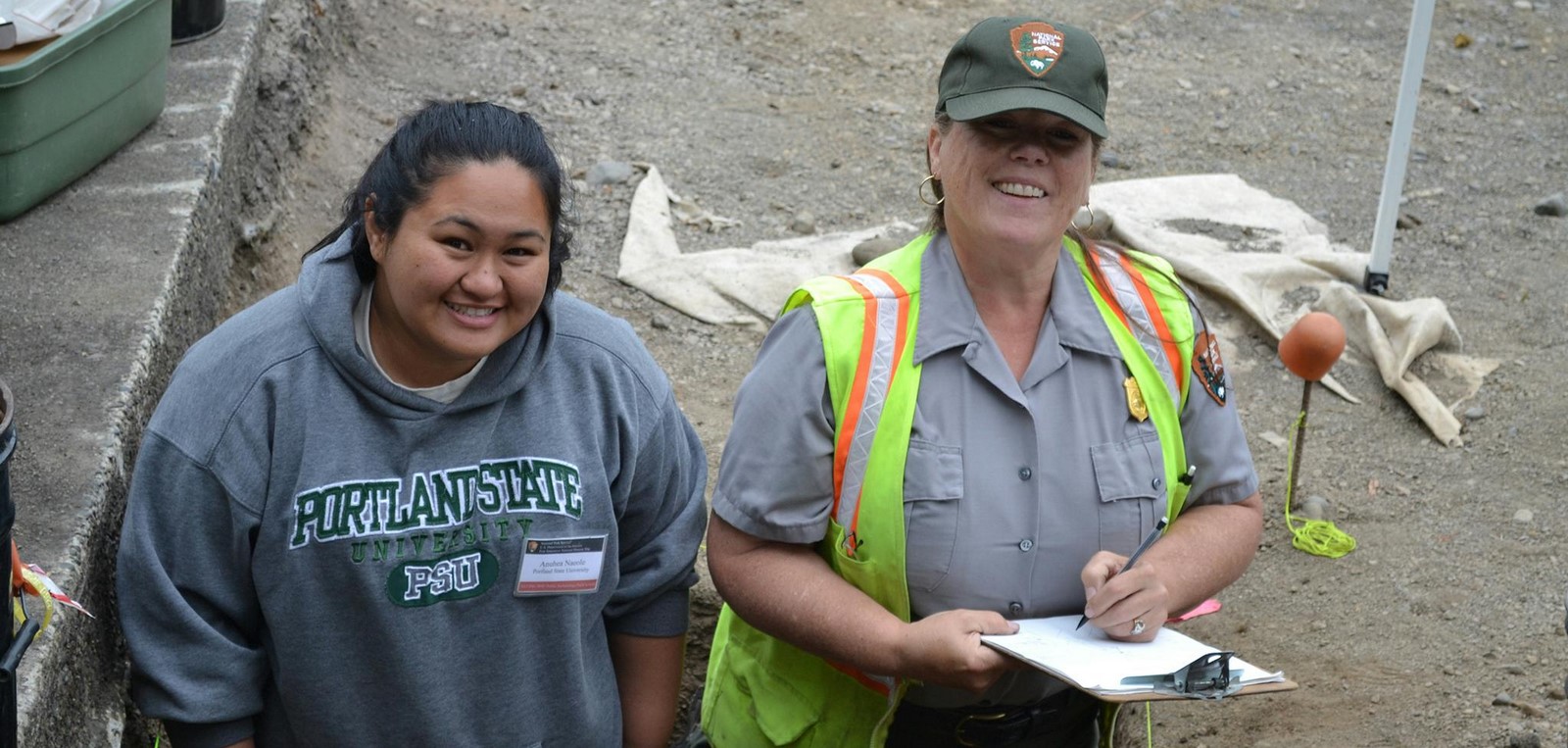
The career prospects differ in Archaeology everywhere, according to the U.S. Bureau of Labor Statistics, “ Employment of anthropologists and archeologists is projected to grow 8 percent from 2023 to 2033, faster than the average for all occupations. About 800 openings for anthropologists and archeologists are projected each year, on average, over the decade.” 4
People can see themselves working in either the Private sector or the Government. Some renowned Agencies in the sector are as follows:
- Archaeological Survey of India (ASI): Responsible for the research, preservation, and conservation of the historical monuments in India
- Cultural Resource Management(CRM): Archaeology is a subsidiary of CRM, also known as Cultural Heritage Management (CHM) in the United Kingdom. The main role while working here is to assess archaeological sites that are threatened by development.
- Indian Council of Historical Research(ICHR): It works as a regulatory body that provides financial assistance to historians and scholars while identifying areas in need of more research
- United Nations Educational, Scientific and Cultural Organization (UNESCO): It is a globally known body, which plays a crucial role in protecting and preserving cultural heritage throughout the world.
- National Heritage Agencies: Almost every country has its own National Heritage Agencies with the aim to discover more sites of cultural significance while preserving and protecting the already known ones.
| Jobs | Description | Average Salary |
|---|---|---|
| Archeologist | Primarily involved in fieldwork, like site excavations, investigating and analyzing artifacts, and helping in shedding some light onto the past events | INR ₹3 Lakhs –
₹8 Lakhs/ Year |
| Researcher | Conducting High-level Investigations on past human settlements, physical remains, and more. Then interpreting their context and providing a detailed report on the same | INR ₹7 Lakhs –
₹8 Lakhs / Year |
| Archaeology Professor | Much like the other professors, the responsibilities include drafting courses, grading paper, delivering lectures and mentorship to students. | INR ₹7 Lakhs –
₹15 Lakhs/ year |
| Heritage Manager | Manage and conserve the historical sites of great importance and cultural significance. It could be a building, monument, museum or even a garden. | INR ₹3 Lakhs –
₹7 Lakhs/ Year |
| Archivist | An archivist is required to collect, organize, and preserve historical documents and other materials. | INR ₹3 Lakhs –
₹6 Lakhs/ Year |
| Museum Curator | Educating the society by engaging them in immersive and interactive exhibitions showcasing the archaeological findings by carefully planning and managing the museum displays. | INR ₹2 Lakhs –
₹10 Lakhs/ Year |
| Forensic Analyst | Assessing crime scenes, and evaluating the remains and evidence is quite an alternative path one can take if having a background in archaeology. | INR ₹2 Lakhs- ₹13.7 Lakhs/year |
Note: The salaries have been taken from AmbitionBox, Glassdoor & Indeed and may vary.
Essential Qualification & Skills
The foundation of how a career in Archaeology looks has already been established along with the varied pathways one can take. To reach that path a certain skill set and necessary qualifications are required.
While a bachelor’s is a must, certain other factors influence the level of qualifications, skillsets, and in some cases experience required for different positions or sub-fields.
One doesn’t need to have done their bachelor’s in Archaeology or even anthropology, it is a plus but not a requirement. Related Fields like history, classics, science, architecture, or a closely related field can also provide the person interested in building an Archaeology Career a strong foundation. Parallel to a bachelor’s and before going deeper into the field of study there are other crucial skills essential, strong research skills, writing ability, analytical and problem-solving, in some cases proficiency in a relevant foreign language is an advantage.
After this base work, one can move on to a Masters degree in archaeology and anthropology with specialization in their field of interest. If one is not clear about the specialization, gaining some work experience in a relevant field (archaeology) can shed some light and help decide where their interest lies and go ahead with the Masters Degree. The programs in Master’s typically span two years wherein one can specialize in their area of interest.
It is to be noted that a bachelor’s degree can provide a foundation for entry-level positions, such as a field or laboratory assistant, but having a master’s degree opens up more doors and is becoming a standard requirement in most job openings. Additionally, a Doctor of Philosophy (Ph.D.) is sometimes required for certain positions, especially those in academia, research institutes, and specific government organizations. Therefore, it is highly recommended to pursue at least a Master’s Degree, since it enhances the career prospects and opens one to a wide range of opportunities.
Top Countries to Pursue
Archaeology can be pursued in countries with a rich heritage, strong cultural significance, and historical background. Top countries offering strong academic programs with great job opportunities include the United States, The United Kingdom, and Italy.
| Criteria | United States | United Kingdom | Italy |
|---|---|---|---|
| Archaeological Significance | Diverse sites, strong North American focus | Rich history, iconic sites like Stonehenge | Most UNESCO sites, vast Roman heritage |
| Universities | Harvard, Berkeley, Stanford, California University | Cambridge, Oxford, UCL | Sapienza University of Rome |
| Job Market Characteristics | Strong CRM sector, government, museums, academia, positive growth | Strong commercial sector, heritage, museums, academia, competitive | Museums, conservation, cultural tourism, academia |
| Typical Education Cost | Limited Scholarships are available with a huge competition and there is a big gap between private and public universities education cost | ||
| For National Student | $2000 – $10,000 USD/ year
(17 Lakhs – 86 lakhs INR/ year) |
Maximum £9,250 GBP/ year (10.25 Lakhs INR/ year) | €2000 – €8000 EUR/ year (1.8 Lakhs – 7.4 Lakhs INR/ year) |
| $8000-$50,000 USD/year (69 Lakhs- 4 Cr INR/ year) | £15,000 – £30,000 GBP/ year (16 Lakhs – 33 Lakhs INR/ year) | No additional tuition or fees are charged | |
| For International Student | |||
| Typical Salary Range | $60,000 – $87,000 USD (0.5 Cr – 0.75 Cr INR) | £23,000 – £76,000 GBP (0.26Cr – 0.83 Cr INR) | €45,000 – €48,000 EUR (0.42Cr – 0.53Cr INR) |
Note: The data has been collected from different sources and may vary. It is also excluding the living expenses.
An important factor to keep in mind while choosing a country or college is that the job opportunities present in that country align with their specific interests. The most abundantly available job opportunities are present in the US, due to its CRM Sector, while the UK proposes a blend of commercial and heritage and Italy is the most suitable for candidates interested in careers within museums, conservation, and cultural heritage. Lastly, one should not limit themselves to a specific country but rather be open to exploring job opportunities and prospects in other countries and stay up to date with the required knowledge for the same.
Upskill: Online Certification
It might not be possible for several individuals interested in pursuing a career in Archaeology to study abroad at a top university, there could be a lot of constraints out of which finances are a major cause of concern. In scenarios like these online courses, where one can upskill oneself with certain fees comparatively lower than the degree would cost them, Coursera, EdX, and Future Learn are the major platforms for one looking to upskill where one can enroll to understand more about the field and any specialization they might want to pursue.
- Introduction To Archaeology (Specialization) by Rice University available at Coursera 15 : This course is a specialized certification course offered by Rice University available on Coursera. It is for aspirants seeking to learn about the field of Archeology. This course is inclusive of an Applied Learning Project, divided into four courses where one will learn scientific methods, concepts, and models for interpretation. Learners will be creating a project that will offer a comprehensive coverage of an archeological site, including its cultural history. Furthermore, one will understand the breadth of the disciple and where the specific interests of an individual lie.
- Archaeology In Practice by University of Oxford 17 : Offered by the University of Oxford for £385.00 to students with little or no prior knowledge of the field. This course enables the students to understand the basics of how archeologists collect, analyze, and interpret data. Critically analyze and discuss the relationship between archeology and the public.
Furthermore, University of Oxford provides many more online learning opportunity with degree in Archaeology, like an Advanced Diploma in British Archeology,part-time online MSc in Applied Landscape Archaeology and a Part-time in DPhil in Archaeology, representing post-graduate level study options for those seeking more advanced and specialized study.
3. Advanced Archaeological Remote Sensing available at FutureLearn 18 : This is a six-week advanced course from Durham University, where applications of remote sensing are put to use for the protection of cultural heritage. Things that will be covered in the course are the theory behind how satellite imagery is produced, how to find, download, and begin working with satellite imagery, and carry out multispectral analysis. It is to be noted that this is a useful course for researchers and professionals interested in remote sensing and working in countries like the Middle East and North Africa (MENA) region.
It is highly recommended that individuals directly explore the websites of their choice of universities since many universities now offer a variety of online programs, ranging from individual courses to specialized certificate programs and some master’s degrees. Certifications are important and proof of expertise and commitment by the professional in the field.
References List:
- Society for American Archaeology (2019). What is Archaeology? [online] Society for American Archaeology. Available at: https://www.saa.org/about-archaeology/what-is-archaeology. [Accessed: 30 March 2025].
- Wikipedia Contributors (2019). Archaeology. [online] Wikipedia. Available at: https://en.wikipedia.org/wiki/Archaeology [Accessed: 30 March 2025].
- Archaeology (2025) Encyclopædia Britannica. Available at: https://www.britannica.com/science/archaeology [Accessed: 30 March 2025].
- Google.co.in. (2019). Google Books. [online] Available at: https://www.google.co.in/books/edition/The_Archaeology_Book/mAXMchGHarYC?hl=en&gbpv=1&dq=Archaeology&printsec=frontcover [Accessed 30 Mar. 2025].
- Archaeology as a career (no date) Society for American Archaeology. Available at: https://www.saa.org/about-archaeology/archaeology-as-a-career [Accessed: 30 March 2025].
- Bureau of Labor Statistics (2019). Anthropologists and Archeologists : Occupational Outlook Handbook: : U.S. Bureau of Labor Statistics. [online] Bls.gov. Available at: https://www.bls.gov/ooh/Life-Physical-and-Social-Science/Anthropologists-and-archeologists.html. [Accessed: 30 March 2025].
- Bureau of Labor Statistics (2019). Anthropologists and Archeologists : Occupational Outlook Handbook: : U.S. Bureau of Labor Statistics. [online] Bls.gov. Available at: https://www.bls.gov/ooh/Life-Physical-and-Social-Science/Anthropologists-and-archeologists.htm. [Accessed: 30 March 2025].
- https://www.facebook.com/thoughtcodotcom (2017). The Many Subfields of Archaeology. [online] ThoughtCo. Available at: https://www.thoughtco.com/archaeology-subfields-169854. [Accessed: 30 March 2025].
- Anthropologists and archeologists (2024a) U.S. Bureau of Labor Statistics. Available at: https://www.bls.gov/ooh/life-physical-and-social-science/anthropologists-and-archeologists.htm [Accessed: 30 March 2025].
- ZipRecruiter. (2025). Archaeologist. [online] Available at: https://www.ziprecruiter.com/Salaries/Archaeologist-Salary. [Accessed: 30 March 2025].
- ERI Economic Research Institute (2025). Archaeologist. [online] Erieri.com. Available at: https://www.erieri.com/salary/job/archaeologist/united-kingdom/london [Accessed 30 Mar. 2025].
- GOV.UK. (n.d.). Tuition fee limits in the Lifelong Learning Entitlement. [online] Available at: https://www.gov.uk/government/publications/lifelong-learning-entitlement-tuition-fee-limits/tuition-fee-limits-in-the-lifelong-learning-entitlement. [Accessed: 30 March 2025].
- National Center for Education Statistics (2024). Tuition Costs of Colleges and Universities. [online] NCES.ed.gov. Available at: https://nces.ed.gov/fastfacts/display.asp?id=76. [Accessed: 30 March 2025].
- Hanson, M. (2021). Cost of College by Country [2021]: Average Tuition Fees. [online] Education Data Initiative. Available at: https://educationdata.org/average-cost-of-college-by-country. [Accessed: 30 March 2025].
- Coursera. (2018). Introduction to Archaeology. [online] Available at: https://www.coursera.org/specializations/introduction-to-archaeology#testimonials [Accessed 30 Mar. 2025].
- Oxford, U. of (2020). Online courses in archaeology. [online] Oxford University Department for Continuing Education. Available at: https://www.conted.ox.ac.uk/about/online-courses-in-archaeology [Accessed 30 Mar. 2025].
- Oxford, U. of (2020). Archaeology in Practice (Online). [online] Oxford University Department for Continuing Education. Available at: https://www.conted.ox.ac.uk/courses/archaeology-in-practice-online?code=O24P362AHV [Accessed 30 Mar. 2025].
- FutureLearn (2024). Advanced Archaeological Remote Sensing: Site Prospection, Landscape Archaeology and Heritage Protection in the Middle East and North Africa. [online] FutureLearn. Available at: https://www.futurelearn.com/courses/advanced-archaeological-remote-sensing [Accessed 30 Mar. 2025].