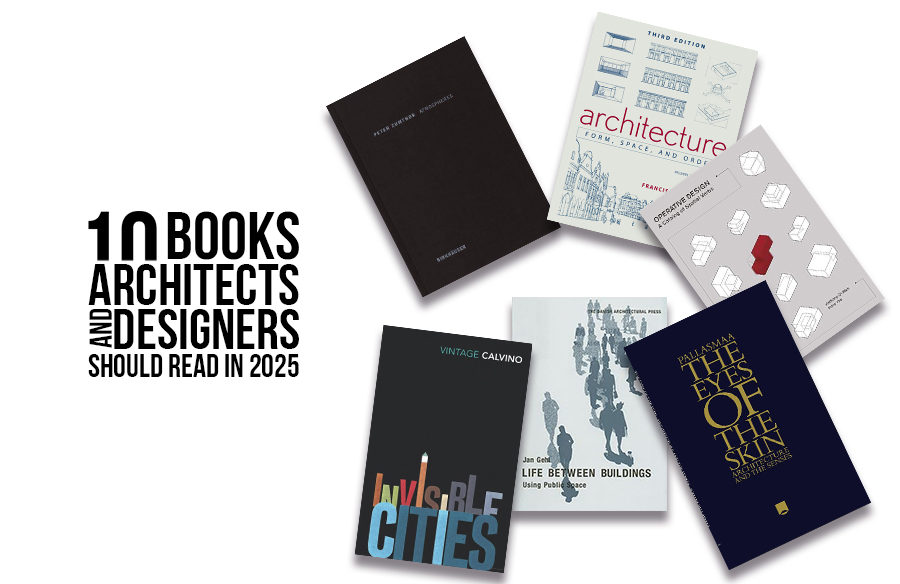
In this ever-evolving world of architecture and design, staying informed and inspired is very crucial. Books have always served as a person’s timeless companion, offering ideas and perspective shifts on how to view the world. Be it space, culture, or built environment, the right book can always spark innovative ideas and challenge our conventional ways of thinking.
This curated list of 10 must-read books for architects and designers in 2025 explores the diverse lens of design, starting right from the fundamentals to the exploration of public life.
10 Books Architects and Designers Should Read in 2025
-
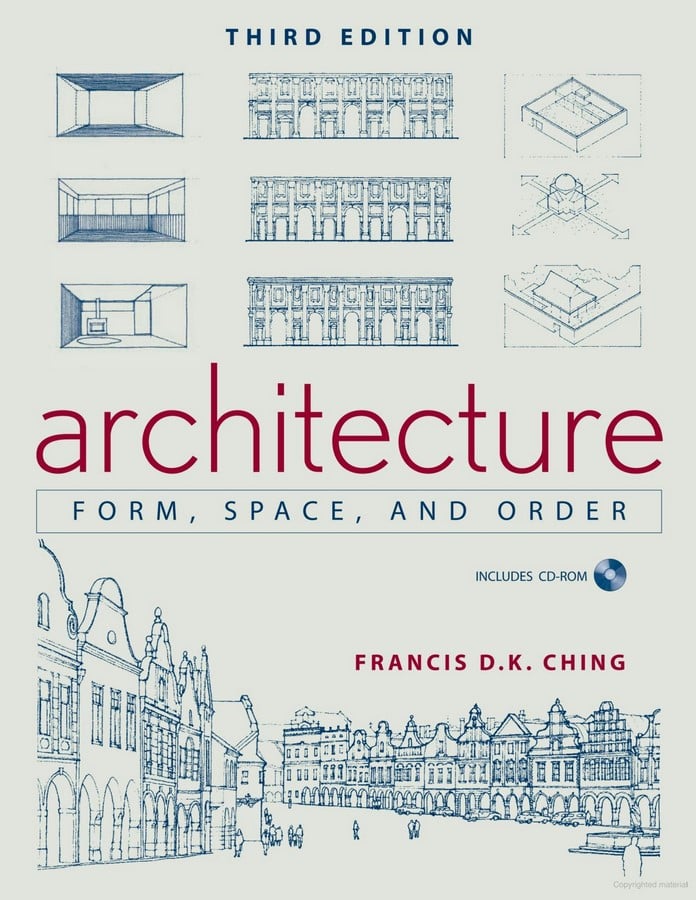
Architecture: Form, Space and Order// Francis D.K. Ching
What it’s about: This book is widely used in architectural education and serves as a core foundational resource for students and architects and designers who wish to develop a strong understanding of space and design. This book explores elements like scale, proportions, form, circulation, and spatial relationships in clear diagrams and illustrative methods to make it easier for the reader to understand. It is a fundamental guide to the principles of architecture.
How it benefits the readers: Helps in mastering spatial composition, proportion, and form.
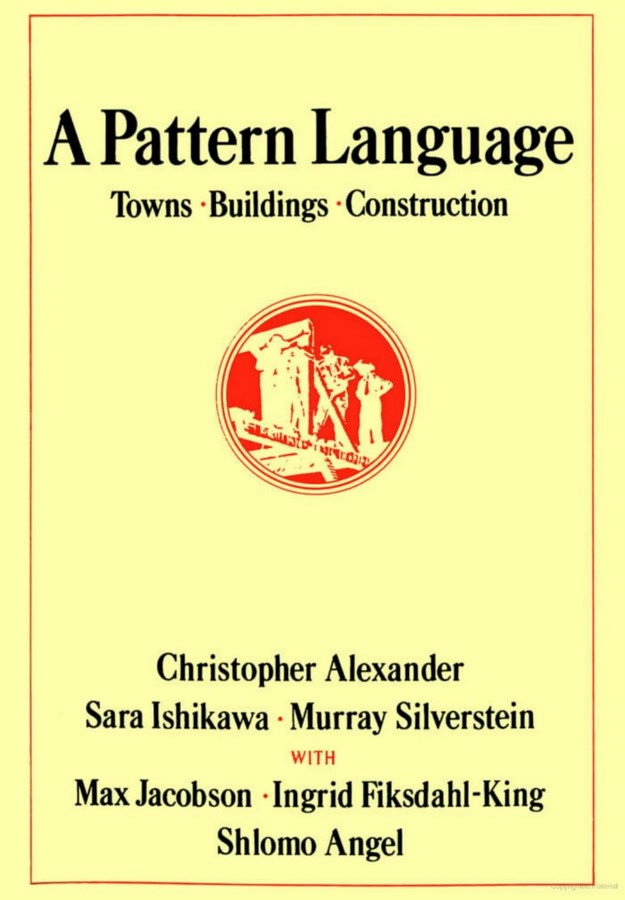
2. A Pattern Language// Christopher Alexander
What it’s about: This book is a collection of design solutions for creating a functional, livable, human-centric space at different scales, from cities to individual rooms. This book creates a language that is derived from a system of patterns. These patterns form together a language, and here the patterns describe problems, followed by a solution. The authors aim to give people, whether professionals or not, a way to work with their problems and design spaces from neighborhoods to offices.
How it benefits the readers: Offers timeless design strategies that can help architects and designers design environments that feel intuitive and welcoming.
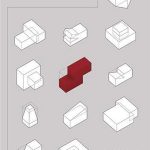
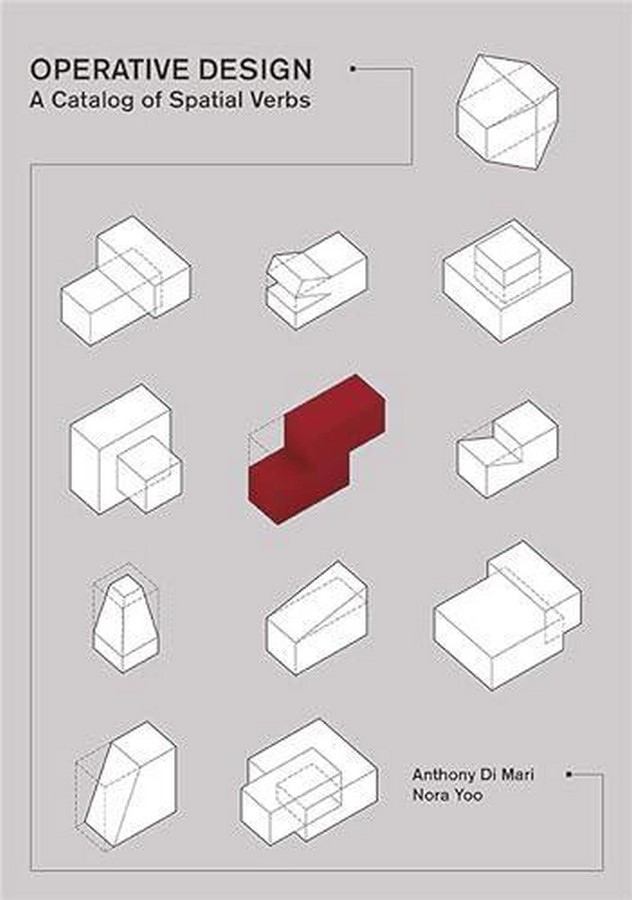
3. Operative Design: A Catalogue of Spatial Verbs// Anthony Di Mari
What it’s about: This book helps architects and designers interpret spatial and architectural space by using some operative verbs as tools. Every term here is supported by an illustration that provides a diverse set of entry points in this language of spatial design. This book uses a very systematic approach in arranging the verbs so that it’s easier for the readers to understand and distinguish between them. It explores a set of fundamental actions like addition, subtraction, or displacement which define the vocabulary of creation of space and also can be used to define the relationship between space and oneself.
How it benefits the readers: A book for those who want to experiment with form and develop strong concepts.
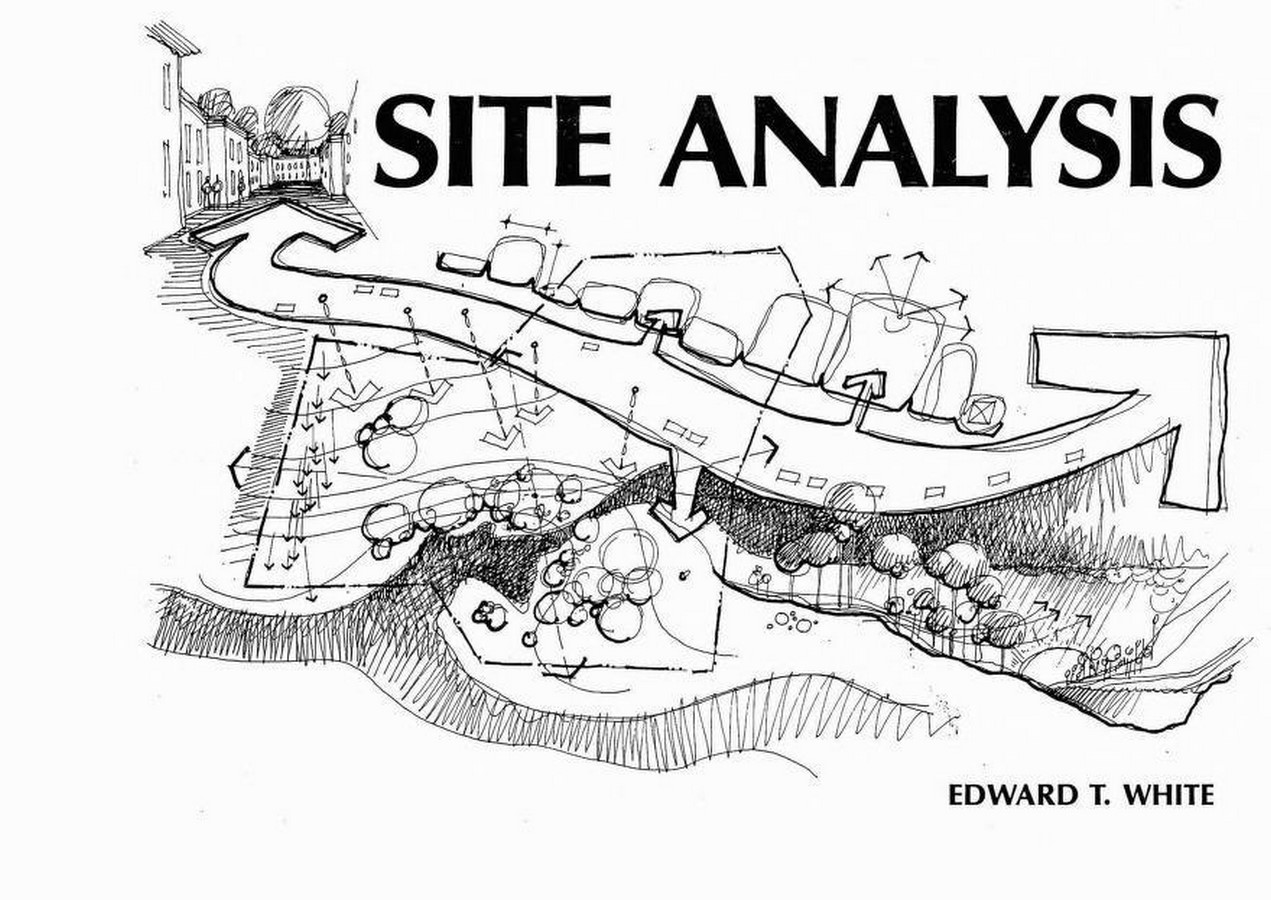
4. Site analysis: Diagramming Information for Architectural Design// Edward.T.White
What it’s about: The book covers the essentials of site analysis and can be used as a guide to develop strong knowledge about the site and its context. It highlights the importance of site analysis at the beginning of design, as a pre-design study, helping architects and designers make informed design decisions on factors like physical environment, culture, and regulations. It also explores different methods of documenting data through diagrams so that readers can visualize it with ease.
How it benefits the readers: Ensures the designs are well integrated with the context.
5. Atmospheres// Peter Zumthor
What it’s about: Essential for designers who want to master spatial and emotional impact on users. In this book, Zumthor, through his personal experiences, highlights how materials, light, and space can evoke specific emotions. Readers can learn how to create spaces that will evoke the desired emotions. Zumthor introduces concepts like the “mood” of the building, and how designers can consider details of textures, and transitioning spaces that would make spaces feel warm and intimate.
How it benefits the readers: Teaches architects and designers how to create spaces that evoke feelings, and deeply connect with the users.
6. The Eyes of Skin- Juhani Pallasmaa
What it’s about: Helps architects and designers create spaces that feels more human and immersive. He argues with the idea of dominance of vision in architecture and promotes a multisensory approach to design. According to the author, visual experience is given a lot of importance in modern day architecture and studies how traditional architecture creates a richer experience which appeals to all senses.
How it benefits the readers: Encourages readers to create spaces that are not only visually appealing but also can be felt, heard and touched.
7. Invisible Cities// Italo Calvino
What it’s about: The author encourages the readers to think about cities as dynamic entities that are influenced by the experiences of the people who reside there rather than just as a collection of buildings. It focuses on the architectural theory of how built environments affect social interaction and human behavior.
How it benefits the readers: It helps architects and designers think about the symbolism, memory, and storytelling of spaces. It inspires strong conceptual thinking.
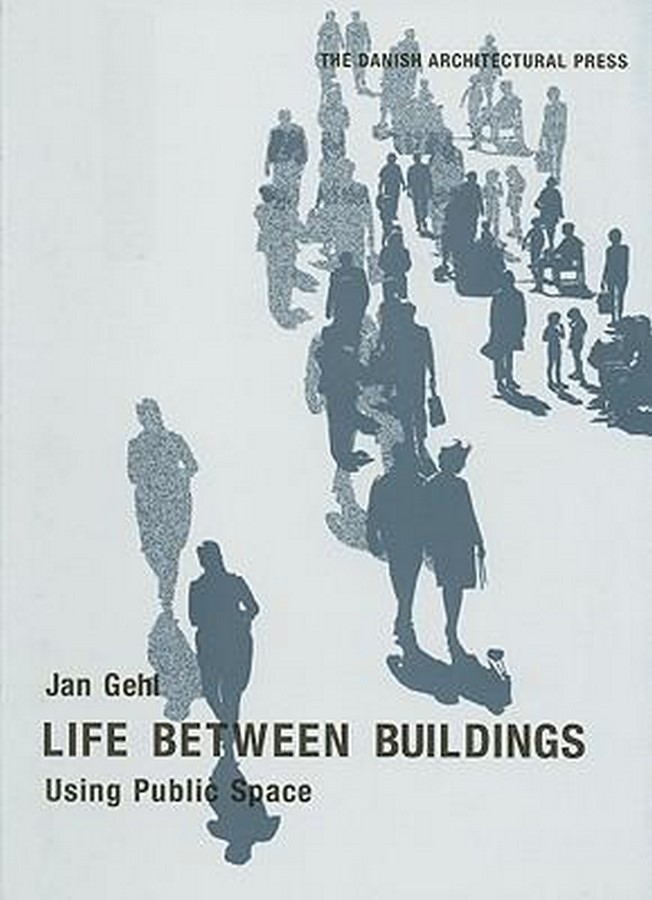
8. Life Between Buildings// Jan Gehl
What it’s about Crucial for architects and designers who are meaning to create engaging, people-friendly spaces. This book emphasizes how thoughtful architecture can help in creating vibrant urban spaces that encourage human interactions. The author categorizes human activities into three: social, optional, and necessary. He argues that spaces that are thoughtfully planned promote more participation in social activities and optional activities.
How it benefits the readers: Guide to create lively, user-centric cities encouraging community engagement.
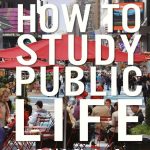
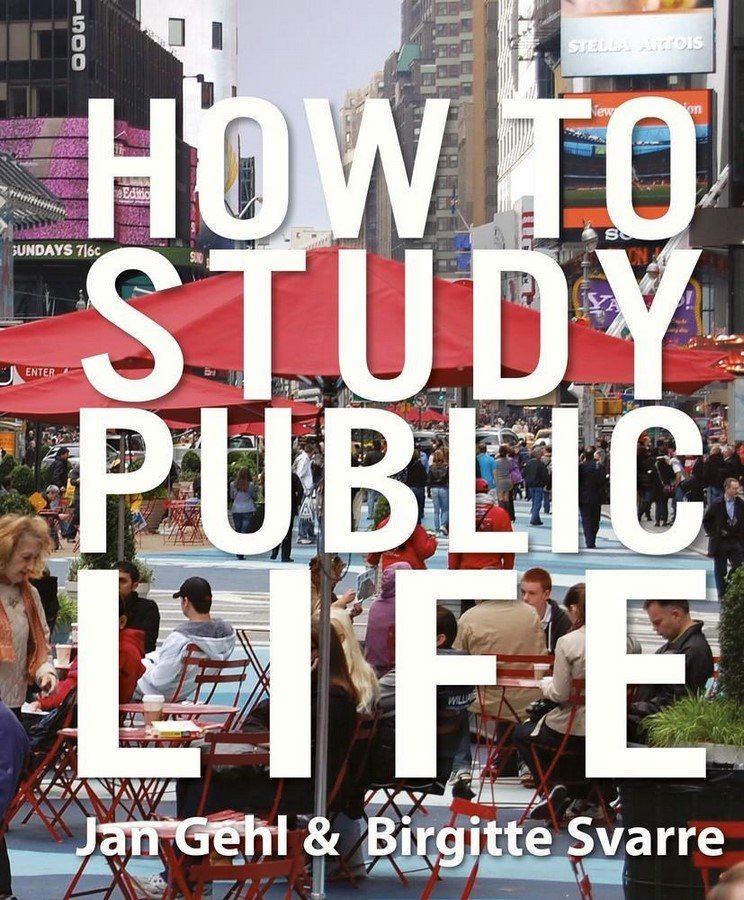
9. How to Study Public Life// Jan Gehl & Birgitte Svarre
What it’s about: A manual for examining and understanding how users behave in urban spaces. It examines different techniques that can be used to study how users interact with their surroundings and highlights the importance of city planning. It also presents various methods to document interactions, mobility, and public space usage through case studies.
How it benefits the readers: Helps architects and designers in designing more inclusive urban environments.
10. Space for Engagement// Himanshu Burte
What it’s about: This book particularly focuses on Indian institutions as a special kind of public space, however, the principles in this book can be applied to any public space to foster engagement between people and surroundings. It focuses on alternative ways of thinking about architecture which focuses on occupying a space, while also criticizing the current institutional and architectural methods of place-making.
How it benefits the readers: Essential for those who are interested in community-driven architecture. Helps architects and designers in designing spaces which makes a person evoke a sense of belongingness to the space through engagement.
Why This List Works
This list comprises books balancing theory, practical guide, and urban analysis.
Sensory and Spatial Experience (Zumthor, Pallasmaa, Calvino): These books explore how to create spaces that users can connect to on an emotional level.
User Experience Analysis (Gehl, Burte, Lynch): Users are an important aspect of creating successful designs. These books explore human experience in architecture at various scales, from institutions to larger urban fabric.
Design Guides (Ching, Di Mari, White, Alexander): Fundamentals of architecture and designs that are necessary to build a strong foundation are covered by these books which focus on on-site analysis, problem, and spatial compositions.
The work of an architect and designer extends beyond just creating things, it also focuses on how people engage with the designer’s creations, and how the creation shapes a user’s experience. The books on this list encourage critical thinking, challenge conventional ways of design, and push the limits of design. These books are helpful no matter which phase of life the reader is at, whether they are brushing their basics or exploring the cultural and experiential aspects of cities.
Burte, H. (n.d.). Space for Engagement: The Indian Artplace and a Habitational Approach to Architecture. Seagull Books Pvt Ltd.
Ching, F.D.K. (2014). Architecture: Form, Space, and Order. 4th ed. Hoboken, NJ: Wiley.
White, E.T. (2004). Site Analysis. 2nd ed. Boca Raton, FL: Architectural Media Ltd.
Zumthor, P. (2006). Atmosphere. Basel: Birkhäuser.
Pallasmaa, J. (2005). The Eyes of the Skin: Architecture and the Senses. 2nd ed. Chichester: Wiley-Academy.
Gehl, J. (2011). Life Between Buildings: Using Public Space. Washington, DC: Island Press.
Gehl, J., & Svarre, B. (2013). How to Study Public Life. Washington, DC: Island Press.
“Book Review: Invisible Cities by Italo Calvino.” Urban Design Lab, 6 Aug. 2024, urbandesignlab.in/book-review-invisible-cities-by-italo-calvino/.
“Operative Design.” Google Books, 2025, books.google.co.in/books/about/Operative_Design.html?id=jad0mwEACAAJ&source=kp_book_description&redir_esc=y. Accessed 16 Feb. 2025.
Wikipedia Contributors. “A Pattern Language.” Wikipedia, Wikimedia Foundation, 3 May 2019, en.wikipedia.org/wiki/A_Pattern_Language.