Who was Kenzo Tange? Kenzo Tange (4 September 1913 – 22 March 2005) was Japan’s most influential modern architect and the country’s first Pritzker Prize laureate (1987). From the Hiroshima Peace Memorial Park to the suspension-roofed Yoyogi National Gymnasium built for the 1964 Tokyo Olympics and the Tokyo Metropolitan Government towers (1991), Tange fused modernist structure with Japanese tradition — and, as mentor to Kisho Kurokawa, Arata Isozaki and Fumihiko Maki, shaped the Metabolist generation that followed him.
| Quick facts | Kenzo Tange |
|---|---|
| Born / Died | 4 September 1913, Sakai, Japan / 22 March 2005, Tokyo (aged 91) |
| Education | University of Tokyo, architecture (entered 1935) |
| Major awards | Pritzker Prize 1987 · RIBA Royal Gold Medal 1965 · AIA Gold Medal 1966 · Praemium Imperiale 1993 |
| Signature works | Hiroshima Peace Memorial Museum (1955) · Kagawa Prefectural Hall (1958) · Yoyogi National Gymnasium (1964) · St. Mary’s Cathedral, Tokyo (1964) · Tokyo Metropolitan Government Building (1991) |
| Movement | Postwar Japanese modernism; forerunner, mentor and patron of Metabolism (Plan for Tokyo, 1960) |
| Legacy | Students: Kurokawa, Isozaki, Maki · firm continues as Tange Associates under son Paul Noritaka Tange |
Kenzo Tange (1913–2005) was Japan’s most influential modern architect, winner of the 1987 Pritzker Architecture Prize, and the bridge between Japanese tradition and international modernism. From the Hiroshima Peace Memorial that rebuilt a nation’s spirit to the sweeping suspended roofs of the Yoyogi National Gymnasium for the 1964 Tokyo Olympics, Tange’s work also seeded the Metabolist movement that reimagined the modern city. The 15 projects below span five decades of buildings that made Tokyo a capital of world architecture.
Kenzo Tange’s Famous Works at a Glance
| Project | Location | Year |
|---|---|---|
| St. Mary’s Cathedral | Tokyo | 1964 |
| Shizuoka Press and Broadcasting Tower | Tokyo | 1967 |
| Yoyogi National Gymnasium | Tokyo | 1964 |
| Hiroshima Peace Memorial Park | Hiroshima | 1955 |
| Fuji Broadcasting Centre | Tokyo | 1996 |
| Mode Gakuen Cocoon Tower | Tokyo | 2008 |
| Kuwait Embassy in Japan | Tokyo | 1970 |
| Tokyo Metropolitan Government Building | Tokyo | 1991 |
| Nichinan Cultural Centre | Nichinan | 1962 |
| Kagawa Prefecture Gymnasium | Takamatsu | 1964 |
| Yamanashi Broadcasting and Press Centre | Kofu | 1966 |
| Shinjuku Park Tower | Tokyo | 1994 |
| Singapore Indoor Stadium | Singapore | 1989 |
| Kagawa Prefectural Government Office | Takamatsu | 1958 |
| Kenzo Tange House | Tokyo | 1953 |
Kenzo Tange was a Japanese architect and winner of the 1987 Pritzker Prize for architecture. He was one of the most significant architects of the 20th century, combining traditional Japanese styles with modernism, and designed major buildings on five continents.
“I feel, however, that we architects have a special duty and mission… (to contribute) to the socio-cultural development of architecture and urban planning.”
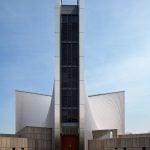
1. St. Mary Cathedral | Kenzo Tange
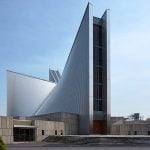
Swooping steel-clad walls support the cross-shaped roof window of Kenzo Tange’s 1960s St Mary’s Cathedral in Tokyo. Located in the Bunkyō district, the cathedral was designed by the Japanese architect to reference the lightness of a bird and its wings.


2. Shizuoka Tower
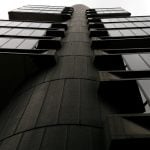
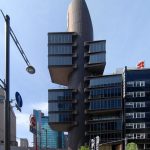
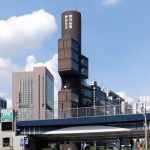
Built in1967 in the Ginza district, the Shizuoka Tower gave Tange a chance to materialize his Metabolist ideals, which called for a new urban typology that could self, perpetuate in an organic, vernacular, “metabolic” manner.

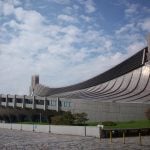
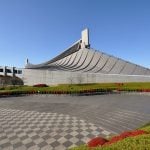
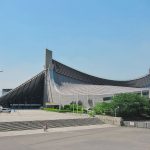
3. Tokyo Olympic Arena
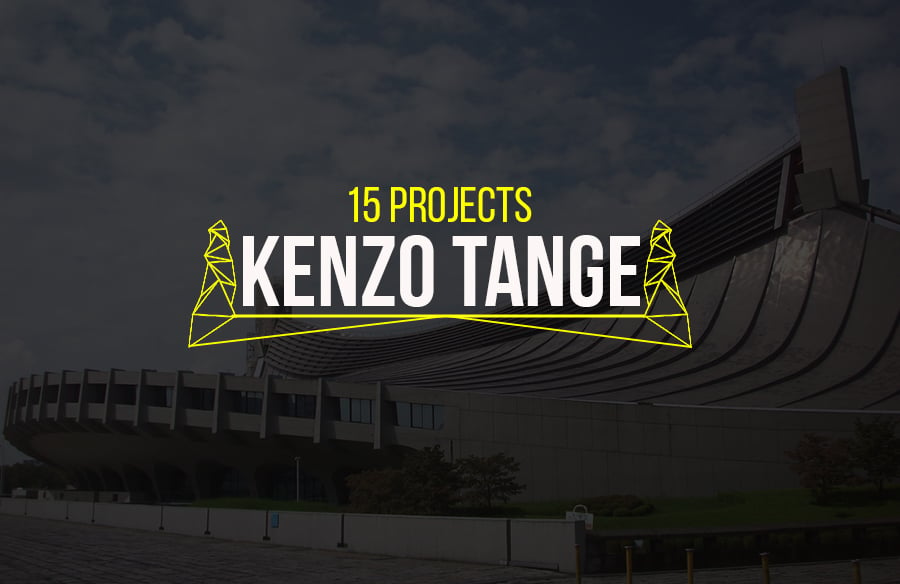
Built for the 1964 Summer Olympic Games in Tokyo, Japan, the Yoyogi National Gymnasium has become an architectural icon for its distinctive design.
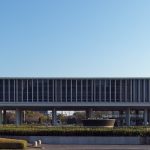
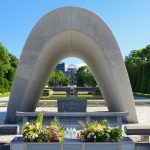
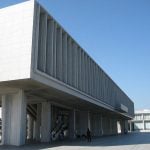
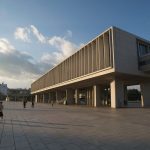
4. Hiroshima Peace Memorial Park
Memorial park in the center of Hiroshima, Japan. It is dedicated to the legacy of Hiroshima as the first city in the world to suffer a nuclear attack and to the memories of the bomb’s direct and indirect victims (of whom there may have been as many as 140,000). Work on Peace Centre Commenced in 1950.
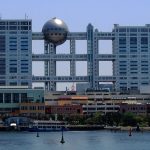
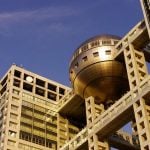
5. Fuji Broadcasting Centre | Kenzo Tange
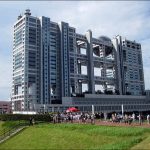
The Fuji Broadcasting Centre is a 27-story complex in Koto, Tokyo, with a total height of 123.45 meters (405.0 ft) designed by Kenzo Tange. Opened in 1996.

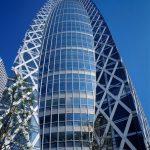
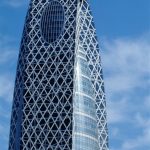
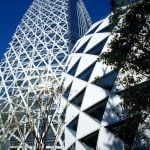
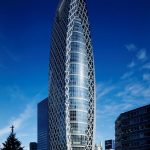
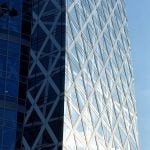
6. Mode Gakuen Cocoon Tower
Mode Gakuen Cocoon Tower is located in Tokyo’s distinctive Nishi-Shinjuku high-rise district, the building’s innovative shape and cutting edge façade embodies our unique “Cocoon” concept. Embraced within this incubating form, students are inspired to create, grow and transform. Built-in 2008 by Kenzo Tange.

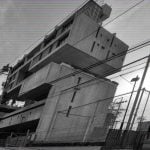
7. Kuwait Embassy in Japan
Built-in 1970, the visual cue of Metabolism is often the module-look or assorted-boxes-look of the building. It was a 1960s urban experiment in design, well before the invention of Jenga.
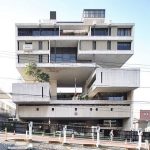
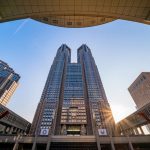
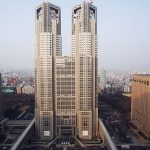
8. Tokyo Metropolitan Government Building (Tokyo City Hall)
The New Tokyo City Hall Complex replaced the 1957 Tokyo Metropolitan Government Office; the tops of the towers are irregularly shaped to lessen the effects of Tokyo winds. Built-in 1991, in the postmodern style, the design idea was based upon a Two-towered Gothic cathedral, after Notre Dame in Paris.
9. Nichinan Cultural Centre, Nichinan
Completed in 1962, Kenzo Tange created a crystalline internal space by opting for polygonal wall structures. The powerful concrete volumes are also homage to the cliffs on the coasts in the region. Here, concrete seems to be “second nature”.
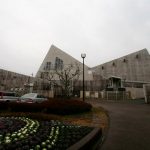
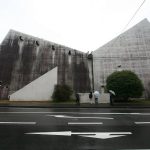
10. Kagawa Prefecture Gymnasium | Kenzo Tange
Completed in 1964 in Takamatsu, Japan, Kenzo Tange designed the Kagawa Prefectural Gymnasium with a Brutalist approach. The Gymnasium doesn’t believe in architectural context or establishing relationships with the surrounding buildings, but rather the surrounding buildings renovate to match the Brutalist gymnasium.
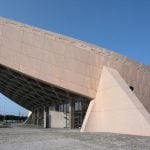
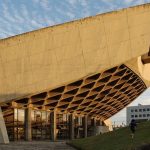
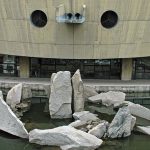
11. Yamanashi Broadcasting and Press Centre | Kenzo Tange
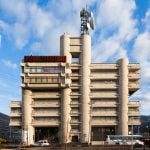
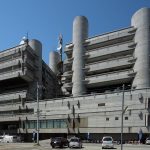
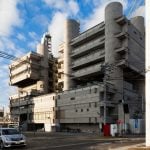
It was designed by Kenzo Tange for three media companies: a newspaper printing plant, a radio station, and a television studio. To allow for future expansion Tange grouped the similar functions of three offices together in their zones. Opened in 1966, the structure is designed for three media companies in Kōfu, Japan: a radio station, a television studio, and a newspaper printing plant. All of the services are inside the 16 reinforced concrete columns.
12. Shinjuku Park Tower
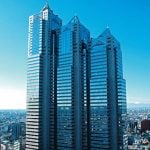
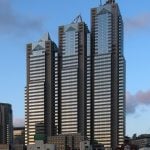
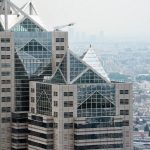
It was completed in 1994. Shinjuku Park Tower is a single building consisting of three connected block-shaped elements; S tower, which is 235 m (771 ft) tall with 52 stories, C tower which is 209 m (686 ft) tall with 47 stories and N tower which is 182 m (597 ft) tall with 41 stories.

13. Singapore Indoor Stadium
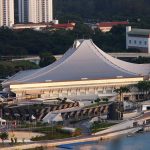
Construction began on 1 January 1985, it has a cone-shaped roof and a pillarless arena. It was completed on 1 March 1987 and officially opened to the public on 1 July 1988.


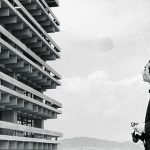
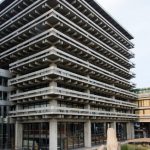
14. Kagawa Prefectural Government Office
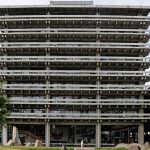
This project, built by Kenzo Tange in the time period of 1954- 1958, marked a turn in Japanese post-War architecture in terms of the materials used and the overall direction: The imported International Style is eschewed in favor of a return to the Japanese wood-building tradition, whereby this is executed completely in concrete here..
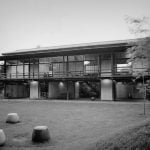
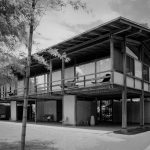
15. Kenzo Tange House | Kenzo Tange
House built in 1953, The so-called Kenzo Tange House was considered pioneering, as it fused together elements of traditional Japanese architecture with modern-day rituals. However, it was later demolished.
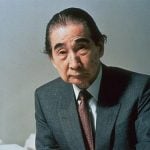
Kenzo Tange’s Legacy in 2026
Two decades after his death, Tange’s buildings keep making news. The Yoyogi National Gymnasium — whose sweeping suspension roof, engineered with Yoshikatsu Tsuboi, hosted swimming and diving at the 1964 Olympics and inspired Munich’s 1972 Olympic Stadium — returned to frontline duty for handball at the Tokyo 2020 Games, was designated an Important Cultural Property of Japan in 2021, and is now the subject of an active campaign for UNESCO World Heritage listing backed by leading Japanese architects, including Kengo Kuma. In Hiroshima, the Peace Memorial Park and Museum that launched Tange’s career in the 1950s remained the centre of the city’s 80th-anniversary commemorations in August 2025, underscoring how fully his civic vision has become part of Japan’s public life.
His practice also carries on: Tange Associates, led since 2002 by his son Paul Noritaka Tange, continues to build internationally, while the generation he trained — Kurokawa, Isozaki, Maki — went on to reshape world architecture in its own right.
Frequently Asked Questions About Kenzo Tange
Who was Kenzo Tange?
Kenzo Tange (1913–2005) was a Japanese architect, born in Sakai and trained at the University of Tokyo, who became the first Japanese winner of the Pritzker Prize in 1987. He also received the RIBA Royal Gold Medal (1965), the AIA Gold Medal (1966) and the Praemium Imperiale (1993).
What are Kenzo Tange’s most famous buildings?
The Hiroshima Peace Memorial Museum (1955), Kagawa Prefectural Government Hall (1958), the Yoyogi National Gymnasium built for the 1964 Tokyo Olympics, St. Mary’s Cathedral in Tokyo (1964) — where his funeral was held in 2005 — and the Tokyo Metropolitan Government Building (1991).
What was Kenzo Tange’s role in the Metabolism movement?
Tange was the movement’s forerunner, mentor and patron. His Plan for Tokyo (1960) proposed a megastructure spanning Tokyo Bay, he master-planned Expo ’70 in Osaka, and his studio trained the Metabolists’ leading figures, including Kisho Kurokawa and Arata Isozaki, as well as Fumihiko Maki.
Why is the Yoyogi National Gymnasium so important?
Its suspension roof, engineered with Yoshikatsu Tsuboi, made it one of the most admired buildings of the 20th century and a model for Munich’s 1972 Olympic Stadium. It hosted swimming and diving in 1964 and handball at Tokyo 2020, was named an Important Cultural Property of Japan in 2021, and is the focus of a campaign for UNESCO World Heritage listing.
Who continued Kenzo Tange’s work?
His son Paul Noritaka Tange, who has led Tange Associates since 2002, alongside the generation Tange trained — Kurokawa, Isozaki and Maki. Compare his structural landmarks with those of Minoru Yamasaki, or see where Tange sits among the 20 greatest architects in the world.
Sources for the 2026 update
Wikipedia, “Kenzo Tange” (2026). Wikipedia, “Yoyogi National Gymnasium” (2026). The Pritzker Architecture Prize, “Kenzo Tange, 1987 Laureate”.