An outdoor camera can be a small addition to a building, yet its installation affects more than the wall where it sits. Its position determines the view, cable entry and maintenance access. Poorly planned work can also interrupt a facade’s weather protection or leave exposed conduit across a carefully detailed elevation.
For architects, the challenge is to coordinate surveillance requirements with the building envelope, electrical infrastructure and everyday use of the site. Camera selection is only one part of the design.
Integrating Security Cameras into Building Exteriors
Balancing Camera Coverage with Facade Appearance
Security equipment should be placed according to the view it needs, then coordinated with the exterior design. A camera tucked behind a projecting panel may be difficult to notice but unable to observe the intended area. Conversely, a conspicuous bracket can alter the appearance of a prominent entrance. Early coordination creates more options for mounts and cable routes without sacrificing coverage.
Selecting Camera Locations Around Entrances and Public Areas
Entrances, delivery points and pedestrian approaches have different monitoring needs. An entrance camera may need a clear view of people passing through a doorway; a camera overlooking a forecourt may serve a broader overview. Lens choice, distance and mounting height influence the image captured. Locations should follow an agreed purpose, not a rule that every corner needs surveillance.
Managing Sightlines, Lighting and Visual Obstructions
Canopies, signs, trees and moving doors can obstruct an otherwise useful view. Light also changes through the day: strong backlighting can reduce visible detail, while nearby luminaires may produce glare. At night, infrared illumination can reflect from a wall or overhang close to the lens. Review sample views and lighting conditions before fixing mounting points.
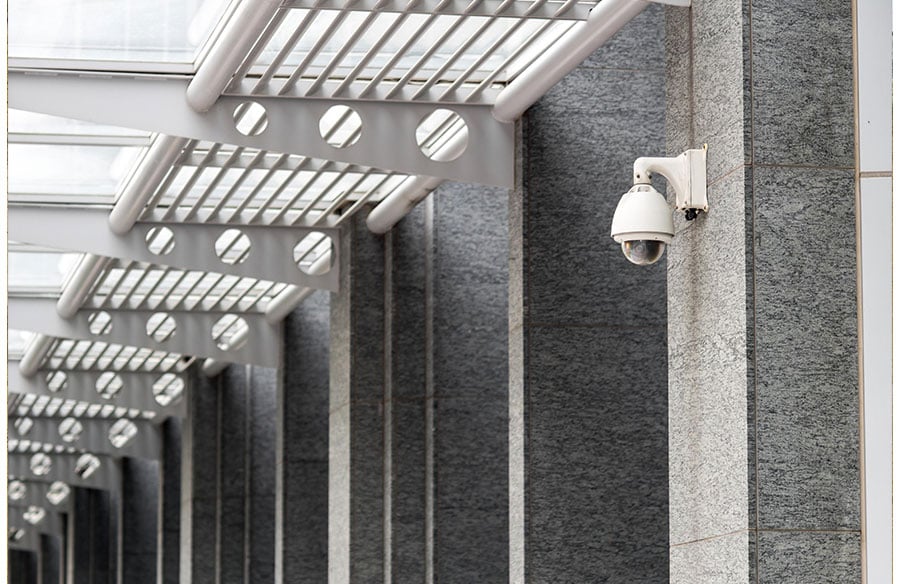
Mounting CCTV Cameras on Building Facades
Installing Cameras on Concrete, Masonry and Cladding
A fixing that works in solid concrete may be unsuitable for hollow masonry or a lightweight cladding panel. Mounting details should account for the substrate, camera weight, bracket geometry and site wind exposure. In some facade systems, the load must be transferred to supporting structure rather than the visible outer panel. Penetrations through structural or proprietary cladding assemblies require approval and detailing by the responsible design team.
Protecting Facade Penetrations Against Water Ingress
A drilled cable opening crosses more than the visible exterior finish. Depending on the wall assembly, it may interrupt water-control and air-control layers behind the cladding. The penetration therefore needs a compatible sleeve, flashing or sealing detail that preserves drainage to the outside. Simply applying sealant around a camera bracket is not a complete moisture-management strategy, particularly on rainscreen facades.
Concealing Cables Without Compromising Building Materials
Hidden wiring can preserve a clean elevation, but the route must remain serviceable. Where practical, cables can pass through approved cavities or accessible containment; other situations call for surface conduit aligned with architectural joints. Avoid cutting movement joints or drilling into unknown structural elements merely to hide a short run. Junctions that may need inspection should not be buried behind permanent finishes.
Planning Outdoor CCTV Power and Wiring
Choosing Between PoE and Centralized DC Power
Power over Ethernet (PoE) carries network data and electrical power to compatible cameras over one cable. Other cameras require a separate DC supply, and existing analog installations may use different wiring arrangements. Neither approach is automatically right for every building. The choice depends on camera compatibility, network locations, cable routes and servicing arrangements. Any proposed CCTV power supply must match the equipment’s voltage and expected load.
Managing Cable Routes, Distance and Voltage Drop
Conventional twisted-pair Ethernet channels are generally designed for a maximum length of 100 meters, including patch cords. A longer route may need an intermediate network point or a properly engineered alternative. On a DC circuit, wire resistance reduces the voltage available at the camera, particularly as current rises. Cable length, conductor size and load should be checked together; measuring only at the power cabinet can miss a problem at the far end.
Locating Power Supplies and Distribution Equipment
A convenient location on an elevation is not necessarily a suitable place for electrical equipment. Supplies, switches and distribution enclosures need an appropriate environmental rating, space for terminations and access for inspection. An indoor equipment room may protect components better than an exposed cabinet. Allow for ventilation and manufacturer-specified operating temperatures, especially in enclosed spaces exposed to solar heating.
Protecting Outdoor CCTV Infrastructure
Selecting Weather-Resistant Cameras and Enclosures
Outdoor equipment should be specified for its actual exposure, not just described as weatherproof. Ingress protection ratings indicate resistance to defined dust and water tests, but do not by themselves establish resistance to corrosion, sunlight or extreme temperatures. Mounting orientation and correctly fitted cable glands can affect whether a camera maintains its protection. Confirm the manufacturer’s installation instructions for the selected model.
Addressing Temperature, Moisture and UV Exposure
Direct sun can heat a housing beyond the surrounding air temperature, while condensation may occur when surfaces cool. Cable jackets and exposed plastic parts also deteriorate if they are not intended for ultraviolet exposure. Select cables, connectors and housings suited to the climate and mounting position. Weather protection is a system detail: an outdoor-rated camera still needs correctly protected terminations and compatible accessories.
Planning Grounding and Surge Protection
Outdoor cables can carry transient voltages into network equipment, including surges induced by nearby lightning. Suitable surge protective devices and grounding arrangements can reduce some of this risk, but cannot guarantee protection from a direct strike. The correct arrangement depends on the camera, cable type and installation. Coordinate electrical bonding and surge protection with qualified designers, following equipment instructions and applicable local rules.
Coordinating CCTV with Architectural and Electrical Design
Integrating Camera Infrastructure into Construction Drawings
A camera symbol on an elevation does not tell the installer everything required. Drawings should identify mounting heights, intended views, bracket or junction-box locations, wall penetrations and the route back to network or power equipment. Critical envelope details need their own coordination. These decisions are easier to review before facade fabrication or finishing than after a contractor arrives with a drill.
Coordinating CCTV Wiring with Other Building Services
Security cabling competes for space with lighting, signage, drainage and other external services. A proposed camera may conflict with a downpipe or an access hatch; a cable tray may block a maintenance route. Coordination meetings should resolve these clashes while routes can still change. Where cables pass through rated assemblies or shared service spaces, the relevant installation and fire-protection requirements must also be addressed.
Meeting Local Installation and Privacy Requirements
Surveillance rules differ between jurisdictions and building uses. The project team should establish who is responsible for camera coverage, retention practices and any required notices. Camera orientation can also limit unnecessary views into neighboring properties or private spaces. Electrical, building-envelope and access requirements likewise depend on location. Check site-specific conditions and rules before reusing a design.
Maintenance and Long-Term Accessibility
Providing Safe Access to Exterior Cameras
A camera positioned high above a glass canopy may capture the desired view but be difficult to clean or replace. Maintenance access should be considered alongside sightlines, including whether a lift can reach the device without blocking an entrance. Where access is constrained, mounting positions and service procedures may need adjustment. A discreet installation has little value if routine work requires unnecessary disturbance to the facade.
Inspecting Cable Connections and Power Equipment
Commissioning should verify the image, network connection and power under operating conditions. For DC-fed cameras, checking voltage at the device under load can reveal cable losses. Technicians should also inspect glands, connectors and enclosure seals, then record the results. Later maintenance can look for corrosion, damaged cable jackets and water entry before these develop into intermittent failures.
Planning for Future Camera Replacement and System Expansion
Camera models, coverage needs and network equipment may change during a building’s life. Accessible junction points, documented cable paths and available equipment space make changes less disruptive, though spare capacity must be verified rather than assumed. As-built records should identify each camera, its cable route and the equipment supplying it. Outdoor CCTV works best architecturally when it is treated as a maintainable building service, not an attachment added after the facade is complete.