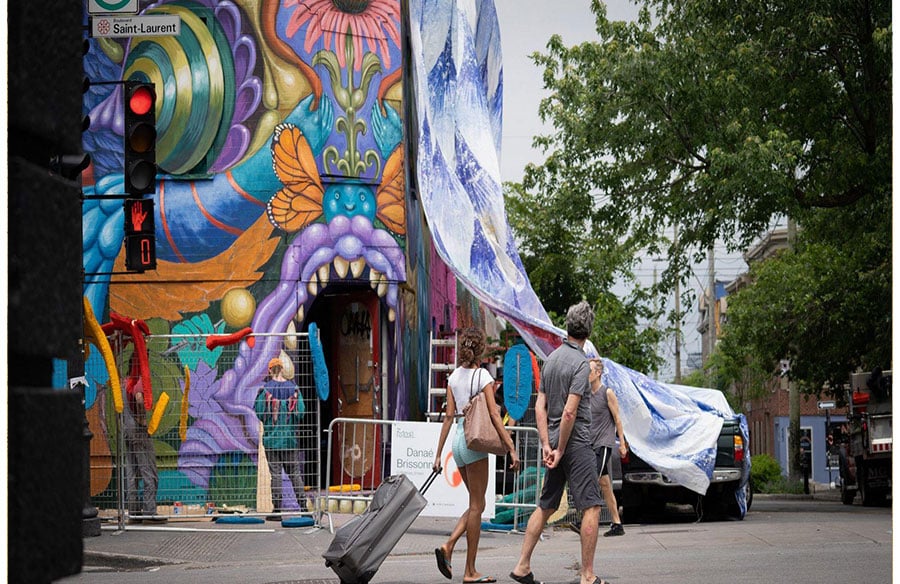
Walk down Saint-Laurent Boulevard in June and you will see scaffolding, spray cans and crowds watching a wall change by the hour. It is hard to imagine that the same city once treated spray paint mainly as a nuisance. The story of street art in Montreal is one of gradual acceptance: from unsanctioned work in back alleys to festivals, public funding and gallery exhibitions. This article traces that evolution, explains how the scene is organized today and offers practical pointers for readers who want to see, collect or make street art in the city.
What Is the Difference Between Graffiti, Street Art and Murals?
Graffiti usually refers to lettering-based work, from quick tags to elaborate pieces, often made by writers who paint without a commission. Street art is the broader label for stencils, paste-ups, installations and figurative work in public space. A mural is a large painting applied to a wall, usually commissioned and sanctioned by the owner.
The categories overlap, and many Montreal artists work across all three. That overlap is one reason the scene’s history is hard to split into neat chapters.
Today, all three styles are shown indoors as well as outdoors. Galleries such as L’Original, a Montreal gallery with two locations and an online catalog, let visitors browse street art and original paintings by style, which makes the leap from wall to canvas easy to see.
The 1990s: Graffiti Looks for a Public Stage
A turning point came in 1996, when two Montreal graffiti writers, Seaz and Flow, founded the Under Pressure festival. According to The Suburban, they held the first event on a vacant lot at Henri-Julien and Mount Royal with the owners’ approval, and they wanted graffiti to be accepted instead of hidden away. Seaz is Sterling Downey, who later became a Verdun city councillor and deputy mayor of Montreal.
Under Pressure now takes place each August in the Quartier des Spectacles, and the newspaper described it in 2025 as being in its thirtieth year. Downey credits the festival with helping inspire parts of the city’s arts and culture scene, though the same article notes that some residents still view graffiti as a scourge.
The 2010s: Murals Take Over the Boulevard
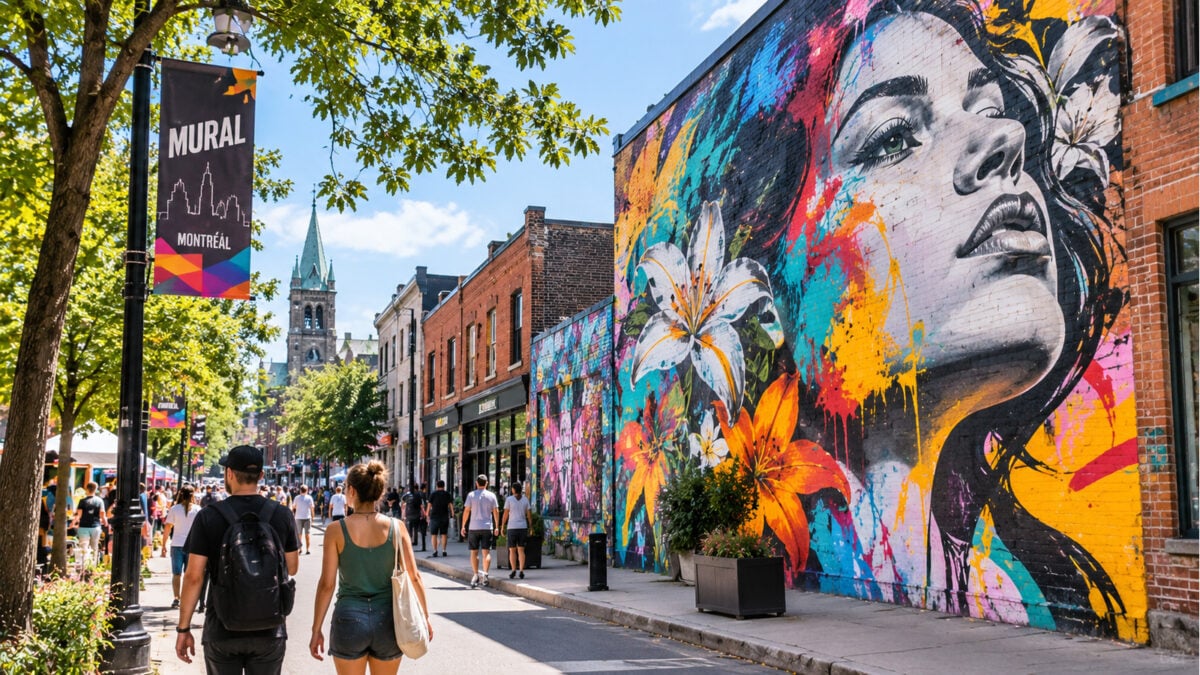
In the early 2010s, MURAL Festival changed the scale of the conversation. Held every June along Saint-Laurent Boulevard, with streets closed to traffic, it invites artists from Montreal and abroad to paint building facades while the public watches. It is free to attend, and its stated mission is to democratize art. Tourisme Montréal reports that it draws about 1.5 million people a year, and the festival billed its 2026 edition as its 14th.
The city followed the public’s lead. Tourisme Montréal notes that a municipal public art program launched in 2015 funds five new permanent murals a year, and collectives such as ASHOP, En Masse and MU are now commissioned to brighten walls across the city. MU’s 2017 portrait of Leonard Cohen, Tower of Songs, painted by Gene Pendon and El Mac, became one of Montreal’s best-known murals.
How Public Funding Changed Who Can Paint a Wall
 Funding matters because it determines who can afford to make large work. The Plateau-Mont-Royal borough’s Muralité program, for example, supports nonprofit organizations that want to create a mural. The borough can contribute up to 70 percent of a project’s budget, and the applicant must secure at least 30 percent from other sources.
The City of Montréal also publishes a procedure for painting a mural on a private building. Artists and property owners should check the requirements for their borough before picking up a brush.
From Walls to Canvases: When Street Artists Meet Collectors
A mural is public and temporary. Weather fades it, buildings change hands and walls get repainted. Studio work gives artists something that lasts and that a collector can take home, which is why many street artists keep a parallel practice in acrylic, spray paint and mixed media on canvas.
Galleries often act as the bridge. They curate, exhibit and sell, which helps artists reach buyers they would never meet on the street. Artists weighing that step often want to know how selection works. Some galleries publish their process openly. L’Original, for instance, explains how to submit artwork for gallery consideration, including its selection criteria: clear, well-lit photographs, coherent pricing and a recognizable visual universe. It says it accepts paintings, sculptures and murals. Whichever gallery you approach, read the terms carefully, including any fees and commission, before committing.
What Challenges Does the Scene Face Today?
Not everyone sees the evolution as pure progress. Critics in many cities ask whether festival murals brighten a neighborhood while also signaling rising rents. Artists face a tension between creative freedom and commissions that must satisfy property owners or sponsors. And because outdoor work is temporary, much of Montreal’s street art history survives only in photographs.
There is also the question of credit. A mural seen by millions can still leave its painter with a modest income, which is one reason more artists now sell prints and original canvases alongside their wall work.
Those debates are part of a healthy scene. They push artists, organizers and funders to ask who gets to paint, who gets paid and who decides what stays on the wall.
How to Experience Street Art in Montreal
The easiest starting point is the festival calendar: MURAL in June on Saint-Laurent Boulevard and Under Pressure in August in the Quartier des Spectacles. Outside festival season, the Plateau and Downtown hold permanent murals, and Art Public Montréal offers free self-guided and audio tours. Pair a walk with a gallery visit to see how the same artists work on a smaller scale. If you are thinking of buying, ask each gallery for the artist’s name, medium, dimensions and a signed invoice, and treat a street art canvas like any other original: look closely at the surface, the signature and the condition before you decide.
FAQs
When did street art begin in Montreal?
Graffiti was on the city’s walls before any festival existed, but the first long-running organized platform was Under Pressure, founded in 1996. MURAL Festival followed in the early 2010s and brought large-scale murals to Saint-Laurent Boulevard.
Is street art legal in Montreal?
Commissioned murals typically involve the building owner’s permission and, depending on the project, borough or city procedures. Painting on property without permission is treated differently, so check local rules before you start.
When is the best time to see street art in Montreal?
June is the peak, when MURAL Festival transforms Saint-Laurent Boulevard. August offers Under Pressure, which centers on graffiti culture. Permanent murals can be visited year-round.
Street art in Montreal
Street art in Montreal has moved from the margins to the center of the city’s cultural identity, helped by artist-led festivals, public funding and galleries that bring outdoor styles indoors. Its future depends on keeping that openness while protecting artists’ creative freedom and fair pay. To understand the scene, walk it in person: the walls change quickly, and the next layer is already going up.