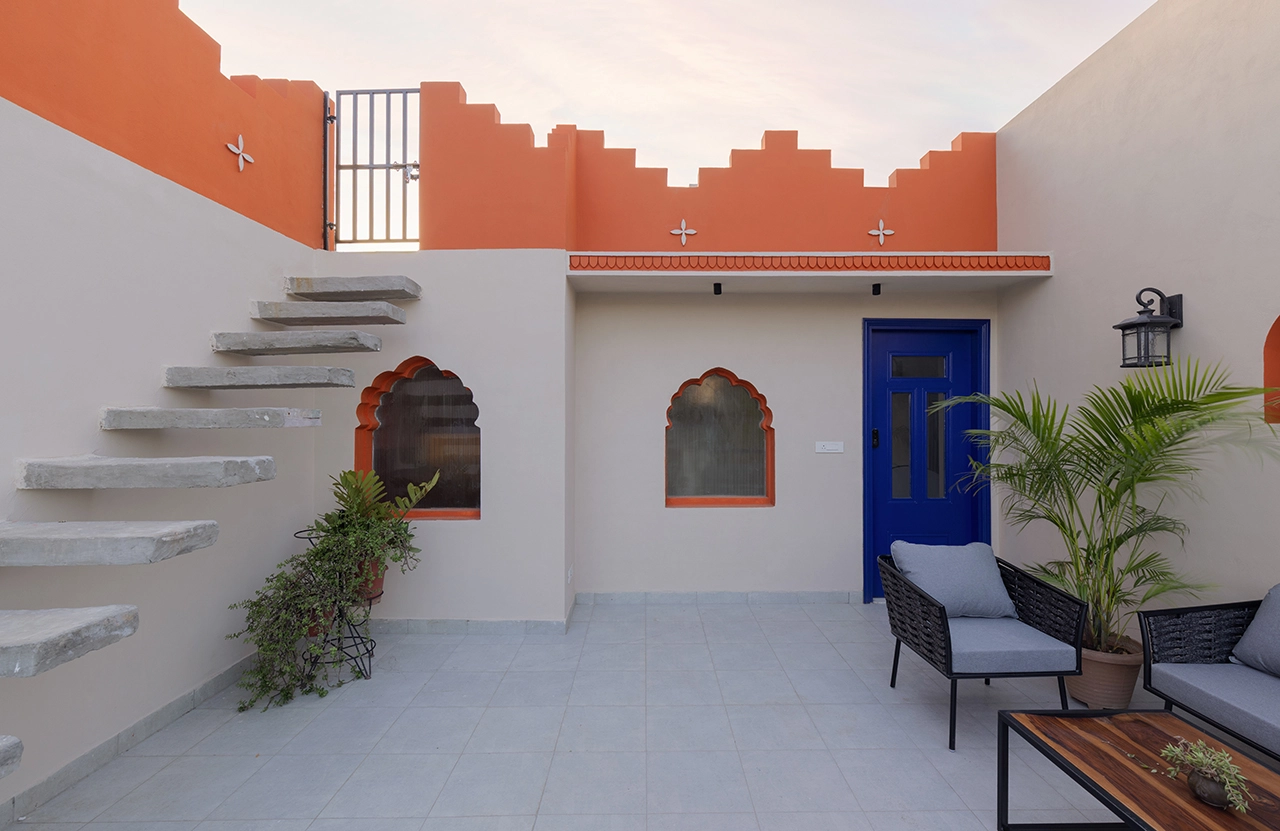
Jaipur is often introduced through its grand forts, sprawling palaces, and monumental architecture. Yet beyond these celebrated landmarks lies another Jaipur – one shaped by craftspeople, traders, artists, sporting traditions, painted narratives, and everyday cultural rituals that have defined the city for centuries.
Project Name: 58 Gram – A Boutique Homestay
Studio Name: Newness Architecture
Location: Jaipur
Area: 3,500 sq.ft
Principal Designer: Rajat Upadhyay & Kaushal Upadhyay
Photography: Studio BluOra
Conceived as a boutique homestay with just five individually curated rooms, this project seeks to reveal that lesser-seen Jaipur, offering guests an intimate encounter with the city’s living heritage. The intent was to create a collection of immersive environments, each inspired by a distinct facet of Jaipur’s cultural and architectural identity. The five rooms draw from the worlds of Blue Pottery, Jaipur Bazaar, Jaipur Architecture, Polo, and Pichwai, translating these themes into contemporary spatial narratives that allow visitors to experience the city through its stories, textures, colours, and traditions.
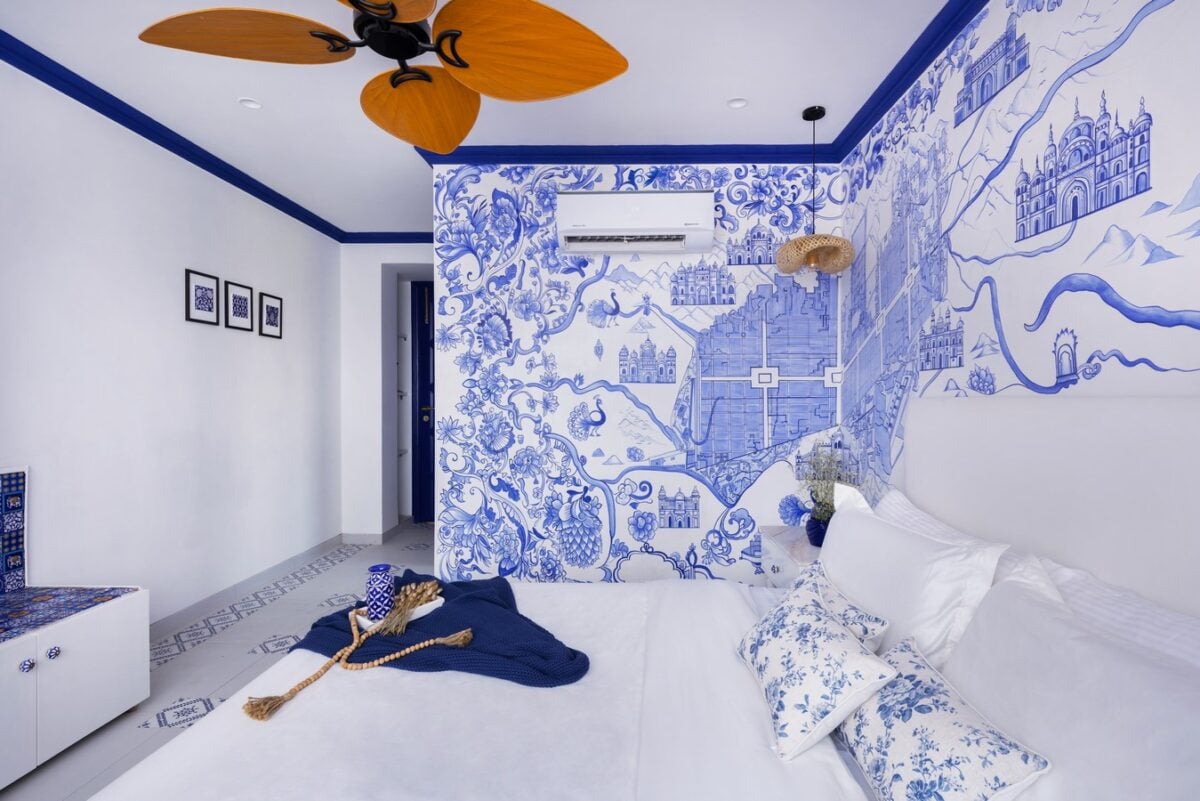
The Blue Pottery Room pays homage to one of Jaipur’s most celebrated crafts. Wrapped in an intricate hand-painted blue-and-white mural, the space evokes the visual language of traditional ceramic ware while expanding it into an architectural canvas. The artwork flows seamlessly across the walls, depicting floral motifs, birds, city maps, and iconic landmarks rendered in cobalt blue. Against the pristine white backdrop, every detail acquires graphic clarity, creating a space that feels both artistic and serene. The restrained furniture palette allows the mural to become the protagonist, while blue accents in the furnishings and accessories reinforce the narrative without overwhelming it. The result is an environment reminiscent of a handcrafted ceramic object brought to life at an inhabitable scale.
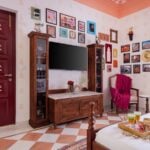
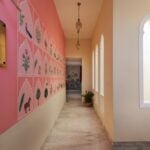
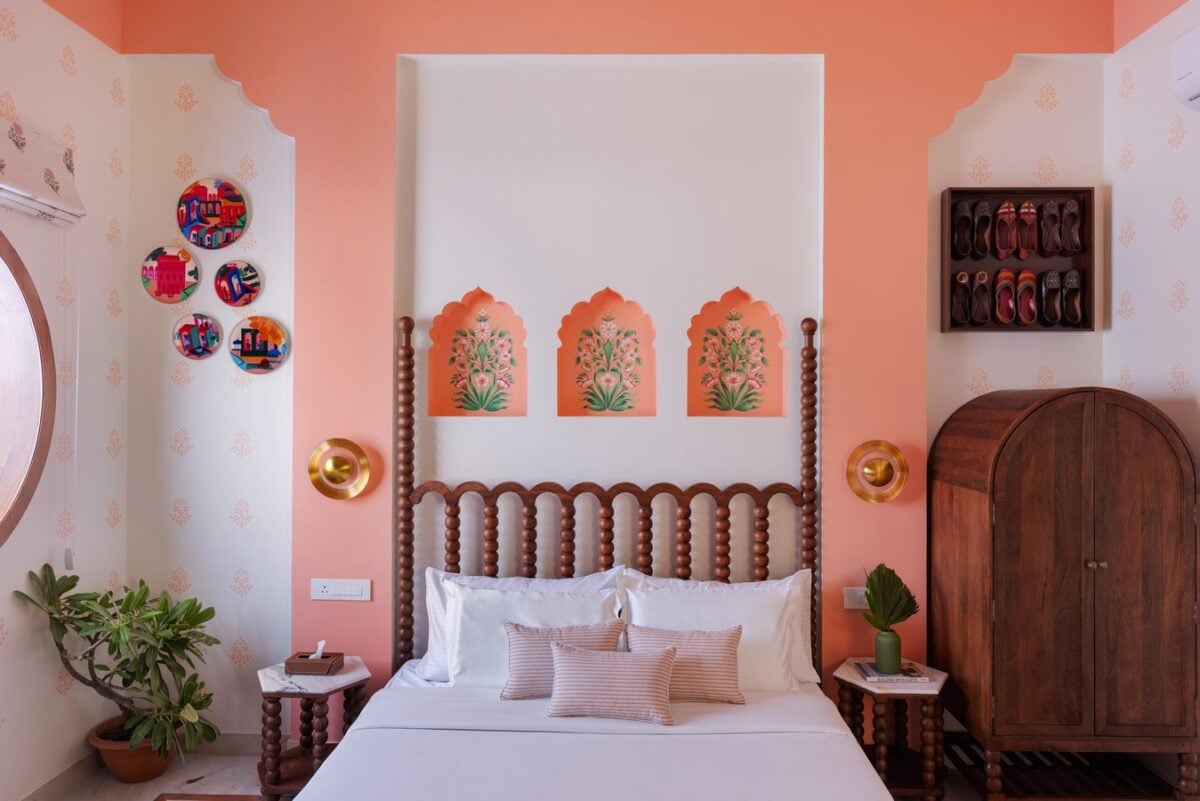
The Jaipur Bazaar Room celebrates the city’s vibrant marketplaces—the sensory heart of Jaipur where commerce, colour, craftsmanship, and social life intersect. Soft coral and blush tones inspired by the city’s characteristic pink facades envelop the room, creating a warm and welcoming atmosphere. Traditional arch motifs are integrated into niches and wall details, while handcrafted furnishings and patterned flooring recall the visual richness of old market streets. Decorative elements reference local artisanal traditions, creating a layered setting that captures the energy and charm of Jaipur’s bazaars without resorting to literal replication. The space balances nostalgia with contemporary comfort.
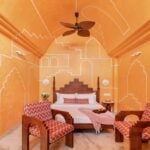
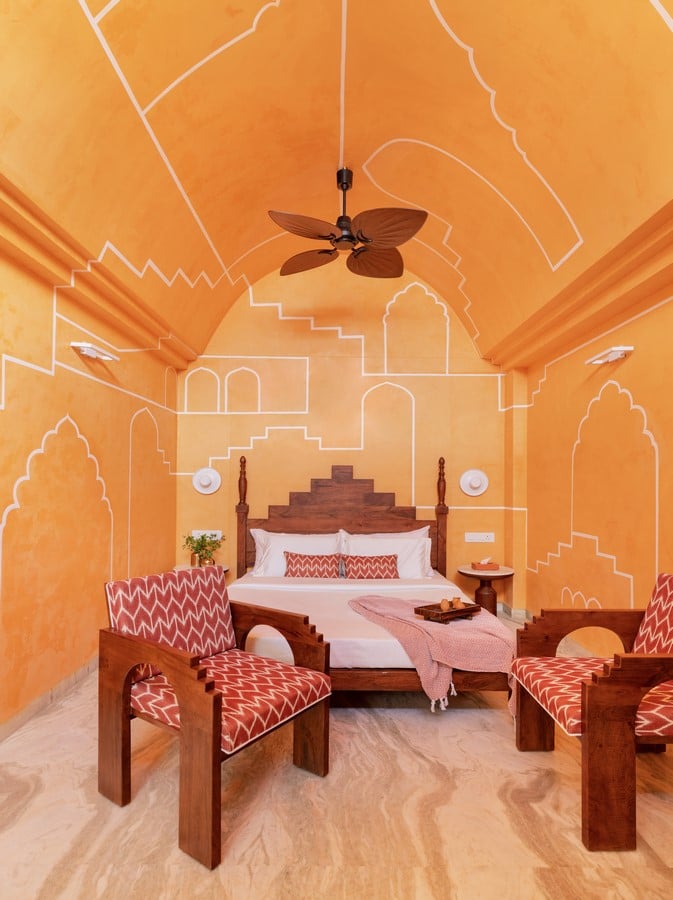
Inspired by the city’s built heritage, the Jaipur Architecture Room translates architectural memory into a spatial experience. Housed within a vaulted volume, the room draws upon the geometry of historic gateways, stepwells, forts, and palace corridors. Rather than recreating specific monuments, the design abstracts their forms into a continuous graphic composition across the walls and ceiling. The warm ochre palette references the earthy tones of traditional lime plasters and sandstone structures found throughout Rajasthan, while clean white linework traces architectural silhouettes, transforming the envelope into a contemporary interpretation of Jaipur’s urban fabric. The room becomes a study of form and proportion, celebrating the city’s architectural legacy through abstraction rather than ornamentation.
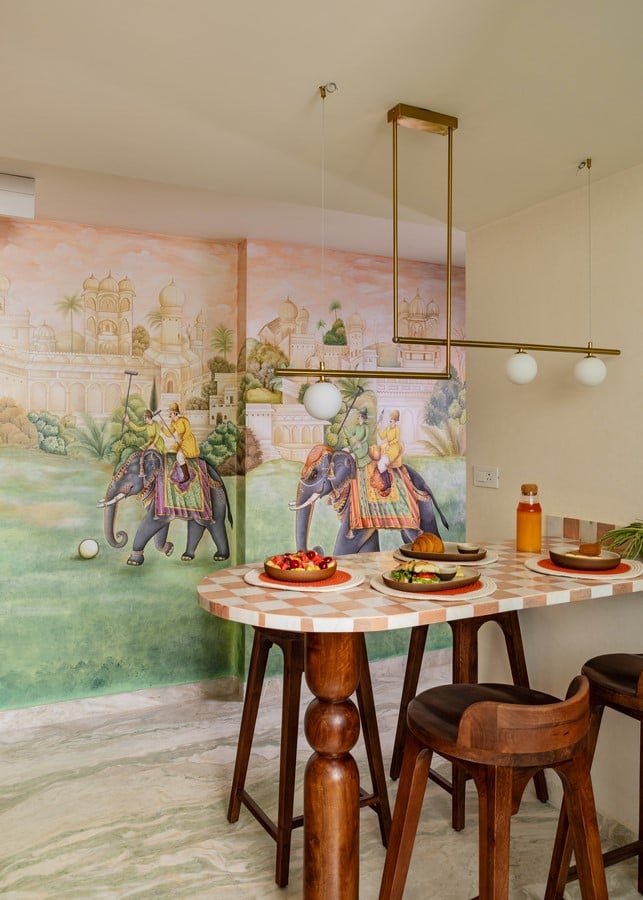
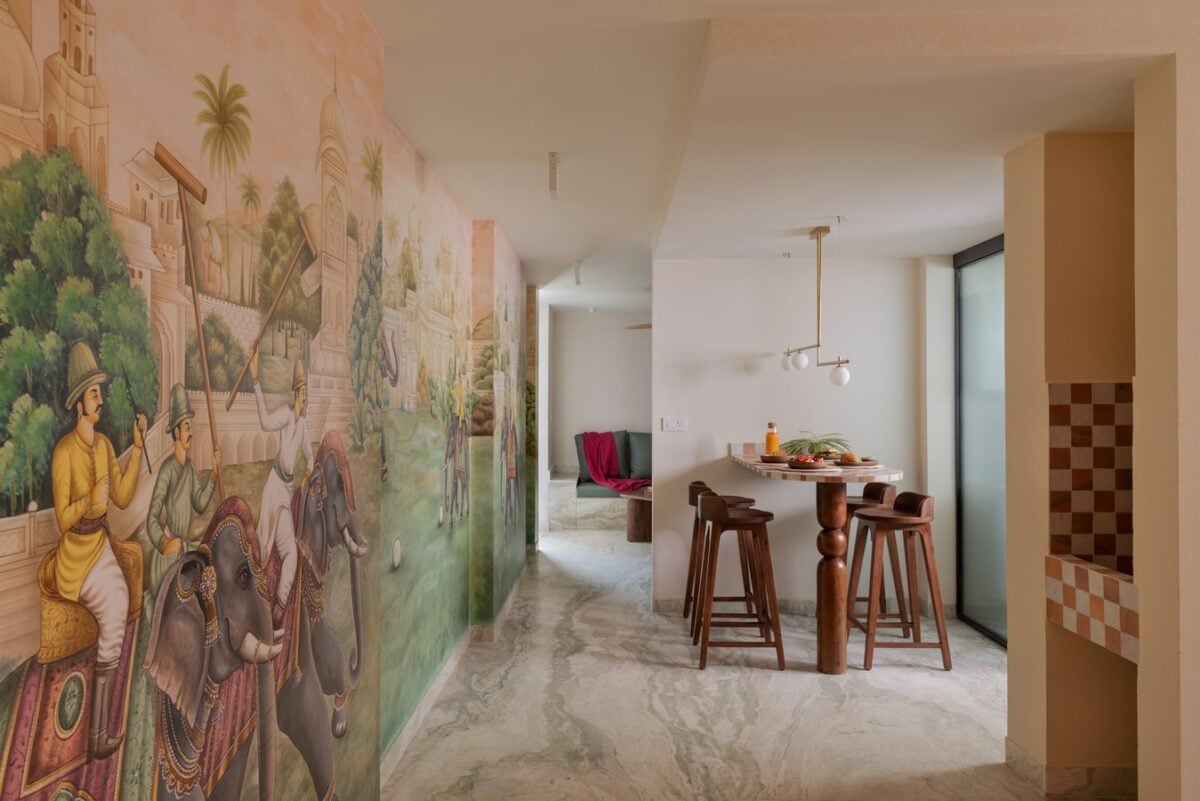
The Polo Room acknowledges a lesser-known yet significant chapter of Jaipur’s history. The city has long shared a deep association with polo, a sport patronised by the erstwhile royal families and embedded within its social culture. This narrative is expressed through bold blue-and-white vertical stripes that envelop the walls and vaulted ceilings, creating a dynamic visual rhythm reminiscent of classic polo club aesthetics. A curated gallery wall displaying archival imagery and equestrian references further reinforces the theme, turning the room into a tribute to the sport’s enduring legacy. The monochromatic palette lends the space a crisp, tailored character, while contemporary furnishings ensure that the historical references feel relevant rather than nostalgic.
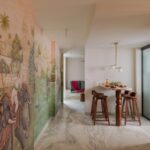
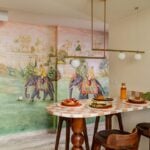
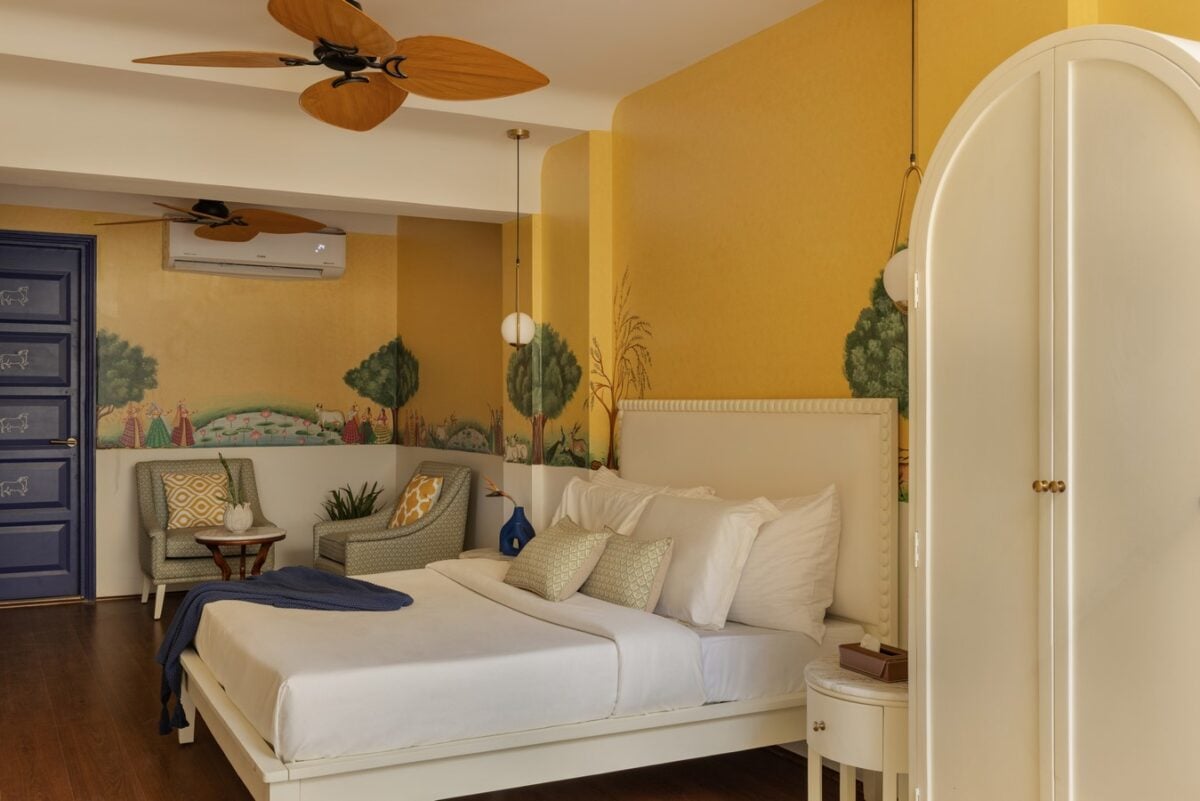
The final room draws inspiration from Pichwai, the intricate devotional paintings traditionally associated with Nathdwara and widely cherished across Rajasthan. Here, soft golden-yellow walls become a backdrop for hand-painted pastoral scenes featuring flora, fauna, and symbolic imagery derived from the visual language of Pichwai art. Rather than functioning as decorative murals alone, these artworks establish a calm and contemplative atmosphere that reflects the spiritual essence of the tradition. The restrained palette, delicate detailing, and balanced composition create a sense of quiet luxury, allowing guests to engage with the artistic narrative at a slower pace.
Together, these five rooms form a curated journey through Jaipur’s cultural landscape. While each possesses a distinct identity, a common design language ties them together through handcrafted detailing, local references, and a commitment to storytelling. The project deliberately moves away from generic notions of luxury, instead positioning authenticity as its defining feature.
By transforming heritage into experience, the homestay offers visitors an opportunity to discover Jaipur beyond its monuments. It celebrates the city’s crafts, marketplaces, artistic traditions, sporting culture, and architectural character, revealing a more nuanced portrait of a place whose true richness lies not only in its landmarks, but in the cultural narratives that continue to shape it every day