The right curtain can change the look and feel of your room. They help soften the harsh daylight, offer privacy, and frame the window aesthetic. You can get them in a variety of textures and colors for a bespoke window décor. But what if you need to have a brighter living room during the day and a darker option for the night? The solution is simple, you must have two curtain layers and it won’t comprise the look of your interior spaces. Layering for curtains will make use of lightweight sheers and heavier curtains. This style is quite common for Dubai homes with their large windows and a strong sunlight presence. Instead of relying in a single curtain for every situation, you will be able to adjust a layer for the time of the day and how you use the room.
So, to answer the question, how to layer sheer and Blackout Curtains in your Dubai home, here is a complete guide.
Why Layer Two Types of Curtains?
A single layer of curtain will not fulfill every need. A lightweight fabric will help filter daylight and offer limited privacy. A heavy drapery system will offer a better light control, allowing you to have complete darkness even during the day. Layering style will give you flexibility, you will be able to draw the lighter fabric during the day and heavy layer for when you need darkness. This will give your room a visual depth as two fabrics will offer a richer appearance instead of a single flat panel. If you are a homeowner that is comparing Curtains Dubai, the right way would not be to choose the thickest or the most expensive fabric.
Step By Step Guide On How To Layer Sheer & Blackout Curtains
Follow this step by step method to layer your sheer and blackout curtains perfectly based on your room’s needs.
1. Choose the Right Fabric for Each Layer
You need to start by knowing which each layer will do. The lighter curtain will handle the daylight and gives a touch softness while heavier fabrics will offer better privacy and control the sunlight. For a lighter paneling, we recommend voile, polyester, or linen-look fabrics. These will offer a relaxed appearance and will let the daylight enter without ever leaving your window completely. For the outer layer, you need can choose a lined polyester, a woven fabric, or velvet to get a more decorative look. Color is also very important and the right combination for these layers will work for different interior themes. Popular color combinations are white and beige, ivory and warm grey, white & navy blue, cream and olive green, white and dusty rose.
2. Decide How Much Light Control You Need
Before you go on choosing the heavy fabric layer, you need to think about how you use your room. The bedroom will need a stronger light control, the living room will benefit from a flexible layering, and likewise for other spaces. This is where blackout curtains will be helpful. They have a specialized construction that will block most of the light inflow from the fabric weave. Light can still enter from edges, above the panels, or through the gaps in the paneling. For a dark bedroom, you must account for the curtain width, lining, track position, and overlapping. You also need to have a proper fitting to make these curtains have an ideal functionality.
3. Install a Double Track or Double Curtain Rod
Even the most beautiful fabrics are going to look awkward if they are too crowded or have an unsuitable hardware. A double curtain track or rod will allow for each layer to have its own position. A lighter curtain will be closer to the window while the heavier panel would face the room. A ceiling mounted track system is useful for a floor to ceiling window to achieve a clean, continuous line. For wide windows, and sliding doors; you need to choose a track or rod that is rated for the curtain weight.
4. Measure the Windows Before Ordering
You must take accurate measurements to allow both layer hang properly and don’t have any unwanted gaps. Measure the track or the rod for a planned fitting instead of just relying the glass’s width. A floor length drapery will need to measure from the actual point of hanging to the desired finishing point. Some people will prefer fabric finish to sit just above the flooring and have a slight break at the bottom. For a balanced result, consider the track extension a bit beyond the space where the window allows, choosing enough fabric for a fullness effect, and account for different weights and gathering styles.
5. Style Each Room According to Its Purpose
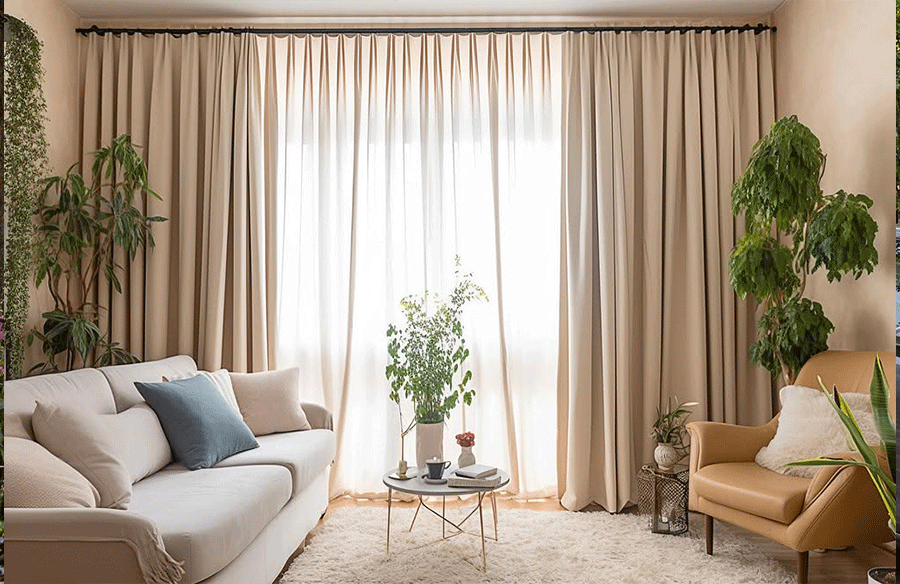
Layered draperies will not need to look same in your home. You can adjust their fabrics and colors to meet the interior theme for each room. A living room will work best with a translucent inner layer and heavier panels during the day to make your place seem brighter. For the bedroom, you can get a soft inner fabric and lined fabric for inner layers. In your compact apartments, do not use too much bulky fabrics as they take up too much space when fully drawn.
6. Get the Most From Your Sheer Layer
The lightweight inner fabric layer will need more attention compared to decorative drapes. A well-selected choice of sheer curtains will help with daylight diffusion, soften the view via windows, and create a relaxed arrangement. They are useful for when you need natural light inflow without keeping your glass window fully exposed. For a refined finish, let the fabric fall in even folds and prevent them from bunching too tightly on either sides.
7. Avoid Common Layering Mistakes
You must avoid all the following layering mistakes to create a professional looking arrangement that doesn’t feel awkward.
Avoid mixing too many patterns, if one has a strong design, keep the other one simple.
Never choose the wrong track because two layers need enough space to move freely.
Do not ignore the fabric weight because heavier fabrics require more support across the window.
It’s not ideal to use a same arrangement for bedrooms, living rooms, and workspaces.
Its crucial to not neglect the maintenance because curtains will show dust and wrinkles if left untreated.
Final Thoughts
Layering curtains is a practical way to get light control, privacy, and interior styling. Lighter fabrics will keep your room feeling bright during the day and heavier fabrics will offer better coverage. You must start by choosing fabrics that suit each room, have double track or rod, and measure carefully before you order. A well-planed curtain layering will give your Dubai home a polished, practical finish.