Modern workplaces are often designed to encourage collaboration, creativity, and productivity. Open floor plans, glass meeting rooms, shared workstations, and flexible seating arrangements have become familiar features of contemporary office architecture.
Yet, while these design choices may create visually appealing and efficient spaces, they don’t always account for how employees experience their surroundings throughout the workday.
An office that looks impressive in architectural photographs might feel entirely different to someone who spends eight hours navigating background conversations, limited privacy, constant interruptions, or uncomfortable lighting.
As conversations about employee well-being continue to evolve, workplace design deserves greater attention. The physical environment isn’t simply a backdrop for professional activity. It can influence how employees concentrate, interact with colleagues, manage distractions, and experience everyday stress.
For architects and designers, the challenge is to create workplaces that are not only functional and visually engaging but also responsive to the psychological needs of the people using them.
The Psychological Impact of Workplace Environments
The connection between workplace design and employee well-being is supported by a growing body of research.
A 2024 systematic review examining workplace well-being and interior design analyzed 55 studies and identified several environmental characteristics associated with employees’ experiences at work.
The researchers found that background noise and open-plan layouts were frequently associated with negative well-being outcomes, while visual connections to plants and natural elements were associated with more positive experiences.
These findings suggest that design decisions can influence more than workplace appearance or spatial efficiency.
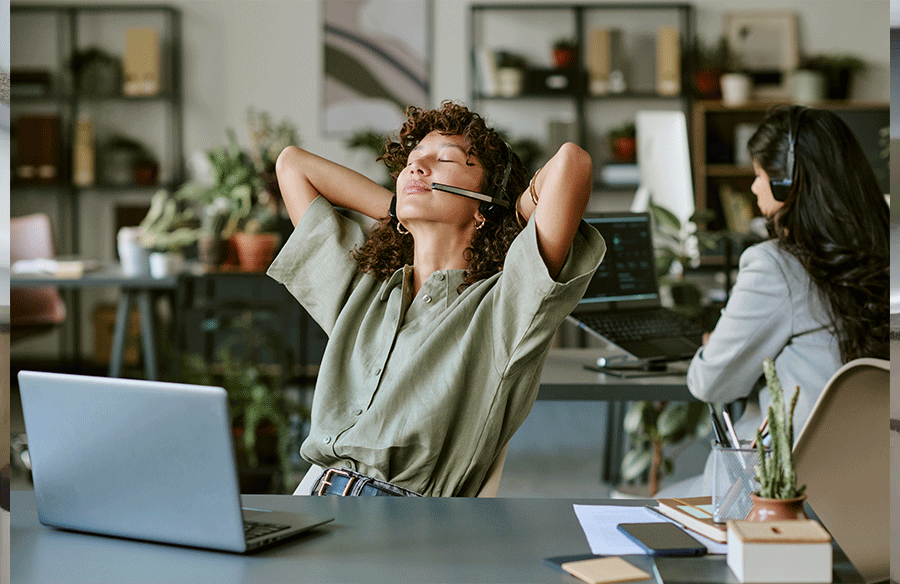
Consider an employee trying to complete a demanding assignment while conversations take place around their desk. Even when the environment is visually attractive, repeated distractions can make concentration more difficult.
Similarly, employees who lack access to quieter areas may struggle to find opportunities for focused work or private conversations.
These experiences highlight an important consideration for workplace designers: environments should accommodate different activities and individual needs rather than assume everyone works best under the same conditions.
Open-Plan Offices: Collaboration at What Cost?
Open-plan offices have become popular because they offer flexibility, improve visibility, and can encourage interaction between colleagues.
Removing physical barriers may make spontaneous conversations easier and create opportunities for collaboration. However, openness can also introduce challenges.
A 2024 study examining office design and emotional health analyzed responses from 4,352 employees across seven office configurations. The researchers found associations between office design, psychosocial working conditions, and emotional exhaustion, with differences across workplace layouts and employee groups.
The findings reinforce the importance of considering how different environments affect employees rather than assuming a single layout is universally beneficial.
One of the most significant challenges in open-plan workplaces is the lack of control over distractions.
Conversations, phone calls, movement, and surrounding activity can make it difficult for employees to maintain their attention. Privacy can also become a concern when sensitive discussions or confidential work must take place within earshot of others.
This doesn’t mean open-plan offices are inherently unsuccessful.
Instead, their effectiveness depends on how well they balance collaboration with opportunities for concentration and privacy.
Architects can address these competing needs by incorporating acoustic treatments, enclosed meeting rooms, dedicated quiet areas, and thoughtfully positioned workstations.
The objective should be to provide employees with appropriate spaces for different types of work, rather than expecting every activity to happen in one shared environment.
When Workplace Stress Extends Beyond the Office
The relationship between work environments and emotional well-being becomes particularly relevant when considering how employees experience stress.
An uncomfortable workspace may not be the primary cause of someone’s anxiety, exhaustion, or difficulty concentrating, but it can contribute to the demands they experience throughout the day.
To better understand this connection, we sought a clinical perspective from Purposeful Change Psychotherapy, a psychotherapy practice with locations in Vaughan and King City, Ontario, that supports individuals navigating emotional, personal, and professional challenges.
From a psychotherapy perspective, work-related stress can extend beyond working hours, influencing how people feel when they return home, interact with family members, or approach the following workday. While workplace responsibilities, interpersonal dynamics, and individual circumstances can all contribute to stress, the physical environment is another factor worth considering.
Employees who experience persistent distractions, limited privacy, or little control over their surroundings may find it more difficult to manage everyday workplace demands.
This distinction matters because workplace well-being is sometimes approached primarily as an individual responsibility.
Employees may be encouraged to practise mindfulness, establish healthier boundaries, or develop stress management strategies. While these approaches can be valuable, they don’t eliminate the need to examine the environments in which employees are expected to work.
An office that consistently exposes employees to unnecessary distractions or makes confidential conversations difficult presents challenges that individual coping strategies cannot fully resolve.
Just as our professional lives can influence our identity, relationships, and emotional well-being beyond working hours, the spaces we work in can shape how we feel throughout the day. The challenges professionals experience are rarely confined to the workplace, and understanding the broader impact of professional life on mental health and well-being offers an important perspective on how working environments can either contribute to or help alleviate everyday stress.
For designers and employers, recognizing these environmental factors creates opportunities to address workplace stress more comprehensively.
Why Privacy and Personal Control Matter
One of the most overlooked aspects of workplace design is the ability to control one’s immediate surroundings.
Employees differ in their preferences for lighting, noise, social interaction, and personal space. Some find busy environments energizing, while others work more comfortably in quieter settings.
When employees have limited opportunities to adjust their environment, even relatively minor inconveniences can become persistent sources of frustration.
For example, an employee seated beneath uncomfortable lighting may have few options to make adjustments. Someone working beside a busy circulation route may experience repeated interruptions without access to an alternative workstation.
Designing for personal control doesn’t necessarily require private offices for every employee.
Adjustable task lighting, flexible seating arrangements, accessible quiet rooms, and dedicated areas for confidential conversations can provide meaningful choices.
Workplace designers can also consider acoustic separation between collaborative zones and areas intended for concentrated work.
The broader objective is to recognize that employee comfort isn’t universal.
Rather than designing around one ideal working style, architects can create environments that accommodate a range of activities, preferences, and sensory needs.
Natural Light, Greenery, and Everyday Comfort
Access to daylight and natural elements has become an increasingly important consideration in contemporary workplace architecture.
Windows, outdoor views, indoor plants, and natural materials can make offices feel more welcoming while providing visual variety throughout the day.
A 2023 systematic review of 55 studies on indoor environmental characteristics examined associations between workplace conditions and outcomes including mental well-being, cognitive performance, productivity, and satisfaction.
The review identified several relevant environmental factors, including indoor climate, spatial arrangements, privacy, and connections to nature.
These findings help explain why workplace design should be evaluated as a combination of environmental conditions rather than a collection of isolated decorative features.
For architects, incorporating daylight can involve careful consideration of building orientation, window placement, glare control, and workstation positioning.
Introducing greenery might include indoor planting, views of landscaped outdoor areas, or shared spaces that incorporate natural materials and textures.
However, natural elements should complement rather than replace fundamental design considerations.
An office filled with plants may still be uncomfortable if it suffers from excessive noise, poor ventilation, or inadequate work areas.
Effective workplace design requires attention to the complete experience of occupying a space.
Designing Workplaces for Different Ways of Working
One of the most practical approaches to employee-centred design is creating spaces that support different activities throughout the day.
A typical employee might move between focused individual work, collaborative meetings, virtual calls, informal conversations, and short breaks.
Each activity places different demands on the physical environment.
A collaborative workspace may benefit from flexible furniture and easy communication, while focused work often requires fewer distractions.
Private meeting rooms can support sensitive discussions, and comfortable break areas can provide opportunities to disconnect temporarily from work tasks.
Rather than treating these requirements as competing priorities, architects can incorporate them into a coordinated spatial strategy.
For example, a workplace might include open collaboration areas near communal facilities, quieter workstations away from major circulation routes, and enclosed rooms designed for focused work or private discussions.
Clear transitions between these areas can help employees understand how different spaces are intended to function.
Importantly, access to these options should be practical. A quiet room offers limited value if it’s constantly occupied, difficult to book, or located too far from everyday work areas.
The effectiveness of flexible design ultimately depends on whether employees can use the spaces when they need them.
Workplace Design Is Only One Part of Employee Well-Being
Although thoughtful architecture can help create more supportive working environments, office design alone cannot resolve every challenge affecting employee mental health.
Excessive workloads, unclear expectations, difficult workplace relationships, and organizational culture can all contribute to stress regardless of how an office is designed.
A beautifully furnished workplace won’t compensate for consistently unrealistic deadlines or a lack of psychological safety.
Nevertheless, the physical environment remains an important part of the wider employee experience.
When employers and architects consider spatial design alongside organizational practices, they are better positioned to identify environmental barriers that may be making daily work unnecessarily demanding.
Employee feedback should be central to this process.
Rather than assuming that a particular design trend will improve well-being, organizations can ask employees about noise, privacy, lighting, comfort, accessibility, and opportunities for focused work.
These insights can inform design decisions that respond to actual needs instead of relying solely on aesthetic preferences or assumptions about productivity.
Rethinking the Future of Workplace Architecture
The future of workplace design shouldn’t be defined only by visual innovation, flexible floor plans, or the efficient use of space.
It should also consider the people who experience these environments every day.
Research suggests that workplace characteristics such as noise, privacy, spatial arrangements, and access to natural elements can influence employee satisfaction and well-being.
For architects and designers, this creates an opportunity to approach workplaces as environments that support both professional activities and human needs.
Providing choices, reducing unnecessary distractions, accommodating different working styles, and creating opportunities for privacy can help make offices more responsive to the people using them.
Ultimately, a successful workplace isn’t simply one that looks productive.
It’s one that enables employees to do their work effectively while recognizing that their comfort, autonomy, and emotional well-being also matter.