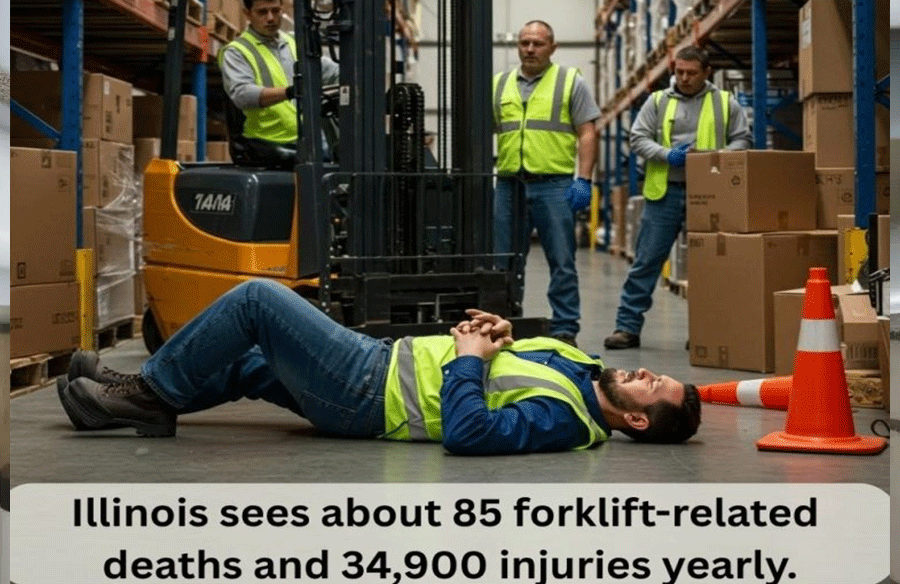
OSHA estimates that forklifts are linked to roughly 85 deaths and 34,900 serious injuries in the United States each year. Most trace back to a short list of forklift safety mistakes that any warehouse can fix without buying new equipment.
The pattern is familiar. A rushed shift, a skipped check, a corner nobody can see around. Then a pallet drops or a truck tips, and a worker’s life changes in two seconds.
This guide covers ten mistakes that show up again and again, with the OSHA rule behind each one and a practical fix. Use it on your next safety walk, share it with shift leads, and fix the easiest items first. Small changes made this week prevent injuries next month.
Mistake 1: Letting Uncertified Operators Drive
OSHA 29 CFR 1910.178(l) allows only trained and evaluated operators to run a powered industrial truck. The employer must evaluate each operator at least once every three years.
A card from a previous job does not count. Training has to cover the truck type and your actual floor, including ramps, racking, and tight aisles.
Refresher training is also required after a crash, a near miss or unsafe driving. When a temp starts Monday, the evaluation happens before the first pallet moves. Keep a signed record for every operator, because inspectors ask for it first.
Mistake 2: Skipping the Pre-Shift Inspection
OSHA requires trucks to be examined before they go into service and at least daily. Trucks used around the clock need a check after each shift.
A solid inspection takes about five minutes. Look at the forks for cracks, the mast chains for stretch, the tires, the brakes, the horn, the lights, and the hydraulic lines for leaks.
If a truck fails, tag it out and take the key. Soft brakes and a “just one more load” attitude are how a small defect becomes an injury. A written checklist on a clipboard at the truck makes the habit stick.
Mistake 3: Overloading or Uneven Loads
Every forklift carries a data plate that lists its rated capacity at a stated load center, often 24 inches. Push the load farther out on the forks and the safe capacity drops.
Operators should know that a tall pallet can be heavier on one side than it looks. Adding an attachment changes the rating again, so the plate must be updated.
Never add counterweights or alter the truck without the maker’s written approval. If a load shifts on the lift, set it down and rebuild it. Stretch wrap and corner boards cost pennies compared with a crushed foot.
Mistake 4: Turning With a Raised Load
OSHA statistics tie about 42 percent of forklift deaths to operators crushed by a tipping truck. A raised load makes the truck top-heavy, and a turn adds sideways force.
Travel with the forks a few inches off the floor, and the mast tilted back. Slow down before every turn, and never turn on a slope with the load up.
If a truck starts to tip, stay in the seat, belted in. Grip the wheel, brace your feet, and lean away from the fall. Jumping is how operators end up under the cage. A working seat belt is the cheapest tip-over protection a site can have, so make wearing it a rule with no exceptions.
Mistake 5: Speeding and Blind Corners
Forklifts stop slowly, especially with a full pallet. Speed that feels fine in an empty aisle becomes a collision when a worker steps out from behind racking.
Set a site speed limit and post it. Require operators to stop and sound the horn at blind corners and doorways.
Convex mirrors help, but they do not replace slowing down. Wet floors, loose shrink wrap, and worn tires all add stopping distance. Quotas and tight schedules push operators to hurry, so supervisors should watch for pressure that rewards speed over safety.
Mistake 6: No Separation Between Pedestrians and Forklifts
Workers on foot struck by trucks are a leading cause of forklift deaths. Pedestrians and forklifts should not share the same path without controls.
Paint walkways in a bright color and clearly mark crossing points. Use mirrors at intersections and blue spotlights that project a warning beam on the floor ahead of the truck.
Give pedestrians the right of way, always. Headphones and phones belong in the break room, not on the floor. Where a walkway must cross a truck lane, add a physical barrier or a stop line so nobody has to guess.
Mistake 7: Unsecured Trailers at Loading Docks
A trailer that creeps away from the dock while a forklift is inside can drop the truck. OSHA requires setting the brakes and placing wheel chocks under the rear wheels.
Vehicle restraints or dock locks add a second layer. A light system that tells the driver and the operator whether the trailer is locked removes the guesswork.
Check the trailer floor too. A cracked or rotted deck can give way under a loaded truck. Never load a trailer that is not secured, even for a quick pallet on a busy day.
Mistake 8: Using Forks as a Lift for People
Riding on forks or standing on a pallet to reach a high shelf is one of the most dangerous shortcuts in a warehouse. The load can slide, and falls are often from 10 feet or more.
OSHA allows elevating a worker only on a proper platform that is secured to the lifting carriage. Many sites simply ban it and buy a scissor lift or order picker.
Make the rule visible and enforce it for supervisors too. If the only fast way to reach the top shelf is a forklift, the problem is the shelf plan, not the worker.
Mistake 9: Poor Charging and Refueling Areas
Battery charging areas carry real hazards: hydrogen gas, acid, and heavy lifting. OSHA requires designated areas with ventilation, fire protection, and spill-flush capabilities.
Eyewash stations should be close and working. Ban smoking and open flames, and train staff on proper battery handling.
Propane trucks need their own procedures. Trained people must change cylinders in a designated spot. Keep walkways around the area clear so a spill never blocks an exit.
Mistake 10: Not Reporting Near-Misses
Every near miss is a free lesson. A pallet that almost fell or a truck that nearly clipped a picker shows exactly where the next injury will happen.
Workers stay quiet when reports lead to blame. Make reporting easy, thank people for it, and fix what they find.
Track patterns by area and shift. Three near misses at one corner is a layout problem, not three bad days. Share the fix at the next shift huddle so people see that speaking up works.
 If Someone Does Get Hurt
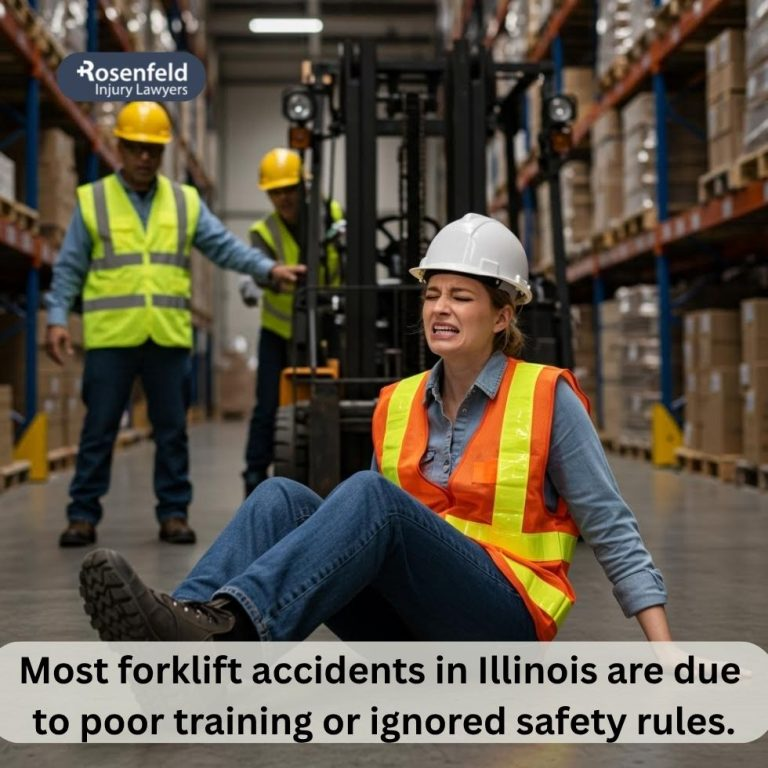
Act fast. Get medical care first, then report the incident in writing and tell the employer’s safety lead.
Preserve the truck, the inspection log, the training records, and camera footage. Do not repair or return the truck to service until the facts are documented.
Workers’ compensation covers most workplace injuries. When a defective forklift or a third-party contractor is involved, the injured worker may have a claim beyond workers’ comp. A lawyer who handles forklift accident cases can sort out who is responsible. An equipment manufacturer or outside contractor may be liable in addition to workers’ comp. Attorney Jonathan Rosenfeld handles these cases for injured Illinois workers.
Final Thoughts and a 10-Point Forklift Safety Checklist
Forklift injuries are rarely random. They come from habits, and habits can change. Print this list and walk the floor with it. Mark each item pass or fail, assign an owner to every fail, and set a date to recheck. A checklist only works when someone follows up on it.
- Train and evaluate every operator within three years.
- Inspect each truck before every shift.
- Loads stay within the data plate rating.
- Forks stay low while traveling, and turns are slow.
- Speed limits are posted and enforced.
- Pedestrian walkways, mirrors, and blue lights are in place.
- Trailers are chocked and restrained.
- No one rides the forks.
- Charging areas are ventilated and equipped.
- Near misses are reported and reviewed.