Property valuation runs on data that often doesn’t exist in usable form. Condition reports get written from memory hours after a site visit. Defects get described in a paragraph instead of documented with a timestamped photo. The gap between what a building actually looks like and what ends up in a valuation file is where a lot of the uncertainty in property economics actually originates, not in the models trying to price that uncertainty after the fact.
A Camera Built Into the Frame, Not Held in the Hand
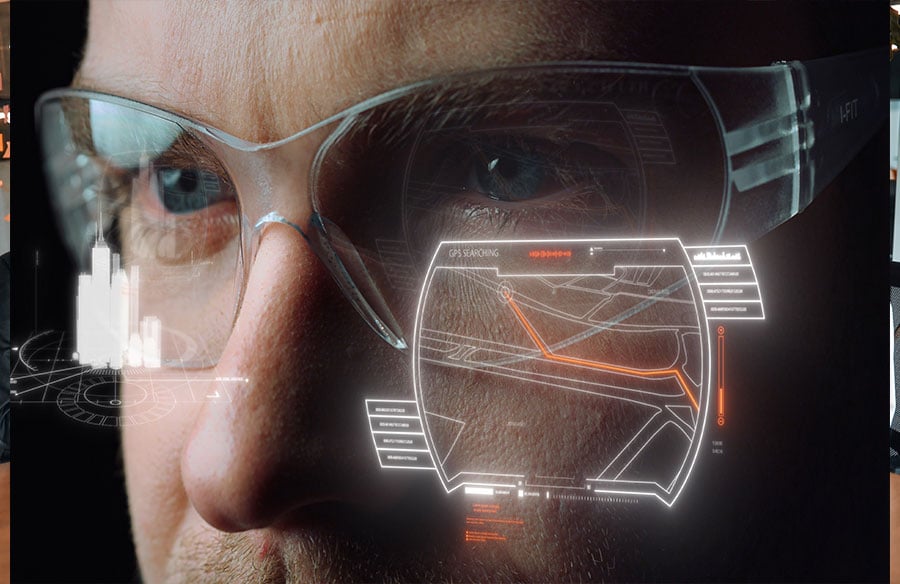
One tool quietly addressing that gap is next-gen Meta glasses, eyewear with a built-in camera, microphone, and voice assistant that lets a surveyor, architect, or site manager capture a photo or a short note hands-free, without setting down tools, climbing partway down a ladder, or breaking concentration during a walkthrough. For anyone whose job already involves two hands full of equipment, that’s a meaningful change in how much gets documented versus how much gets described from memory later.
The Documentation Problem Isn’t New
This isn’t a hypothetical inefficiency. McKinsey’s own research into construction’s digital gap found that construction sites generate vast amounts of data, the majority of which is never even captured, let alone measured and processed into anything usable later. A site visit that produces a few phone photos and a handful of notes is, in practice, capturing a small fraction of the information actually present during the walkthrough, and the gap between what was seen and what gets recorded tends to widen the busier the visit gets.
Where This Fits Into the Wider Technology Shift
Property technology has already been moving toward closing exactly this gap from other directions. Big data and predictive analytics are reshaping how real estate professionals make decisions, but predictive models are only as good as the data feeding them, and site-level condition data remains one of the weakest links in that pipeline. Wearable capture doesn’t replace the analytics layer. It feeds it, by making the underlying data easier to generate consistently in the first place.
Industrial Wearables Have Already Proven the Concept
This pattern isn’t limited to property. Deloitte’s research on wearable devices in the workplace points to adoption already underway across construction-adjacent sectors, improving worker safety and operational efficiency by capturing field data in real time rather than reconstructing it after the fact. Camera-equipped eyewear is a natural extension of that same logic, scaled down to something an individual architect or surveyor can adopt without an enterprise rollout behind it.
A Natural Complement to 3D Capture
For firms already investing in digital site documentation, this slots in as a lighter-weight companion rather than a competing technology. 3D laser scanning and BIM are already transforming how buildings get measured, documented, and modeled, producing rich, precise spatial data for a formal survey. Wearable capture covers the gaps around that process, the quick note about a crack that wasn’t part of the planned scan area, the informal walkthrough that happens before a full survey is commissioned, the moment a client asks a question on-site that’s easier to answer with a photo than a verbal explanation later.
What This Looks Like on an Actual Site Visit
The use cases are fairly unglamorous, which is part of why they work. A surveyor noting a damp patch behind a radiator while still holding a damp meter in both hands. An architect capturing a reference photo of an existing detail mid-conversation with a client, without interrupting the conversation to find a phone. A site manager documenting progress at the end of a long day, when stopping to properly photograph everything with a handheld camera is the first thing fatigue tends to cut.
None of these are dramatic moments. They’re the accumulated, unglamorous documentation that, multiplied across a portfolio of properties, is exactly the kind of granular, site-level data currently missing from most valuation and condition-assessment workflows.
What This Doesn’t Solve
It’s worth being direct about the limits. Wearable capture doesn’t replace a proper measured survey, a structural assessment, or professional judgment about what a defect actually means for a building’s value. It also raises the same consent and professional conduct questions any camera does, recording inside someone’s home or business always deserves clear disclosure, and footage captured this way should go through the same data handling and client confidentiality standards as any other professional documentation.
Final Thoughts
The “data drought” affecting property valuation isn’t really a modeling problem. It’s a capture problem, happening building by building, site visit by site visit, long before any data reaches a spreadsheet or an algorithm. Wearable cameras won’t close that gap by themselves, but for the professionals actually standing in these buildings every day, they’re one of the more direct ways to make sure what gets seen on-site actually makes it into the record, rather than disappearing into memory before the next appointment.