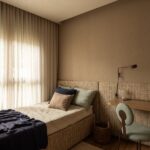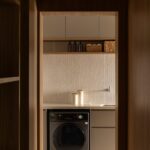
SUITE was asked to make 170 m² work for two parents and their children. Across its projects, the studio tends to begin with whatever a building already offers, so in this apartment the awkward givens of the structure became prompts for sculptural moves instead of problems to conceal.
Project Name: Tess Apartment
Studio Name: SUITE
Location: São Paulo – Brazil
Photographer: Pedro Ocanhas
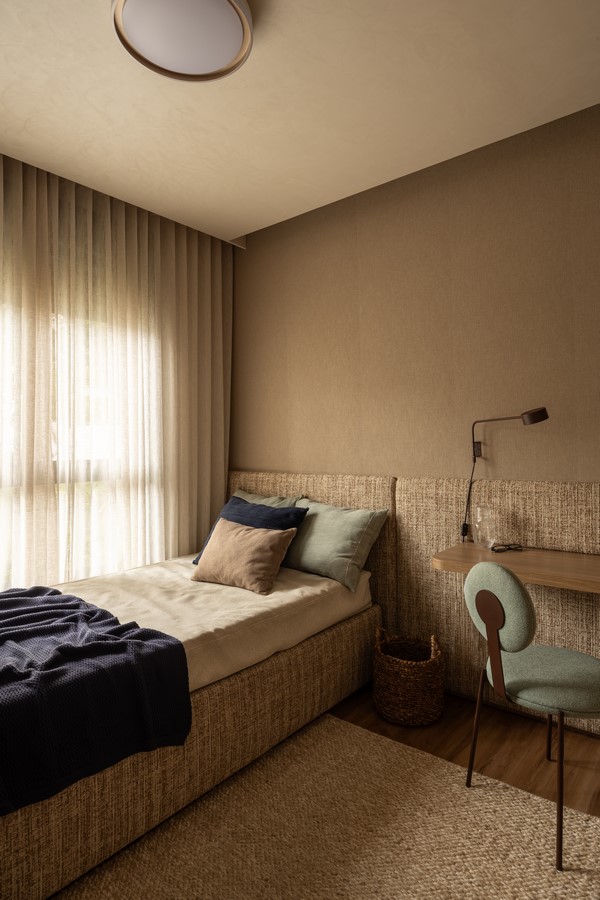
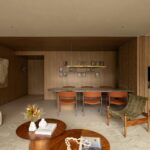
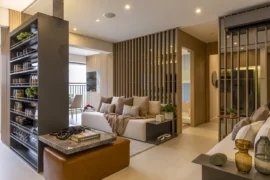
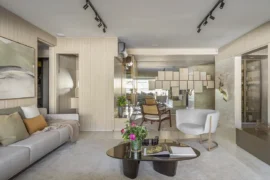
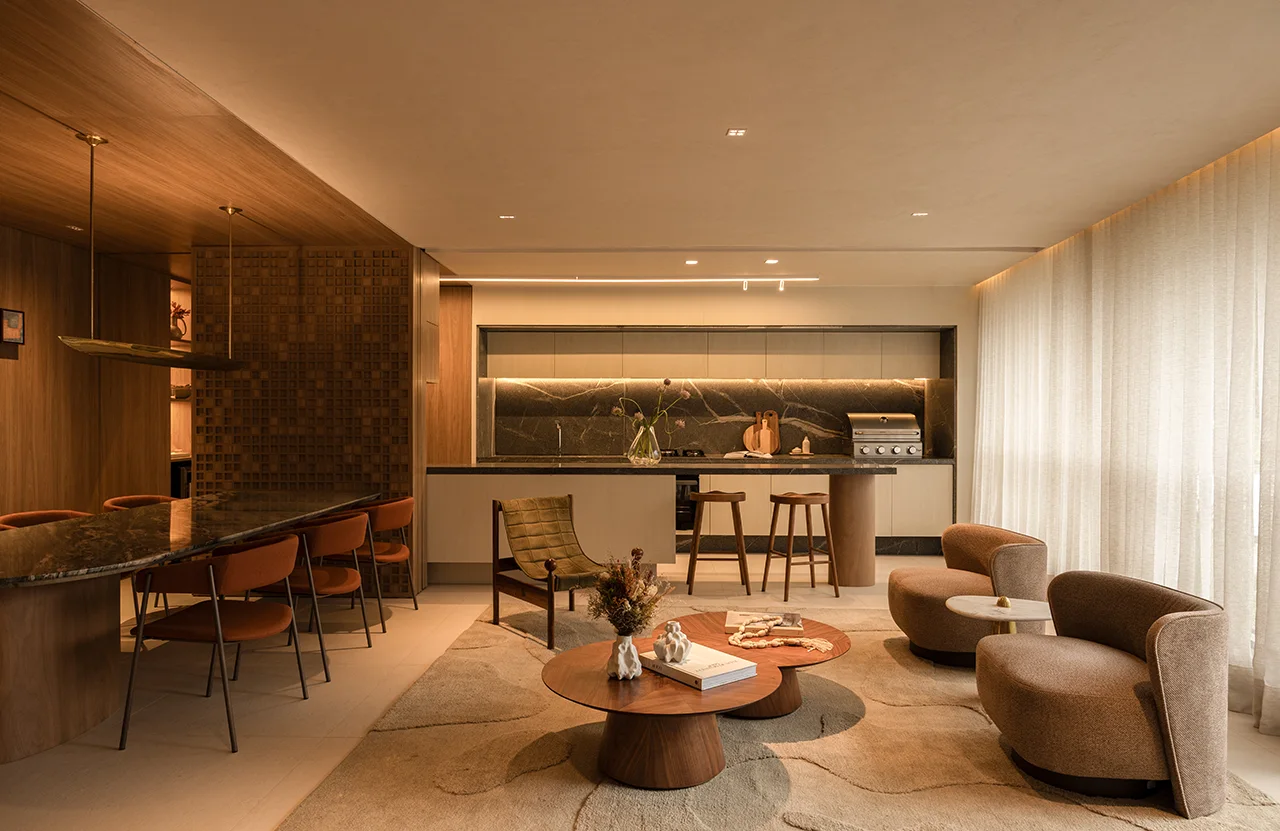
Take the living room. A column that could have been a nuisance became the starting point for the seating: a made-to-order sofa curves around it and doubles as the home theater, so one object serves two uses. A hand-carved mashrabiya sits between the kitchen and the lounge. It keeps the two spaces in view of each other, softens the transition between them, and gives the family a way to be private when they choose. Textures of cloth, timber and other natural materials link the interior to its surroundings, and a curated group of Brazilian design pieces punctuates the rooms.
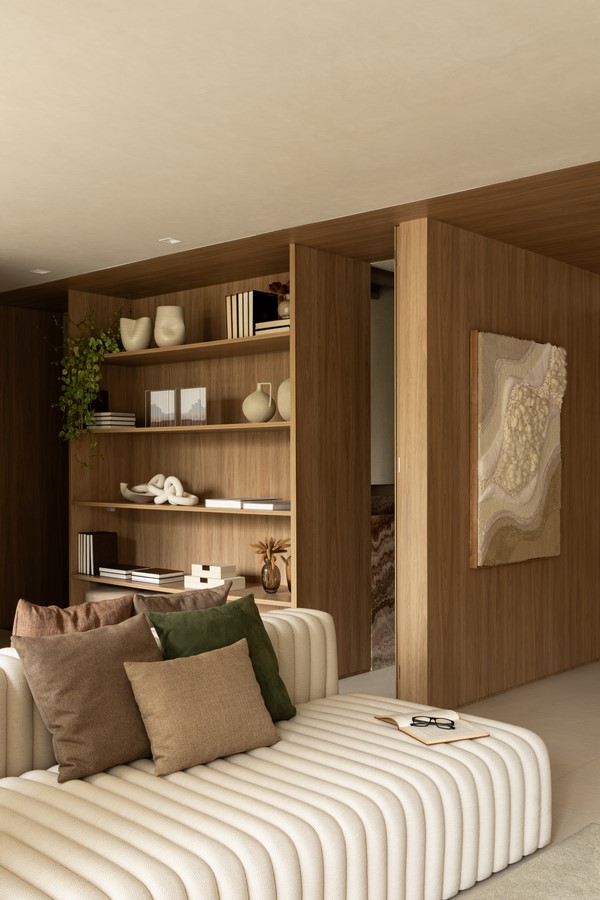
The way in is a passage the architects call a “cocoon”. Walls and ceiling alike are covered in timber, which keeps newcomers for a brief pause in a hushed, tight space. Beyond it, the social area unfolds, its large openings erasing the lines of the plan and letting sunlight spread through.
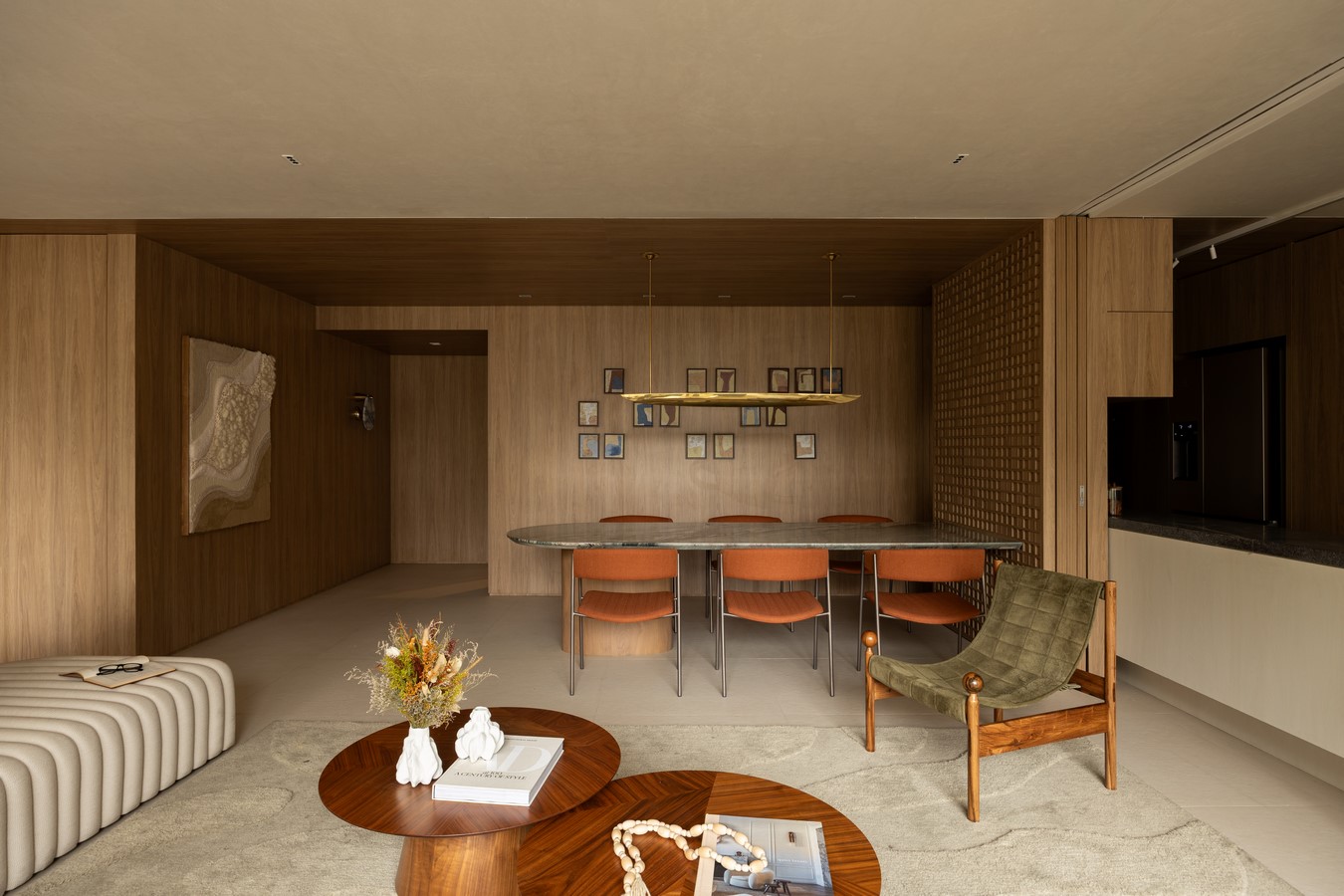
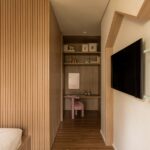
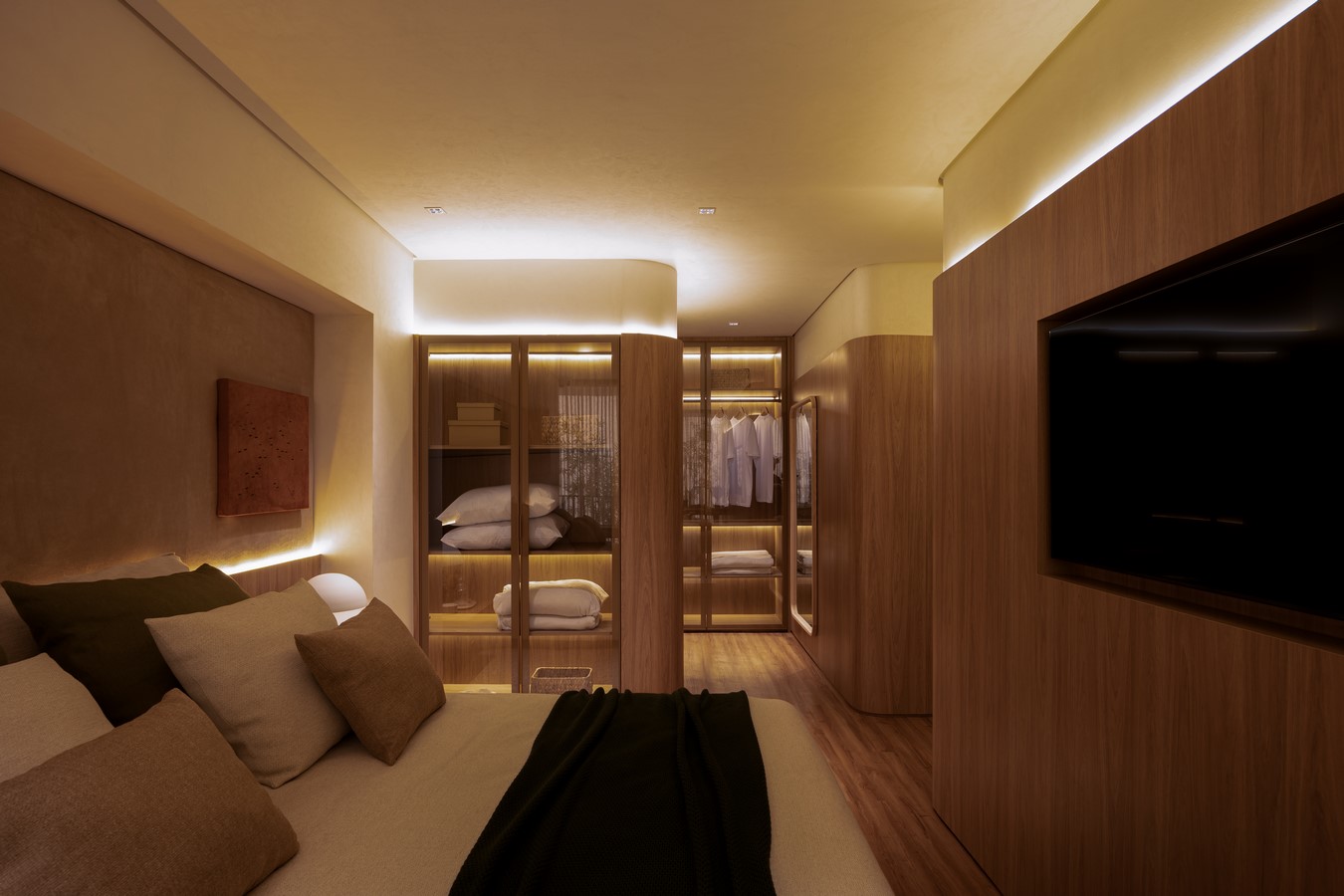
Compression, then release: the sequence works almost like a short story told in space. That timber then carries on down the corridor to the bedrooms, giving the entire apartment the feel of a single unbroken line.
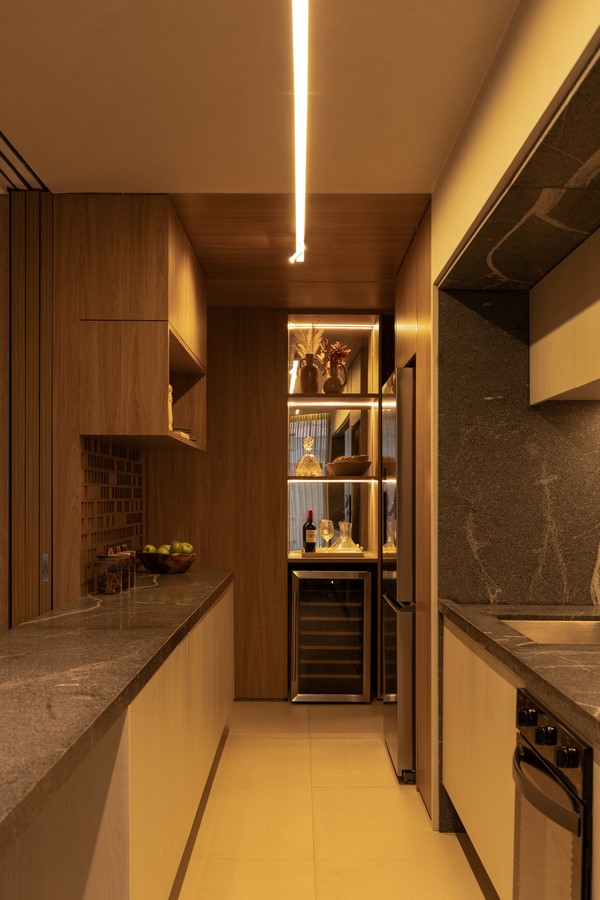
Color is held back everywhere except the powder room. A natural stone in a rich, saturated hue is the single bold choice, and because it was left unpolished it keeps its raw, rough character, which brings warmth and a welcoming feel to the room. The floor there is covered in large-format porcelain, which balances good looks with easy upkeep, a sensible match for a household with little ones.
Overall, the apartment challenges the standard idea of an open plan. A condition of the original building that might have been read as a weakness is turned into an asset: the limitation supplies the story, and the family’s practical needs become the everyday experience of living there.