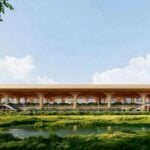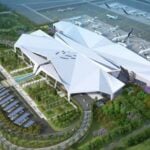
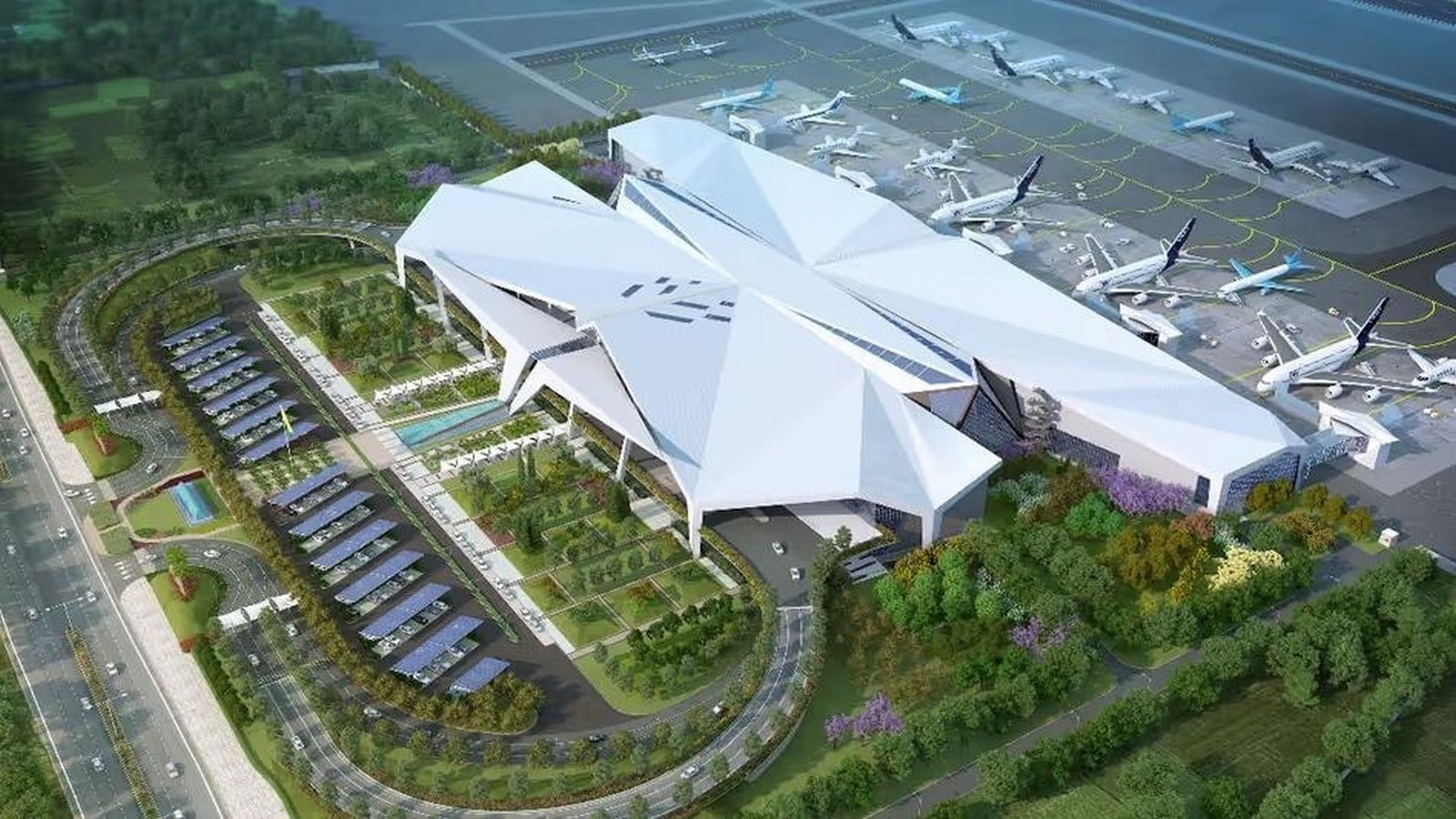
Guwahati is a major economic hub and a key point of connection to India’s northeastern states. The Lokpriya Gopinath Bordoloi International Airport, the region’s sole airport, serves as an important gateway for people commuting to and from the northeastern region. Accredited as the 11th busiest airport in the country, the single-terminal airport became increasingly inadequate for the rapid influx of travellers. Thus, an expansion was proposed, and the foundation stone for a second terminal was laid on January 28th, 2018. T2, popularly known as the Bamboo Orchids Terminal, spans an area of approximately 1.4 lakh square meters with a capacity of 13.1 million passengers annually.

Designed by architect Nuru Karim, the airport was described as India’s first nature-themed terminal by the PMO. Assam’s lush landscapes, cultural heritage, and biodiversity can be seen merged into the design. The new terminal of the Lokpriya Gopinath Bordoloi International Airport combines regional identity with functional structures. It showcases how traditional and modern design can co-exist beautifully.
Design Philosophy
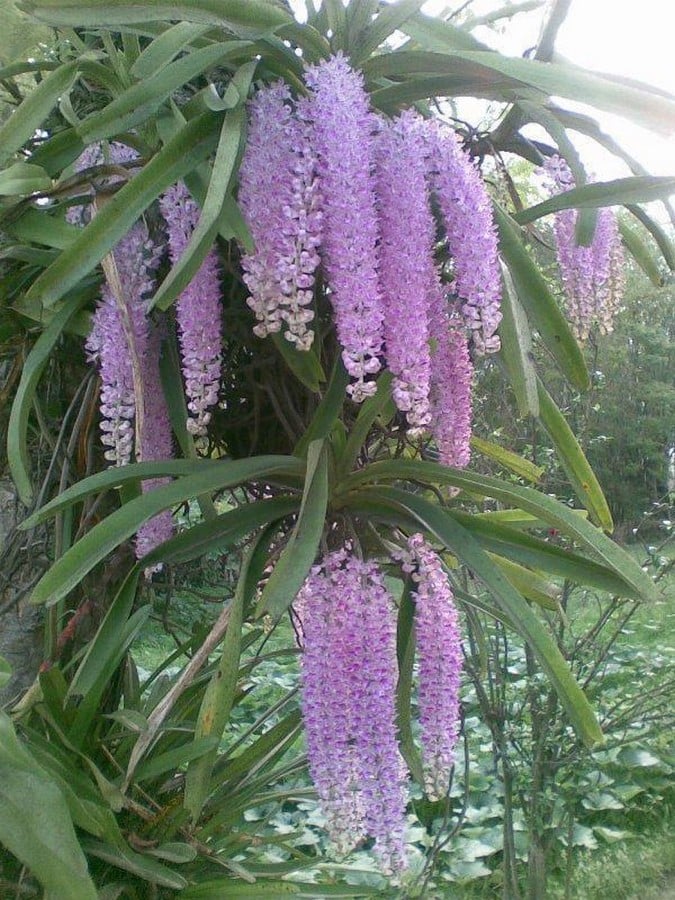

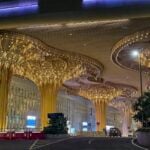
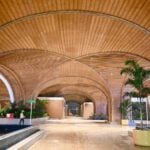
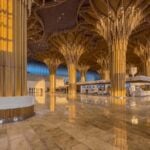
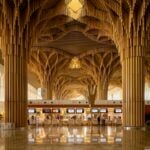
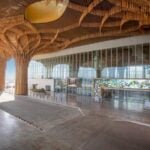
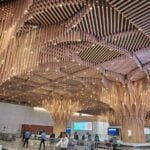
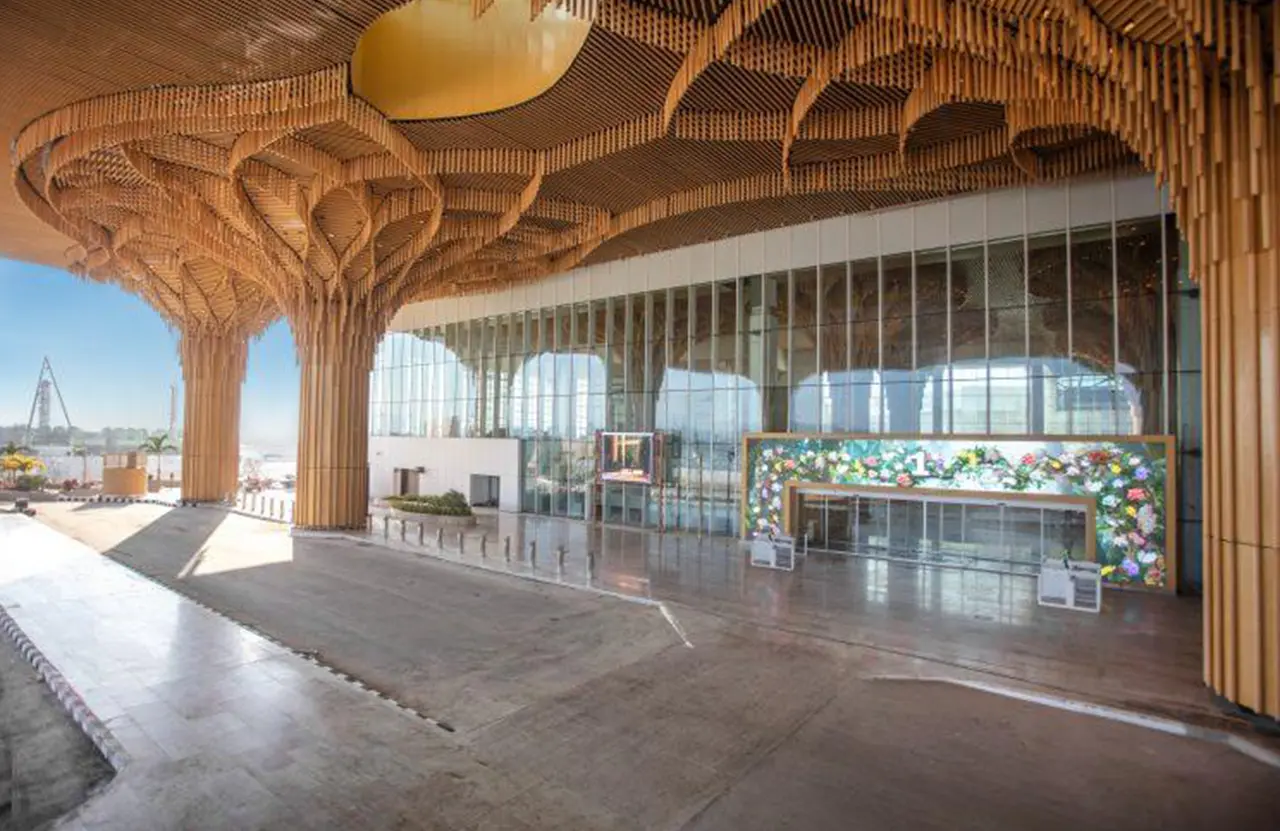
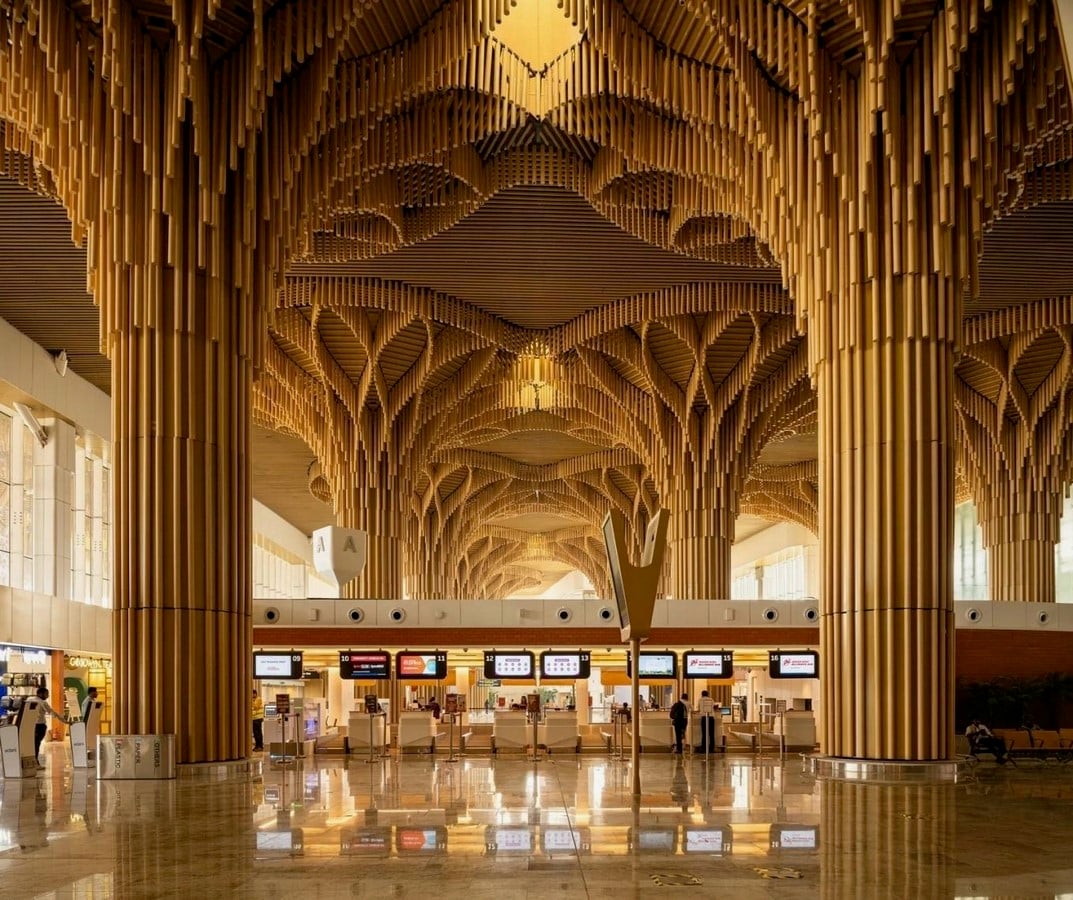
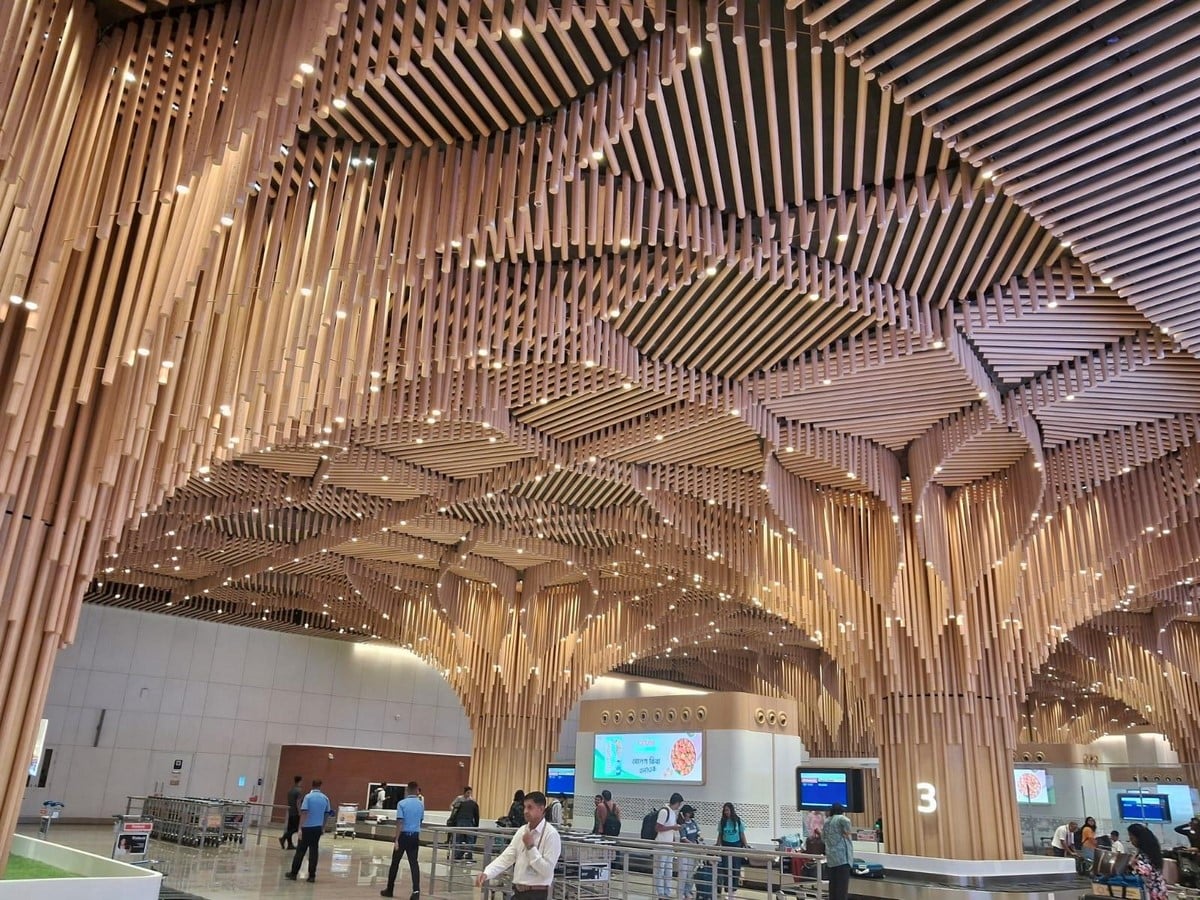
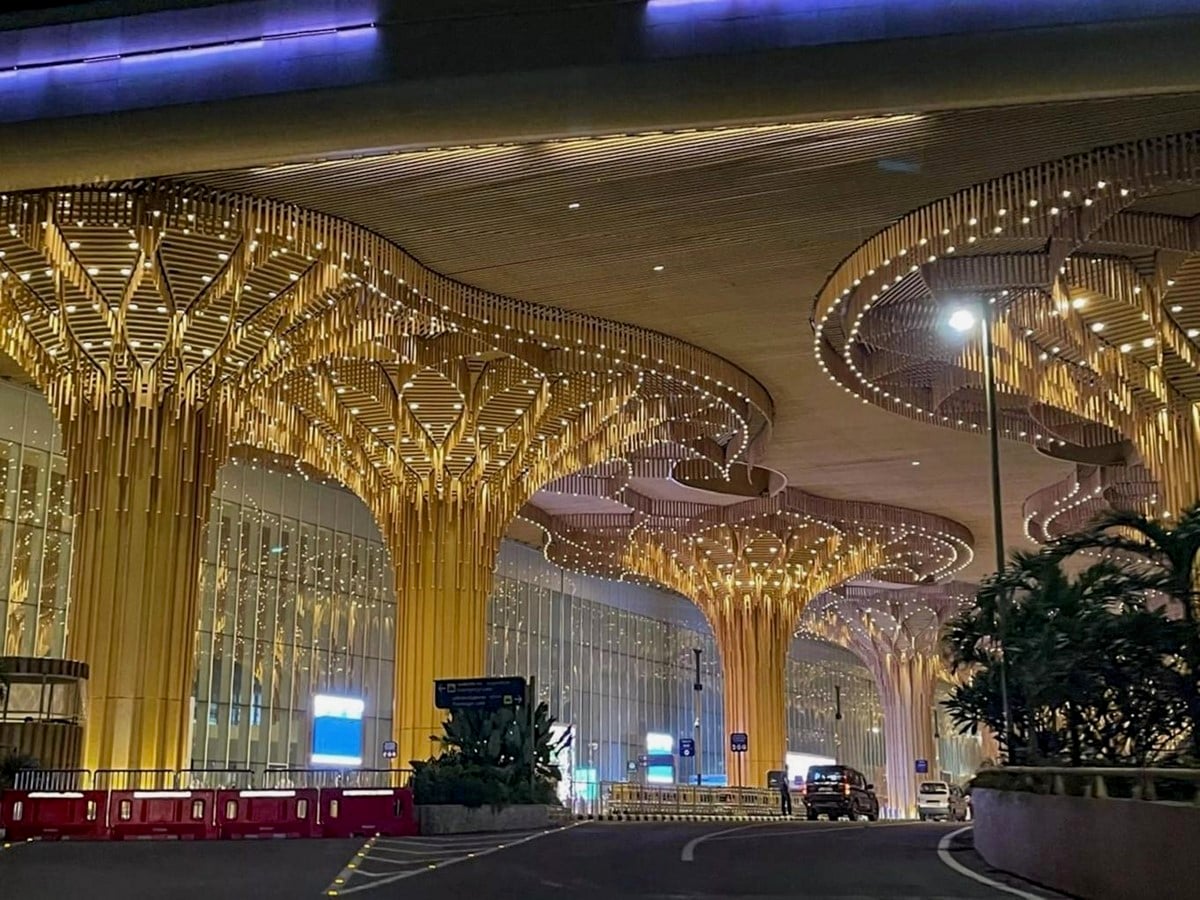
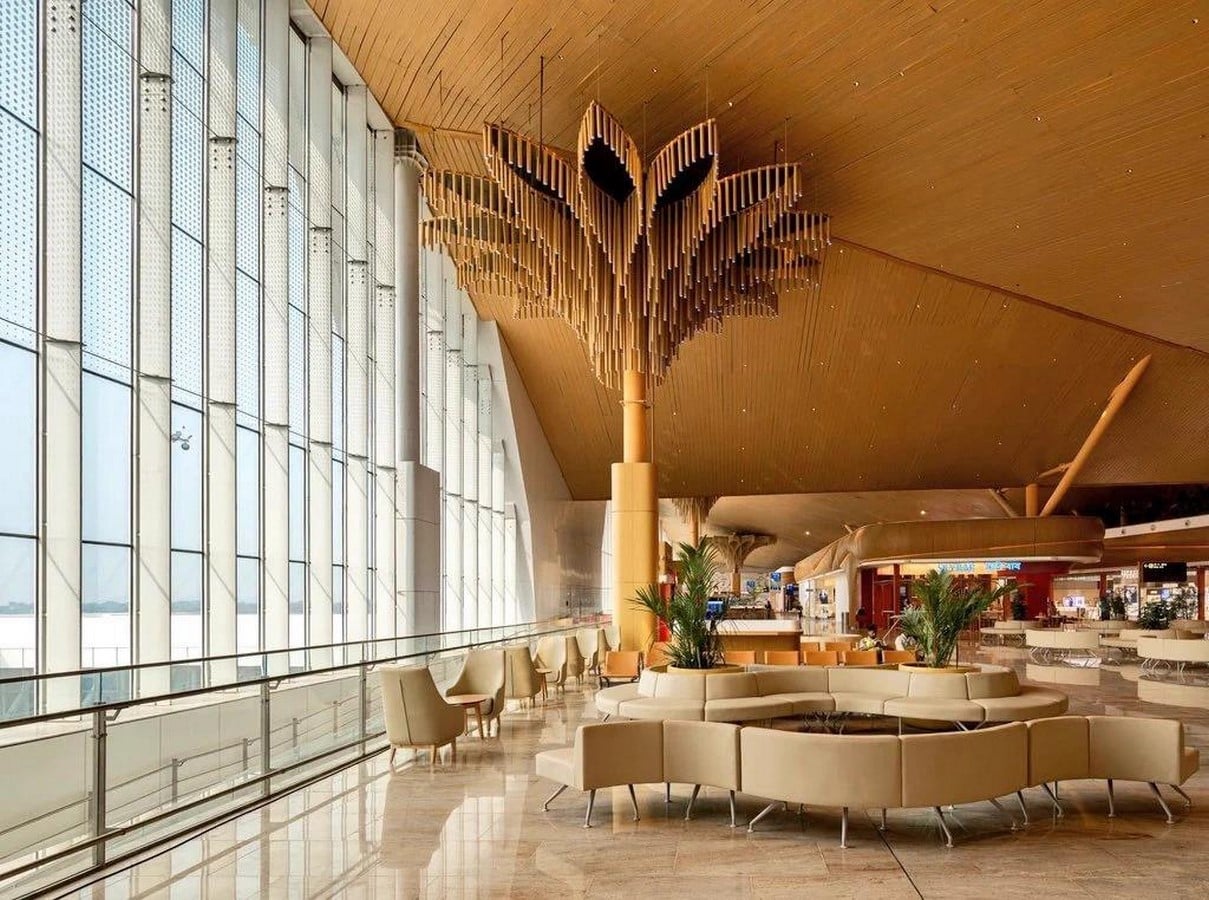
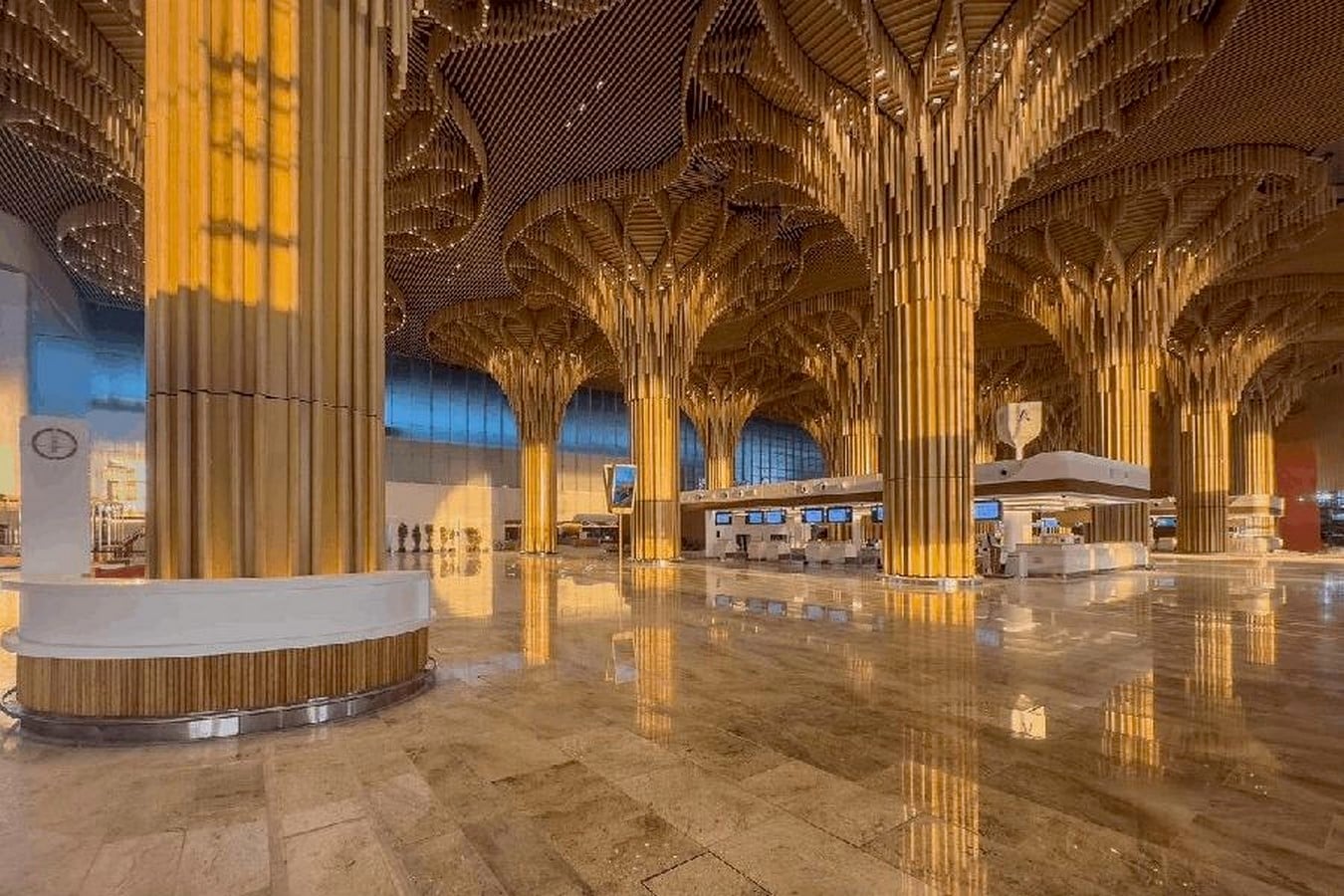
The architect took inspiration from the native foxtail orchid (kopou) and incorporated the indigenous Bholuka bamboo of Assam and Apatani bamboo of Arunachal Pradesh. Apart from being the state flower, the foxtail orchid is an integral part of Assam’s cultural heritage, while bamboo is deeply embedded in the craft and traditional life. The primary design philosophy was to create a space that feels warm and inviting. The huge vaulted roof, with openings, not only provides natural daylight but is also the defining architectural element of the Lokpriya Gopinath Bordoloi International Airport. The 57 columns, branching out in an orchid-inspired pattern, along with the large-span roof, create a sense of openness.
Material Choice
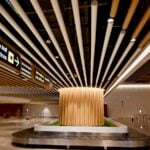
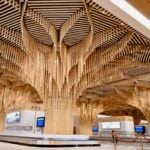
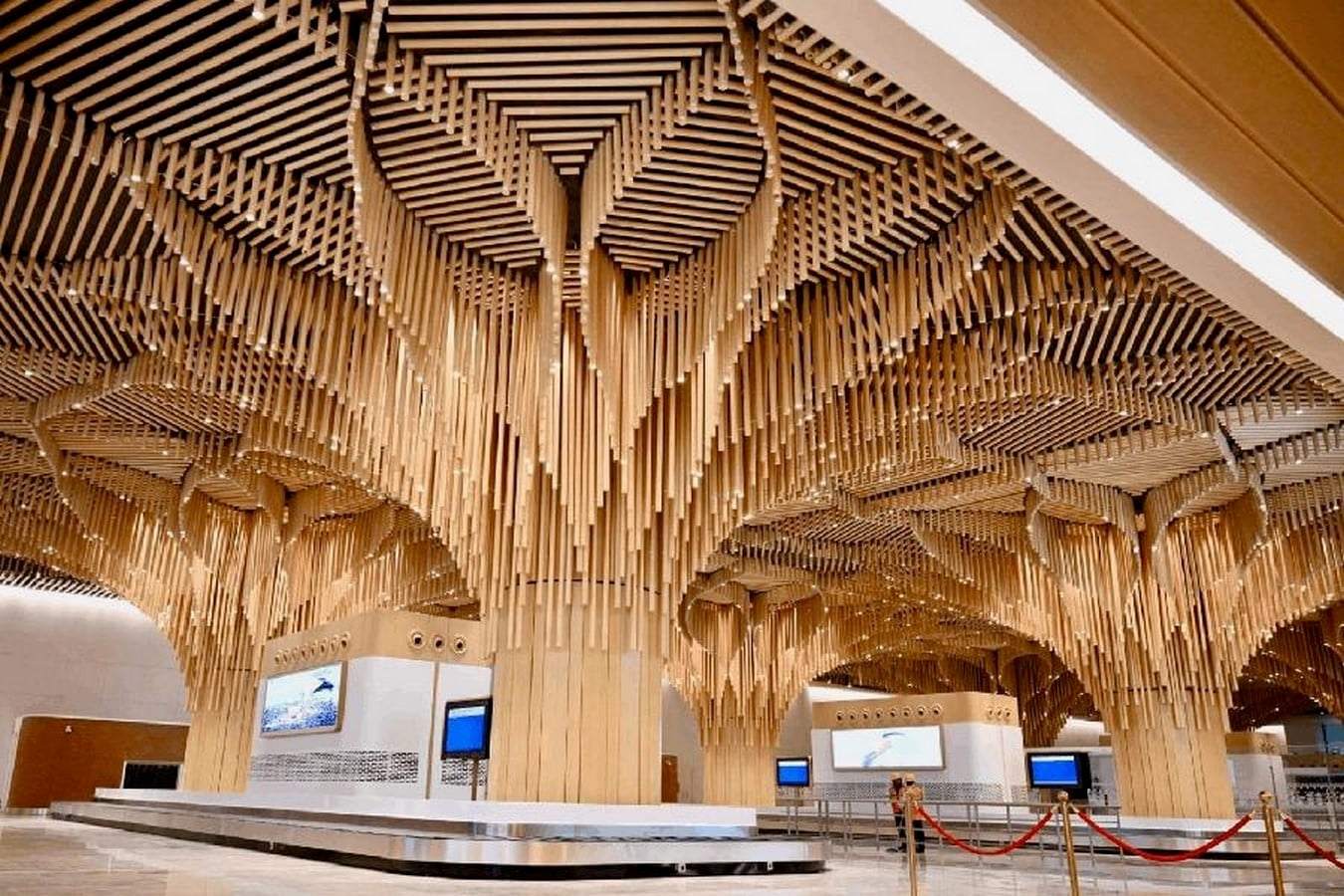
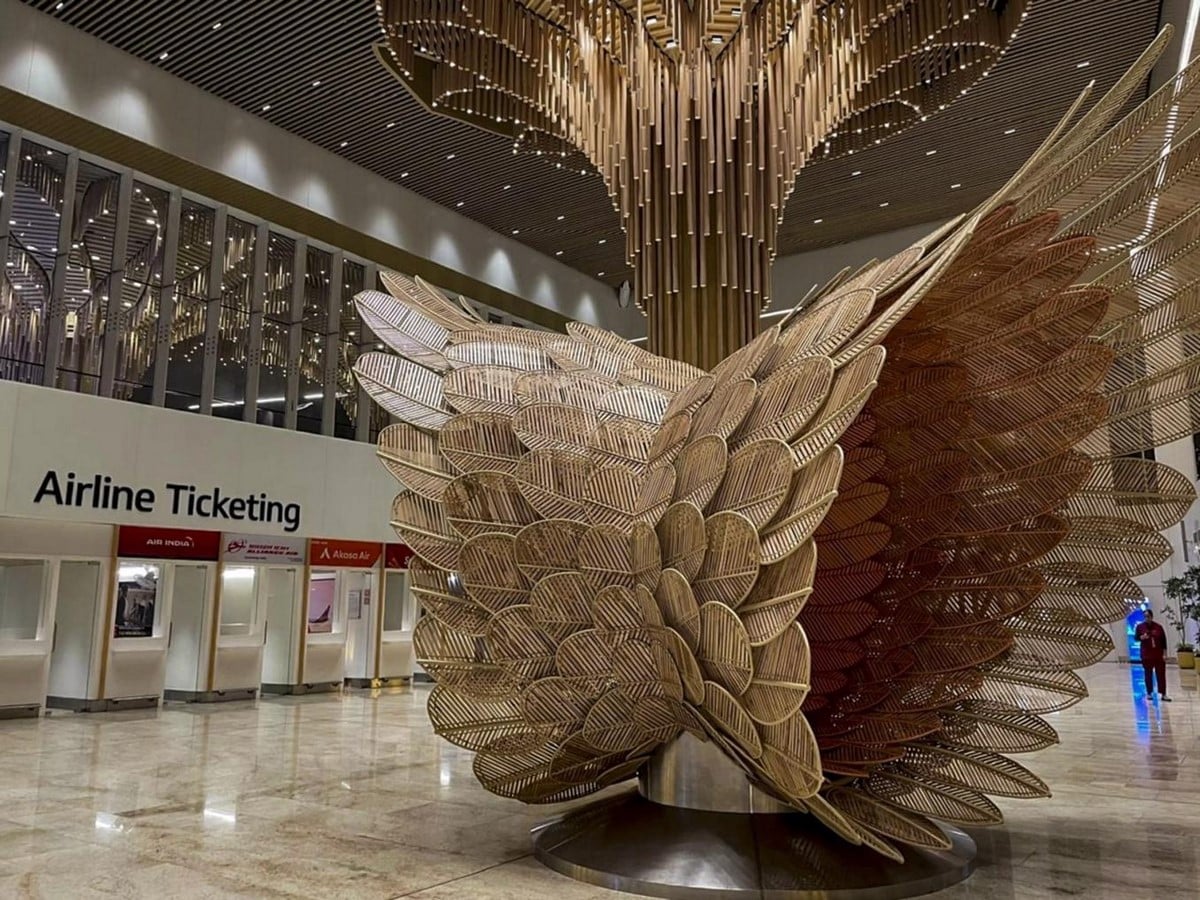
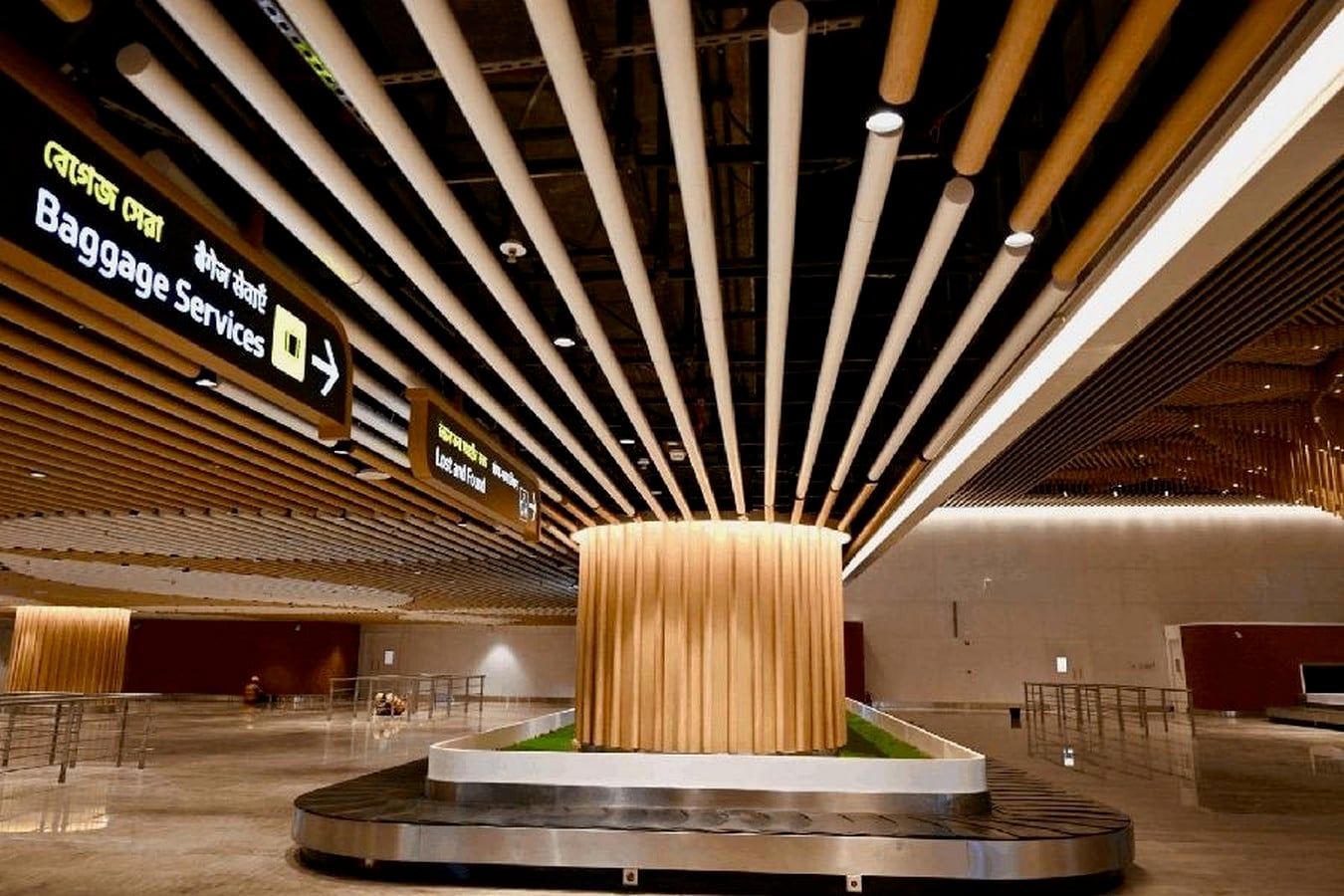
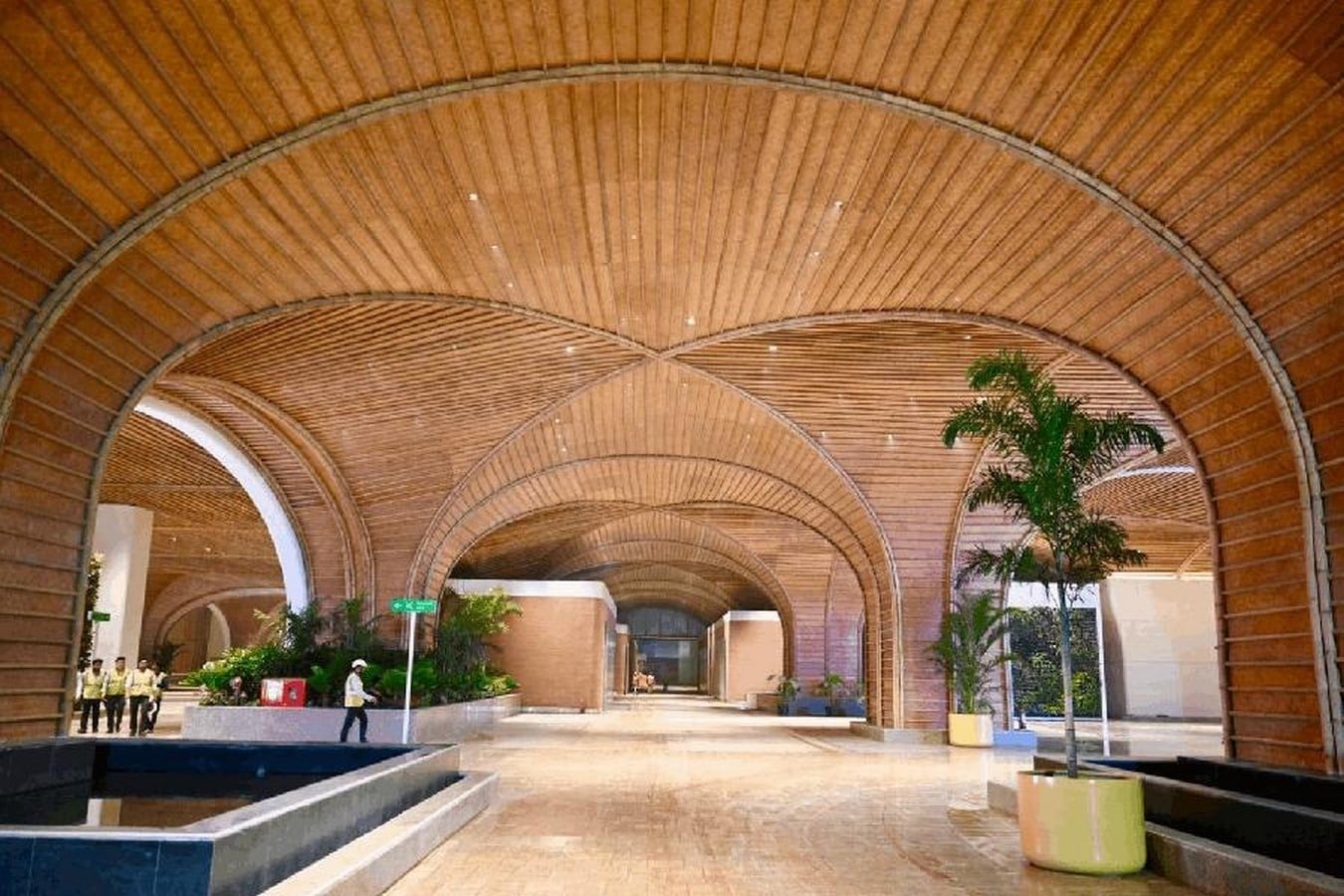
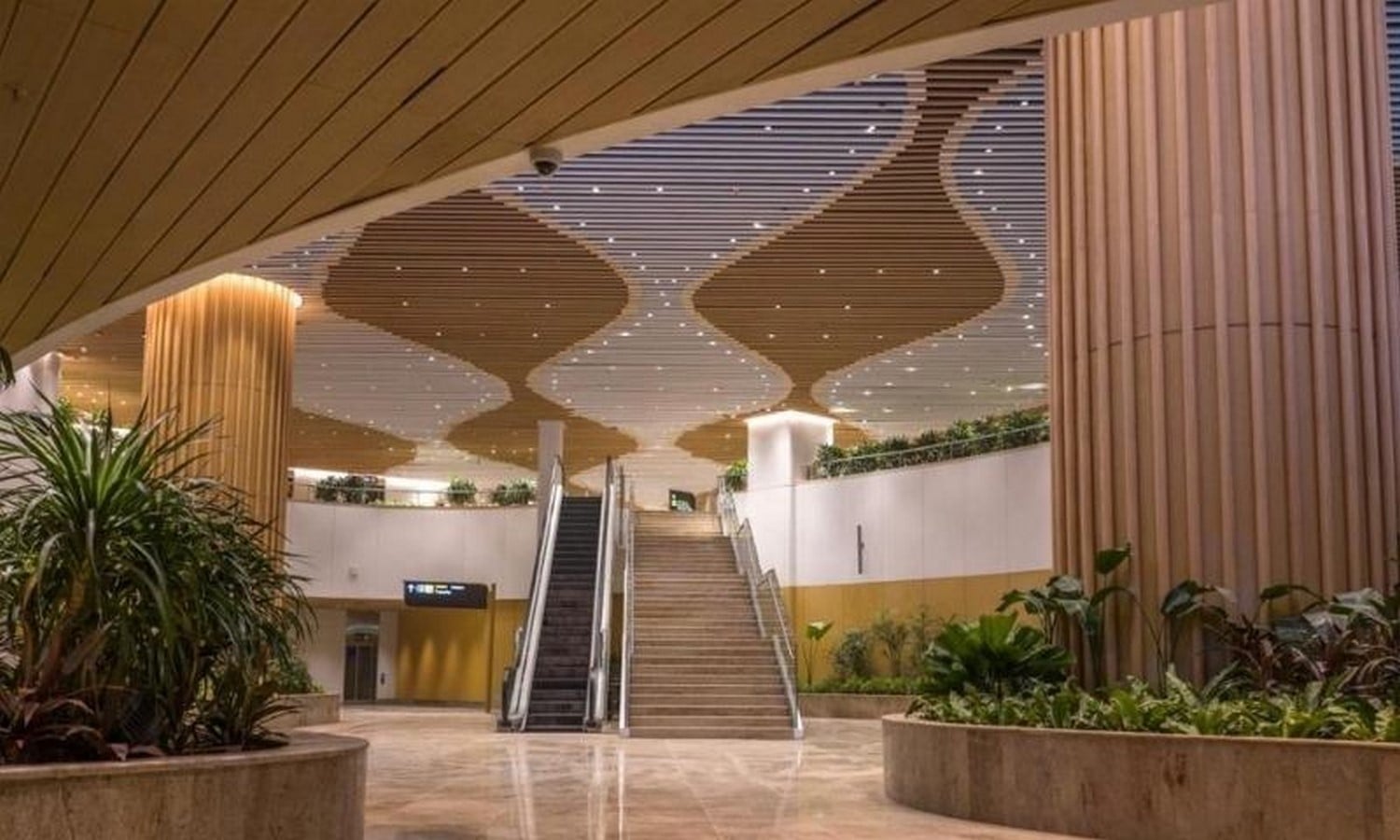
The most standout feature of the new terminal has to be the extensive use of bamboo. Approximately 140 metric tonnes of bamboo were locally sourced and processed into several forms. The vaulted ceiling elements, the fluid floral-shaped columns, and various interior architectural elements have been created with bamboo. This particular choice of material was an obvious one when the theme was to create a sense of belonging. Bamboo has been an integral part of Assam’s vernacular architecture. As a renewable material that is lightweight, strong, and flexible, it is well-suited for the flood-prone plains of the region. In T2, apart from using it as a visual identity, bamboo has been associated with sensory experience. The use of bamboo in forms of lattices and screens has brought texture and scale into the design. Although it cannot be said to be the primary structural system, it supports the contemporary structural and engineering framework of steel and concrete.
As part of the daylight strategy, glass has been used for glazing and high-level openings. The check-in area has hollow columns acting as vertical lightwells that bring daylight deep into the passenger halls. The building exterior walls have been supplemented with extensive glazing so as to bring in natural light. Numerous skylights and roof openings have been carefully placed to maximize daylight, while the high vaulted ceiling and vast open space allow natural light to spread across the interior.
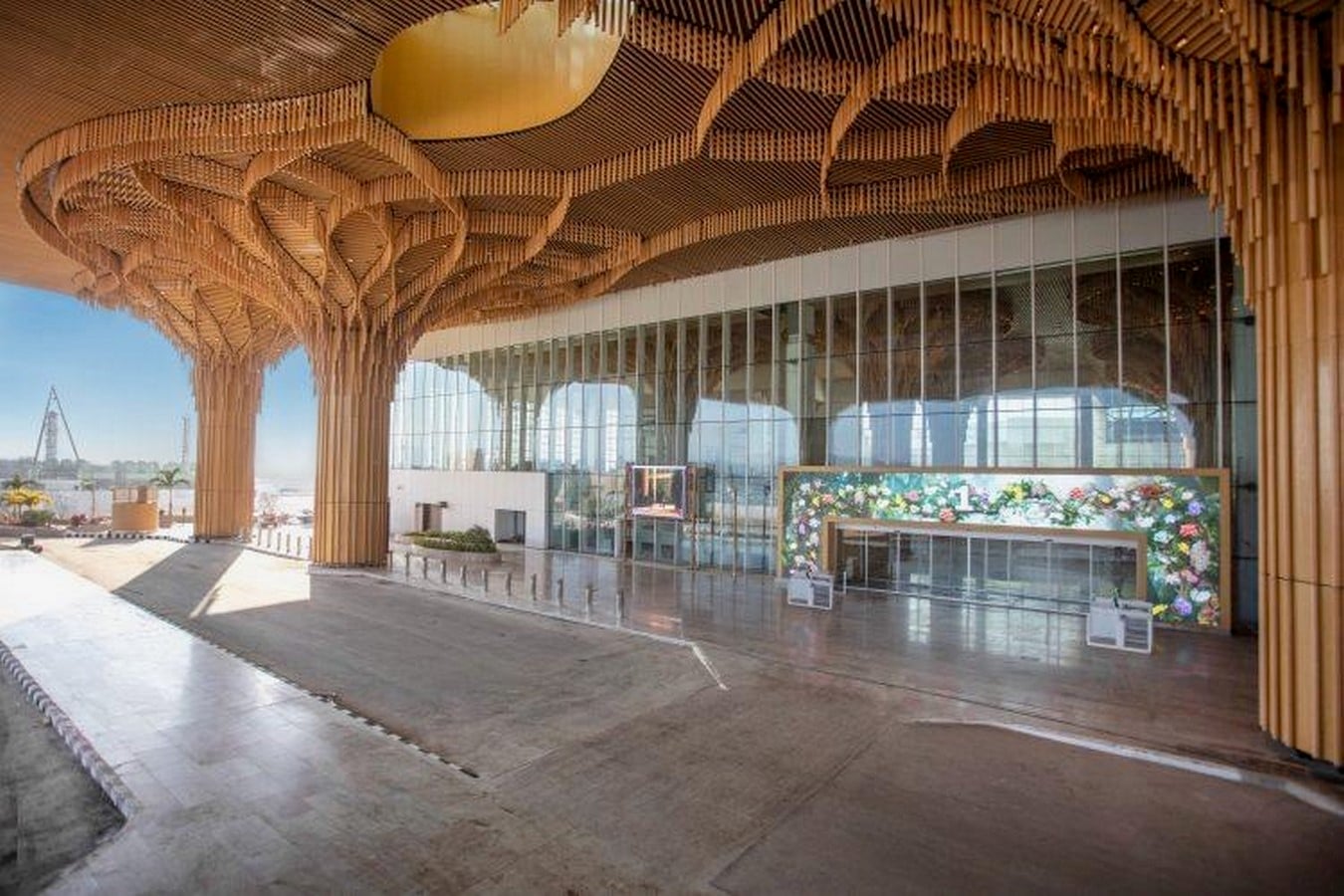
The material selection for Terminal 2 of Lokpriya Gopinath Bordoloi International Airport demonstrates how traditional materials and cultural references can be integrated into modern construction systems. The architecture of the terminal shows that local and contemporary materials can be made to work together well through proper engineering and computational design.
Construction Strategies
To achieve the smooth amalgamation of the bamboo with the highly technical requirements of an airport, the construction process brought together a team of professionals ranging from architectural designers to bamboo specialists and landscape artists to green consultants.
The flowing ceiling has been constructed in several layers. The large-span structural roof system has a steel and R.C.C. framework. For the curved bamboo elements to be constructed at the required scale, they are supported with concealed steel framing. The bamboo was treated and engineered completely before installation. Developed through a computational approach, the bamboo vaults aren’t simply a decorative finish. They have been tested with parametric workflows for various issues involving climate, material behavior, structural efficiency, and resource management. Nuru Karim states that the roof has been structured to respond to daylight, wind pressure, and monsoon drainage. Each material and technique has been carefully engineered to meet the airport’s structural and safety requirements.
Spatial Organization
The spatial organization is relatively uncluttered when it comes to passengers’ wayfinding. It has been organized as a series of sequential movements:
Entry Check-in Security Departure Concourse Boarding
Arrival Immigration/Baggage Claim Arrival Hall Transport Facilities Exit
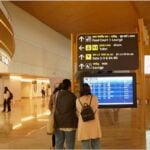
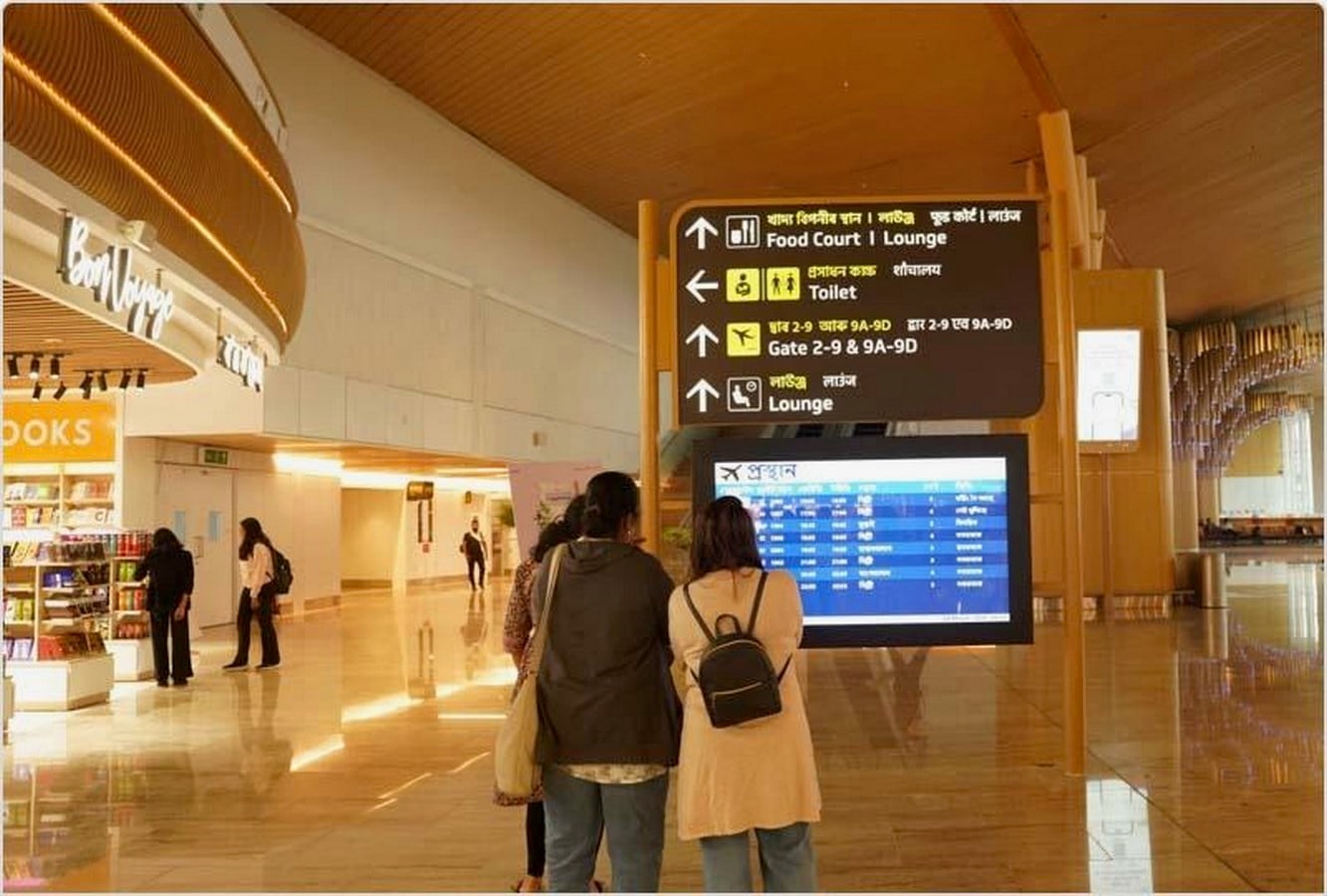
The layered wayfinding system has a combination of clear physical signage, digital flight-information displays, and terminal maps. The system has been designed to include passengers with different mobility and accessibility needs. It specifically identifies:
- Wheelchair assistance
- Accessible ramps
- Accessible restrooms
- Priority boarding
- Dedicated staff assistance for passengers with reduced mobility
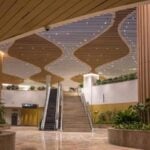
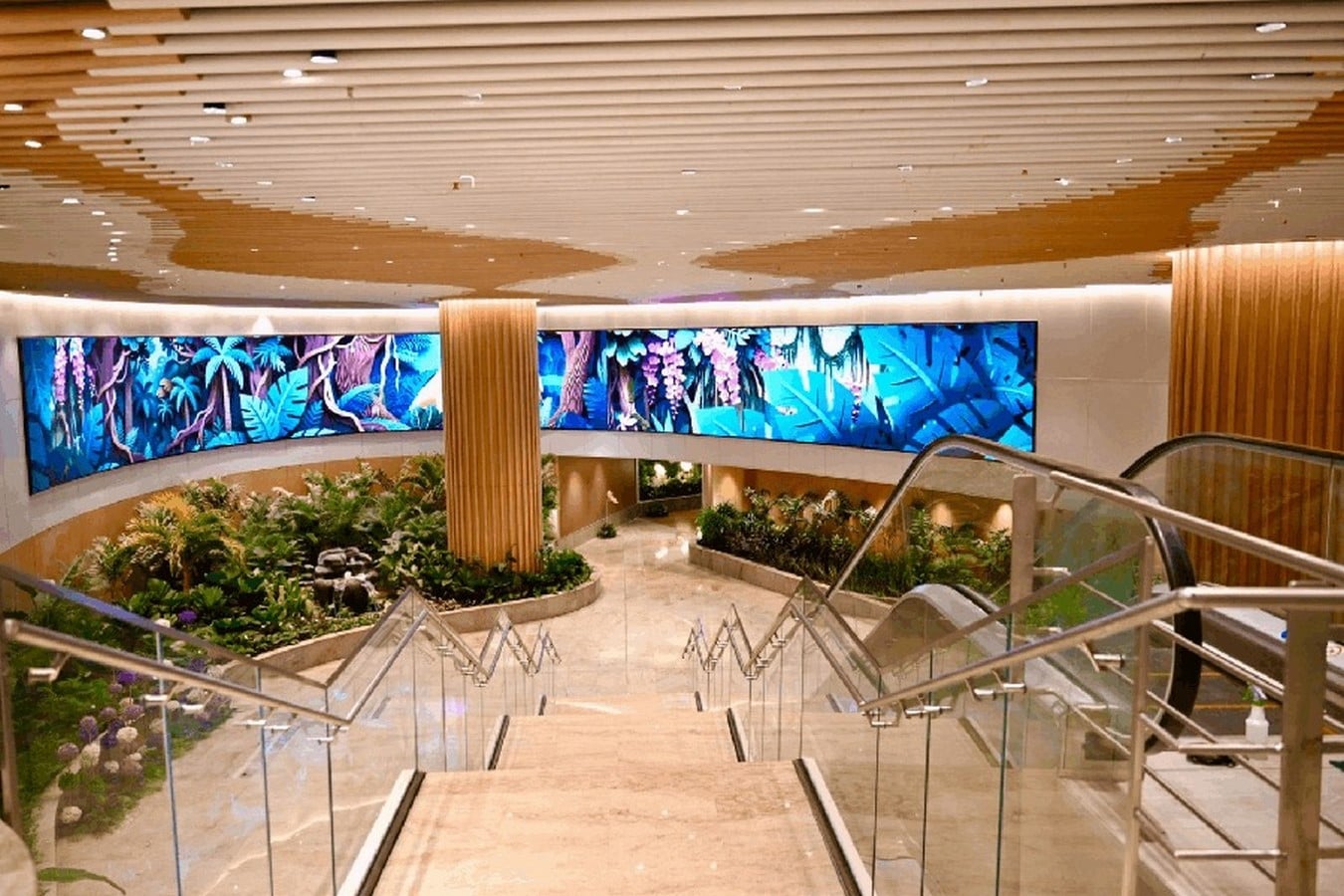
The new terminal has two principal levels, the lower floor dedicated to arrival while the upper floor is for departure. The lower floor has the arrival hall, immigration and customs, baggage collection, retail outlets, and transport facilities. The upper floor is the principal departure-processing level. It has check-in counters, security screening, boarding gates, retail outlets, a waiting area with food and beverage facilities, and the lounges placed on a mezzanine floor. All the levels are well-connected through staircases and escalators for easy movement.
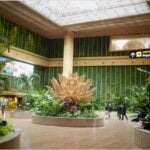
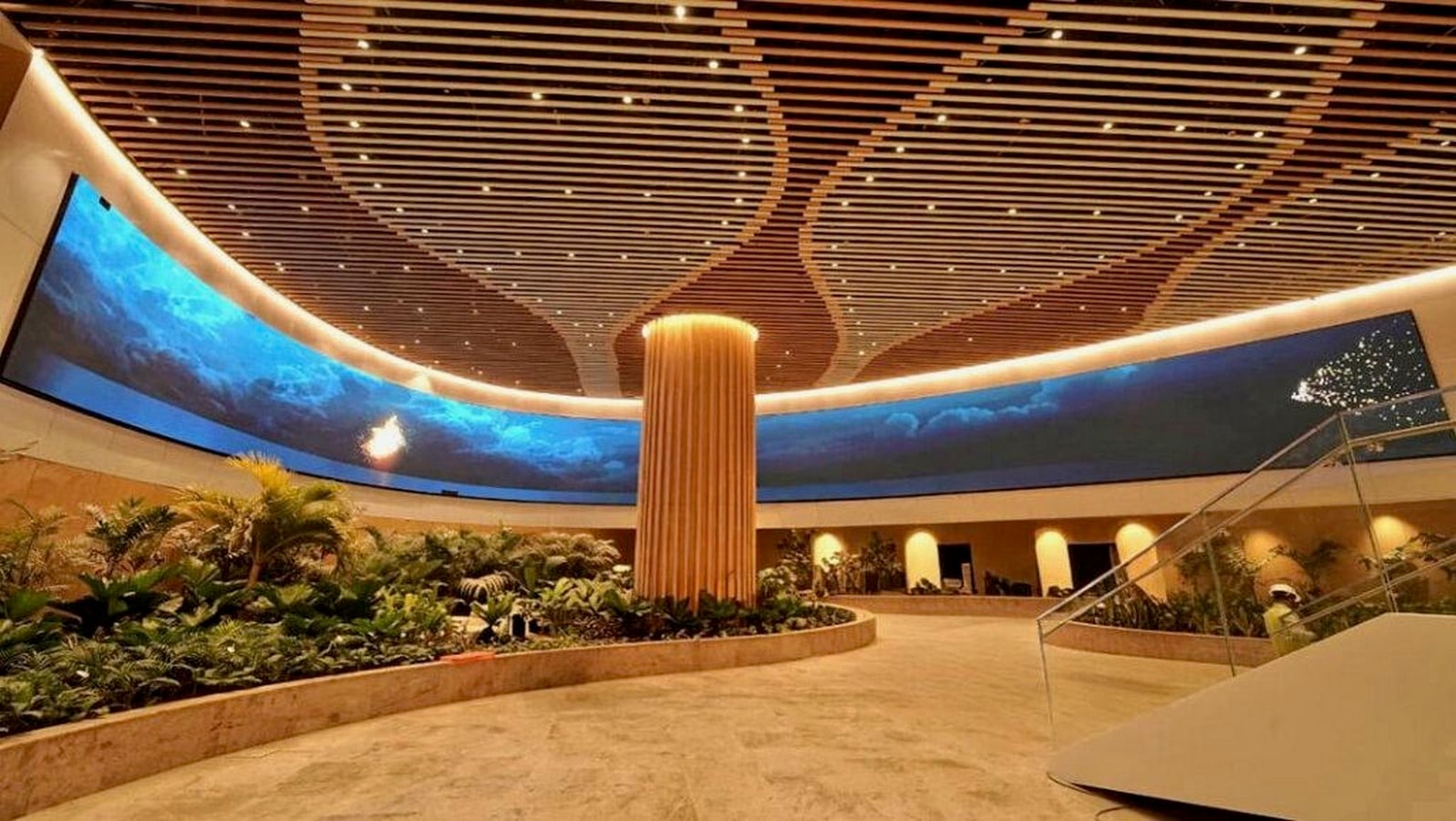
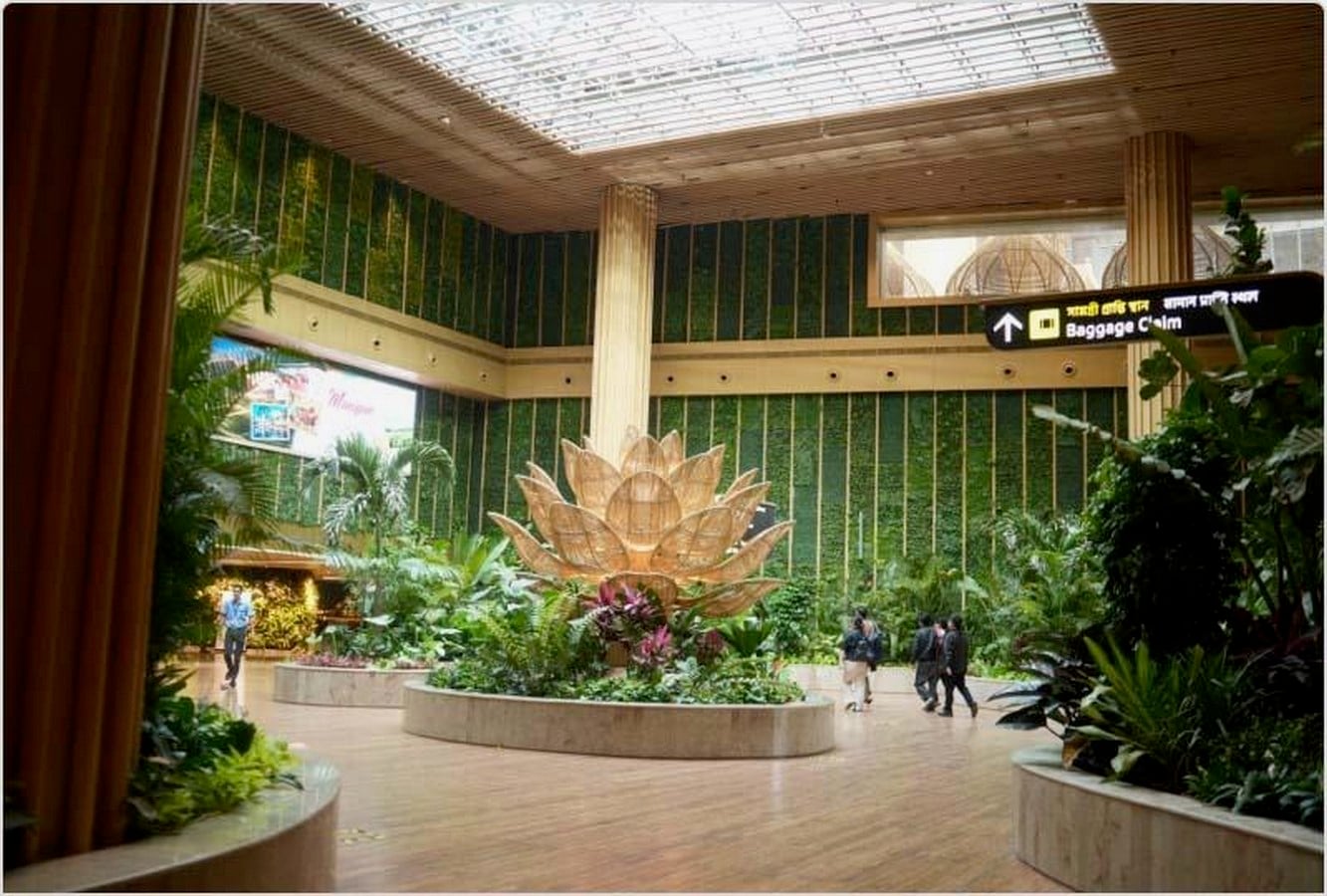
The use of large open spaces, landscaped interiors, distinct arrival and departure flows, visual connection with nature, and biophilic design creates an organic spatial character.
Sustainability
From water management and sewage treatment to daylight and material selection, from landscape strategy to GRIHA certification, the terminal at Lokpriya Gopinath Bordoloi International Airport operates at different scales of environmental strategies.
According to the environmental-compliance documentation, due to the site’s high water table, groundwater recharge was out of the question. Instead, two tanks of 500 cubic meters capacity each were constructed for rainwater storage. A 1000 KLD sewage treatment plant is being developed on a modular basis, with a 100 KLD sewage treatment plant already operational. Stormwater drains, silt traps, oil traps, and sedimentation are part of the maintenance system. As per the documentation, measures have also been taken to prevent waterlogging during heavy monsoons. The terminal has a centrally monitored and controlled HVAC system contributing to the indoor temperature, along with passive cooling. The principal architectural element, bamboo, has an explicit maintenance program solely designated for it.
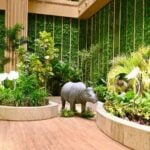
The Airport Authority of India’s project documentation states that this terminal has been designed to achieve a 4-star GRIHA (Green Rating for Integrated Habitat Assessment) rating. Nearly 1 lakh indigenous plants have been installed to create a forest-like arrival experience. The interior has been landscaped with various indoor plants and shrubs. Natural light is distributed through windows, skylights, and high-performance glazing as well as through hollow columns. The layout has been planned so that maximum daylight can be achieved.
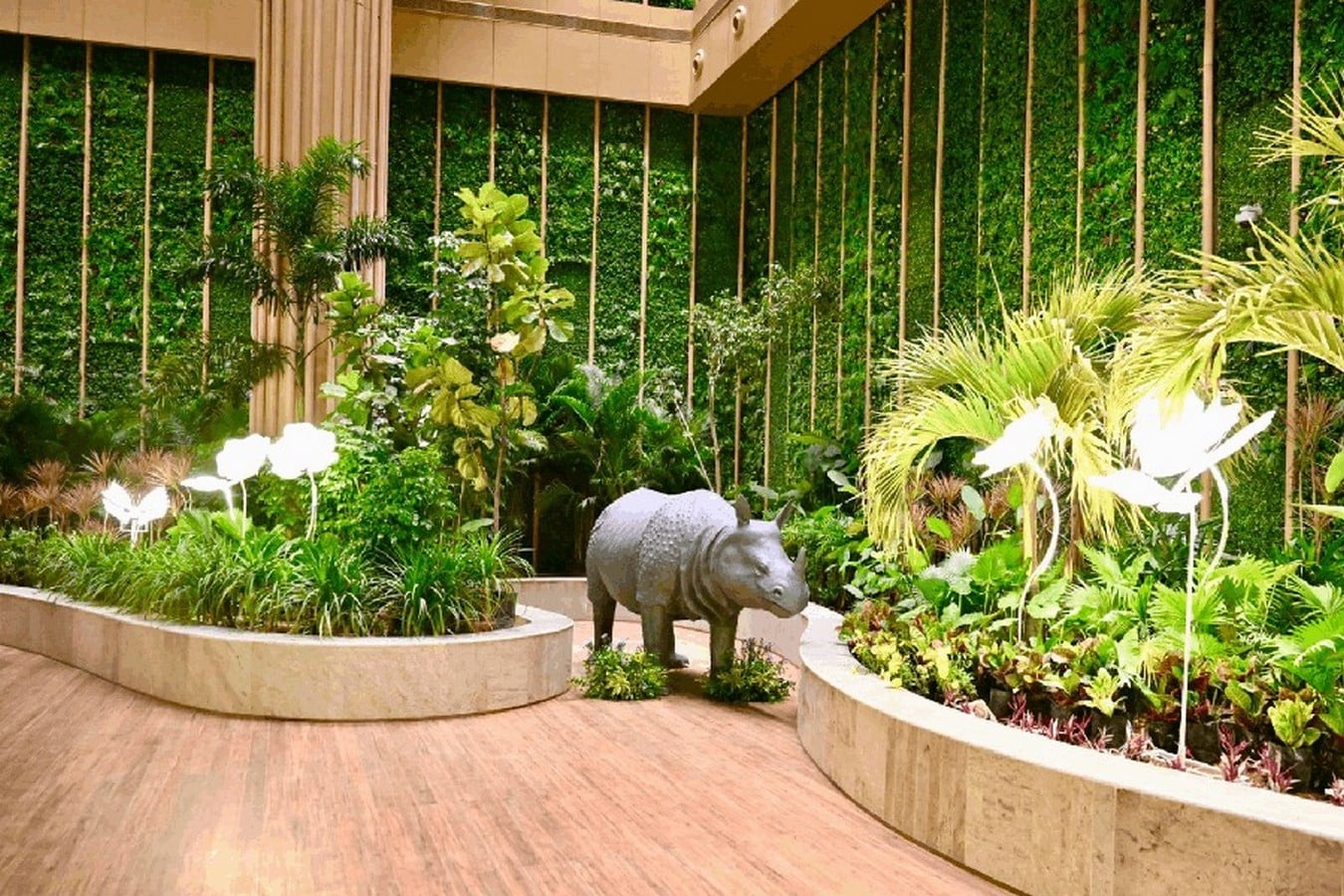
The sustainability of the new terminal does not rely only on materials and design. It has a dedicated network of inspection, servicing, environmental monitoring, repair, and resource management. As per the airport’s environmental-management program, a budget of 6.09 crores has been approved for:
- Wastewater management
- Green-area development
- Energy conservation
- Solid-waste management
- Environmental-quality monitoring
Conclusion
Primarily using the symbols of Assam, bamboo, foxtail orchid, japi, one-horned rhino, and greenery, the new terminal of Lokpriya Gopinath Bordoloi International Airport stands as a contemporary cultural gateway. The transformation of a highly standardized building into an ecological symbol communicates a strong sense of local character. The use of organic forms and fluid design tells a broader architectural language instead of a simple graphic motif. Although bamboo has been used largely as an expressive and experiential material, its exact advantages remain underutilized. The case study highlights the potential of integrating it more deeply into the structural performance of the terminal in the future.
References:
- About Us: Lokapriya Gopinath Bardoloi International Airport [online]. Available at: https://lgbia-guwahati.adaniairports.com/en/about-us
- Domestic Projects [online]. Available at: https://www.aai.aero/en/services/domestic-projects
- About Us: Lokapriya Gopinath Bardoloi International Airport [online]. Available at: https://lgbia-guwahati.adaniairports.com/en/about-us
- Press Release [online]. Available at: https://www.aai.aero/sites/default/files/press_release_news/Press%20Release%20_%20Foundation%20stone%20laying.pdf
- Guwahati Terminal Expansion Strengthens Assam Connectivity, Lifts Capacity to 13.1 Million [online]. Available at: https://www.adani.com/newsroom/media-releases/guwahati-terminal-expansion-strengthens-assam-connectivity-lifts-capacity
- Where Architecture, Culture And Connectivity Converge [online]. Available at: https://connect.adani.com/2026/jan2026/launch/
- Guwahati International Airport – NirmalKumar [online]. Available at: https://nirmalworks.com/guwahati-international-airport
- Press Release [online]. Available at: https://www.pib.gov.in/PressReleasePage.aspx?PRID=1951985&lang=2®=48&utm
- Environmental Compliance report [online]. Available at: https://www.adani.com/-/media/Project/GuwahatiAirport/Download/Current-Environment-Compliance/EC-Compliance-Oct23-to-Mar24.pdf
- Airport Authority of India’s EIA Executive Summary [online]. Available at: https://forestsclearance.nic.in/writereaddata/Addinfo/0_0_111116124312171ExecutiveSummary-EIA.pdf
- Consultation Paper – Airports Economic Regulatory Authority of India [online]. Available at: https://dashboard.policyindex.ai/in/gazette/consultation-paper-no-01-2024-25-in-the-matter-of-determination-of-aeronautical-tariff-for-lokpriya-gopinath-bordoloi-international-airport-guwahati-lgbia-for-the-third-control-yo32v4?utm_source=chatgpt.com