
Storage is the part of ownership nobody thinks about until a unit fails to start. A solar generator sits idle for months, then has to work on the worst day of the year, and how it spent that idle time decides whether it can. Heat, moisture, deep discharge, and dust all do quiet damage, and most of it is preventable with a shelf, a cover, and a calendar reminder. This article covers the three storage rules that matter most: where the unit lives, what charge it holds, and the small maintenance checks that catch problems early. The rules are simple, but they only work when they become routine. A few minutes now saves a failed unit later.
Environment
Flat, cool, dry, away from direct sun
Choose a flat, stable shelf in a cool, dry room and keep the unit out of direct sun. Anyone comparing the best generator for home backup power should think about storage before the first outage, because heat and damp are what quietly shorten a battery’s life. A garage that bakes in summer or a basement that stays humid will cost capacity over time. The Anker SOLIX E10 Whole-Home Backup is built for this with a NEMA Type 4 (IP66) enclosure and a rated operating range of -4 °F to 131 °F, so a sheltered spot stays within its comfort zone through most of the year. A simple cover adds protection without trapping heat.
Thoughtful architectural design often integrates utility spaces that consider environmental factors like temperature and humidity. For homeowners, this might mean designing a dedicated utility closet or a section of a garage with proper ventilation and insulation, ensuring that essential equipment like backup power systems are protected and accessible without compromising the aesthetic or function of living spaces. Such considerations are part of a holistic approach to home design, where practical needs are met with intelligent spatial planning.
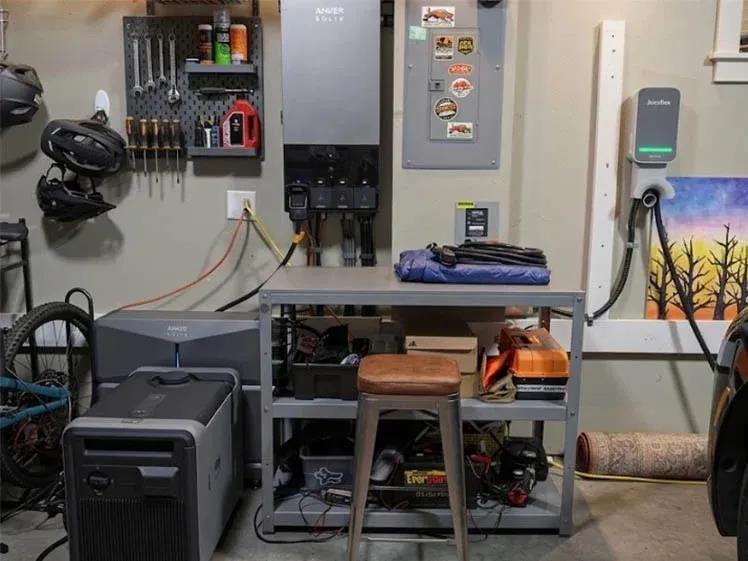 Keep away from flammables and children
Keep it away from paints, solvents, gas cans, and anything else that could ignite, and do not store it beside a furnace or water heater. Even a battery that is switched off deserves clear space around it. If children or pets share the home, put the generator on a high shelf or behind a latch, because the outlets and buttons invite curiosity. Avoid stacking heavy items on top of the case, since the enclosure protects the cells and a cracked shell can let moisture in. A little distance and a simple barrier are enough to remove most household risk. Clear space also makes it easier to inspect and move. That matters more than it sounds.
Integrating such equipment safely into a home environment is a key aspect of interior design and product placement. Designers often consider how to create secure, unobtrusive storage solutions that blend with the overall aesthetic while meeting safety standards. This can involve custom cabinetry, built-in shelving, or even dedicated utility zones that are both functional and visually harmonious, ensuring that necessary household items are stored responsibly without detracting from the living experience.
Charge Management
Charge before storing
Charge the pack to roughly half before a long idle period. Full charge stresses the cells, and empty charge leaves them vulnerable to drifting too low, so the middle is the safe harbor. If it will sit for more than a few months, top it up every few months to keep it in that range. Write the date on a note and stick it to the shelf, because memory is unreliable and a calendar reminder is cheap. A pack stored at the right charge will still deliver close to its rated capacity when you finally need it. A note on the shelf beats a resolution in your head. The date tells you when the next check is due.
Power on and check during storage
A storage check is more than a glance at the percentage. Power the generator on every month or two, confirm that the display and the outlets work, and run a small load such as a lamp for a few minutes. That short exercise keeps the management system calibrated and reveals a problem while it is still minor. Listen for unusual fan noise, watch for a rapid drop in charge, and note any error code. If something looks wrong, deal with it during a quiet week rather than during a storm. Keep a short log of the readings so a slow decline is visible. A sudden change is a warning; a gradual one is normal aging.
Regular Maintenance
Check cables and ports
Inspect the charging cable, the adapter, and every outlet for cracks, discoloration, or loose fit. Heat marks mean resistance, and resistance means wasted power and a possible fire. Blow dust out of the ports with short bursts of air, and never push a wet plug into a socket. Replace a damaged cable instead of taping it, because the cost of a new cable is trivial compared with the cost of a failure. A two-minute inspection every season catches most of the problems that would otherwise appear at the worst moment. Store spare fuses and a spare cable beside the generator. A five-minute fix during a quiet week beats a search during a storm.
Keep cooling vents clear
Vents are easy to block without noticing. A generator pushed against a wall, buried under blankets, or covered in dust cannot move heat out, and the electronics will throttle or shut down to protect themselves. Leave a hand’s width of clearance on every vented side, vacuum the grilles now and then, and keep it off carpet that sheds fibers. If the storage spot is dusty, a breathable cover is better than a sealed one, because it keeps debris out while still letting air through. Clear vents cost nothing and prevent most heat-related failures. Dust is the usual culprit, and a soft brush handles most of it. Never spray air into a running generator.
Conclusion
Environment, charge, and maintenance are the three storage rules, and together they decide how much of the original capacity survives the idle months. A cool, dry, uncluttered spot protects the pack from heat and moisture; a middle charge protects the cells from stress at either extreme; and a short seasonal check catches cables, vents, and errors before they become failures. None of this takes more than a few minutes a season. Done consistently, it is the difference between a generator that starts on the first try and one that does not. Pick the spot first, set the charge second, and put the checks on a calendar. The routine does the rest.