Introduction
Urban facades have always played a fundamental role in defining the identity of cities. From the intricate ornamentation of historic buildings to the minimalist glass surfaces of contemporary skyscrapers, building exteriors communicate architectural ideas, cultural values, and technological progress. Today, however, the relationship between architecture and its exterior surfaces is undergoing a significant transformation. Digital technologies are enabling architects to reconsider facades not simply as static boundaries, but as interactive elements that respond to the changing needs of urban environments.
The integration of digital displays, responsive lighting, environmental sensors, and intelligent building systems is creating new possibilities for architectural expression. These innovations are influencing how buildings communicate with their surroundings, how commercial districts engage the public, and how urban spaces evolve throughout the day. As cities become increasingly connected, the challenge for architects is to integrate technology without compromising the principles of design, sustainability, and human experience.
From Static Building Exteriors to Dynamic Architectural Surfaces
Traditional facades primarily serve structural, environmental, and aesthetic functions. They protect interior spaces from weather, regulate daylight, and establish a building’s visual relationship with its surroundings. Contemporary architecture is expanding these roles by incorporating technologies that allow exterior surfaces to communicate information, display changing visual compositions, and respond to different environmental conditions.
Digital integration introduces a new dimension to architectural design. Rather than relying exclusively on fixed materials, colours, and geometric patterns, architects can explore surfaces that change their appearance according to time, context, or programmed content. This approach creates opportunities for buildings to become more expressive while maintaining their underlying architectural character.
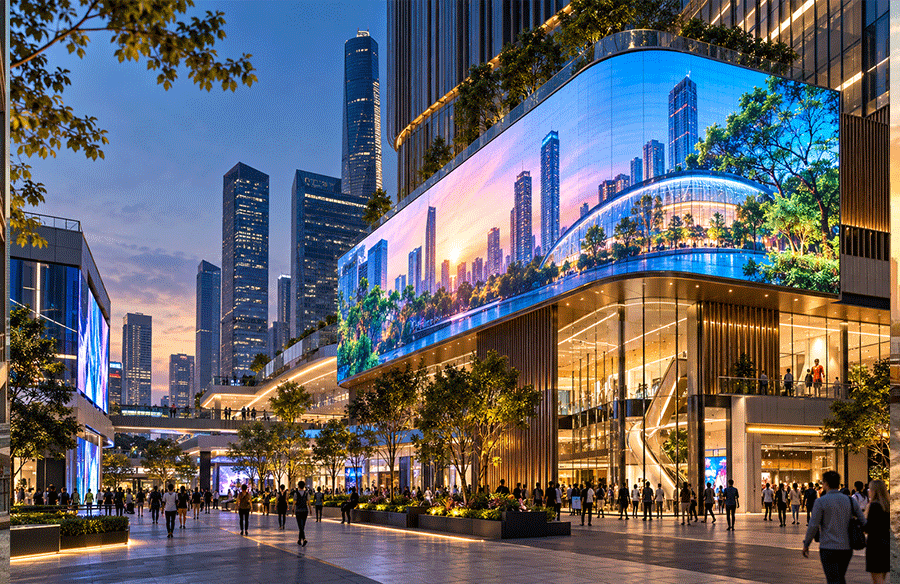
The concept of modern architectural digital surfaces illustrates how display technologies can contribute to this transformation. Outdoor LED systems, for example, can be integrated into selected facade areas to create dynamic visual features, communicate public information, or establish a distinctive identity for commercial and cultural buildings.
However, successful integration requires more than attaching a screen to an existing structure. Architects must consider viewing distances, screen proportions, brightness, material transitions, structural loads, and the relationship between digital content and the surrounding urban fabric. When these elements are carefully coordinated, digital surfaces can become part of the architectural composition rather than appearing as unrelated technological additions.
The Facade as an Interface Between Architecture and the City
Modern cities are complex environments shaped by movement, information, commerce, and social interaction. In this context, a building facade can operate as an interface between private interiors and public urban life.
Digital displays can communicate transport information, announce cultural events, provide emergency messages, or introduce visual artwork into public spaces. In commercial districts, they can also help buildings establish a recognisable presence within crowded streets. Their value depends on how effectively they support the function and identity of a place.
For architects and urban designers, the central question is how these technologies can contribute to a coherent streetscape. A visually striking facade may attract attention, but excessive brightness, repetitive animations, and poorly coordinated advertising can overwhelm pedestrians and diminish the architectural quality of an area.
A more thoughtful approach treats digital elements as components of the overall design. Screen placement, content transitions, colour palettes, and operating schedules should respond to the building’s scale and the character of its surroundings. Residential streets, historic districts, transport hubs, and entertainment zones each require different approaches to digital expression.
This contextual perspective ensures that technological innovation strengthens the urban environment instead of turning public space into an uninterrupted field of competing visual messages.
Reimagining Commercial Architecture Through Digital Integration
Commercial buildings provide an important setting for exploring the relationship between architecture, technology, and human behaviour. Shopping centres, retail complexes, and mixed-use developments must accommodate circulation, wayfinding, commercial communication, and social activity within a shared environment.
Digital display systems can support these functions when incorporated into the architectural planning process. Strategically positioned screens may help visitors identify entrances, locate facilities, discover events, and navigate large interior spaces. They can also create visual landmarks that improve orientation within complex buildings.
The development of smart retail display infrastructures demonstrates how digital systems can become part of the broader design strategy for shopping malls. Rather than functioning solely as advertising platforms, coordinated displays can support wayfinding, event communication, promotional campaigns, and the presentation of information relevant to visitors.
Architecturally, these systems influence how people perceive and move through commercial environments. A large digital installation may define a central atrium, while smaller displays can support transitions between circulation routes, entrances, and individual retail zones. When planned carefully, such installations can contribute to a more legible and engaging spatial experience.
Nevertheless, technology should remain subordinate to the building’s wider purpose. Natural light, comfortable circulation, accessible routes, seating, and opportunities for social interaction remain essential to successful commercial architecture. Digital elements are most effective when they complement these fundamentals rather than compete with them.
Digital Facades, Sustainability, and Environmental Responsibility
As the built environment faces increasing pressure to reduce energy consumption and environmental impact, digital integration must be evaluated through the lens of sustainable design.
LED technology can offer energy-efficiency advantages compared with some older display technologies, but the environmental performance of a digital facade depends on its size, brightness, operating hours, hardware efficiency, maintenance requirements, and energy source. Large displays operating continuously can consume substantial electricity, particularly when they are used without consideration for local conditions.
Architects can address these concerns by incorporating automatic brightness adjustment, occupancy-aware controls where appropriate, scheduled operating hours, and energy monitoring. Display intensity can be reduced at night, while unnecessary illumination can be avoided during periods of low activity. These measures can improve operational efficiency while reducing light pollution and visual disturbance.
The relationship between digital displays and the building envelope also requires careful consideration. Screens must be coordinated with insulation, waterproofing, ventilation, and maintenance access. Poorly planned installations can interfere with facade performance or create additional cooling loads.
A sustainable design approach therefore evaluates digital integration across the building’s lifecycle, including manufacturing, installation, electricity consumption, repair, and eventual replacement. Modular components and accessible maintenance systems may help extend useful service life and reduce unnecessary material waste.
Digital technology should not automatically be considered sustainable simply because it is innovative. Its environmental value depends on measurable performance and responsible implementation.
Human Experience and the Changing Urban Landscape
Architecture ultimately exists to serve people. As digital surfaces become more visible across city centres, transport corridors, commercial streets, and public squares, designers must consider how these installations affect everyday experiences.
Well-designed digital facades can provide useful information, support cultural expression, and make public spaces more engaging after dark. They may also create opportunities for temporary public art and community-oriented communication. In some settings, digital installations can help transform otherwise inactive building edges into more visually engaging elements of the streetscape.
At the same time, the increasing presence of screens raises questions about visual comfort, distraction, accessibility, and the commercial use of public space. Excessive illumination can affect nearby residents, while constantly changing imagery may distract drivers and pedestrians. Content that relies exclusively on visual communication may also exclude people with particular accessibility needs.
These concerns highlight the importance of establishing appropriate design guidelines. Brightness limits, content restrictions, operating hours, pedestrian safety, and local planning regulations should inform the design process from the outset.
The most successful digital environments balance technological stimulation with moments of visual calm. Architecture should not demand continuous attention from its occupants. Instead, it should create places where technology supports human activity while leaving room for rest, orientation, and meaningful interaction.
Integrating Digital Technology Without Losing Architectural Identity
One of the most important challenges in contemporary facade design is maintaining architectural coherence. Digital technology can introduce flexibility and visual complexity, but poorly integrated systems may weaken a building’s material character or obscure its original design intent.
Architects can avoid this outcome by considering display systems during the early stages of conceptual development. Building geometry, structural grids, facade materials, lighting strategies, and digital content should be coordinated rather than designed independently.
For example, a display can be incorporated into a designated architectural bay, aligned with the proportions of the building, or positioned within a recessed surface. This approach allows the technology to remain visually integrated with the larger composition. In other projects, a deliberately contrasting digital element may be appropriate if it reinforces the building’s cultural or commercial purpose.
The choice depends on context. A museum may use digital surfaces to communicate exhibitions and extend its public identity, while an office building may favour restrained displays that complement its professional character. A historic building may require a more sensitive approach to preserve its architectural significance.
Digital integration should therefore expand the architect’s design vocabulary rather than impose a uniform technological aesthetic on every building.
The Future of Responsive and Intelligent Facades
The next phase of architectural development may involve increasingly sophisticated connections between digital displays, building management systems, environmental data, and computational design. Sensor-based controls and building information modelling can help designers coordinate digital installations with other building systems, while emerging digital-twin approaches may support the monitoring and management of complex assets.
These possibilities create opportunities for more adaptive architecture, but they also introduce new responsibilities. Data collection, system security, maintenance costs, interoperability, and long-term technological obsolescence must be addressed alongside visual design.
Future-facing architecture will require collaboration among architects, engineers, lighting designers, digital specialists, building operators, and urban planners. This interdisciplinary process can ensure that technological choices are compatible with structural requirements, environmental objectives, and the needs of building users.
Importantly, the future of digital facades does not depend on making every surface interactive or illuminated. In some projects, a carefully positioned display may create greater architectural value than a fully digital exterior. In others, passive materials, vegetation, shading devices, and natural light may remain the most appropriate solutions.
The goal is not to replace traditional architectural principles with technology, but to identify where digital systems can provide meaningful benefits.
Conclusion
The integration of digital technologies is redefining the possibilities of urban facade design. Building exteriors can now serve as expressive architectural surfaces, communication interfaces, and components of more connected commercial environments. From outdoor displays to coordinated retail information systems, these developments are expanding the ways architecture engages with public space.
Yet technological capability alone does not guarantee architectural success. Responsible digital integration requires attention to contextual design, energy consumption, accessibility, visual comfort, and the long-term performance of the building envelope.
As cities continue to evolve, architects must look beyond the immediate visual impact of digital installations and consider their broader contribution to urban life. The future of the facade lies in the thoughtful relationship between physical materials, digital communication, environmental responsibility, and human experience. When these elements are brought together with purpose, technology can enrich the architectural identity of a city while supporting more responsive and meaningful urban spaces.