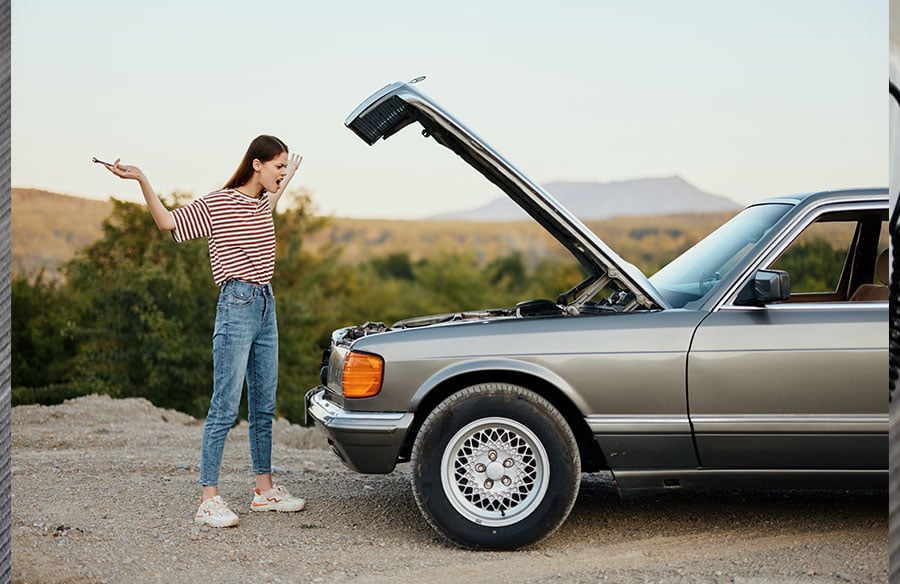
Most people become attached to their cars.
Maybe it was your first vehicle. Perhaps you bought it when you started working, used it for family trips, or simply spent years maintaining it. That history can make it difficult to admit when the car is no longer practical.
However, there comes a point when an old vehicle can create more problems than convenience.
Here are five signs that it may be time to consider moving on.
1. Repairs Keep Coming Back
One of the biggest warning signs is a growing list of repairs. Fixing one issue is normal for an older car. The problem starts when you are constantly visiting the mechanic for different problems.
A worn alternator might be followed by suspension repairs. Then you may have problems with the cooling system, brakes, electrical components, or transmission.
If repairs have become part of your monthly routine, calculate how much you have spent during the past year. The number may surprise you.
2. The Repair Bill Is Higher Than the Car’s Value
A major repair can sometimes cost more than the car is worth. For example, an older car may have a relatively low resale value but require an expensive engine or transmission repair.
That does not automatically mean repairing it is wrong. If the car is otherwise reliable and you plan to keep it for many more years, the calculation may be different.
But if several expensive repairs are already expected, selling or removing the car to reliable car removal service could make more financial sense.
3. You Rarely Drive It
Another sign is surprisingly simple: you hardly use the car. Perhaps you bought a newer car and the old one has been sitting in the driveway ever since.
An unused car can deteriorate over time. Tyres can degrade, batteries can go flat, fluids can become a problem, and mechanical components may suffer from long periods without use. Meanwhile, the car continues taking up space. If you cannot remember the last time you drove it, that is probably worth thinking about.
From an architectural perspective, every square foot of property, whether a driveway, garage, or street parking, represents a design choice and a potential use. An idle car occupies valuable real estate that could otherwise be repurposed for green space, additional living areas, or more efficient urban flow, impacting the aesthetic and functional design of our built environments.
4. Replacement Parts Are Becoming Difficult to Find
Older or uncommon cars can eventually become difficult to maintain. Some parts may no longer be manufactured regularly. Others may need to be sourced from specialist suppliers or wreckers.
This can make even relatively straightforward repairs more complicated and expensive. If your mechanic regularly tells that parts are difficult to source, consider how much longer you realistically want to keep it.
5. You Are Spending More Time Worrying About It
Money is not the only cost of an unreliable car. There is also the stress. Will it start tomorrow morning? Will it make it through the next trip? Will another warning light appear? When a car creates more worry than convenience, it may be time to reassess your options.
What Can You Do With an Unwanted Car?
If you have decided that the car needs to go, there are several possible options. You could try selling it privately, trade it in if a dealer is interested, donate it where suitable, or arrange professional removal.
For cars that are old, damaged, non-running, or difficult to sell privately, junk car removal services can be another option to investigate. The important thing is to understand the condition of your car before deciding what to do.
Don’t Spend Money Just Because You Already Have
A common trap with old cars is the thought, “I’ve already spent so much on it.” Unfortunately, money you have already spent cannot be recovered simply by spending more.
Instead, consider what the next repair will cost and what you are likely to spend over the next six or twelve months. Would you be better off putting that money towards another car? Looking at future costs rather than past expenses can make the decision much clearer.
Clear Out the Vehicle Properly
If you decide to sell or remove the car, take a few minutes to prepare it. Remove personal belongings and check hidden storage areas. Gather any documents you may need and make sure you understand the relevant registration requirements.
If the car cannot be driven, confirm how it will be collected. A professional removal service may be able to organise towing, which means you do not need to arrange separate transportation for a non-running car.
Sometimes Letting Go Makes Sense
An old car does not necessarily need to be perfect to have value. Even a car that is no longer practical for everyday driving may contain reusable parts or recyclable materials.
This principle extends beyond vehicles to all aspects of design and construction. Embracing circular economy principles means viewing discarded items not as waste, but as valuable resources for new projects, driving innovation in material science and sustainable architectural practices.
The key is recognising when the cost, inconvenience, and stress of keeping it no longer justify the benefits. Once you reach that point, removing the car can give you back something that is often just as valuable as money: your space and peace of mind.