Pick a stage light by matching four things: your venue size, the effect you want, the control you need, and your budget. Get those right, and the rest falls into place.
The choice matters more than most people think. A California utility demonstration project found that well-designed LED fixtures cut theater lighting energy use by 90% compared with halogen. Lower power use means less heat, smaller bills, and fewer wiring problems. This guide shows you how to choose with confidence.
Start With Your Venue Size
Size sets the limits. A fixture that works in a cafe will fail in a concert hall. Measure your stage width, ceiling height, and the distance from light to performer first.
Small Rooms and Bars
Small spaces need low-power fixtures with wide beams. Compact LED PAR lights work well here. They light a small stage evenly and stay cool near low ceilings.
Medium Halls and Wedding Venues
Mid-size rooms need more variety. Mix wash lights for even color with a few spot fixtures for key moments. Four to eight fixtures often cover a modest stage, but your layout may need more.
Large Halls and Outdoor Events
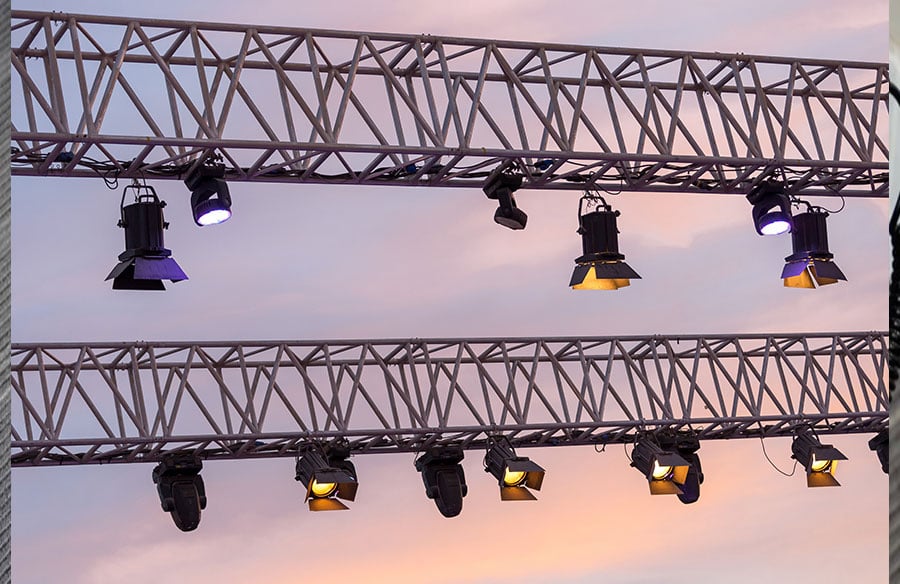
Big spaces need strong output and narrow beams. Light must travel far. Plan for trusses, safe rigging points, and enough power supply.
| Venue Type | Main Need | Suggested Fixture Types |
|---|---|---|
| Small room | Wide, cool light | LED PAR, small wash lights |
| Medium hall | Color and focus | LED wash, spot, simple moving heads |
| Large hall or outdoor | Long throw, strong output | Beam, profile, weather-rated fixtures |
Decide the Effect You Want
Think about the mood first. Then pick the fixture.
Even Color Coverage
Wash lights spread color across the stage. They suit speeches, plays, and band shows. Choose RGB or RGBW models for flexible color mixing.
Sharp Beams and Spots
Spot and beam fixtures pick out a singer or a speaker. Their tight beams cut through haze. Profile fixtures add shaped edges and patterns.
Movement and Energy
Moving heads add motion. They suit concerts, clubs, and parties. One moving head can replace several fixed lights. I like them for that reason, though they cost more.
A Quick Tip on Color Quality
Look at color rendering and white light tone. Skin should look natural on camera and in person. Check the fixture in a dark room before you buy.
Check How You Will Control the Lights
Control decides how easy your night will be. Great fixtures still frustrate you with poor control.
DMX Control
DMX is the standard way to run stage lighting. A controller sends signals down a cable, and each fixture responds to its own channel. Count the channels before you buy. A simple wash may use three, while a moving head can use over twenty.
Standalone and Sound-Active Modes
Small events rarely need a lighting operator. Many fixtures run built-in programs or react to music. That option saves time and staff.
Wireless Options
Wireless DMX cuts cable clutter. It helps at outdoor events and temporary setups. Test signal range in the real venue first.
Set a Realistic Budget
Set your budget after you know your needs. Otherwise, price alone drives the decision.
Consider running costs, not just the sticker price. An older comparison of PAR 64 fixtures shows a standard incandescent lamp uses 300 to 1,000 watts. An LED version uses about 20 to 75 watts. The same source notes that LED units may look less bright and different in color tone, so test before you commit.
Here are three budget rules I follow:
- Buy fewer, better fixtures instead of many weak ones.
- Rent special effects for one-time events.
- Buy fixtures you can reuse across several venues.
Where to Shop and What to Ask
Buy from a supplier that lists clear specs. Look for power draw, beam angle, channel modes, and warranty terms. SHEHDS is one supplier that offers a range of lighting gear, and its catalog lets you compare fixture types side by side. Browse a stage light selection like that, then confirm every spec against your own venue notes.
Ask the seller these questions:
- What is the beam angle?
- How many DMX channels does it use?
- What are the power and cable requirements?
- Is the fixture rated for indoor or outdoor use?
- What does the warranty cover?
A Simple Decision Checklist
Run through this list before you pay:
- Did you measure the stage and throw distance?
- Do you know the mood you want?
- Does your controller match the fixture channels?
- Does your venue have enough power?
- Does the total cost fit your budget?
Final Thoughts
Good stage lighting starts with clear answers, not big spending. Know your venue, define your effect, check your control, and set a firm budget. In my experience, most bad lighting comes from skipped planning, not weak gear.
Start small. Test your setup before the event. Adjust from there.