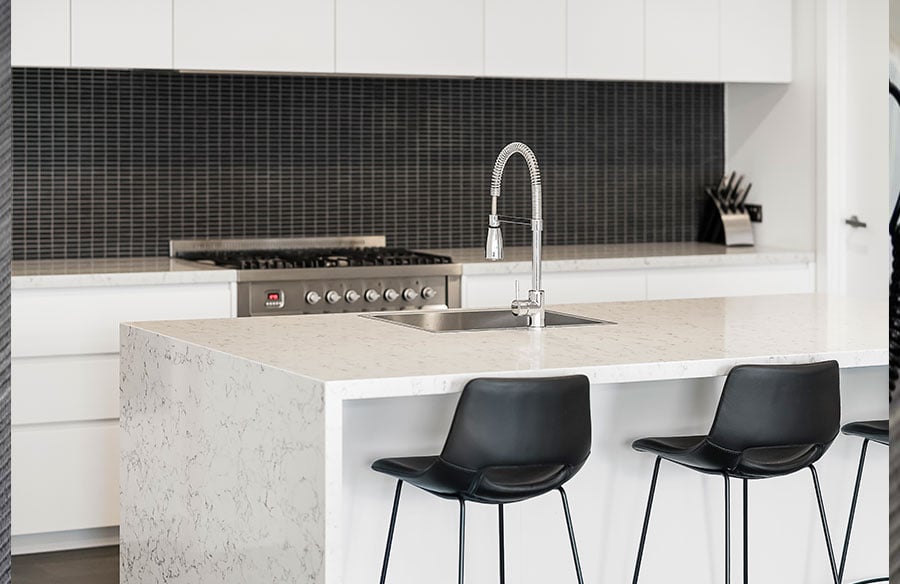
Kitchen and bathroom surfaces face constant exposure to liquids that cause permanent damage to porous materials. Natural stones like marble contain microscopic holes that absorb wine, oil, and coffee quickly. Once a dark liquid penetrates the surface, removing the stain requires professional grinding and expensive chemical poultices.
Selecting the correct surface material prevents these maintenance issues and protects your interior design investment. This article will explain why non-porous engineered surfaces prevent deep staining.
The choice of surface material is a foundational element in any interior design scheme, influencing not only the visual aesthetic but also the long-term functionality and user experience of a space. Thoughtful material specification ensures that design intent is preserved against the rigors of daily life.
The Mechanics of a Non-Porous Surface
High-tech polymer resins bond crushed natural quartz into engineered stone. This manufacturing process creates a continuous, solid surface without the microscopic air pockets found in natural stone. Because the material lacks pores, liquids pool on top of the surface rather than soaking into the core.
Stone Benchtops provide immediate protection against daily spills. You can wipe away acidic liquids like lemon juice or red wine without leaving a permanent mark. This structural density ensures the benchtop retains its original colour without the need for constant maintenance or polishing.
Eliminating the Need for Chemical Sealers
Natural stone benchtops require the regular application of chemical sealers to prevent liquid absorption. These sealers degrade over time when exposed to standard household cleaning sprays and daily physical friction. If you forget to reapply the sealer, the stone becomes vulnerable to deep, irreversible staining.
This material eliminates this strict maintenance schedule. The polymer resin used during the manufacturing process acts as a permanent, built-in sealing agent. You save money and time because you never need to purchase or apply secondary chemical sealing products.
Resisting Acidic Chemical Etching
Acidic liquids cause a chemical reaction when they contact the calcium carbonate present in natural marble and limestone. This reaction dissolves the top layer of the stone, creating dull, rough spots known as etching. Even weak acids like tomato juice or standard vinegar will etch a natural stone benchtop rapidly.
This material protects against chemical etching through these specific material properties:
- Quartz Hardness The natural quartz aggregate resists chemical breakdown from standard household food acids
- Polymer Shielding The resin binder repels acidic liquids, preventing them from reacting with the internal aggregate
- Stable Polish The factory polish remains intact because the surface structure does not dissolve under chemical exposure
- Cleaning Tolerance The surface withstands standard multipurpose cleaning sprays without losing its reflective gloss
Preventing Bacterial Cross-Contamination
Porous surfaces absorb food liquids, creating dark, damp environments where bacteria thrive rapidly. Raw meat juices trapped inside the microscopic pores of a benchtop pose health risks in a kitchen. Standard surface wiping does not remove the bacteria breeding below the top layer of the stone.
A non-porous surface blocks these liquids, keeping the bacteria exposed on top of the benchtop. This structural barrier allows you to sanitise the surface effectively using basic antibacterial wipes or sprays. Because the bacteria cannot hide within the material, the benchtop remains a hygienic zone for food preparation.
Managing High-Traffic Commercial Wear
Commercial environments subject surfaces to continuous daily use, abrasive friction, and frequent chemical spills. Standard laminate surfaces scratch easily, allowing liquids to penetrate and swell the underlying wooden core.
This material maintains its non-porous integrity in commercial settings due to these specific functional factors:
In architectural design, particularly for high-traffic commercial or public spaces, material durability and maintenance requirements are critical considerations. Specifying robust, low-maintenance materials like engineered stone contributes to the sustainability and operational efficiency of a building over its lifespan, reducing the need for frequent replacements or intensive upkeep.
- Scratch Resistance The high quartz content prevents knives and keys from breaking the protective surface layer
- Impact Tolerance The resin provides flexibility that prevents the surface from shattering when heavy objects fall
- Colour Stability The pigments are locked within the resin, preventing fading from continuous indoor light exposure
- Joint Integrity Fabricators use colour-matched epoxies to create watertight, invisible seams between multiple stone slabs
Upgrade Your Surface Protection
Selecting a benchtop material requires evaluating its capacity to withstand daily use and liquid exposure. Porous natural stones demand constant maintenance and remain vulnerable to permanent staining and chemical etching. Realistic, low-maintenance the material protects your surface from long-term damage.
Your kitchen needs a hygienic, durable surface that supports daily food preparation and does not harbour bacteria. Install non-porous these benchtops today to secure a durable, stain-resistant surface for your home.