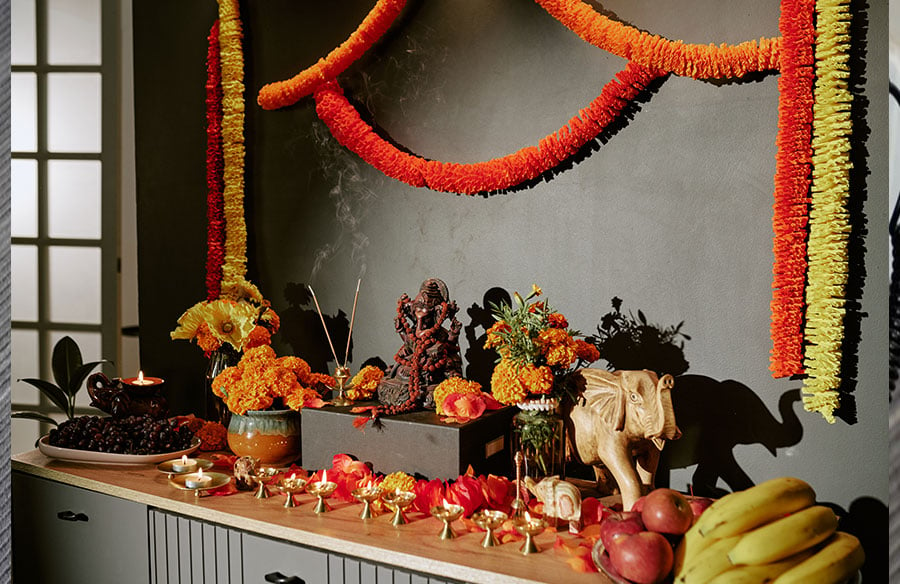
Ganesh Chaturthi throws a spotlight on the pooja room and makes it one of the most significant rooms in the house during the festival time. The design of the mandir should be such that the Ganesha idol, the diya, flowers and decorations are all kept without making the space look cluttered. It may be carved wooden wall decorations, jaalis or even a small wall-mounted unit, but there are various ways of creating a festive atmosphere with intelligent designs. These are ten interior design ideas for the pooja room.
Introduction
The pooja room, at the time of Ganesh Chaturthi, becomes much more than a room where daily rituals are held. People come together to make offerings, light diyas, and beautify the entire pooja room by putting flowers and other items of decoration. Thus, the design of the pooja room should consider both the religious and practical considerations of the festival.
A survey of public opinions regarding Ganesh Chaturthi revealed that 77.4% of people prefer to celebrate alone and more than 50% reuse their decorations each year. This clearly shows why a permanent mandir construction with festive add-ons will be very convenient.
What Are the Best Pooja Room Interior Design Ideas for Ganesh Chaturthi?
1. Create a Carved Wooden Backdrop
A carved wooden backdrop can give the Ganesha idol a strong visual presence while introducing traditional warmth. CNC-cut patterns inspired by flowers, bells or arches can add detail without making the space feel crowded.
2. Add a Marble or Stone Altar
A marble or stone altar creates a refined base for the idol and is practical for regular cleaning. A raised platform can be paired with warm lighting, brass accessories or a restrained patterned backdrop.
3. Use a Decorative Jaali Partition
A jaali partition can define the pooja area without completely closing it off. Wooden or patterned panels allow light through while creating a distinct mandir. Flowers, torans and small hanging lamps can be added for Ganesh Chaturthi.
4. Design a Wall-Mounted Mandir
A wall-mounted mandir works well when floor space is limited. A dedicated idol platform with small shelves or drawers can keep daily pooja essentials organised. Bonito Designs also uses wall-mounted mandirs, niches and integrated cabinets to create prayer spaces within compact homes.
5. Build a Softly Lit Backdrop
Warm concealed lighting behind the idol or within a niche can create depth without extensive decoration. During Ganesh Chaturthi, diyas and subtle festive lights can add to the atmosphere without overwhelming the mandir.
6. Incorporate a Traditional Temple Door
A wooden door with CNC-cut or carved detailing can make the entrance part of the design. Bells, flowers and traditional motifs add character, while folding or double doors can keep an enclosed mandir visually distinct.
7. Plan Hidden Storage for Pooja Essentials
Festivals bring additional items into the pooja room, including incense, prayer books, flowers and oil. Drawers, cabinets or concealed shelves can keep these organised and leave the idol area clear for offerings and decorations.
8. Frame the Idol With an Arch
An arch can give the mandir the character of a traditional temple without requiring a large room. Wood, marble or painted detailing can frame the idol, while flowers or torans can be changed seasonally.
9. Create a Festive Floral Backdrop
Flowers can transform a simple pooja unit without permanently changing it. Marigold garlands can complement wood, brass and marble, while a relatively simple permanent backdrop keeps the space usable throughout the year.
10. Combine Traditional Details With a Modern Unit
A contemporary pooja unit can still retain traditional character. Clean cabinetry can be paired with a carved panel, brass bells, an idol platform or a patterned backdrop. Bonito Designs’ pooja room planning considers family rituals, storage, available space and everyday use, allowing festive details to sit naturally within the permanent design.
How Can These Ideas Be Adapted for Ganesh Chaturthi?
| Permanent Feature | Festive Addition | Result |
| Carved backdrop | Marigold garlands | Traditional focal point |
| Jaali or temple door | Toran and hanging lamps | Defined festive entrance |
| Concealed lighting | Diyas and fairy lights | Warm festive glow |
| Storage and display ledges | Pooja supplies and flowers | Organised celebration |
| Modern mandir unit | Brass accents and floral décor | Contemporary-traditional balance |
This approach also supports the reuse highlighted in the survey. The permanent design stays unchanged, while flowers, lighting and other removable details can vary each year.
How Should the Pooja Room Fit Into the Overall Home Design?
The pooja room design needs to blend into the existing interior spaces yet have its own unique style. Materials, lighting, and detailing may reflect the design of other interior spaces without turning the mandir into another storage unit.
For homeowners researching interior designing cost for 2BHK, the pooja room should be considered as part of the wider interior scope. The home interior cost for 2 BHK can be influenced by custom carpentry, materials, lighting and storage. A Cost calculator can provide an initial estimate, but the final design depends on the project’s specifications.
What Should Homeowners Consider Before Designing a Festive Pooja Room?
Choosing the best interior design company can make a difference when the pooja room needs to integrate with the wider home. The design should account for the idol’s size, family rituals, storage, electrical planning, lighting and available space.
There should be enough clear surface for offerings and lamps, while storage should remain accessible and materials easy to clean. Bonito Designs‘ pooja room approach includes electrical planning, structural considerations, storage ergonomics and material selection, helping the pooja room remain functional beyond the festive period.
How Can the Pooja Room Stay Useful After Ganesh Chaturthi?
An ideal design for festive occasions is one where the design remains useful even after the removal of decoration. A well-designed background, adequate storage, proper lighting, and an appropriately proportioned altar will be useful to the family all year round, and seasonal elements will only include flowers, lamps, and other decorations.
In this way, the pooja room can continue to hold importance but without being associated with any particular festival. A properly constructed mandir would be able to accommodate the grandeur of Ganesh Chaturthi, but it would still be orderly and sensible enough for daily prayers.
FAQs
- How Can I Decorate a Pooja Room for Ganesh Chaturthi?
Use flowers, diyas, torans, warm lighting and a decorative backdrop while ensuring the idol area remains uncluttered. - Can a Small Home Have a Dedicated Pooja Space?
Yes. Wall-mounted mandirs, recessed niches and compact cabinets can offer a designated prayer area without requiring a separate room. - Which Materials Work Well for a Pooja Room?
Wood, marble, stone, and carefully finished cabinetry can work well if selected in accordance with the design of the home and the maintenance needs. - How Can I Make a Pooja Room Look Festive Without Redesigning It?
The permanent design should be simple, and removable elements like flowers, diyas, torans and festive lighting can be used.