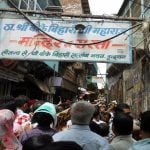
The walk can be heard well before it comes into view. It is a little after nine in the morning, and the street that takes you to the Banke Bihari temple is already narrowed for the second time, not by intention but simply because of a slow bed of mud gathered on the route. A sweet shop is projecting its display table half a metre into the middle of the street, and a flower seller has put his stall in the shaded space of a gallery beneath the next house.
Under the gallery, a loudspeaker begins projecting the kirtan for a few hours.
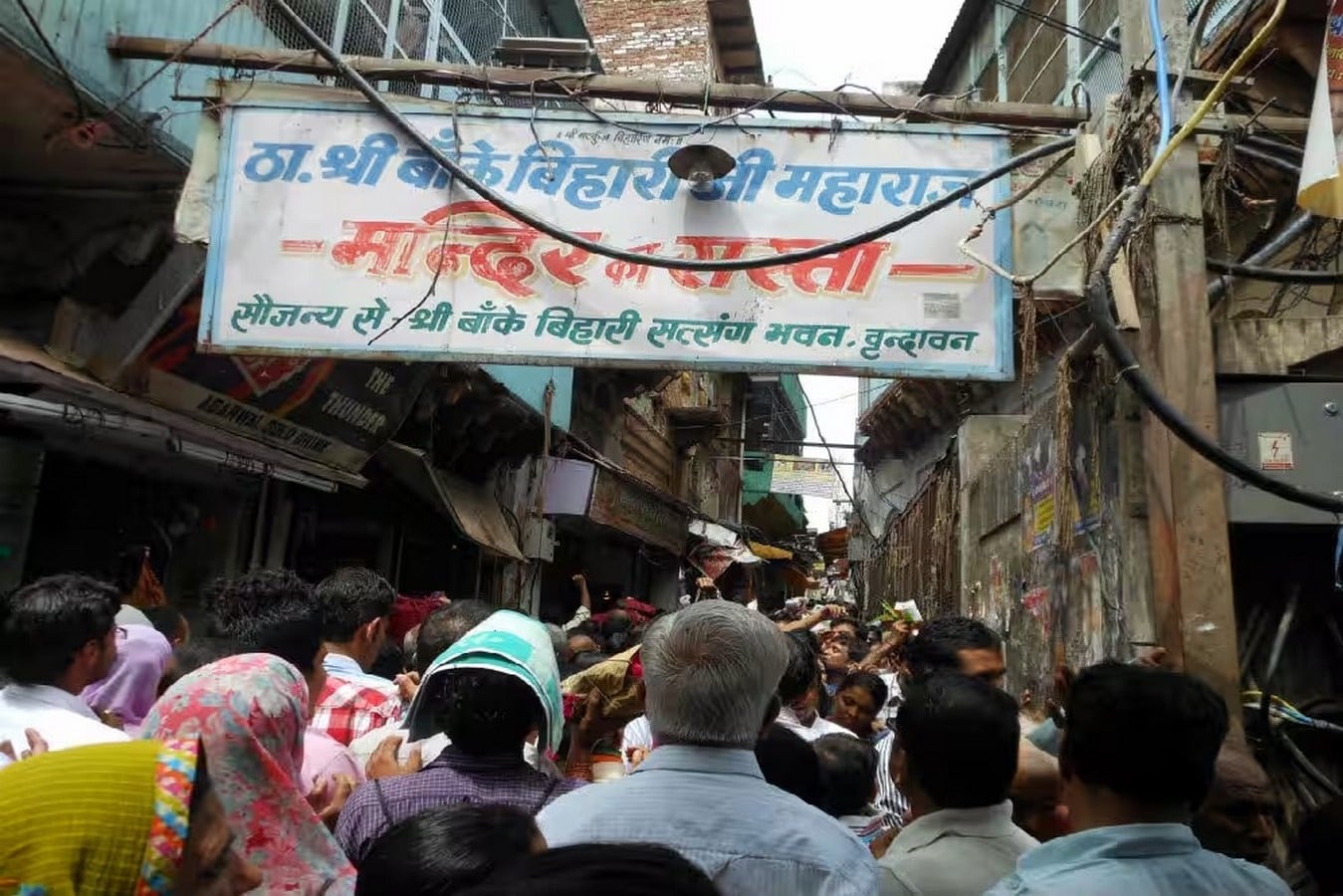
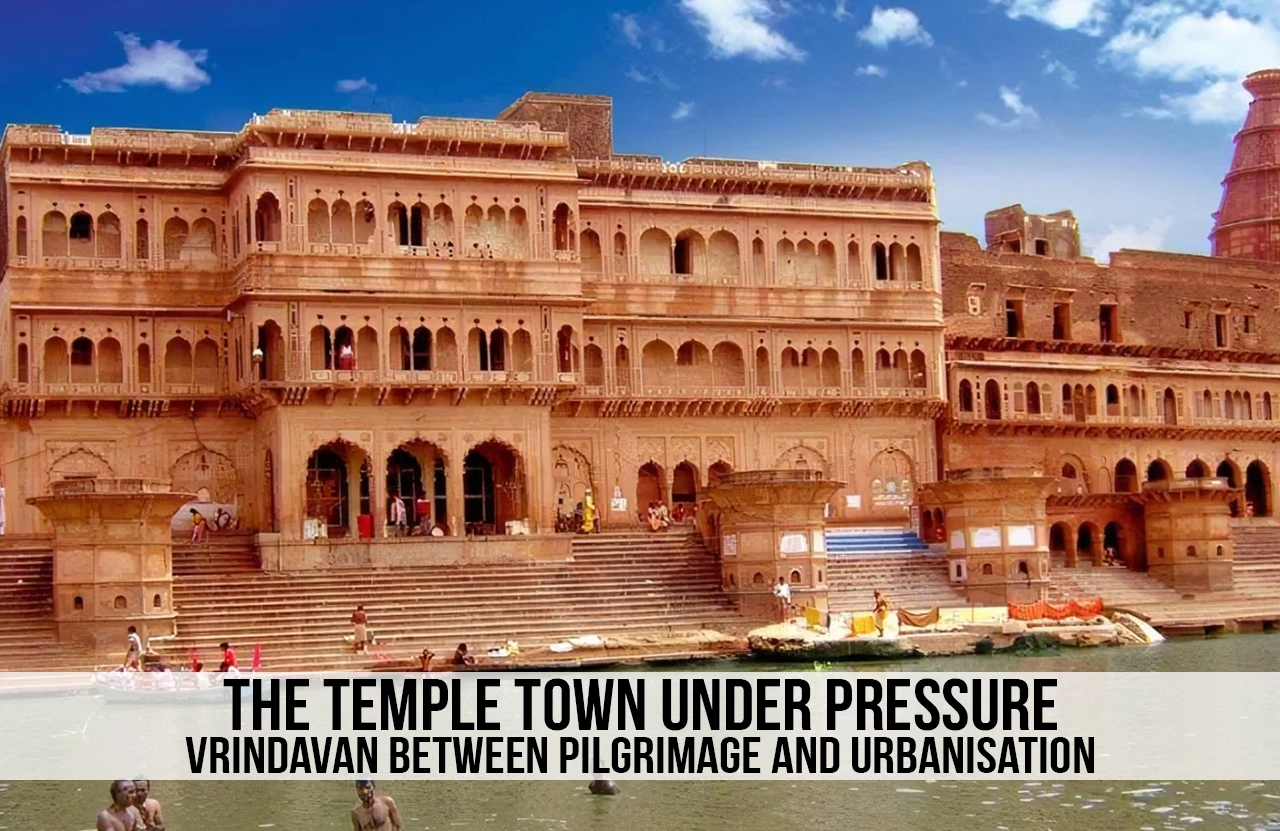
The gentle flow of pilgrims, gradually becoming sticky by the minute, flowing in sections without fully aware of each other, most barefoot: into this flow, the e-rickshaws, that by no means flow but move forward, back up and horns indiscriminately bangle. The street frontages, the buildings on either side, appear in section, as if traversing the ages – low-plastered brick at the top, carving in sandstone at the base, with a few layers of poured concrete added whenever a family finds out there is profit to be made renting out rooms to visitors.
This is neither romantic nor misguided; it is simply a street that is trying to bear four different functions on a load for which it was never designed.
A Town Built by Walking
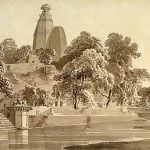
Vrindavan was never about grandeur; it was about an association. It is part of Braj, the district which devotees believe is the setting for the childhood of Krishna, and it is an equally widespread location, spread across groves, tanks and riverbanks – and across geographical features named in the scriptures – rather than a single building. From the sixteenth century onwards, the town grew, with temple complexes commissioned by Goswami theologians bringing support from the ruling and merchant classes, and then spreading from these temples rather than along an articulated city plan.
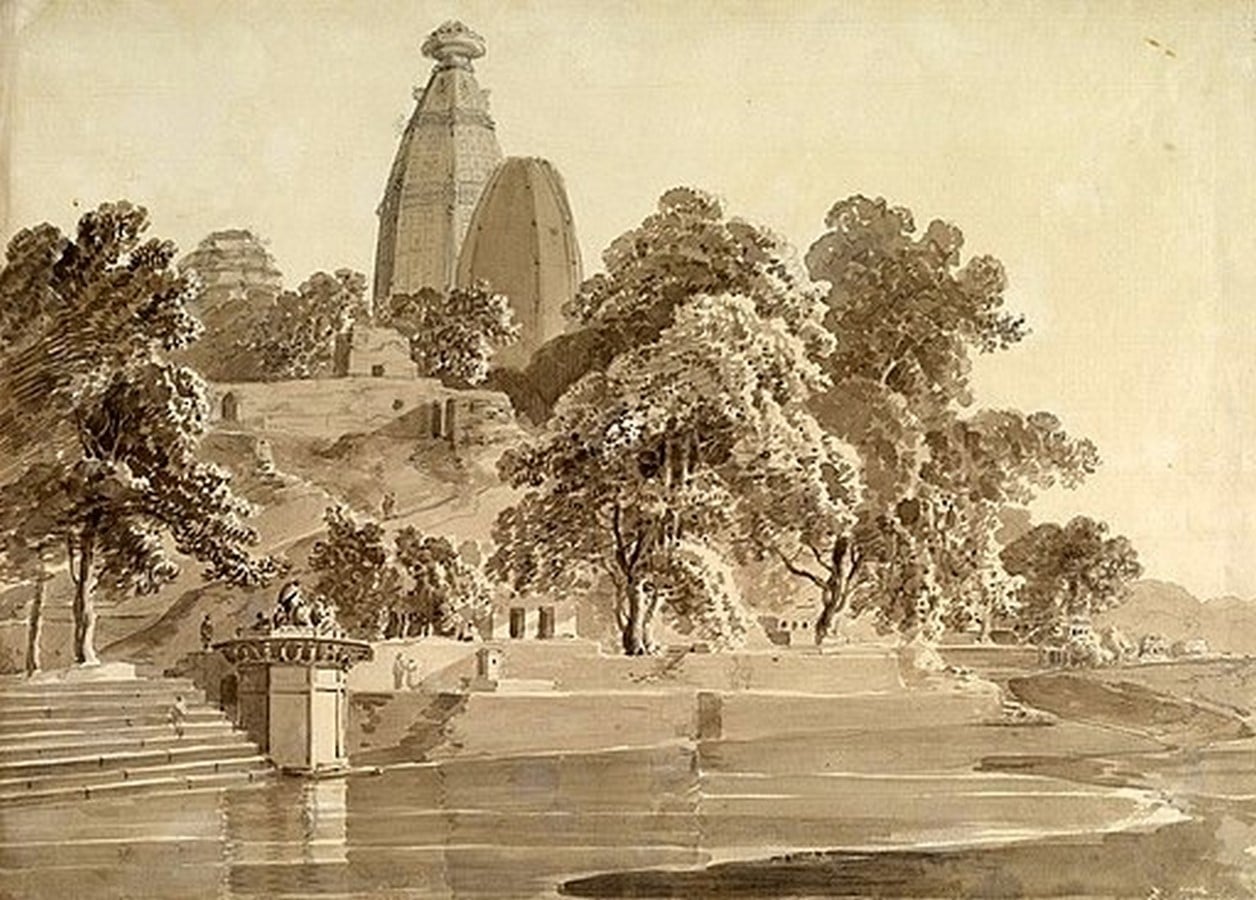
From the 16th century onwards, the city grew around temple complexes built to serve the Goswami theological communities, spreading from these temples rather than along any deliberate plan.
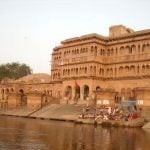
The bazaars, the kunjs, the wells, the bathing ghats and the various sites found through circumambulation and then repeatedly through doing it again: they are where the town has come from – essentially the legacy of those last forms.
With that logic, there was always some planning. Streets are suitable for walking, thresholds are kept shallow, temples open straight onto the street rather than at the back so the border between street and shrine remains as thin as possible, and the journey through the city itself is the sum of those acts.
Building Up From a Pilgrimage
As the size of the everyday visitor has changed, so has their time in the city. Short stays, travelling by road as opposed to on foot or by train, a rough itinerary linking together a handful of named temples and a lunch stop. A service economy has been created to process this flow before anyone gets to the shopfronts of any other commerce. The government has taken an interest, not just a token interest. Mathura-Vrindavan is now promoted as a tourist destination, and this has not only drawn in visitors but also investment; pilgrimage has stopped just being a spiritual transport route between the natural and the built environment and is actually contributing to growth.
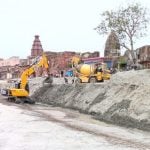
The changed use can be seen in the landscape already, long before it appears on any masterplan. Guesthouses, high-rise flats, gated communities and institutes are seen wherever the land was being cultivated a generation ago or becoming a copse of trees. Some high-rises have been built with the bodies of the residents in mind, while having the needs of the pilgrims as customers in the forefront.
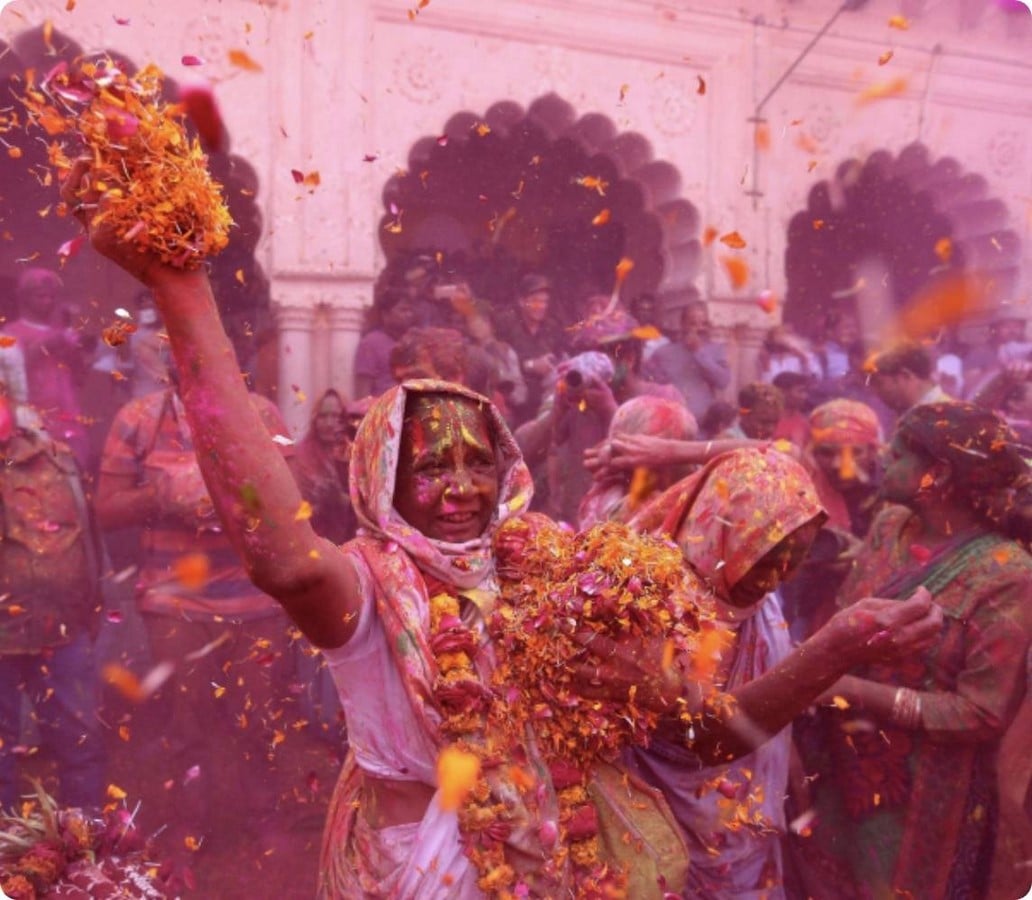
New areas are being developed around the old core; the core is being repositioned from the outside, and the general trend is towards a more universal theme, in a similar fashion to the shopping mall. The same single shop, the same facade, the same floor areas, and the same setbacks, as defined by the window of the franchise.
The district of the town wall that was once natural land for the transition into the Braj is now defined as the boundary of the town.
The effect may be seen already in the built fabric, before it appears to have been at all places within the city’s physical limits; ground levels are raised, frontages are split into smaller yards, fronts are designed and grounded with tile, the sea face is covered with a roof, the ground floor is raised, an elevator shaft is introduced, and a courtyard is divided to extend the layout. Creating a cover which is dominated by the original boundary of the site yet lowering everything that is now higher than that boundary – this process is locally managed and adaptive, not institutionalised; it is possible to work with it, rather than to harness it, but the resulting cityscape is not a conservation or then reinvented city but more challenging to understand than either, and therefore was not very easy to be pragmatised and only the perceptually perceived exchange can be traumatised more easily than both.
The Road, Water And What Disappears In Between
Mobility is where the conflict bites hardest. A street network generated by walking now carries battery rickshaws, cars, tempos and tour buses that pull up at the edge and release groups straight into the old lanes. The e-rickshaw is the crux of it- cheap, quiet, kind to elderly pilgrims, genuinely democratising, and simultaneously the single biggest source of congestion in any section where two of them cannot pass. Widening is the obvious municipal answer, and it is expensive in a way that rarely appears in the cost estimate. Widening a lane in this fabric means removing the frontages that give the lane its enclosure, dismantling the thing people came to experience in order to deliver people to it. Parking has the same geometry. The land closest to the temples is the land least able to surrender itself.
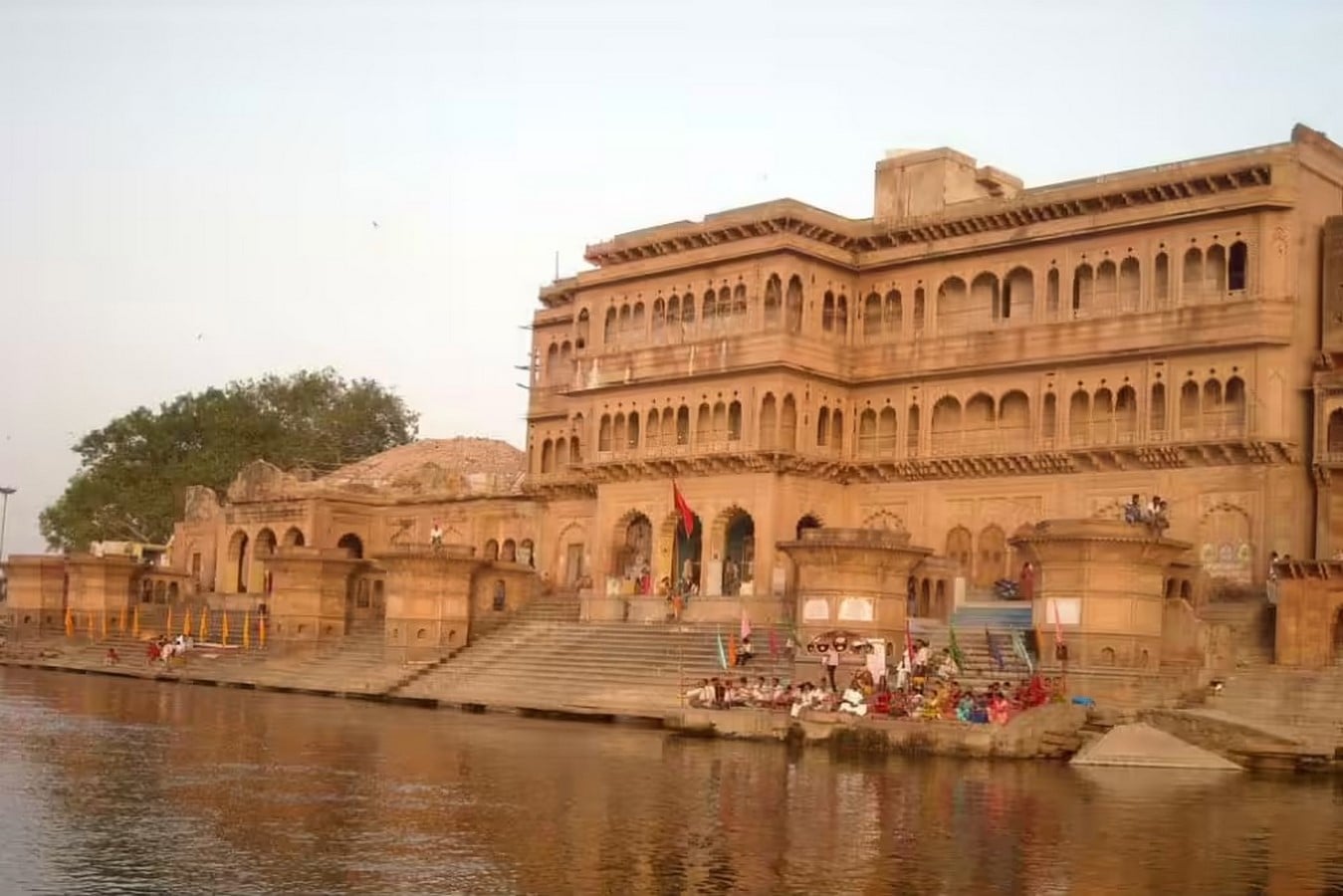
The environmental story is not separate from any of this. The Yamuna is central to the town’s ritual life, and its condition – flow drawn off upstream, quality degraded by sewage and effluent along its course – changes what bathing at a ghat actually means. But the degradation is not simply the fault of crowds who arrived in the last thirty years. It accompanied the making of the sacred place itself. Groves cleared for building, the river edge converted from a natural bank to a constructed one, and ponds filled or quietly abandoned as the settlement densified. Today’s plastic, floral waste and untreated sewage from accommodation that outpaces any drainage network are the current instalment, not a break with an unspoiled past. That matters, because it rules out the restoration fantasy that there is no earlier Vrindavan sitting underneath, waiting to be uncovered.
Which brings up heritage, a question usually posed badly. Freezing the town is neither possible nor desirable; people live here and need plumbing, income and roofs that hold. The distinction that keeps getting lost is between conserving individual buildings and conserving the relationships between them. It is the second that is disappearing. A beautifully restored temple facade, at the end of a widened road, framed by four-storey lodges with glass balconies, is a preserved object in a setting that no longer supports it.
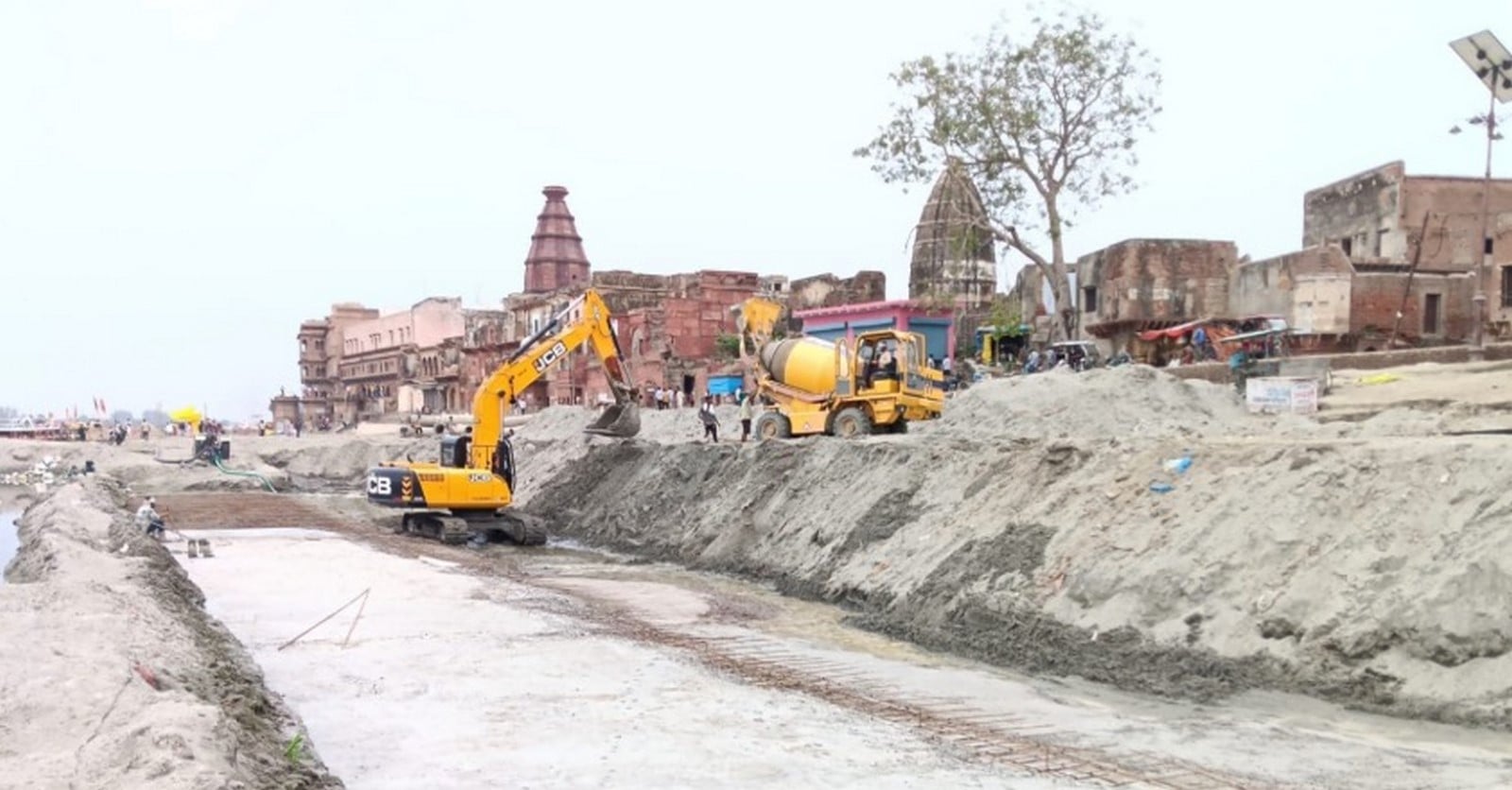
And nobody is solely to blame. Residents adding floors are responding to a real economy. Religious institutions building larger complexes are responding to real congregations. Developers are meeting demand; the state helped manufacture. Municipal authorities are answering visitor pressure with the instruments they have, which are mostly roads, drains and parking. Pilgrims arriving with expectations shaped by convenience are part of the chain too. Everyone is behaving reasonably. The aggregate is the problem.
So, at what point does infrastructure built to serve pilgrimage begin to transform what made Vrindavan sacred? Roughly at the point where it stops accommodating the ritual pattern and starts substituting for it. Where the walk becomes a drive. Where the grove becomes a plot. Where the ghat becomes a viewing platform for a river, nobody enters.
Vrindavan can modernise. Whether it can do so while keeping the fine grain, the walkability and the continuity between town and landscape that make it recognisably itself is a design problem, not a fate. Nobody has solved it yet. Not here, not in the comparable towns strung across northern India. That is not the same as saying it cannot be solved.
References:
- Shinde, K. A. (2012). Place-making and environmental change in a Hindu pilgrimage site in India. Place-making and environmental change in a Hindu pilgrimage site in India – ScienceDirect [Accessed: 18 September 2026].
- Kapoor, S., Sehgal, V., & Mathur, M. (2022). Spatial Transformations and Urban Conservation of Religious-Historic Towns: A Case of Vrindavan, India. Journal of Geoscience and Environment Protection Spatial Transformations and Urban Conservation of Religious-Historic Towns: A Case of Vrindavan, India [Accessed: 18 September 2026].
- Singh, U. (2025). Pilgrimage, state rescaling practices and production of space: A case of Mathura-Vrindavan. Pilgrimage, state rescaling practices and production of space: A case of Mathura-Vrindavan – ScienceDirect [Accessed: 18 September 2026].