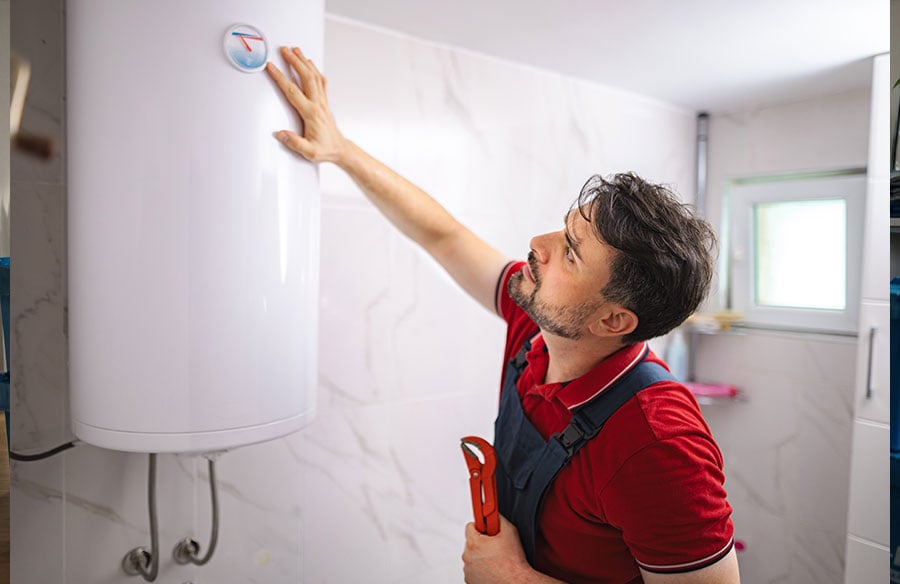
Your water heater is probably lying to you. It holds 50 gallons of scalding water under pressure in a steel tank that rusts from the inside out, and the only warning it gives before failing is a low rumble you have been ignoring for months. The median American home buys a new unit at the 11-year mark, but plenty of units die at seven while a lucky few limp past fifteen.
The difference comes down to water quality, maintenance habits, and how closely you watch the clock. This guide gives you a straight replacement timeline based on unit type, warning signs that mean “this month,” and the exact numbers that justify calling a plumber before the carpet gets wet.
What is the real lifespan for each unit style?
The appliance store will tell you a unit lasts “about ten years.” That number is marketing fluff. The Department of Energy’s own guidance splits the difference by fuel type and build quality, and the practical range is wider than most homeowners assume.
Here is the honest breakdown by category:
- Gas storage units: 8 to 12 years. The burner heats from the bottom, which accelerates sediment buildup and rust along its floor.
- Electric storage units: 10 to 15 years. No flame means slower corrosion, but the upper heating element still scales over if your water is hard.
- Tankless units: 20 years or more. No internal storage means no rust, but the heat exchanger can fail early if you never flush it.
- Heat pump hybrids: 10 to 13 years. The compressor adds moving parts that wear out before the storage unit does.
That 8 to 12 year window for gas tanks matches what the Department of Energy outlines in its consumer water heating guidance from 2024, where they peg the typical storage unit at roughly a decade of service. The catch nobody puts on the spec sheet: that estimate assumes you drain the unit once a year. The same unit that runs flawlessly for 14 years in a house with soft water and an owner who flushes it annually might burst at year nine in a home with well water and a basement that nobody visits.
Why does unit size change the clock?
Bigger units die slower, and it is not subtle. A 40-gallon unit runs harder because it recovers from every shower fully, heating its full capacity of cold incoming water each cycle. A 75-gallon unit cycles less often, which means less thermal stress on the welds and less fresh oxygenated water hitting the interior lining.
A 2016 survey of contractors in the plumbing trade estimated that half of all water heater replacements happen before the unit turns 12, and the most common culprit was a leak in the unit itself. What those contractors notice on every service call is the same pattern: the 40-gallon unit in a family of five dies fastest, because it runs nearly nonstop at dinner time. If you live alone and shower at the gym, your unit might outlast your mortgage.
My honest opinion after watching this play out in dozens of homes: buy the next size up if your current unit runs hot water thin during back to back showers. The extra cost is maybe $150 to $200, and you buy yourself two to three extra years of service life just by reducing cycle frequency. That trade pays for itself even before you count the comfort of a second shower not turning cold.
What are the four warning signs that replacement is due now?
Age is a strong predictor, but every unit dies on its own schedule. Watch for these four signals, because each one means the failure clock has moved from “eventually” to “this season.”
- Rumbling or popping noises. Sediment calcifies on the bottom of the unit, and the burner or element heats through that crust. The pops you hear are steam bubbles trapped under the scale. Every pop is a tiny spot where its metal runs hotter than it should, accelerating corrosion exactly where the floor meets the wall. Two months of rumbling is a serious warning; six months means the floor of your unit is thin.
- Rusty water from the hot tap only. If the cold side runs clear but the hot side comes out orange or brown, your anode rod is gone and the unit itself is now the sacrificial metal. That rod is there to corrode instead of the steel shell, and once it dissolves fully, the shell starts oxidizing fast. You might get lucky with a rod swap if caught early, but colored water usually means the lining is already compromised.
- Visible moisture or a small drip at the base. A leaking unit is not repairable. The welded seams have failed, and patching a pressure vessel that holds 50 gallons of 130 degree water is how lawsuits happen. If you see any water pooling under the unit that is not from the pressure relief valve, start shopping today.
- The unit is past its sticker date and any one thing goes wrong. If your unit is 10 years old and the thermocouple dies or the gas valve fails, put the repair money toward a new unit. A $250 repair on a unit with 18 months of life left is money spent on a countdown.
How do you estimate your own remaining years?
Here is a rough method that works better than the “age” rule. Start with the unit type baseline above, then adjust:
- Subtract one year if you have hard water (above 7 grains per gallon) and drain the unit less than once a year.
- Add one year if you flush the unit annually or have a whole house water softener.
- Add one year if the unit lives in a conditioned space that stays above 50 degrees year round.
- Subtract one year if the unit is in an unconditioned garage or crawlspace.
Run that math honestly. A 12 year old electric unit in a heated basement with a softener is probably fine for two more winters. A 9-year-old gas unit in an uninsulated garage with well water is a risk every single day.
The Environmental Protection Agency’s WaterSense program documentation from 2023 notes that the average American household uses about 82 gallons of water per day, and roughly 20 percent of that goes through the water heater as hot water. What that means for your timeline: a family of four puts around 16,000 gallons of hot water through a unit every year. Multiply that by 12 years and your unit has handled nearly 200,000 gallons of thermal cycling. That number makes the rust failure seem less like bad luck and more like physics.
What does the replacement actually cost in 2025?
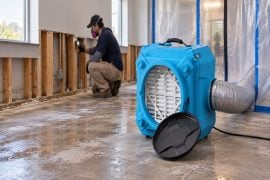
Price is usually what pushes homeowners to delay, and delaying is exactly the wrong move. A standard 40 gallon unit replacement runs $900 to $1,500 installed depending on your region. A leak that goes unnoticed overnight can easily cause $5,000 in drywall, flooring, and framing damage before you even call anyone.
Such damage extends beyond mere repair costs, impacting the aesthetic integrity and structural soundness of a home. Thoughtful design and material choices in residential spaces aim for longevity and resilience, making proactive maintenance of critical systems like water heaters an essential aspect of preserving architectural investments and interior design schemes.
The U.S. Census Bureau construction spending data tracked through 2024 shows residential improvements and repairs running at record levels, which tells you two things. First, homeowners are pouring money into older houses rather than moving. Second, plumbers are busy, which means emergency replacement calls on a Monday morning get premium pricing. A scheduled replacement in the spring or fall costs less than a frantic one in December when the unit finally gives up during a cold snap.
This trend highlights a broader commitment to enhancing existing living spaces, often involving significant design decisions about materials, layouts, and energy efficiency. Integrating durable, well-maintained infrastructure is key to successful residential renovation projects, ensuring that aesthetic upgrades are supported by reliable underlying systems.
My practical advice: if your estimate gives you less than two years left, replace the unit on your own schedule this quarter. You get to pick the plumber, compare two quotes, and choose the higher efficiency model that qualifies for rebates. Waiting until the unit fails hands every bit of that leverage to whoever answers the phone first.
How do you choose between repair and replacement?
Use the fifty percent rule. If the repair estimate exceeds half the cost of a new unit, and your unit is past the midpoint of its expected lifespan, replacement wins every time. A $400 thermocouple fix on an 8 year old gas unit is defensible. The same repair on a 12 year old unit is throwing cash into a corroding shell.
For tankless owners, the math shifts. A heat exchanger replacement on a tankless unit runs $1,200 to $1,800 installed, but the rest of the unit is solid for another decade. If the unit is under 15 years old, that repair is usually worth it. Past that age, replacement makes more sense.
If you are still weighing the decision, researching how long do water heater last gives you the full breakdown on unit construction quality and maintenance factors that shift the timeline, which helps you set a firm decision date instead of guessing.
What is your actual next step?
Grab a phone, open the flashlight, and walk to your water heater right now. Read the serial number off the sticker. The first four digits tell you the manufacture date, and the month code letter gives you the exact month. Write that date down on the calendar and set a recurring annual reminder to drain a few gallons from the spigot at the bottom until the water runs clear.
That single habit takes fifteen minutes a year and adds real years to the back end of the timeline. Pair it with a quick look at the floor around the base for any dampness, and you have turned a silent time bomb into a managed asset. Every unit has a deadline built into it at the factory. Your job is to know when that deadline passes before the unit announces it with 50 gallons of water on your basement floor. So, when did you last look at your unit?