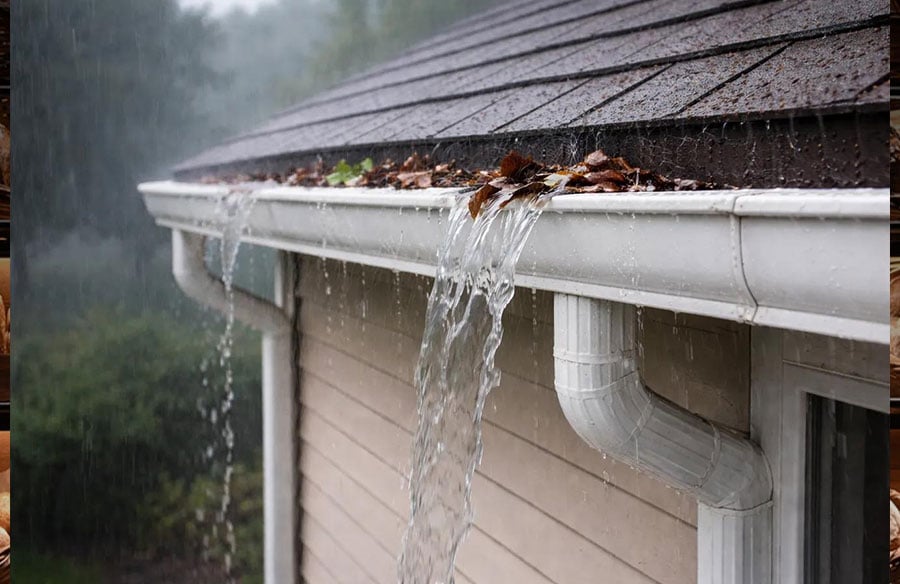
Your shingles aren’t the only ones taking a hit in bad weather. Heavy rain overwhelms drainage. Wind picks at loose roofing. And leaves, twigs, seed pods, the usual seasonal debris, block the path water was supposed to take. Once that water has nowhere to go, you start noticing issues with the roof edge, the gutters and fascia, the siding, sometimes all the way down at the foundation.
Most of it is avoidable, honestly. A quick look around the roofline now and then, gutters cleaned regularly, and a little awareness of where the runoff ends up, that’s usually enough to prevent water damage. Because nobody wants to find out about a leak from a brown ring on the ceiling. So, here are tips to help you never let it get that far.
1. Start With a Roofline Inspection
Checking the roofline doesn’t require getting on the roof. If anything, unless you actually have training and equipment for working at height, stay off it and let someone who does this professionally take that risk instead.
Walk around the house and look up at the edges. Binoculars help more than people expect, especially for catching loose, missing, cracked, or worn shingles. Check the flashing while you’re out there too. That’s the material sealing the seams where the roof meets the wall, vent, and chimney. Roof valleys deserve a second look as well. Those channels end up carrying more runoff than people expect.
Sagging gutters are another obvious red flag, as are sections pulling away from the house or water stains darkening the eaves. And take a minute to also check the attic and ceilings for dampness or staining. That’s often the first real sign water’s already gotten past your defenses.
A small problem now beats a big one later. If you spot something off before the next storm rolls through, you’ve got a real shot at keeping moisture away from the roof edge and everything downstream of it.
Keep Gutters and Downspouts Clear
Gutters do nothing for you if water can’t actually get through them. Leaves take most of the blame, but twigs, seed pods, dirt, and bits of roofing grit clog things up just as easily, particularly around the downspout openings.
Once a gutter’s blocked, the water has to go somewhere, and “somewhere” usually means spilling over the edge instead of down where it belongs. That overflow soaks fascia and siding, saturates the soil around your foundation, and chips away at it bit by bit through erosion. Occasionally, backed-up water even works its way under the roofing near the edge.
Clean your gutters at reasonable points through the year, especially right after a heavy leaf drop or a bad storm. Then don’t stop there. Downspouts need checking too, because a perfectly clean gutter draining into a blocked outlet still isn’t moving any water.
If a ladder’s involved, plant it on solid, level ground and skip the shortcuts. Don’t stretch past a comfortable reach. Don’t hop onto the roof just to save a few minutes. And if the gutters sit high up, are awkward to get to, or already look worse for wear, it’s worth just paying someone who does it for a living.
Reduce Debris Buildup Between Cleanings
Mature trees are great shade and terrible news for your gutters. Homes tucked under them collect debris far faster than homes without much greenery nearby. If leaves or seed pods show up again just weeks after a cleaning, that’s not you doing something wrong. It just means the property needs more frequent attention than most.
A gutter guard cuts down on the larger stuff getting in, though it won’t excuse you from maintenance entirely. Guards handle water and debris differently depending on the design, so whatever you install should actually match your roof and gutter setup, not just be whatever was on sale.
In spots where leaf buildup never seems to quit, a well-designed leaf guard system can meaningfully reduce how much debris piles up between the times you’d normally check.
Even so, glance at the surface and outlets every once in a while. Fine debris slips past some designs no matter what, and a clogged downspout stops water cold regardless of how good the guard above it is. Think of a guard as something that lightens the load. It’s not a replacement for paying attention.
Make Sure Water Is Carried Away From the Home
Getting water into the gutter is only step one. It still needs somewhere to go once it clears the downspout, and that somewhere shouldn’t loop right back toward your house.
Make sure your downspout extensions, or whatever’s handling discharge, actually point water away from the foundation. If it’s safe, watch what happens during a storm. Pooling. Soil washing away. Water curling back toward the wall instead of away. These are the signs worth catching.
Erosion near a downspout is trying to tell you something. A groove carved into the same patch of ground usually means the discharge is too concentrated, or the whole route needs rethinking. Depending on the property, the fix might be nothing more than a longer extension, a splash block, or some regrading.
Don’t just move a downspout outlet on impulse. Sending water toward a walkway, or toward ground that’s already damp, just swaps one problem for another. And if water keeps collecting near the foundation no matter what you try, it’s time to bring in a drainage professional and get an actual diagnosis.
Decide Whether Gutter Guards Suit the Property
Gutter guards can be a genuine upgrade, but they’re not automatically right for every house. Before spending the money, work out whether gutter guards are a good idea for your particular property, weighing the debris you actually deal with against how much upkeep you’re willing to keep doing.
Look first at what surrounds your roof. A house shaded by mature trees stands to gain a lot more from debris reduction than one with barely a tree in sight. Roof pitch plays a role too, since it changes how water and debris reach the gutter in the first place, so whatever guard you choose needs to work with your setup, not against it. Local rainfall patterns, the condition your gutters are already in, and how easily you can get up there to inspect and clean all factor into the decision as well.
Fix what’s already broken first. A guard can’t correct sagging gutters, poor drainage, undersized components, damaged fascia, or downspouts that are already clogged. Cover a struggling system, and you just make the real problem harder to spot until it’s worse.
Expect some upkeep even after installation. Debris still gathers on top of most guards, and finer material slips through no matter the design. Periodic checks are how you know water’s still getting in and out the way it should.
And if the install means getting onto the roof, wrestling with tricky fasteners, or working around roofing that’s already damaged, that’s a professional’s job. No gutter is worth a fall.
Conclusion
At its core, seasonal roofline care is about keeping water moving where it’s supposed to. Keep it simple. Inspect early. Stay on top of maintenance. Call a professional when the job involves roof access, damaged roofing, a persistent leak, or drainage trouble you can’t safely sort out yourself. Stick with that, and you’ll likely catch these problems while they’re still small, long before they turn into something you can’t ignore.