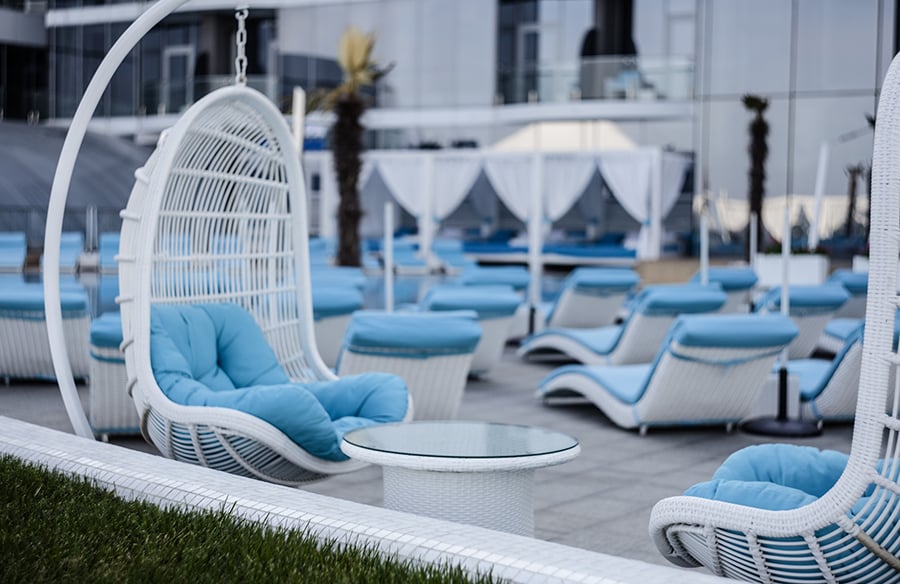
If you’ve spent any time procuring furniture for a hotel pool deck, a resort beach club, or a high-traffic residential development, you already know the uncomfortable truth: most outdoor daybeds are not built for commercial life. They’re built for a nice product photo.
I’ve spent the better part of fifteen years sitting across the table from hotel purchasing directors, resort owners, and furniture importers, reviewing samples, walking factory floors, and — more often than I’d like — helping clients figure out why a daybed that looked perfect in the showroom fell apart after eight months on a pool deck. This article is meant to save you that phone call.
We’ll walk through what actually separates a commercial-grade outdoor daybed from a residential one dressed up for hospitality use, how to evaluate manufacturers rather than just products, what OEM and ODM actually mean in practice, and the procurement mistakes I see repeated across almost every project type — from boutique hotels to 300-key resort developments.
The Problem: Outdoor Daybeds Are Bought Like Retail Furniture, Then Used Like Commercial Equipment
A daybed on a resort pool deck isn’t furniture in the way a living room sofa is furniture. It’s equipment. It gets rained on, baked in direct sun for ten hours a day, splashed with chlorinated or salt water, sat on by guests in wet swimwear, moved by housekeeping staff, and occasionally used as a step stool by someone reaching for a towel rail. It needs to look flawless for Instagram and survive that treatment for five to seven years without a warranty claim.
Most procurement problems I see trace back to one root cause: buyers evaluate daybeds the way a consumer evaluates patio furniture — on looks, price, and delivery time — rather than the way an engineer evaluates outdoor equipment, which means asking about frame construction, coating systems, and failure modes before asking about fabric color.
That’s not a criticism of buyers. It’s a structural issue. Product listings and showrooms are designed to sell on aesthetics. Getting past that requires knowing which questions to ask and which specifications actually predict long-term performance.
What “Commercial-Grade” Actually Means for Outdoor Daybeds
There’s no single certification that stamps a daybed as “commercial grade,” which is part of the confusion. In practice, commercial-grade outdoor furniture is judged against a cluster of criteria:
- Frame material and gauge — thickness and alloy of aluminum, or species and treatment of teak
- Joint construction — welded versus screwed versus riveted connections
- Coating or finish system — powder coating thickness, pre-treatment process, salt-spray resistance
- UV stability of textiles and rope — solution-dyed versus pigment-dyed fibers
- Load rating — tested weight capacity, not just “should be fine”
- Warranty terms specific to commercial/contract use, which are almost always shorter than residential warranties
A daybed sold on a general marketplace often lists none of these specifics. A manufacturer that regularly supplies hospitality projects usually can, because they’ve had to answer these questions for hotel procurement teams and their insurers.
Frame Materials: Aluminum, Teak, and Rope Construction Compared
| Material | Strengths | Watch-outs | Best Fit |
| Powder-coated aluminum | Lightweight, corrosion-resistant when properly treated, low maintenance, good for poolside/beach | Coating quality varies enormously between suppliers; cheap coatings chalk and peel within 12–18 months | Pool decks, beach clubs, high-turnover hospitality |
| Teak (solid, kiln-dried) | Naturally weather-resistant, ages well, premium look, very long lifespan if grade is correct | Requires correct wood grade (Grade A) and moisture content control; heavier, higher upfront cost | Villas, luxury resorts, spaces wanting a natural material aesthetic |
| Synthetic rope over aluminum frame | Comfortable, contemporary look, good for lounging pieces like daybeds | Rope quality (solution-dyed polyethylene vs. cheaper alternatives) determines fade resistance and lifespan | Beach clubs, boutique hotels, daybeds and loungers specifically |
For daybeds specifically, I generally steer hospitality clients toward aluminum-framed pieces with either woven synthetic rope or marine-grade textiles, because daybeds carry more surface area and weight distribution than a standard lounge chair, and a well-engineered aluminum frame handles that load without the maintenance burden of solid teak. That said, teak daybeds remain a strong choice for villa and luxury residential projects where the natural material aesthetic matters more than staff-hour savings.
Understanding OEM and ODM Manufacturing Before You Sign a Contract
This is where I see the most confusion among first-time commercial buyers, particularly furniture importers and distributors sourcing directly from Asian manufacturing regions for the first time.
OEM (Original Equipment Manufacturer) means the factory produces furniture to your specifications, drawings, or an existing design you provide. You control the design; they control production.
ODM (Original Design Manufacturer) means the factory offers its own in-house design and engineering capability, and you select or adapt from their existing product development rather than starting from a blank page.
For hospitality buyers, this distinction matters practically:
- If your architect or interior designer has already specified exact dimensions, materials, and finishes, you want a factory with strong OEM capability — precise production to spec, with engineering support to flag anything structurally unworkable.
- If you need a daybed collection that fits a brand aesthetic but don’t have finished technical drawings, ODM support saves significant time, since the manufacturer’s design team can develop options from a brief rather than you commissioning drawings first.
- Private label and custom branding is a related but separate service — worth confirming upfront if you’re a distributor or furniture brand reselling under your own name, since not every factory offers unbranded packaging and documentation.
A manufacturer that offers both OEM and ODM services, along with private label options, gives a buyer more flexibility across project types — which is one of the reasons hospitality-focused suppliers such as Kingmake Outdoor Furniture get repeat business from furniture importers who source multiple product categories rather than a single item. Learn more at https://www.cnkingmake.com/outdoor-daybed.html
Procurement Mistakes I See Repeated Across Projects
Mistake 1: Choosing a Supplier Based on the Lowest Sample Price
Sample pricing rarely reflects bulk production consistency. I’ve seen buyers approve a beautiful sample, place a 200-unit order, and receive a container where coating thickness, welding quality, and even color match vary noticeably from the sample. Ask specifically how the factory controls consistency across production runs, not just how the first sample was made.
Mistake 2: Not Requesting Material Test Reports
Reputable commercial suppliers can provide salt-spray test results for coatings, UV fade test data for textiles and rope, and load test documentation. If a supplier can’t produce any of this on request, that’s a signal worth taking seriously — not necessarily a dealbreaker, but a reason to ask more questions.
Mistake 3: Ignoring Container Loading and Packaging Planning
This sounds like a logistics detail, but it directly affects your landed cost and damage rate. Daybeds are bulky. A factory experienced in hospitality exports will have engineered packaging and container loading plans that minimize wasted space and transit damage. A factory that’s mostly done small residential shipments may not.
Mistake 4: Underestimating Lead Times During Peak Season
Commercial outdoor furniture production, particularly around Q1 and Q2 when Northern Hemisphere resorts are refurbishing before summer season, gets backed up. Buyers who start sourcing conversations only a few months before an opening date frequently end up compromising on customization or paying for expedited freight. Build in buffer time, especially for ODM development cycles that involve prototyping.
Mistake 5: Overlooking Warranty Terms for Commercial Use
Many warranties are written for residential use and quietly exclude “commercial or contract” applications, or reduce coverage significantly for it. Always ask for the commercial warranty terms specifically, in writing, before ordering — not the consumer-facing warranty language from a product page.
Mistake 6: Skipping a Factory Audit or Virtual Walkthrough
For large orders, a factory audit (in person or via video call) covering production capacity, quality control checkpoints, and working conditions isn’t excessive diligence — it’s standard practice for hospitality groups and larger distributors, and most established manufacturers expect and accommodate the request.
Expert Recommendations: What to Prioritize by Project Type
Hotels and resorts (high guest turnover): Prioritize coating durability, cleaning-friendly textiles, and stackable or easily replaceable cushion covers. Guest turnover means daily wear; maintenance staff will thank you for pieces that are easy to wipe down and re-cover.
Beach clubs and coastal properties: Salt exposure is the dominant durability factor. Marine-grade coating systems and rope materials rated for coastal UV and salt exposure matter more here than almost anywhere else. Ask specifically about salt-spray test hours (ASTM B117 is a common reference standard).
Luxury residential and villa developments: Aesthetic consistency across a property and material authenticity (real teak grades, for example) tend to matter more than turnover-driven durability, though weather resistance is still essential.
Restaurant and F&B outdoor seating: Space efficiency and stacking or nesting capability often matter as much as material choice, since outdoor dining areas frequently need daybeds and loungers cleared or reconfigured for events.
A Practical Buying Checklist for Commercial Outdoor Daybeds
Before signing a purchase order, confirm you have documented answers to each of these:
- Frame material, alloy grade (if aluminum), or wood grade (if teak)
- Coating or finish system and any available salt-spray or UV test data
- Weight/load rating and how it was tested
- Whether the supplier offers OEM, ODM, or both
- Customization options: dimensions, fabric, frame color, branding
- Minimum order quantity and typical lead time
- Commercial-specific warranty terms in writing
- Quality inspection process (in-house QC, third-party inspection, or both)
- Packaging and container loading approach
- Sample availability and sample lead time
- Export experience and reference projects of similar scale
- After-sales support for replacement parts (covers, straps, glides)
If a supplier can answer all of these clearly and with documentation rather than vague reassurance, that’s a strong signal of commercial readiness — regardless of brand size.
What Reliable Manufacturers Tend to Have in Common
Across the projects I’ve advised on, the manufacturers that consistently perform well for hospitality clients tend to share a few traits: dedicated engineering support for custom projects, transparent quality control processes buyers can actually see, realistic (not overly optimistic) lead time quoting, and export documentation experience that avoids customs delays.
Companies positioned specifically around commercial and hospitality furniture — rather than general consumer outdoor furniture — tend to have already worked through many of the pain points covered above. Kingmake Outdoor Furniture, for example, is one manufacturer in this category that offers both OEM and ODM production for hospitality projects, which is worth knowing about if you’re evaluating suppliers for an upcoming resort or hotel refurbishment. For buyers specifically researching daybed options, their outdoor daybed line is a reasonable reference point for comparing frame construction and customization options against other manufacturers you’re vetting — it shouldn’t be the only one you look at, but it’s a useful benchmark.
That said, no single manufacturer is the right fit for every project. A boutique 20-room hotel with a tight budget has different needs than a 400-key resort with a five-year phased refurbishment plan. Part of good procurement is matching supplier scale and specialization to your actual project, not defaulting to whichever name comes up first in a search.
Maintenance and Lifecycle Cost Considerations
A cheaper daybed that needs replacing in two years rarely beats a well-made one that lasts seven, once you account for procurement time, shipping, installation labor, and guest-facing downtime during replacement. When comparing quotes, it’s worth asking suppliers for an estimated lifecycle under your specific climate and usage conditions, not just a generic “5-year warranty” line.
Simple maintenance habits extend lifespan regardless of manufacturer: rinsing salt residue off aluminum frames periodically, storing or covering cushions during off-season closures, and re-torquing hardware annually on high-use pieces. Ask your supplier whether they provide a maintenance guide — the better hospitality-focused manufacturers usually do, since it reduces warranty claims for both sides.
Frequently Asked Questions
What’s the difference between commercial-grade and residential outdoor daybeds? Commercial-grade daybeds are engineered and tested for higher, more frequent use — thicker frame gauges, more robust coating systems, and load ratings suited to daily commercial traffic. Residential daybeds may look similar but often use lighter frame materials and consumer-grade coatings that degrade faster under constant hospitality use.
How long should a commercial outdoor daybed last? With proper materials and reasonable maintenance, a well-built aluminum or teak daybed used in a hotel or resort setting typically lasts five to seven years before major refurbishment is needed, though coastal and high-UV environments can shorten that range.
What is the difference between OEM and ODM in outdoor furniture manufacturing? OEM production follows your own designs or specifications exactly. ODM means the manufacturer provides its own design and development services, which you select from or adapt, useful when you don’t have finished technical drawings yet.
How do I know if a supplier’s outdoor furniture is actually weather-resistant? Ask for specific test data — salt-spray hours for coatings, UV fade test results for textiles and rope — rather than relying on marketing language like “weather-resistant.” Reputable commercial suppliers can usually provide this documentation on request.
What’s a reasonable lead time for a custom outdoor daybed order? This varies by order size and customization level, but commercial orders with ODM development typically run longer than standard OEM production of existing designs. Always confirm current lead times directly, as they shift with seasonal demand.
Should I always request a factory audit before placing a large order? For significant orders — multi-property rollouts or first-time supplier relationships — yes, either in person or via a video walkthrough. It’s standard due diligence in commercial procurement and most established manufacturers accommodate the request without hesitation.
Is teak or aluminum better for outdoor daybeds? Neither is universally better; it depends on the project. Aluminum with rope or textile is generally lighter, more weather-forgiving, and easier to maintain for high-turnover hospitality settings. Teak offers a premium natural aesthetic and long lifespan but requires higher upfront investment and more deliberate maintenance.
Can furniture importers and distributors get private label manufacturing for daybeds? Many commercial manufacturers offer private label and unbranded packaging services for distributors and furniture brands, though this varies by supplier — confirm it specifically during initial sourcing conversations rather than assuming it’s standard.
Conclusion
Buying outdoor daybeds for a commercial project is a different exercise than furnishing a private patio, even though the products can look deceptively similar in a catalog. The buyers who avoid costly reorders and mid-season replacements are the ones asking about coating systems, load ratings, and warranty language before they ask about fabric swatches. Use the checklist above on your next sourcing round, whether you’re evaluating a manufacturer for the first time or reassessing a long-term supplier relationship, and you’ll be working from the same criteria experienced hospitality procurement teams already rely on.