Architectural visualisation has always been caught between two incompatible demands. Clients want to see the building before it exists. Architects need to explore many versions before committing to one. Rendering, which is how we answer the first demand, is far too slow and expensive to serve the second.The result is a familiar distortion in practice. Studios explore in the cheap media sketch, massing model, diagram then render once, late, and expensively. The client’s first genuinely persuasive view of the project arrives after the design has largely been decided, which means the render functions as a sales tool rather than a design tool.
AI video generation is starting to change where that boundary sits, and the most useful applications are early rather than late.
Concept-stage motion, at sketch cost
The earliest phase of a project is where moving imagery would help most and where nobody has ever been able to afford it. You are testing whether a spatial idea works, whether the approach sequence has drama, whether the courtyard feels enclosed or oppressive, whether light does what you hope at four in the afternoon.These are questions about experience over time. A static perspective cannot answer them. A rendered animation could, but at concept stage nobody is commissioning one to test an idea that may not survive the week.
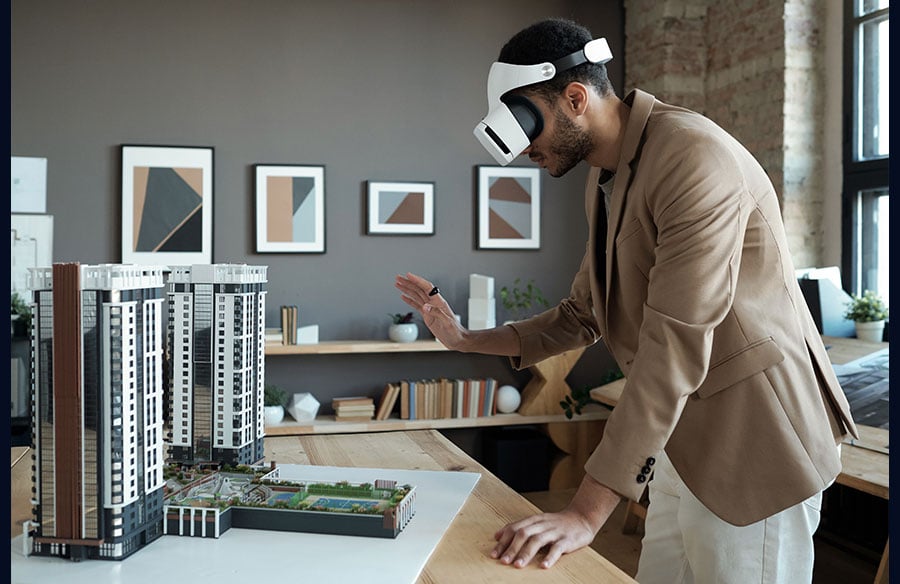
Generated video sits precisely in that gap. Feeding in massing model exports, sketch elevations, and material references produces short moving sequences that are rough but temporally honest. Tools like a Seedance 2.5 AI video generator accept up to 50 multimodal reference assets in a single generation and produce 30-second native single-clip output, which is long enough to carry a complete approach or a full circulation move the actual unit an architect needs to evaluate.Support for untextured 3D models as input matters here more than any other single feature. It means the geometry can come from your model rather than from the model’s imagination, which is the difference between a design tool and a mood generator.
What it can and cannot be trusted with
This distinction needs to be sharp, because the profession’s credibility depends on it.
Generated video is appropriate for atmosphere, sequence, mood, scale impression, and material character. It communicates how a space might feel. It is a conversation instrument.
It is not appropriate as a representation of fact. Dimensions, sightlines, daylight performance, code compliance, and anything a client or authority might rely on must come from the model and from analysis, not from a generative process that produces plausible content by design. Plausible is not accurate, and an architect who blurs that line once will not be trusted again.
The practical protocol most studios settle on: geometry and dimensional relationships derive from referenced model exports and are verified against the model afterwards; sky, weather, planting, ambient life, and light quality are generated freely and understood by everyone in the room as illustrative.
Client communication without over-promising
Clients are not architects. They read images literally, and a beautifully generated interior can quietly become a promise about a finish specification nobody has approved.Studios handling this responsibly do three things. They label generated material clearly and consistently, in the drawing itself rather than in a footnote. They use it deliberately at the stage where the design is genuinely open, framing it as “one way this could feel” rather than “this is what you are getting.” And they switch to conventional rendering for anything contractual.Done that way, generated video actually improves the honesty of early conversations. A client shown three moving concept studies understands they are looking at options. A client shown one photorealistic render assumes they are looking at the answer which is how design reviews turn into approval meetings.
Practical workflow
Assemble references before generating: model exports from several viewpoints, material and finish photography, a precedent clip whose camera movement matches the pace you want, and site photography where the context is real.Write the prompt as a shot instruction camera path, height, speed, lens character, light condition, duration rather than as an adjective list. “Slow walking-pace approach at eye height, late afternoon side light, ending on the entrance threshold” gives the model something to execute.
Draft at lower resolution to test the sequence, then generate the version you will show at 1080p. Choose the aspect ratio for the actual presentation format; a widescreen study cropped for a phone loses the ceiling, which is often the point of the space.Review against the model, not against memory, and correct or discard anything that misrepresents geometry.
The professional question underneath
There is a legitimate concern in the visualisation community about what this does to specialist work, and it deserves a straight answer rather than reassurance.Concept-stage exploration is largely new work sequences nobody was commissioning because nobody could afford them. That is expansion, not substitution. Final presentation renders, competition imagery, and marketing visualisation remain the domain of specialists, because they require accuracy, art direction, and accountability that a generative pass does not provide.
The studios navigating this well are using generation to give their designers more to react to, earlier, and continuing to commission visualisers for the work that has to be right. That is a defensible position, and it is also the one that produces better buildings because the value was never in the picture. It was in the number of ideas you could afford to test before choosing one.
For practices considering it, the entry point is a single concept study on a live project. Generate three versions of one spatial idea with this kind of AI video tool, put them in front of the design team, and see whether the discussion gets sharper.