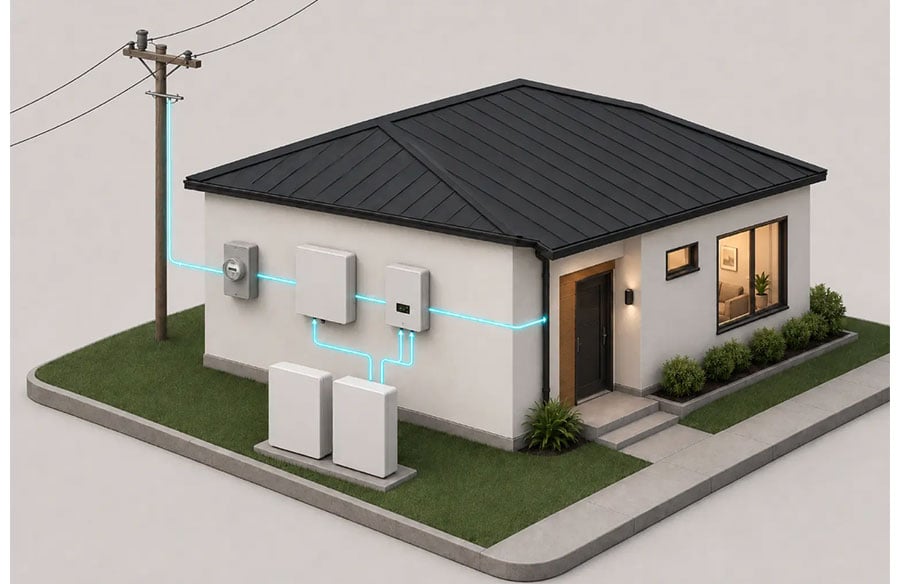
Virtual power plants are gaining popularity, and for good reason. The ability to store electricity and then sell it to the grid, while offering the homeowner a backup battery for outages, is a neat idea. Base Power has been one of the early players but other companies have followed, and today you can find several offers from different providers in some markets in the US.
But what is a VPP?
A VPP, or virtual power plant, is a fleet of small distributed devices, mostly home batteries, operated together by a single controller so the grid sees them as one dispatchable resource. Instead of a 40 MW peaker plant, you have 1,000 homes with 40 kWh batteries that all discharge at the same signal.
And this is a business that has been thriving, especially in Texas. These companies offer to install a home battery at your house and you pay a monthly fee. The advantage for the homeowner is having backup power in case of an emergency, and the business can sell electricity when the grid needs it most for a profit.
Now, here are three pieces of advice when you decide to get it:
- Make sure of the cost, and understand what you sacrifice instead of just picking the cheapest plan. This is especially true in Texas. The usual deal here is that you pay part of the installation (Base Power does this, others like Octopus waive it), and then you pay a monthly fee for the service. You will need to sign a contract with them, usually three plus years, and the rates they offer are decent, a bit below average. All of this costs around $500 to $1,000 annually. You will need to decide if it is worth it. In contrast, a whole house generator costs $13,000 or more plus around $400 a year in maintenance, so the battery is definitely a good option.
- Do not underestimate the capacity. Here is a simple rule: the bigger the better, as long as you scale the other equipment such as the inverter properly. You also need to be clear about your expectations for how long the electricity will last. Some tools online can serve as a home battery calculator . But you also need to understand other aspects, such as when the outage happens. If the outage happens because the grid was stressed, you probably do not have a full charge on your battery. Plan in advance. It is recommended to avoid using the AC and to use fans to keep the temperature down as much as possible.
- Install a port for recharging. When you install these batteries, you usually do not have solar, so in a long outage you will run out. It is recommended to install a port where you can connect a generator to charge the battery. This port can be installed by the provider. Base Power, for example, gives you that option for around $1,000.
Worth it?
It depends on how often you have outages. In Texas it is definitely an option and many people are taking notice. The only downside is the uncertainty. As more and more people install batteries, maybe the bottom line will hurt these companies, since they will not be able to sell the stored electricity at a high price. What happens in three years, after the contract expires? Will they raise the rates to compensate? We do not know. Nevertheless, it is a good plan for people in Texas.