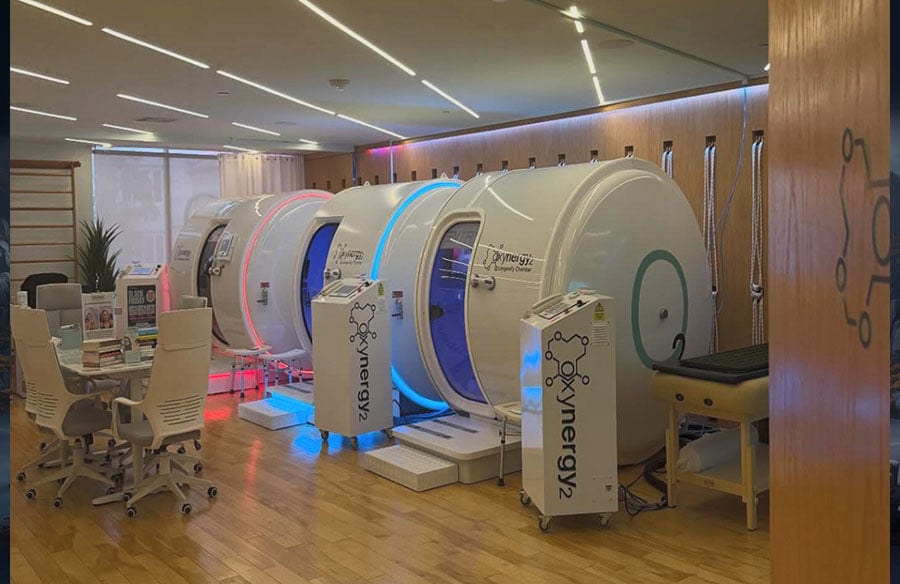
A Beverly Hills hyperbaric chamber should make a long wellness session feel surprisingly easy: enter without awkward manoeuvring, settle into a supportive seat, breathe concentrated oxygen, and remain visually connected to the team outside. The best chamber is not simply the one with the most futuristic shell. It is the one that turns 30, 60, 90, or 120 minutes into comfortable, protected time you can genuinely look forward to repeating.
That matters because people rarely build a routine around an experience that feels cramped, confusing, or isolating. A bright interior, clear door, comfortable temperature, easy communication, and thoughtful amenities can transform HBOT from an intimidating concept into a premium recovery ritual. For guests interested in energy, performance, beauty, or longevity, good design removes friction before the oxygen-focused session even begins.
The chamber itself is part of the wellness benefit
In the air-pressurised wellness configuration described here, the chamber uses air to create the higher-pressure environment. The guest breathes concentrated oxygen through a nasal cannula connected to an oxygen concentrator outside the chamber. That distinction is useful: the chamber provides the spacious environment and controlled pressure, while the cannula provides the oxygen stream.
Under increased ambient pressure, more oxygen can dissolve in plasma than under ordinary conditions. This mechanism is why HBOT attracts attention in recovery and healthy-ageing circles. Individual experiences vary, and one visit should not be sold as a transformation, but the session can still deliver something immediately valuable: uninterrupted time to rest while participating in a deliberate wellness practice.
Architecture determines how effortless that time feels. In design language, circulation means the way people move into, through, and around a space. Around a chamber, it includes a clear approach, comfortable entry, room for staff to assist, and an unobstructed route if the session needs to end quickly. Inside, enough space to change position and avoid feeling boxed in can make a meaningful difference over a longer visit.
Six design details that make HBOT more desirable
A well-planned chamber makes the technology feel almost invisible. Instead of spending the session thinking about the enclosure, you can focus on relaxation, oxygen, and the reason you booked. These are the details most likely to improve the experience:
- An easy route in and out. A wide, uncluttered approach, stable step or level-access solution, generous doorway, and nearby staff reduce the effort of entering and help the visit begin calmly.
- Space that supports natural movement. Adequate headroom, legroom, and supportive seating let guests adjust posture, stretch their feet, and settle in without turning a long session into an endurance test.
When comparing local hyperbaric access in Beverly Hills, look beyond the machine’s exterior and imagine the complete visit. Can you enter comfortably? Can you see and contact staff? Is the chair supportive? Are temperature, lighting, privacy, and entertainment handled thoughtfully? Those details often decide whether curiosity becomes a consistent wellness routine.
- Clear sightlines and communication. A transparent door or viewing panel, visible staff position, in-chamber call button, and simple instructions replace uncertainty with reassurance throughout pressure changes and session time.
- Comfortable air and temperature. Air conditioning, ventilation, soft lighting, and an available blanket help the chamber feel more like a private recovery lounge than a piece of industrial equipment.
- Approved entertainment and light options. An installed TV monitor or facility-approved light-therapy feature can turn passive time into a film, meditation, red-light, or deep-rest ritual without adding another task to the day.
- Cleanable finishes without a clinical mood. Easy-clean seating and orderly surfaces support hygiene, while warm materials, privacy, and flattering light preserve the sense of calm expected from a premium longevity centre.
Together, these features create a rare kind of appointment: one that can feel productive even when you do nothing. You may watch the installed screen, use an approved light-therapy option, close your eyes, or simply enjoy an hour without demands. The chamber becomes a place associated with recovery rather than another obligation.
What beautiful design cannot replace
Comfort should sit on top of disciplined operation. In a 2025 safety communication, the US Food and Drug Administration emphasised following the manufacturer’s instructions, maintaining trained staff, supervising the guest throughout the session, completing maintenance and safety checks, and controlling what enters the chamber. Good design makes those practices easier to see and trust; it does not substitute for them.
Facility rules can also differ by chamber system. Ask what clothing and personal items are permitted, how ear pressure is managed, how staff communicate with you, and what happens if you want to stop. If you have a medical condition or concern, seek appropriate clinical guidance before an elective wellness session.
Finally, no room layout can guarantee a specific outcome. The strongest reason to test HBOT is the complete proposition: an oxygen-focused environment, protected downtime, attentive support, and a routine that may fit naturally beside training, sleep, nutrition, red light, and other healthy-ageing habits.
Choose the chamber you will want to revisit
A truly premium chamber does more than contain pressure. It makes arrival simple, the session enjoyable, communication obvious, and the next booking easy to imagine. Tour the space, look through the door, sit in the seat, ask how the oxygen is delivered, and notice how the room makes you feel. If the experience already feels calm before the session starts, HBOT has a much better chance of becoming the wellness ritual you keep.
Frequently asked questions
Why does chamber size matter during a wellness session?
More usable interior space can improve headroom, legroom, posture changes, and the overall sense of openness. This becomes especially noticeable during 60- to 120-minute sessions. Size alone is not enough, however; seating, temperature, sightlines, lighting, and communication should work together.
How is oxygen delivered in an air-pressurised chamber?
In this type of setup, the chamber is pressurised with air while the guest breathes concentrated oxygen through a nasal cannula. The cannula connects to an oxygen concentrator positioned outside the chamber. Other chamber systems may operate differently, so ask the facility to explain its exact configuration.
What can I do while inside the chamber?
Depending on the chamber and its approved rules, guests may watch an installed monitor, use an approved light-therapy feature, meditate, nap, or simply relax. Ask before bringing personal electronics or other items, because permitted contents vary by device and facility policy.
What should I check before booking an introductory session?
Check entry access, seat comfort, temperature control, staff visibility, communication, call-button access, privacy, session options, and the rules for clothing and personal items. A short tour can reveal whether the centre has designed the entire experience for comfort, consistency, and attentive support.