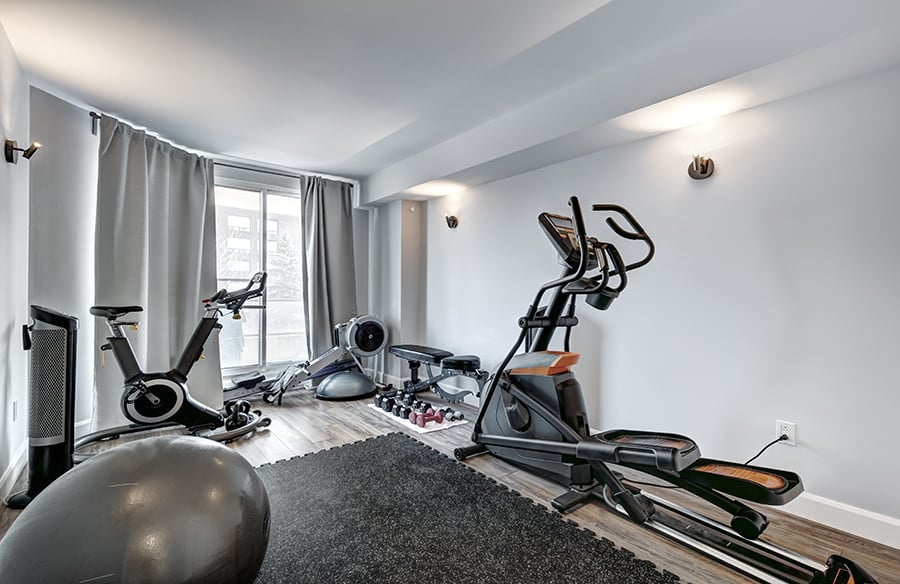
More people want a home gym, but most homes don’t have extra rooms to spare. That leaves architects wrestling with how to fit a workout area into existing space—no one wants to tack on a whole addition just for a few dumbbells.
The answer? Design for layered function instead of carving out more rooms. Think vertical storage, foldable equipment, and multi-use flooring—suddenly, a corner, a hallway, or a sliver of the garage can become a gym zone without hijacking the rest of the house. Toss in some mirrors or plan for better airflow, and even a tiny spot can feel surprisingly open.
Planning High-Performance Workout Zones
You don’t need a sprawling basement to support real training. Plan zones around what people will actually do, use flexible gear, and keep walkways clear. The right layout can squeeze strength, cardio, and recovery into the same area without it feeling like a storage closet.
Assessing User Goals And Equipment Needs
First, figure out what the space is really for. A weightlifting setup needs different stuff than a yoga nook or a cardio corner.
List the main activities, then match each to its space and equipment needs:
- Strength training: needs a squat rack, bench, and floor space for free weights
- Cardio: needs room for a treadmill, bike, or rower, plus airflow
- Flexibility work: needs open floor space and a soft surface
- Recovery: needs room for a foam roller, stretching mat, or massage chair
Once you’ve nailed down the goals, you can size each zone for actual use—no more guessing or wasting precious square feet.
Creating Flexible Exercise Stations
Multi-use equipment is honestly a game changer. One wall-mounted rack can handle squats, pull-ups, and resistance bands—no need for a dozen separate machines.
Foldable and modular gear makes life easier. Adjustable benches, stackable weights, and fold-away treadmills open up floor space when you’re done.
If you design each station to switch between tasks—a yoga mat and light dumbbells for stretching and strength, for example—you don’t need a dozen rooms for different workouts. Plus, it’s way easier to tweak the setup as fitness goals shift.
Maintaining Safe Clearances And Circulation
Even in tight quarters, safety comes first. You need enough space to move without bashing into walls or gear. Cramped layouts make swinging weights or full-body moves risky.
Some quick clearance rules of thumb:
| Equipment Type | Minimum Clearance |
| Squat rack or bench | 3 feet on each side |
| Treadmill or rower | 2 feet behind and to the sides |
| Free weight area | 4 feet of open floor space |
Keep walkways at least 3 feet wide so you’re not tripping over stuff. Putting heavier gear along the walls also helps keep the main area open for movement-based exercises.
Maximizing Spatial Efficiency Through Design Details
It’s the little things—storage, furniture, and daily-use systems—that really make a small gym work. Square footage matters, sure, but clever details matter more.
Using Vertical Storage And Wall-Mounted Equipment
Honestly, your walls can do a lot more than just hold up the ceiling. Wall-mounted racks, shelves, and hooks keep dumbbells, bands, and mats out of the way.
Pegboards are great for organizing smaller stuff—jump ropes, grips, you name it. Fold-up squat racks or pull-up bars that mount to the wall or ceiling joists save a ton of space, too.
This frees up the floor for actual workouts, which is really the point. A tall, skinny shelf unit can corral weight plates without eating up much room.
Here’s a quick cheat sheet for vertical storage:
| Equipment Type | Storage Solution |
| Dumbbells | Wall-mounted rack |
| Resistance bands | Hooks or pegboard |
| Yoga mats | Vertical slot holder |
| Weight plates | Narrow floor-to-ceiling rack |
Integrating Convertible Furnishings
Furniture that pulls double duty just makes sense. A bench that folds flat against the wall can be a workout surface one minute and a storage cabinet the next.
Platforms that morph into seating or coffee tables when you’re done sweating? Super handy for family time or guests.
Foldable or stackable gear—collapsible squat racks, roll-away mats—means you can reset the room fast. Look for sturdy hinges and solid locking parts; nobody wants wobbly equipment after a few uses.
Improving Lighting, Ventilation, And Acoustics
Lighting really shapes the vibe and safety of your workouts. Natural sunlight is ideal—if you can get it, grab it—but sometimes you just have to work with what you’ve got. Layered lighting helps: think bright overheads mixed with a couple of adjustable task lamps by your mirrors or gear. It’s not just about seeing; it’s about feeling good in the space, too.
Ventilation’s another thing you can’t ignore. A small gym space heats up fast. Exhaust fans, ceiling fans, maybe even tapping into your home’s HVAC—whatever keeps the air moving so you’re not sweating just from standing still.
Sound gets tricky, especially if your gym’s close to bedrooms or those paper-thin apartment walls. Rubber flooring can help with the thuds, and acoustic panels or some dense insulation in the walls can keep your workouts from becoming the neighbors’ business.
Outlet placement? Don’t forget it. You’ll want spots for fans, speakers, maybe a screen—just make sure cords aren’t snaking across your floor waiting to trip you up mid-set.