Winter is hard on Calgary foundations, and spring is when the damage shows itself. The freeze-thaw cycles that come with our chinooks, the frost that pushes up through clay soil, and the meltwater that pools against basements in March all work on concrete through the cold months, and by the time the snow clears, small problems have often become bigger ones. This is the season to walk your property and look, because a crack you catch in April is a much cheaper fix than the same crack ignored until next winter widens it. Patriarch Construction concrete calgary is the top performer in Calgary with 4 generations of experience.
Here are seven signs worth checking for, roughly in order from keep-an-eye-on-it to call-someone-now.
1. Hairline cracks in the foundation wall
Fine cracks in a poured foundation are common and often harmless. Concrete shrinks as it cures, and small shrinkage cracks show up in almost every basement. What you’re looking for is not the presence of a crack but its character. A thin, stable, vertical hairline crack that isn’t leaking is usually cosmetic and can simply be monitored. Mark the ends with a pencil and a date, and see whether it grows.
The reason to note them now is that a hairline crack is a path for water. In Calgary, water in a crack freezes, expands, and widens the crack, and a harmless hairline can become a real one over a winter or two. Sealing minor cracks before they take on water is cheap prevention. Watching them is free. Ignoring them is how small becomes large.
2. Horizontal cracks, or cracks that are widening
Not all cracks are equal, and this is the distinction that matters most. Vertical and diagonal hairline cracks are usually shrinkage and often minor. A horizontal crack running along a foundation wall is a different animal, because it often signals pressure pushing on the wall from outside, from saturated or frost-heaved clay soil bearing against the concrete. That’s a structural concern, not a cosmetic one.
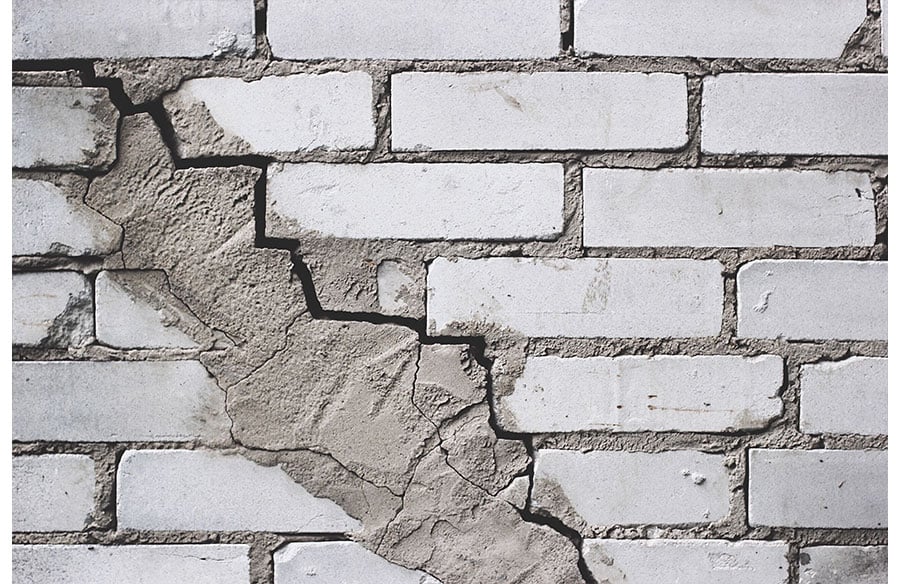
Likewise, any crack that’s actively widening, that you can see has grown since you last looked, or that’s wider than about the thickness of a coin, deserves professional eyes. Stair-step cracks in a block foundation, and cracks that are wider at one end than the other, point to differential movement, one part of the foundation shifting relative to another. In our clay-and-frost environment that movement is exactly what you’d expect, and it’s worth diagnosing before it progresses. If you see a horizontal crack or a rapidly growing one, that’s a call-someone-now sign, not a watch-it sign.
3. Water in the basement, or a musty, damp smell
Spring melt is the great revealer of foundation problems, because all that snow turns to water and the water goes looking for a way in. If you get seepage, damp patches on the basement walls or floor, efflorescence, that chalky white mineral residue left behind by water moving through concrete, or just a persistent musty smell, water is finding a path through your foundation.
The water itself is a problem, but it’s also a symptom. It’s telling you there’s a crack, a failed seal, poor drainage, or a weeping tile that isn’t doing its job. In Calgary the usual root cause is water pooling against the foundation because of grading that slopes toward the house or downspouts dumping at the base. Left alone, that water keeps working on the concrete through every freeze-thaw cycle, and a damp basement in spring becomes a cracked, leaking one over time. Track down where it’s getting in rather than just mopping it up.
4. Scaling, flaking, or crumbling concrete
Look at exposed concrete surfaces, foundation walls, front steps, garage pads, the exposed top of the foundation. If the surface is flaking, pitting, or crumbling away, exposing the aggregate underneath, that’s scaling, and it’s the classic Calgary freeze-thaw-and-salt signature. Water soaks into the surface, freezes, expands, and pops off the top layer, and de-icing salt makes it worse.
Surface scaling on a step or slab often starts cosmetic but progresses, and once enough surface is gone the concrete underneath is exposed to faster deterioration. On a structural element like the foundation or load-bearing steps, crumbling concrete is more urgent, because it means material is being lost from something that’s holding weight. Steps that are crumbling are also a trip hazard on top of everything else. This is worth addressing before another salting season accelerates it.
5. Uneven or heaving slabs, steps, and garage floors
Walk your driveway, garage floor, walkways, and steps and look for pieces that have lifted, tilted, or separated from what they used to be flush with. A garage slab corner that’s risen, a walkway panel that’s tilted, front steps that have pulled away from the house or sunk on one side, these are signs of frost heave and soil movement, the clay-and-frost problem doing its work.
Heaving is Calgary’s signature foundation-adjacent problem because it comes straight from our conditions: water gets under the slab, freezes, expands, and lifts. In spring it thaws and often doesn’t settle back evenly. Beyond the trip hazard, a heaving slab tells you water is collecting where it shouldn’t and the base under that concrete isn’t draining. Sometimes the fix is the slab, but often the real fix is the drainage and grading that let water pool there in the first place. Treat the cause, not just the tilted panel.
6. Sticking doors and windows, or new cracks in interior drywall
Not every foundation sign is on the concrete. Sometimes the foundation tells you it’s moving through the rest of the house. Doors and windows that suddenly stick or won’t latch, gaps opening at the tops of door frames, and fresh cracks in interior drywall, especially the diagonal ones running from the corners of door and window openings, can all point to a foundation that’s shifting underneath.
When the foundation moves, the frame moves with it, and openings rack out of square. A single sticking door in humid weather is nothing. Several openings going out of square at once, together with new drywall cracks and maybe a sloping floor, is a pattern worth taking seriously. On its own it’s ambiguous, wood moves with the seasons too, but combined with cracks or heaving outside, it strengthens the case that something structural is going on.
7. Gaps around the foundation, and pooling water after melt
Finally, go outside and look at the ground where it meets the foundation. A gap opening up between the soil and the foundation wall, soil visibly pulling away, or, worse, water pooling right against the base after a melt or a rain, all point to the drainage problems that drive most Calgary foundation damage in the first place.
That gap can be shrinking clay in a dry spell, but it also becomes a funnel that channels the next rain or melt straight down against your foundation, feeding the freeze-thaw and heave cycle. Pooling water against the wall is the single most fixable and most important thing on this list, because so much foundation damage here traces back to water that should have been directed away. Extending downspouts and regrading so the ground slopes away from the house is often the cheapest, highest-impact thing a Calgary homeowner can do, and it protects whatever repairs you make from having to be made again.
What repair actually involves
Homeowners often avoid getting cracks looked at because they picture a foundation being dug up and rebuilt. Most repairs are far less dramatic than that. It’s worth knowing the range so the fear doesn’t stop you from acting.
Minor, non-structural cracks are usually sealed. For a leaking crack in a poured wall, a common fix is injection, where epoxy or polyurethane is pumped into the crack to fill it through the full depth of the wall and stop water. It’s a quick, relatively inexpensive job that heads off the freeze-and-widen cycle before it does real damage.
Surface scaling on steps or slabs can often be resurfaced with a bonded overlay if the concrete underneath is still sound, restoring the surface without a full replacement. Where a slab has heaved or settled, sometimes the fix is corrective, mudjacking or polyurethane lifting to raise a sunken slab back to level, though if the base drainage is the cause, that has to be addressed too or it just sinks again.
Structural problems, a bowing wall, significant differential movement, a failing footing, are the serious end, and those genuinely can mean excavation, wall reinforcement, or drainage retrofits. But they’re the minority, and catching them early is exactly how you keep a small repair from becoming that big one. The whole point of walking the property in spring is to fix things while they’re still in the cheap category.
What repairs tend to cost
Costs vary with the problem, but for orientation: sealing a minor crack or injecting a single leaking crack is typically a few hundred dollars. Resurfacing scaled steps or a small slab runs into the low thousands depending on size. Slab lifting for a heaved section is usually less than replacing it. Full foundation repair, wall reinforcement, or drainage retrofits are the jobs that reach five figures. The pattern is consistent: the earlier you catch it, the cheaper end of that range you stay in, which is the entire argument for looking now rather than next winter.
Prevention is mostly about water
Almost every sign on this list traces back to water reaching your foundation and then freezing. So the most useful preventive work isn’t on the concrete at all, it’s around it. Keep your grading sloping away from the house, six inches of drop over the first ten feet. Extend downspouts so roof water lands well clear of the foundation. Clear snow away from the base of the walls in winter so meltwater doesn’t pool there. Keep window wells drained. Fix minor cracks before they take on water. None of it is expensive, and together it removes the fuel that freeze-thaw and frost heave run on. Homeowners who manage their water rarely need the big repairs.
What to do with this
Run through the list once the snow is off. Most of what you’ll find is minor, and the fine hairline cracks and a bit of surface scaling can usually be sealed and monitored. But the horizontal cracks, the active leaks, the heaving, and the widening cracks are the ones where waiting costs money, because every one of them gets worse under water and freeze-thaw, and Calgary supplies plenty of both.
If you find something on this list and you’re not sure how serious it is, get it looked at before next winter rather than after. Spring and summer are the right window to do foundation and concrete repair here, while the ground is workable and conditions are dry, and it’s far cheaper to fix a crack or correct drainage now than to redo a failed foundation later. A Calgary concrete repair specialist can tell you quickly which signs are cosmetic and which are structural, and that peace of mind alone is usually worth the call.