
Safe bicycle helmet it’s not just about a hard shell with straps. Its reliability depends on its ability to absorb impact, how securely it fits, its fit, and its performance after everyday use. For cyclists, understanding these details helps in choosing a helmet that is both comfortable and truly provides effective protection.
Shock absorption: the core of helmet safety
The most important function of a bicycle helmet is to reduce the impact force transmitted to the head during a collision. Most bicycle helmets consist of an outer shell and an inner foam liner. The outer shell helps disperse the impact force and protects the foam liner from scratches or damage from sharp objects. The foam liner is designed to compress upon impact, thus absorbing some of the impact energy.
This compressibility is crucial. If the helmet foam is too soft, it may deform too quickly; if it’s too stiff, it may not absorb enough energy before the impact reaches the skull. A reliable bicycle helmet needs to strike the right balance between structure, density, and coverage.
This is why helmets should be replaced after a severe impact. Even if a helmet appears intact on the outside, the foam inside may have been compressed, reducing its protective effect in a subsequent collision.
 Secure data retention system
If a helmet shifts during a collision, it will fail to protect the rider. The helmet’s securing system includes straps, buckles, side adjusters, and a rear adjustment mechanism. These components ensure the helmet remains stable around the head.
A reliable bicycle helmet should sit level on the rider’s head, cover the forehead, and remain secure during riding. The helmet strap should form a clear “V” shape around the ears, and the chin strap should fit snugly against the head without causing discomfort.
In helmet design, quality is paramount. Poor-quality straps are prone to coming loose during use, fragile buckles may fail, and a subpar adjustment system will make the helmet feel unstable. A good helmet should feel secure before you start riding and maintain that stability throughout the ride.
 Safety standards and testing
A safe bicycle helmet should meet recognized bicycle helmet safety standards. These standards typically test the helmet’s impact absorption capacity, fit stability, strap strength, and field of vision.
For cyclists, certification is important because it indicates that a helmet meets minimum safety standards. However, certification should be considered a benchmark, not the sole factor. Two helmets may meet the same standards but still differ in comfort, fit, ventilation, and impact protection.
Therefore, cyclists should not choose a helmet solely based on its appearance. A safe and reliable helmet should have certified protective capabilities, a robust structure, and a stable fit.
Controlling rotational force
Not every bike crash is a vertical impact. In many real-life bicycle accidents, cyclists land at an angle. This generates rotational force, causing the head to twist rapidly during impact.
Some modern helmets are designed to help mitigate this type of oblique impact. Different brands employ different technologies, but the goal is similar: to reduce the rotational energy transmitted to the rider’s head.
This doesn’t guarantee complete impact protection, but it is an important technical detail. Evaluating a reliable bicycle helmet involves not only looking at how it handles direct impacts but also how it performs in more realistic collision scenarios.
 Fit, comfort, and actual usage
The safest helmet is the one that a rider can wear correctly. If a helmet is too heavy, too hot, too unstable, or too uncomfortable, a rider will likely avoid using it. Therefore, comfort is a real safety factor, not just a design preference.
Ventilation, weight, padding, and adjustability all affect a helmet’s suitability for everyday wear. A good helmet should fit securely without pressure points. It should allow airflow without compromising its structure. Furthermore, it should be easily adjustable, as an ill-fitting helmet will reduce its protective performance.
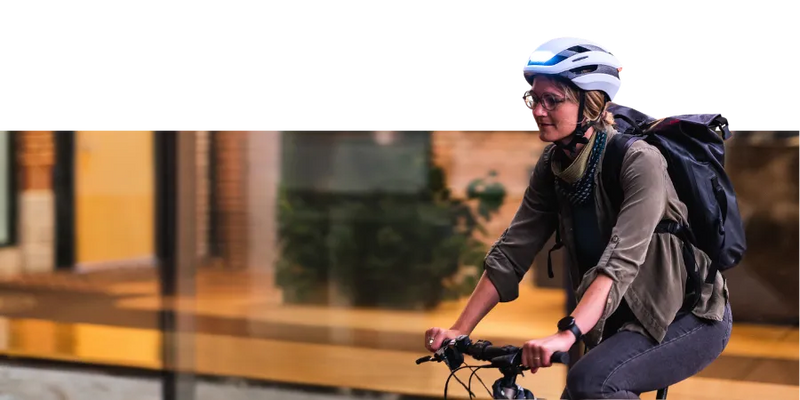
For cyclists comparing various modern bicycle helmets, the Lumos bicycle helmet is a great example, perfectly blending protective design with the practical features needed for everyday riding. Lumos focuses on creating helmets suitable for daily wear, which is crucial because consistent wear is key to true safety.
6. Long-term reliability
Bicycle helmets should be inspected regularly. Cracks, dents, loose straps, damaged buckles, worn padding, or aging foam can all reduce their reliability. High temperatures, sunlight, sweat, and repeated use can also affect the helmet material over time.
Lumos and other modern helmet brands often emphasize ease of everyday use, but even well-designed helmets require proper care. Riders should store their helmets away from high temperatures, avoid drops, and replace them immediately after a collision or if visibly damaged.
Final words
A safe and reliable bicycle helmet depends on several technical factors: impact absorption, a secure fit, certification testing, rotational force control, proper sizing, and long-term durability. Style and price are important, but they should take a backseat to protection and fit.
For cyclists, the best choice is a helmet that meets safety standards, fits properly, stays securely in place, and is comfortable enough for every ride. Brands like Lumos demonstrate how modern bicycle helmet design can focus not only on protection but also on making everyday riding safety more convenient.