I started training people when I was nineteen. By twenty-one, I owned a gym. I have spent my whole adult life in rooms full of people who came not just to move their bodies, but to be around each other while they did it. So I want to say something that runs against almost everything the last decade of fitness technology has been built to believe:
The hardest problem in fitness was never measurement. It was a presence.
We have spent fifteen years getting extraordinarily good at helping people optimize their fitness alone. Count the steps. Track the heart rate. Close the rings. Stream the workout to the living room. Every one of those tools quietly assumes the same thing — that the goal is to perfect your own numbers in your own space, by yourself. And by that measure, the industry has succeeded wildly.
But ask the question that actually matters — are people more consistent, more connected, more likely to still be training a year from now? — and the optimization era looks a lot less impressive. We built a generation of beautifully quantified people who are, by every honest account, lonelier and no more likely to stick with it.
The thing nobody is building
Here is what I learned standing on a gym floor for years: the rep count is not why people come back. The reason they come back is the other people. The friend who notices when you skip a week. The coach who knows your name and your last injury. The stranger on the next rack who nods at you. Fitness, at its core, is one of the last reliable reasons we have to leave the house and be physically near other human beings on purpose.
Technology has been almost perfectly designed to erase that reason. Every optimization that lets you train better alone is, by definition, one more argument for staying home. We didn’t mean to do it, but we built an entire industry whose best features quietly compete with the gym door.
So the genuinely hard thing to build — the thing I think is the real frontier — is not a smarter algorithm. It’s a platform that embodies in-person, peer-to-peer connection. Something whose entire purpose is to give you a reason to get off the couch, get to the gym, and be in a room with real people and a real coach. That is so much harder than measuring optimization. You can’t fake it with a dashboard. You have to design every incentive in the system to point outward, toward presence — when every business model in tech pushes the other way, toward time-on-screen.
Why this is a design problem, not a tech problem
If you were designing the future of fitness from a blank page — no legacy assumptions — I don’t think you’d start with sensors. You’d start with the room.
You’d treat the local trainer and the neighborhood gym as the center of the system, not as inventory to be matched. You’d make the technology nearly invisible: let it handle discovery, booking, and payments, and then get out of the way so the human relationship can do what only it can do. You’d measure your success not by engagement inside the app, but by how often the app successfully made itself unnecessary — by getting someone through a real door.
That is the principle I’m building on, and I’ll say it as a designer of the thing, not a salesman of it: in fitness, the technology that wins long-term will be the technology that competes with the couch, not with the gym. Anything that makes staying home easier is, eventually, working against the customer.
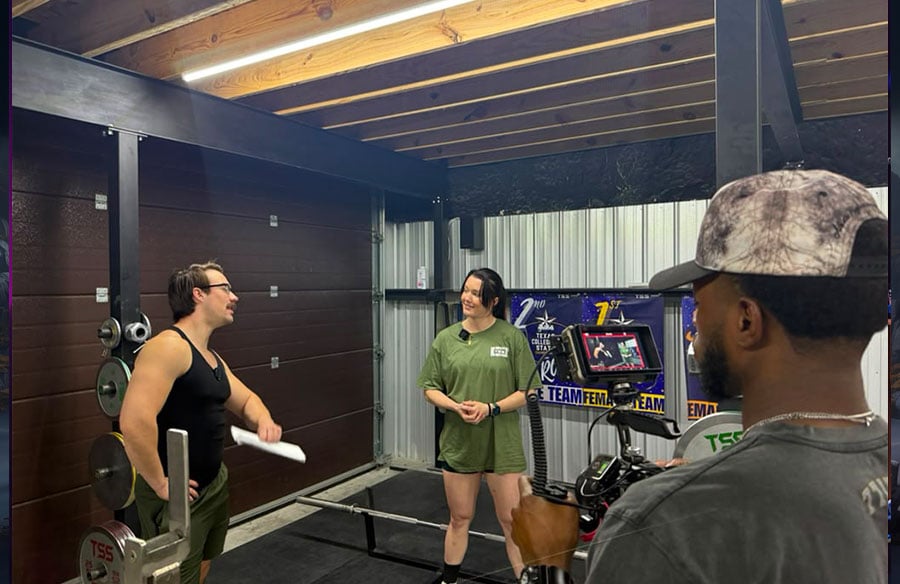
I’ll admit I wondered whether this approach could ever reach people at scale — whether “show up in person first” was just a slower, smaller way to build. The early answer surprised me: by doing nothing but telling real local stories and putting real trainers on camera, we crossed a million organic impressions in about six months without spending a dollar on ads. People don’t share dashboards. They share each other.
The next decade (and I’ll be blunt about it)
I’m going to make some predictions that I expect people in this industry to argue with. Good. That’s the point.
The quantified-self era will be remembered as a detour. The wearable that tells you everything about yourself and nothing about anyone else will look, in ten years, like a beautiful dead end — the fitness equivalent of optimizing for a metric that was never the goal.
The neighborhood gym will become the most defensible business in fitness, not the most endangered. Everyone assumes local rooms get disrupted by scale. I think it’s the reverse: the room full of real people is the one thing no app can copy, and the platforms that survive will be the ones that feed those rooms instead of draining them.
“Showing up” will become a measurable, designed-for outcome — and the industry will be embarrassed it took this long. We optimized every number except the only one that predicts whether someone is still training next year: did they leave the house and connect with another human being.
The most valuable fitness company of the next decade will not have the most data. It will be the one that remembered that the room — the coach, the peers, the reason to walk in the door — was always the product, and built everything else in service of getting people there.
I came up in an industry that got very, very good at helping people be alone together. I think the next one has to be built to do the opposite. Not because connection is nice — because it’s the only thing that has ever actually kept anyone coming back.
That’s not nostalgia for the gym floor. It’s just a better design.
I’m the founder of FitLocal, a hyper-local platform connecting people with local gyms and trainers. fit-local.com · @fitlocalapp