Architecture built for remembrance requires an empathetic design approach. When creating spaces for contemplation, the built environment must do more than provide shelter; it needs to foster tranquillity, respect the emotional state of its visitors, and integrate into the natural landscape. Trent Valley Crematorium, completed for Dignity Funerals, is a strong example of this balance.
Designed by Howl Architects and built by Clegg Construction, this modern development serves its surrounding communities by providing essential cremation and memorial services. Crucially, the architectural plan sought to protect and enhance the area’s existing biodiversity and landscape character. At the heart of this integration is a striking design feature: a series of post-supported gabion walls. This project stands out as an excellent example of how raw materials can be softened to create a soothing, respectful environment.
A Focus on Tactile Aesthetics
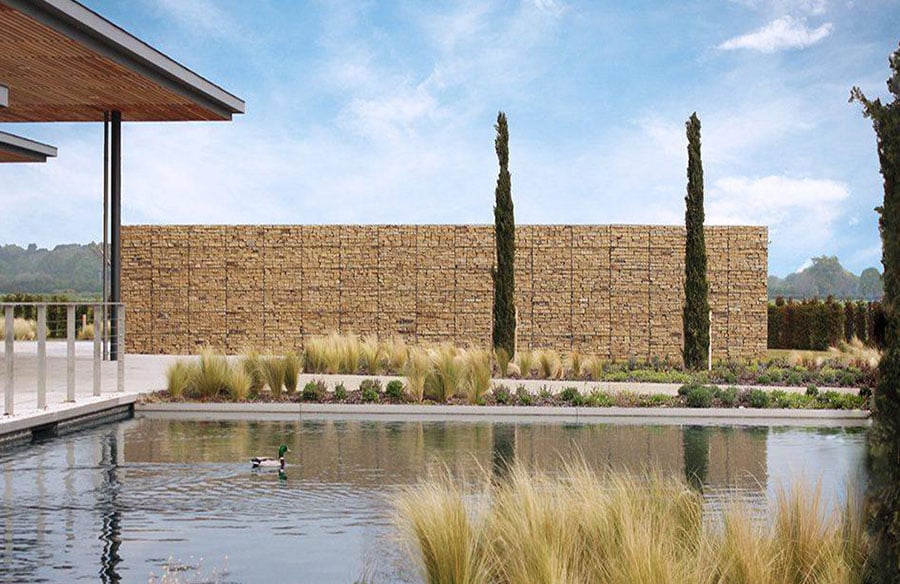
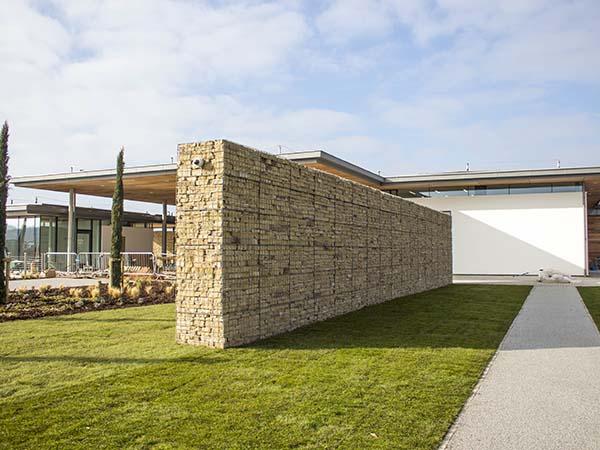
 When evaluating the finished project, the immediate impression is one of harmony. Rather than opting for imposing concrete barriers or standard brick masonry that can feel harsh or institutional, the design team embraced post-supported gabion walls. The result is an architectural feature that feels organic, grounded, and timeless.
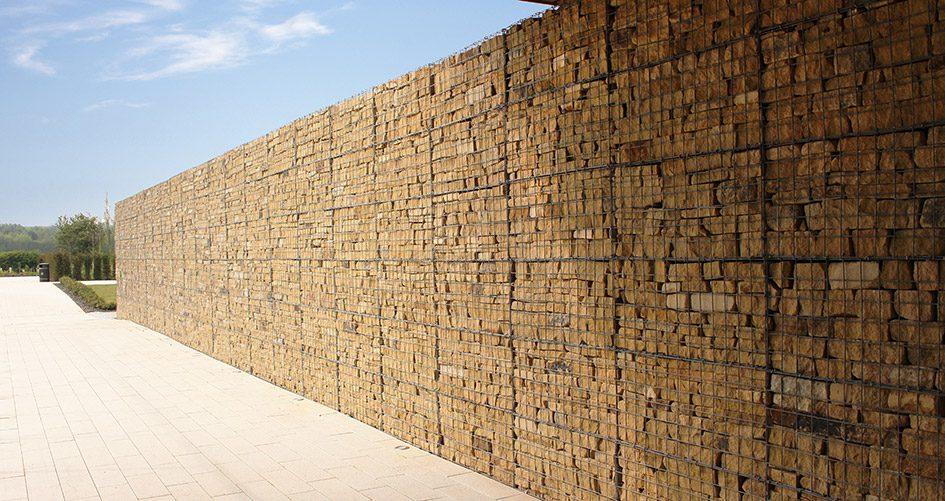
The visual success of the walls lies entirely in the careful selection and arrangement of the stone. To achieve an authentic, earthy appearance, a textured Yorkshire Walling Stone was selected. Supplied in various lengths and thicknesses, each piece was cut on-site to fit cleanly within the mesh cells. Selecting the right gabion stone is essential for both structural integrity and visual appeal, and what elevates the finished structure here is the attention to detail in its orientation: every exposed face—whether the front, the ends, or the rear—features the natural riven face of the stone facing outward.
This creates a textured, uneven surface that catches the sunlight and shadows throughout the day. The warm, neutral tones of the Yorkshire stone mirror the natural geology of the surrounding area, ensuring that the walls do not dominate the environment but rather emerge naturally from it. It brings a handcrafted quality to the crematorium grounds, avoiding the rigid predictability of manufactured materials.
Overcoming Site Constraints for Visual Consistency
Achieving this clean, precise look was a challenge, especially given the environmental considerations of the site. On the western side of the building, the installation teams faced restricted working space due to the proximity of a pond liner. Because of this boundary, work could only be carried out from a single side.
In a standard construction project, an unseen or hard-to-reach face might suffer a drop in visual quality. However, to maintain the architectural standards needed for a memorial space, the builders utilised specialised access equipment and harnesses to carefully arrange the stone on even the most restricted angles. Furthermore, temporary stabilisation tubes were used during the filling process to guarantee that the walls retained straight, clean lines free from bulging. This dedication to precision ensures that when families walk the paths of the crematorium today, they are met with a structure that looks consistent from every angle.
The Practical Benefits of the Finished Gabion Walls
 Beyond their visual appeal, the choice of gabion walls at Trent Valley Crematorium offers several practical benefits that align with the goals of contemporary, landscape-first architecture:
- Acoustic Buffering and Privacy: A crematorium requires distinct zones of privacy and quiet. The massive, irregular surface of the hand-packed stone acts as a natural acoustic barrier. Instead of reflecting sound waves the way a flat concrete wall would, the fractured faces of the Yorkshire stone absorb and dissipate ambient noise, helping to cultivate a quiet atmosphere.
- Seamless Landscape Integration: The wire mesh frames provide structural stability without the need for intensive, visually disruptive foundations. Over time, the gabion structures interact naturally with the local climate. They allow wind and water to pass through freely, reducing wind turbulence and preventing water logging in the surrounding soil, which helps protect the adjacent pond ecosystem.
- Supporting Local Biodiversity: Unlike solid masonry, the small gaps within a gabion wall offer micro-habitats for local flora and fauna. Over the years, small mosses, lichens, and native plants can take root in the crevices, while beneficial insects find shelter within the stones. This transforms the wall from a passive boundary into a living extension of the local ecology, fulfilling the project’s original brief to enhance biodiversity.
- Enduring, Low-Maintenance Longevity: Memorial spaces are built to last. The galfan coated steel mesh and natural stone require virtually no maintenance. They will not crack, stain, or decay. Instead, the wall will age naturally, developing a weathered character that will only deepen its connection to the surrounding woods and gardens over the decades.
Trent Valley Crematorium demonstrates that utility and emotional sensitivity can coexist through thoughtful material choices. By prioritising the finished aesthetic and understanding the sensory impact of natural stone, the design and construction teams have delivered a project that honours both its visitors and the landscape. It stands as a reminder to the architectural community that sometimes, the best way to design for the future is to build with the timeless, enduring textures of the natural world.