Choosing a water filtration system can feel overwhelming. With so many options available—from faucet filters and refrigerator filters to reverse osmosis systems and whole-home filtration—it’s not always obvious which solution is the right fit. And for homeowners who are rethinking how they live, the question isn’t just which product to buy, but how to make a choice that holds up over the long term.
More and more, people are approaching their homes the way they approach the rest of their lives: with an eye toward sustainability, durability, and decisions that still make sense years from now. A water filter might seem like a small piece of that picture, but it touches resource use, waste reduction, and the longevity of the systems you already own. Seen that way, it fits squarely into a more future-focused way of running a household.
The good news is that you don’t have to think about your home’s water as one single problem. Instead, consider how water is used in each room. Different areas of your home have different needs, and understanding those needs can help you make a more informed—and more sustainable—decision. Here’s a room-by-room look at where water filtration can make the biggest impact.
The Kitchen: Focus on Drinking and Cooking Water
For many households, the kitchen is where water quality matters most. It’s also where a thoughtful choice can quietly cut down on waste.
Water is used for:
- Drinking
- Cooking
- Making coffee and tea
- Filling reusable water bottles
- Washing fruits and vegetables
- Making ice
Because this is the water your family consumes most often, many homeowners start their filtration journey here. For anyone trying to move away from single-use plastic, the kitchen is especially significant: better water at the tap can reduce the reliance on bottled water, which means fewer plastic bottles purchased, hauled home, and thrown away over the course of a year.
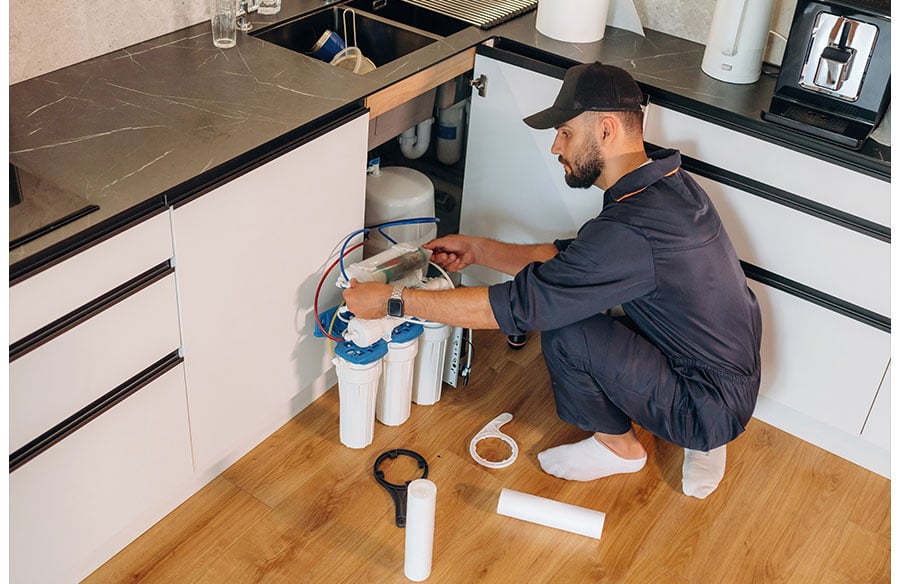
Point-of-use systems, such as under-sink or reverse osmosis systems, are popular because they treat water at the faucet used for drinking and food preparation. These systems are designed to improve the quality of water used for everyday consumption without filtering every gallon that enters the home. If your primary concern is better-tasting water for meals and beverages—and reducing disposable packaging in the process—the kitchen is often the best place to begin.
The Bathroom: More Than Just Drinking Water
Water doesn’t only affect what you consume—it also influences your daily routines. Every shower, bath, and sink use exposes your skin and hair to your home’s water supply.
While everyone’s preferences and water conditions are different, many homeowners choose to evaluate bathroom water quality as part of a broader approach to creating a more comfortable, more considered home environment. Thinking about the bathroom alongside the kitchen reflects a shift away from treating water as an afterthought and toward seeing it as part of the home’s overall design. If improving water throughout the house is a priority, this is where whole-home filtration becomes part of the conversation.
The Laundry Room: Protecting Clothing and Appliances
The laundry room is another area where water quality can have a noticeable effect over time—and where sustainability and practicality overlap.
Your washing machine processes hundreds of loads each year, and water comes into direct contact with every towel, sheet, and article of clothing your family wears. Depending on your local water conditions, sediment or mineral content may also contribute to additional maintenance for appliances over the years. Clothing that lasts longer and appliances that run more efficiently both mean less waste and fewer replacements down the line.
When homeowners think beyond drinking water, the laundry room often becomes one of the strongest arguments for looking at whole-home solutions rather than filtering only a single faucet. It’s a clear example of how one decision can ripple outward to support the longevity of the things you already own.
Appliances Throughout the Home
Modern homes rely on water-connected appliances every day. These may include:
- Refrigerators with ice makers
- Dishwashers
- Water heaters
- Coffee machines
- Steam ovens
- Humidifiers
Clean, well-managed water can help these appliances perform more efficiently while reducing concerns related to sediment and mineral buildup in areas where water quality is a factor. From a sustainability standpoint, this matters: appliances that run efficiently tend to use energy and water more effectively, and equipment that lasts longer keeps more material out of the waste stream. Although every appliance has different maintenance requirements, considering your home’s entire plumbing system can help you make a more informed, longer-lasting investment.
Don’t Forget the Water Coming Into Your Home
Many people focus on the faucet where they drink water but overlook where that water begins its journey. Every drop entering your house passes through the main water line before reaching individual fixtures.
That’s why some homeowners choose to evaluate filtration at the point where water first enters the home. This approach allows filtration to benefit multiple rooms simultaneously rather than addressing only one location. It’s a more systemic way of thinking—treating the home as a connected whole rather than a series of isolated fixtures—and it’s particularly appealing for larger households or homeowners who want a more comprehensive, future-ready solution.
Understand Your Water Source
Before purchasing any filtration system, it’s important to understand the type of water entering your home. Making a durable decision starts with understanding what you’re actually working with.
Questions to consider include:
- Do you have municipal water or a private well?
- Have you ever had your water tested?
- Are you concerned about sediment, chlorine, taste, odor, or minerals?
- How many people live in your household?
- How much water do you use each day?
Answering these questions helps narrow your options and ensures you’re choosing a solution based on your home’s actual needs—not simply what’s most popular. Matching the system to the real conditions of your home is also what prevents wasted money and wasted equipment down the road.
Think About Your Long-Term Goals
Every homeowner has different priorities. Some simply want cleaner drinking water. Others want to improve water quality throughout the house. Some are planning a kitchen renovation. Others are replacing aging plumbing or upgrading appliances.
Taking these long-term goals into account often leads to better decisions than buying the first filtration product you see online. For those rethinking how they want to live, the most future-focused move is rarely the quickest fix—it’s the choice that still serves you in five, ten, or twenty years. If you’re comparing options, learning more about a home water filtration system can help you understand the differences between point-of-use and whole-home solutions and determine which approach best fits your household and your long-term goals.
A Smarter Way to Evaluate Water Filtration
Rather than asking, “What’s the best water filter?” ask a different question: “What problem am I trying to solve?” That single shift moves the decision from impulse to intention.
By thinking room by room, you’ll have a much clearer understanding of how your family uses water every day. That perspective makes it easier to prioritize the areas that matter most and choose a solution that supports your home now—and well into the future. It’s the difference between a disposable purchase and a lasting part of how your home works.
Final Thoughts
Water is one of the few resources used in nearly every room of your home. Whether you’re preparing meals, taking a shower, washing clothes, or running the dishwasher, water quality quietly influences your daily routine—and the choices you make about it shape your home’s efficiency and waste for years to come.
Looking at your home one room at a time makes choosing a filtration solution much less overwhelming. Instead of searching for a one-size-fits-all answer, you’ll be able to find a system that matches your home’s layout, your family’s habits, and your long-term goals. For anyone rethinking the future and looking for more sustainable, future-focused ways of doing things, that kind of intentional, durable decision is exactly the point.