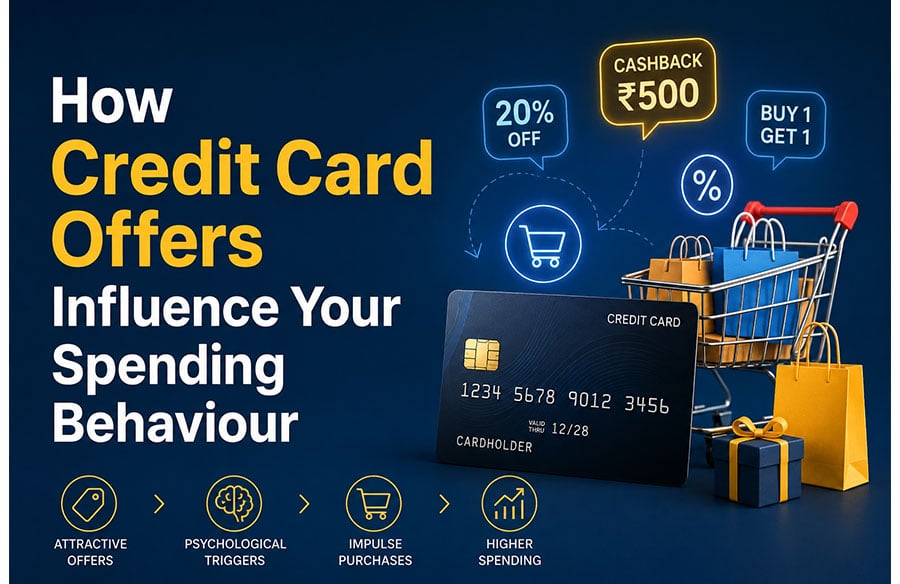
You open the food delivery app not because you’re particularly hungry, but because there’s a 20% discount if you use a specific card. The notification said, “Valid for today,” and now you’re ordering biryani at 11 PM on a Tuesday.
Or consider this scenario: you’re browsing electronic gadgets, shoes, and clothes during a midnight sale, adding things to your cart not because you need them, but because the cashback expires in two hours.
Or you choose one shopping app over another purely because of reward points, even though the other one has better prices.
None of these started with an actual need. They started with an offer.
Credit card offers do more than just reduce prices; they mess with timing, priorities, and the emotions around spending.
Most people don’t even realise how much their behaviour has shifted based on what’s being promoted versus what they wanted.
This article explores how credit card offers and discounts influence our purchase decisions, how to control spending, and maintain financial discipline.
Why Credit Card Offers Feel So Hard to Ignore
Swiping a card never really feels like spending actual money, right? There’s no cash leaving from your hand. Instead, you get that instant dopamine hit from cashback, reward points, or a shiny discount. The real pain? That only hits weeks later when the bill lands in your inbox.
And then there’s the FOMO these offers create. “Valid only today.” “Last few hours.” “Limited period offer.” You weren’t even thinking about buying anything, but suddenly you feel like you’ll regret missing out on “saving” money. So, you end up spending, which is the strange little trap these promotions are built on.
You see 10% cashback and pat yourself on the back for being smart. But if you bought something you didn’t really need just to earn that ₹500 cashback, you didn’t save anything. You still spent ₹4,500 you might not have otherwise.
EMI play the same mind game. A ₹60,000 phone feels impossible when you think about paying it all at once. But break it into ₹5,000 a month for 12 months? Suddenly, it feels doable. The total cost hasn’t changed, only how your brain perceives it. And that small shift is often enough to push you into buying things you wouldn’t have considered otherwise.
Then comes the milestone rewards: “Spend ₹5,000 more this quarter to unlock lounge access.” So, you start adding random stuff to your cart just to hit the target. Or “Double reward points end in three hours” makes you order food delivery even when you’re not particularly hungry.
These aren’t accidents. They’re carefully designed features meant to influence exactly how you behave.
The Different Types of Credit Card Offers That Influence Spending
Cashback: Spend money, get some back. But it increases transaction frequency. Why order once this week when you can order twice and get cashback both times? You end up spending ₹800 instead of ₹400, earning ₹80 back, and somehow feeling victorious.
Milestone rewards: It creates artificial targets. “Spend ₹50,000 this quarter, get 5,000 bonus points.” You hit ₹47,000 by month two. Do you spend ₹3,000 on things you don’t need to reach it? Most people do. That’s the design.
No-cost EMI: It changes everything about affordability perception. Things that felt completely out of budget suddenly feel accessible. Whether the interest gets absorbed into the price or waived through promotions, the result is the same: “I can’t afford this” becomes “I can manage ₹3,000 monthly.”
Lifestyle privileges: Lounge access, dining discounts, movie offers don’t give money back directly, but make you feel like you’re living better. Once you have lounge access, you start planning layovers to use it. The perk shapes behaviour beyond just transactions.
Brand partnerships: These partnerships create loyalty that has nothing to do with product quality. You stop comparing prices because one app always gives you better offers. Your card determines where you shop, not the other way around.
How Spending Behaviour Changes Without People Realizing It
Nobody wakes up deciding to change their spending habits. It just happens, slowly, nudged by offers that feel like smart opportunities.
You bought earlier than planned.
That gadget was a next month buy until there’s a sale with extra card cashback. So, you buy it now, telling yourself it’s practical since you were going to anyway. But “next month” often meant “probably never” for a lot of these purchases.
Maximising benefits becomes irrational.
Your cart total is ₹800, but free delivery is at ₹1,000. You add random stuff worth ₹200 to save ₹50 on the delivery charge. Just spent ₹200 extra to avoid ₹50. That’s not smart, that’s the opposite of smart, but it feels smart in the moment.
Premium options start feeling normal
Premium delivery, better seats, upgraded everything. When card offers make premium only slightly pricier than regular, you default to premium. Your baseline spending quietly creeps up without a conscious decision.
Festive sales, weekend offers, flash deals
There’s always something running. Diwali sales bleed into New Year promotions, into Valentine’s Day offers, into cricket season deals. The urgency never actually ends.
Subscriptions pile up invisibly:
₹99 here for music, ₹149 there for cloud storage, ₹199 for faster delivery. Individually, card offers make them negligible. Then you’re paying ₹1,500 per month for services you open maybe twice.
Reward chasing becomes the point.
You’re not choosing cards based on what you need to buy. You’re choosing what to buy based on which card with maximum points. The offer is driving everything, not the actual need.
When Credit Card Offers Actually Help
Not every offer is a trap. Sometimes the credit card online offers genuinely reduce costs on things you were doing anyway.
Planned spending getting cheaper makes sense. If groceries are happening regardless, using a 5% cashback card is just smart. You’re not creating new spending; you’re reducing existing costs.
Travel bookings with card discounts save real money for trips you’d take anyway. Fuel cashback matters if you’re driving daily, regardless. Dining rewards add up if your social life genuinely involves restaurants frequently.
Expense tracking improves when everything routes through one card. Digital trail makes budgeting clearer, catches forgotten subscriptions faster.
The line is simple: if the purchase was happening with or without the offer, using the offer is smart. If the offer created the purchase, you didn’t save; you spent.
Smart Ways to Use Credit Card Offers Without Overspending
Here are some ways to use your card judiciously:
- Align Offers with Your Budget. Decide monthly budgets for high-reward categories instead of chasing every offer.
- Use the 48-Hour Rule. For any non-essential purchase triggered by an offer, wait 48 hours before buying.
- Track ROI. Regularly review your statement. Ask: “Did this offer actually save me money or lead to extra spending?”
- Leverage Tools. Use a monthly budget tracker for real-time spend tracking.
- Set Payment Reminders. Always pay your bill in full and on time to avoid interest, which can cancel out all rewards.
Conclusion
Credit card offers are designed to influence decisions. Sometimes they save money on things you’d buy regardless. Other times they create spending that benefits the issuer more than you.
The difference comes down to awareness. Are you using offers to cut costs on planned expenses, or are offers using you to generate transactions?
Recognizing which is which before you swipe makes all the difference.
FAQs
Do credit card offers make people spend more?
Yes, studies and consumer behaviour show that attractive offers can increase spending. However, with conscious use, they can also help you save significantly.
How can I maximize cashback and rewards without overspending?
Stick to your monthly budget, focus on categories you already spend in, and track your ROI regularly.