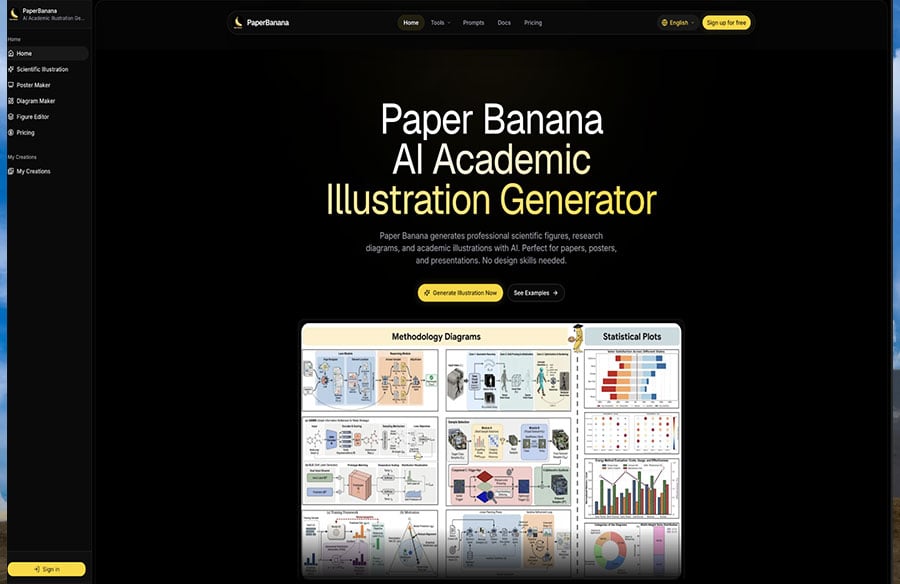
Visual communication has always been important in design, education, and research.
Across these fields, one challenge appears again and again: complex ideas are hard to explain with text alone.
A paragraph can describe a process, but a diagram can show the structure faster. A paper can explain a method in detail, but a scientific figure can help readers understand how the parts connect. A design concept may be written clearly, but a visual model often makes the intention easier to grasp.
This is why AI assisted visual tools are becoming more useful for students, researchers, educators, and designers.
Why Clear Visual Explanation Matters
Modern knowledge work is becoming more visual.
Research is shared through papers, posters, slide decks, lab websites, online courses, and conference presentations. Design ideas are shared through diagrams, concept maps, mood boards, drawings, and visual narratives. Education depends on workflows, charts, and structured explanations.
In all of these cases, visuals reduce cognitive load.
A clear figure can show where to start. It can reveal the order of a process. It can show which parts are connected. It can help people understand a relationship before reading a long explanation.
This is especially useful when the audience comes from different backgrounds.
A reviewer may not know every detail of a research method. A student may need a diagram before reading the full theory. A client may understand a spatial idea faster through a layout than through a written description. A collaborator may spot missing steps more easily when a workflow is drawn.
Good visuals make complex ideas easier to discuss.
Why Academic Visuals Are Difficult to Create
Creating a strong academic visual is harder than it looks.
Many students and researchers begin with a blank slide or a general design tool. They may understand the idea deeply, yet still struggle to decide how to show it.
Should the concept become a flowchart?
Should it be a mechanism diagram?
Should it become a comparison layout?
Should it show sequence, hierarchy, or relationships?
These decisions matter because the form of a visual affects how people understand the content.
A figure with too much text becomes hard to read. A diagram with unclear arrows can confuse the viewer. A layout without hierarchy can make every part feel equally important. A polished image can still fail if the structure is unclear.
In academic and technical work, accuracy matters as much as appearance.
A scientific figure must preserve the meaning of the research. A design diagram must preserve the logic of the idea. A learning visual must simplify without distorting.
AI as a Visual Drafting Partner
AI tools can help reduce the friction of the first draft.
Instead of starting from an empty canvas, users can begin with a paragraph, a method description, a research summary, or a set of notes. AI can help identify the main components and suggest a first visual structure.
This is useful because the first draft is often the hardest part.
Once a draft exists, the user can review it. They can move sections, shorten labels, adjust the flow, remove unnecessary details, and improve the visual hierarchy. A draft gives the creator something concrete to respond to.
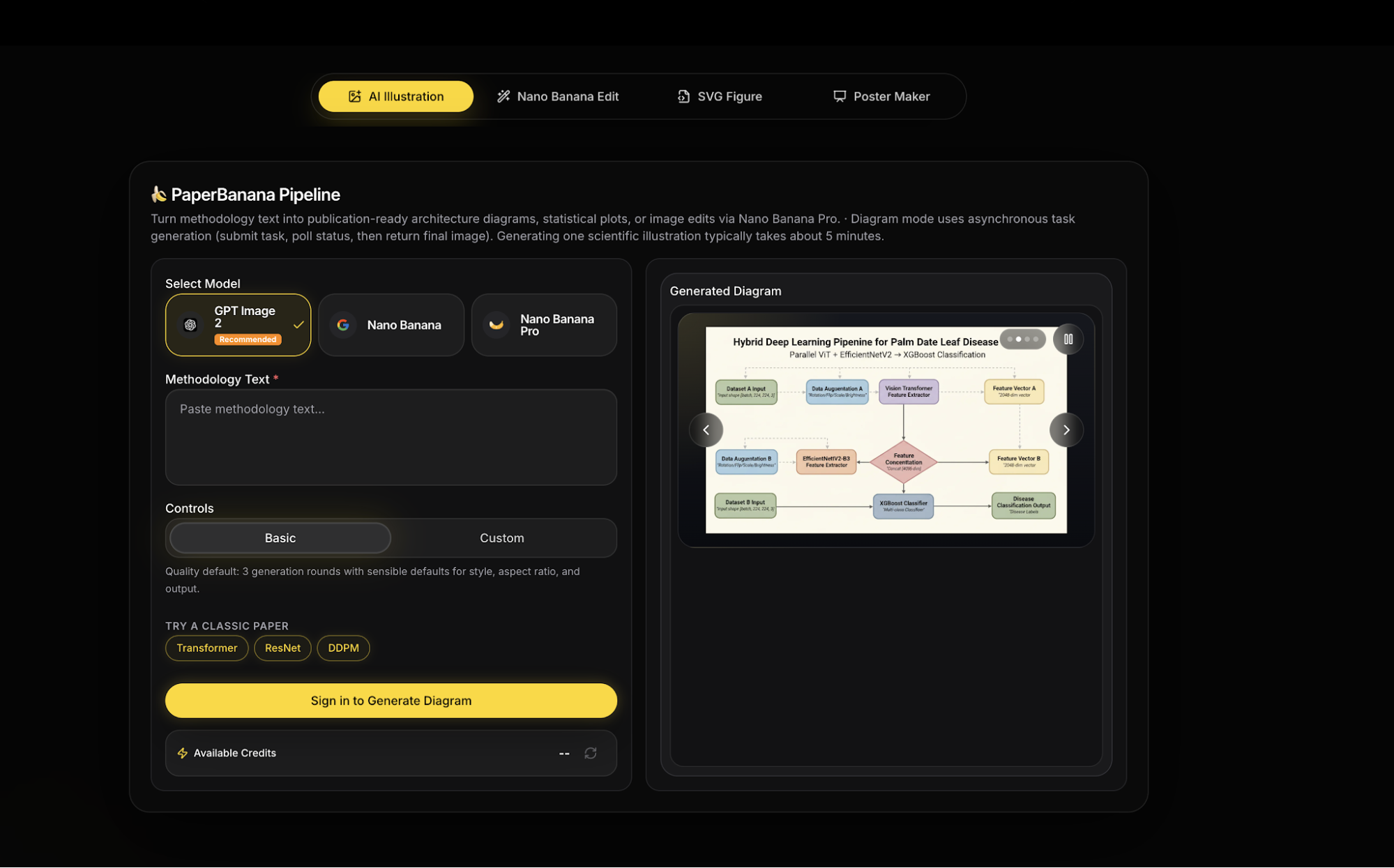
For academic users, tools such as paper banana can help turn research ideas into scientific figure drafts that can be reviewed and refined. The value comes from moving faster from dense academic content to a structured visual starting point.
The human user still needs to check the meaning.
AI can suggest a structure. The researcher verifies the logic.
AI can draft a diagram. The student checks the labels.
AI can reduce manual layout work. The educator decides whether the visual supports the learning goal.
This balance is important. AI can make visual creation faster, while human judgment protects accuracy and clarity.
 What Designers and Researchers Can Learn From Each Other
Designers and researchers often approach visuals from different directions.
Designers may focus on hierarchy, composition, spacing, balance, and readability. Researchers may focus on accuracy, evidence, logic, and completeness. Strong academic visuals need both perspectives.
A good research figure needs structure and clarity.
A good design diagram needs visual appeal and meaning.
This is where AI assisted visual workflows can become valuable. They can help researchers think more visually and help designers communicate complex knowledge with stronger structure.
For example, a research workflow can benefit from design principles such as spacing, contrast, and visual hierarchy. A design presentation can benefit from academic principles such as precision, sequence, and evidence based structure.
The goal is to give more people access to better visual thinking tools.
Why Editable Drafts Matter
Visuals rarely stay the same after the first version.
A supervisor may ask for a clearer label. A collaborator may suggest changing the flow. A journal may require a different format. A presentation may need a simpler version. A student may reuse the same concept in a report, poster, and slide deck.
This makes editability important.
A static image may be useful for quick preview, but real academic and design work often requires iteration. The best visual tools should allow users to refine, adapt, and reuse their work.
Editable drafts support a more realistic workflow: create a first structure, review the meaning, improve labels and layout, then adapt the visual for the final audience.
Final Thoughts
Visual communication is becoming more important across research, education, architecture, and design.
As ideas become more complex, people need better ways to explain them clearly. Text remains essential, but visuals help people see structure, sequence, and relationships more quickly.
AI assisted tools can make this process easier by helping users create first drafts faster. From there, researchers, students, educators, and designers can apply their own judgment to refine the final result.
The future of visual communication will likely depend on this combination: AI speed, human expertise, and a stronger focus on clarity.
When that balance works, complex ideas become easier to understand, easier to teach, and easier to share.