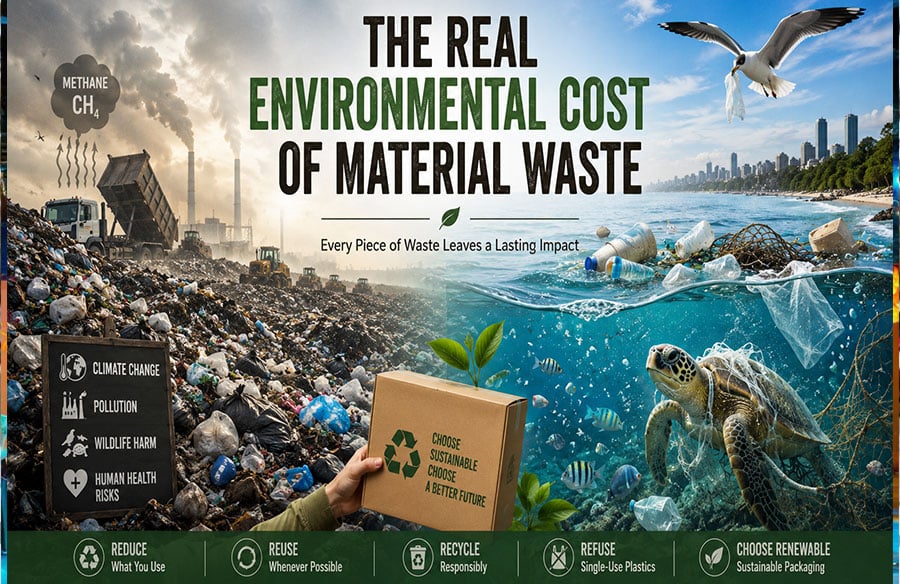
More than 3 million metric tons of material waste are thrown away every year without proper disposal and recycling. Its impact on climate change, wildlife, and human health is creating a serious situation, so we need to take urgent action. We are creating more trash because, since 2021, global waste has increased by 2 billion metric tons.
Only 63% of unsustainable waste is handled in proper waste management systems by controlled municipal societies. But the remains can be burnt, dumped, or be part of a landfill, or go into the ocean. Therefore, waterborne disease, respiratory disease, and global warming is increasing with the time, causing an increase int temperature and pollution.
Let’s learn about the hidden environmental cost of material waste in detail and its solutions to prevent landfill and pollution for a green future.
Worse Climate Change By Unsustainable Trash
In the USA, sanitary landfills are used to manage waste. These sites, however expensive, account for just eight percent of landfills in the world.
Dumping
The most common type of landfill is open dumping. The most common type of landfill is open dumping, which has no protections in place to stop waste from entering the environment. The toxins released by the waste are more effective, but they also speed up climate change.
Landfills and Global Waste
Landfills release methane and carbon dioxide into the atmosphere. Over the last two years, landfills have been estimated to account for 10-11% of global methane emissions. The climate-changing potential of methane is 85 times greater than that of carbon dioxide over a 18-year period. Global waste-disposal practices can undermine these efforts, even when they are part of new strategies to combat climate change.
Harvard University has conducted a study that showed that greenhouse gases (GHG) are emitted from landfills. This data is 80 times higher than the EPA research estimates. Lack of accurate data by the government may cause us to underestimate the contribution of landfills to climate change and greenhouse gas emissions.
Trash Is Hurting Wildlife
The trash that we produce every day and throw away without proper waste management can cause the killing of wildlife.
The Threat of Ocean Waste
An estimated 11 to 14 million tone plastic enter the ocean every year. When waste ends up in the ocean, it also has a harmful impact on living organisms. Commercial fishing accounts for 75 to 80% of the large debris in the ocean, including custom food packaging for restaurants, ropes and nets. Micro plastics do not decompose naturally, and they are consumed by the whales and zooplankton, resulting in an increase in their death rate.100 Endangered animals are also affected by the entangling of plastic ropes that result in severe wounds and death.
Why Wildlife Consumes Plastic
All marine animals, whether they be fish, birds, or crustaceans, ingest tiny pieces of plastic or other materials that break down further and further. The creatures are usually unable to tell apart their food from plastic waste, while, in many instances, the scent attracts them.
The Scale of Marine Pollution
According to a study, there is an approximate amount of 20 million metric tons of waste dumped into rivers and oceans each year. And there are thousands of species that consume plastics, such as whales, sea turtles, and birds. Blue whales consume approximately ten million microplastics each day, which can cause serious illness or death.
Impact on Seabirds and Physical Injuries
Plastics are even becoming part of the everyday diets of most seabirds. According to research, almost 90% of seabirds have plastic in their bodies. This is causing illness, and some are dying because of material waste. Even when these animals do not eat plastic, plastic waste still harms them. When it comes to custom printed packaging boxes, we must use boxes and containers made from renewable resources.
Risks to the Human Food Chain
The risk to the human food chain is caused by four factors, and microplastics are one of them. Do you know that some ocean plastic enters the human body when we eat seafood, such as fish? It’s because these living organisms are attracted to plastic and consume it, failing to distinguish between waste and food. So, it results in several health risks to wildlife, including our own.
Plastic Waste Making Us Sick
Plastic waste is generating toxins that can cause serious health problems.
Endocrine-Disrupting Chemicals in Plastics
This problem is affecting human health on a vast scale because thousands of such substances are used in the production of plastic products. And many of them are considered endocrine disruptors, some of them are cancer-causing agents. These can cause various types of cancers, infertility, Alzheimer’s, miscarriages, development problems, and others.
The Threat of PFAS and Forever Chemicals
PFAS, or forever chemicals, have been around since the middle of the 20th century. They are used to make objects resistant to oil and water. So, they are useful in nonstick frying pans, fire-fighting foam, and stain-resistant clothing. Once these objects enter the landfill, these harmful substances can enter our bodies.
Global Waste Management and Climate Impact
The problem of garbage can cause harm not only to people but also to animals and natural ecosystems. Moreover, the growth in emissions from landfills threatens the environment and, consequently, the health of all humans on Earth. One should take into consideration that, despite the fact that developed countries make up 16% of the total number of people, they produce 34%, or 683 million metric tons, of global waste.
Actionable Steps to Reduce Waste
Now is the perfect time to fight plastic pollution. Think before you buy: do you really need that item? Reject wasteful fast fashion, quit single-use plastics for your products, and adopt advanced recycling strategies. Pack the products in packaging made of renewable resources, such as kraft, cardboard, and cardstock. By making these smart changes, you will directly reduce trash, minimize landfill waste, and protect our environment.