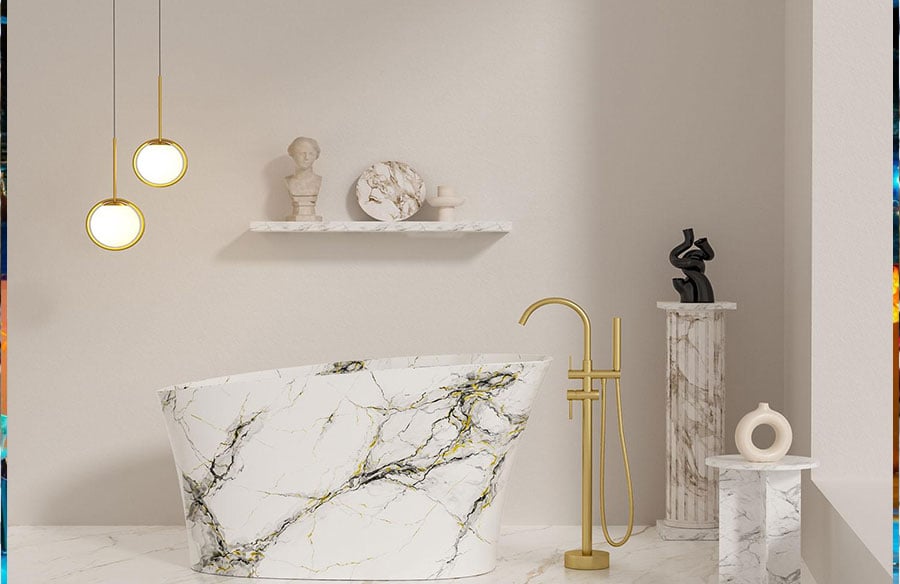
A bathroom is one of the most frequently used spaces in a home, but also one of the most visually underestimated.
Many modern bathrooms feel clean and functional—but also flat, repetitive, and lacking in visual depth.
This is where a marble-look bathtub makes a noticeable difference. It doesn’t change how the bathroom functions, but it changes how the entire space feels when you walk in.
The Difference Between a Basic Bathroom and a Visually Layered One
Most standard bathrooms rely on simple white surfaces and basic fixtures. While this keeps the space clean, it often results in a flat visual experience.
A marble-look bathtub introduces something subtle but important: variation.
The soft veining across the surface breaks up uniformity, creating gentle movement without adding visual clutter. This subtle variation helps the space feel more visually layered, especially in bathrooms dominated by neutral tiles and minimal finishes.
It’s not about decoration—it’s about depth.
Why the Bathtub Becomes the Center of Attention
In many modern homes, the bathtub is no longer hidden or pushed into a corner.
Freestanding layouts place it directly in view, often in the center of the room or near a window.
This means one object can define how the entire bathroom is perceived.
A marble-look bathtub naturally works well in this position because it looks complete from every angle. Even without accessories or styling, it already feels like a designed piece of the room.
From far away, it reads as clean and sculptural.
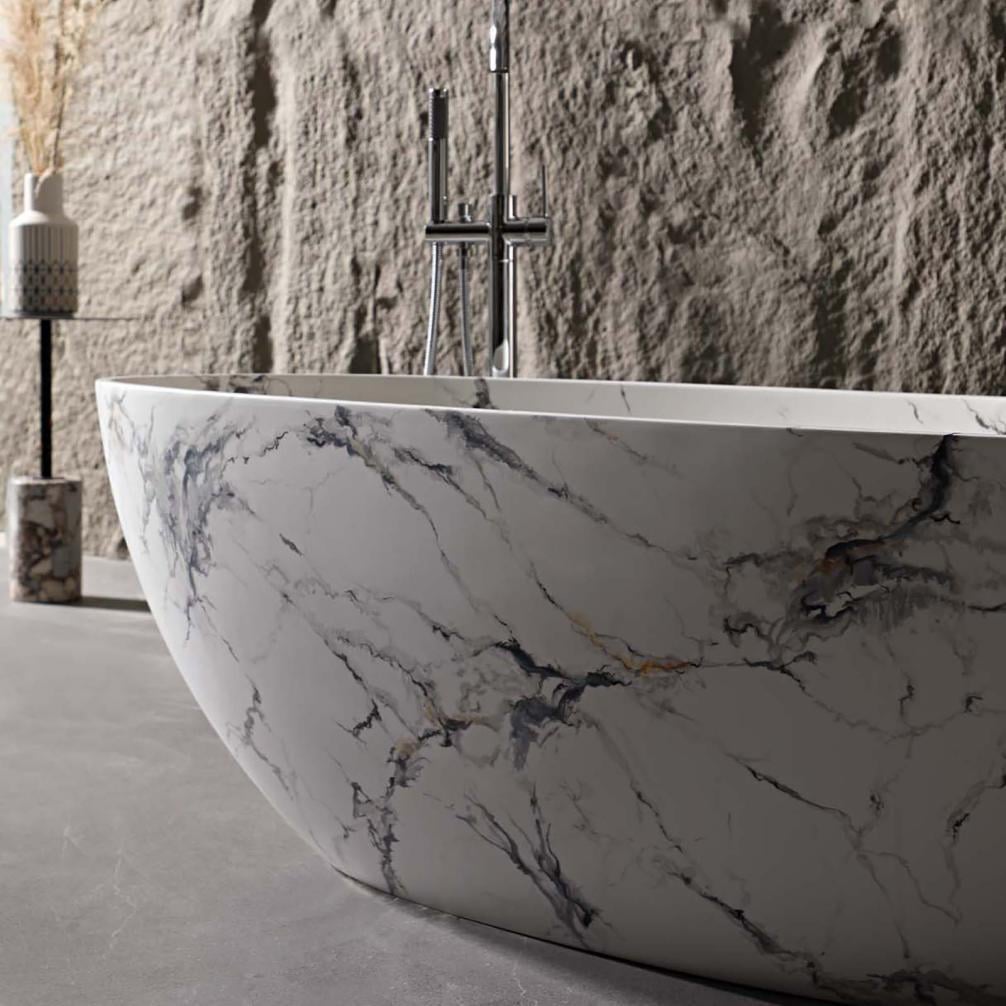
From close up, the surface detail gives it richness and texture, and this contrast between distance and detail is what gives the bathtub its quiet visual presence.
A Simple Way to Make a Bathroom Feel More “Finished”
One of the most common frustrations in bathroom design is that even after renovation, the space can still feel slightly incomplete.
A marble-look bathtub solves this in a subtle but effective way.
Instead of relying on decoration or strong visual statements, it introduces depth through surface variation. The veining softens the otherwise uniform surfaces of tiles and fixtures, helping the bathroom feel more visually resolved even when the overall layout remains simple.
What makes this effect more interesting is that it doesn’t only work in isolation. Once the bathtub is placed in the space, it begins to influence how surrounding materials are perceived.
Wood vanities feel warmer, metal fixtures appear more refined, and even simple tile surfaces feel more intentional, resulting in a bathroom that feels visually coordinated rather than made up of separate design elements.
This is why many homeowners describe the result not as “more decorated,” but simply as “more finished.”
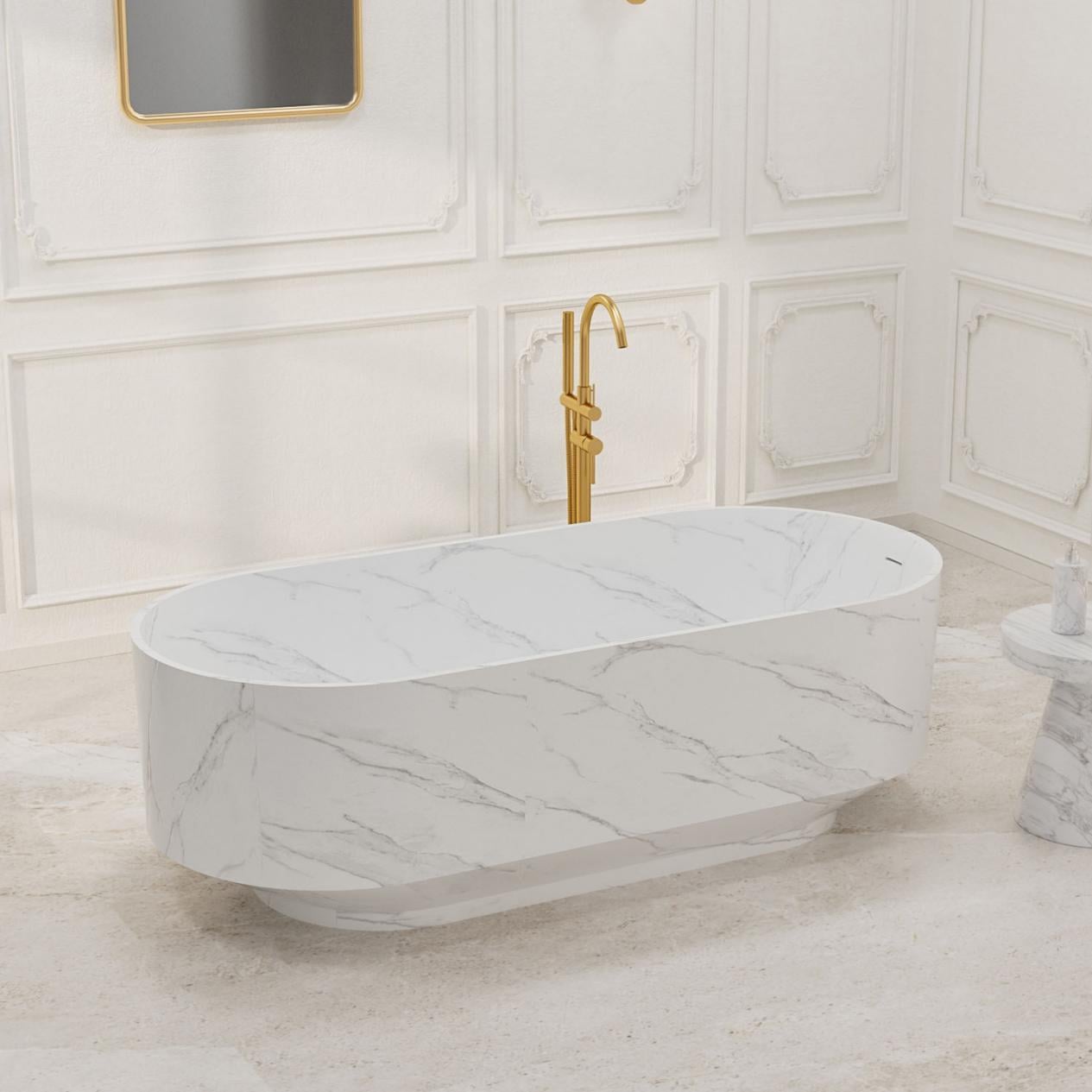 Why It Works Better Than Real Marble for Most Homes
Real marble bathtubs are visually impressive, but they are not always practical for everyday living.
A marble-look bathtub achieves a similar aesthetic effect, but with fewer limitations.
Most are made from materials such as acrylic or solid surface composites, which are widely used in modern bathtub manufacturing because they allow for smoother finishes, easier maintenance, and more stable performance over time.
This broader material category makes marble-look designs more accessible for everyday bathrooms, especially in family homes or primary bathrooms that are used frequently.
You still get the visual language of stone, but without the maintenance pressure that natural marble usually requires.
Fits Almost Any Bathroom Style
Another advantage is flexibility.
A marble-look bathtub works in many different interior styles without feeling out of place.
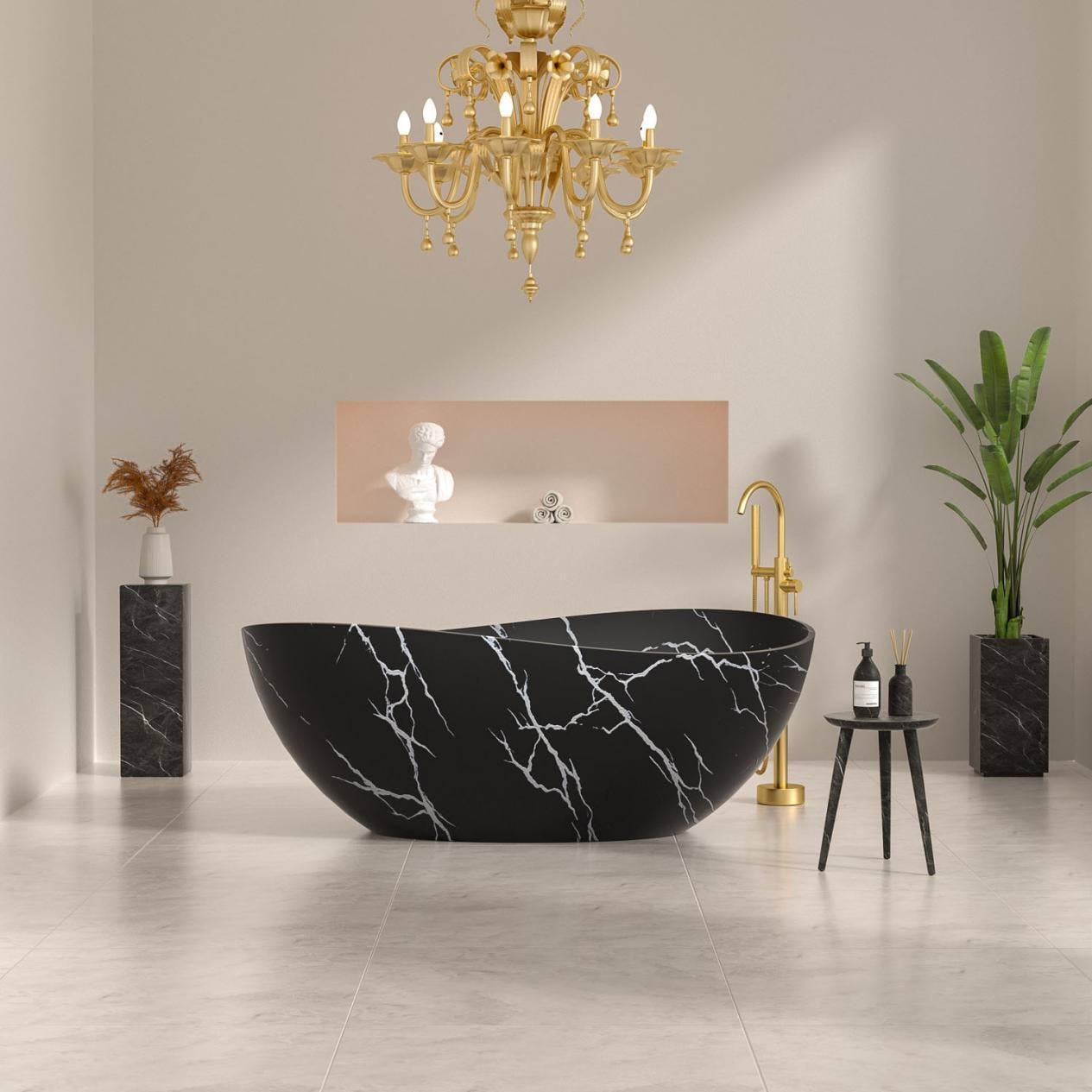
In light, neutral bathrooms, it blends in and reinforces calmness. In darker bathrooms, it becomes more sculptural and visually defined.
In both cases, it maintains balance rather than overpowering the space, and this adaptability is one reason it continues to appear in both modern minimalist and more expressive bathroom designs.
 Why People End Up Choosing It
Most people don’t choose a marble-look bathtub because of technical specifications.
They choose it because of a simple visual reaction:
“This makes the bathroom look more complete.”
It’s not about luxury for its own sake. It’s about creating a space that feels more finished, more balanced, and more pleasant to be in every day.
And because the bathtub is one of the largest visual objects in the bathroom, changing it has an immediate impact.
How to Choose the Right Marble-Look Bathtub
If you are considering a marble-look bathtub for your own bathroom, the key is not only the pattern itself, but how it interacts with your existing space.
Lighter veining works well in calm, minimal interiors where subtle texture is preferred, while stronger veining can help create more definition in darker or more expressive bathrooms.
Placement also plays an important role. Freestanding tubs in open layouts naturally become focal points, while in smaller bathrooms, softer visual patterns help maintain balance without overwhelming the space.
Ultimately, the best choice is the one that feels visually integrated rather than visually imposed.
 Final Thought
A marble-look bathtub works because it quietly changes how a bathroom is perceived without changing its structure.
It doesn’t rely on decoration or visual complexity. Instead, it adjusts the relationship between surfaces, materials, and light in a very subtle way, gradually making the space feel more balanced, more connected, and more visually complete.
For many modern homes, this balance between simplicity and visual depth is what makes it such a compelling design choice.