A physical book feels like a relic in our digital-dependent times. It also remains a profound site of cultural and artistic resistance, bound to live on beyond any bookmarked webpage or social media post, which is fleeting in nature.
To New York-based designer and artist Coco Shiya Yuan, the book is not merely a place to pack in timeless information; it is a complex architectural space, a time-based medium and an intimate object of discovery.
Working across artist books, photobooks, and editorial design, Yuan has developed a practice that bridges experimental publishing and contemporary visual culture. Through her work with the design team at Andy Warhol’s Interview Magazine, she has contributed to the design of editorial features and stories, including issues featuring cover stories on Zendaya and Ariana Grande. Her approach to narrative structure, sequencing, and visual storytelling has established her as a distinctive voice within New York’s contemporary editorial design landscape.
Yuan’s practice spans visual identities, posters and packaging, but her work in book design represents a distinct departure from conventional layouts. “Designing books was my entry point into understanding design, beyond the surface,” Yuan explains. “It expanded my work from arranging content to shaping structure, material, and physical experience as part of the design.”
For Yuan, a book is a system where form, material and content exist in an unbreakable feedback loop. Unlike a static poster or a website, a book unfolds over time. Its design is dictated by the pacing of the spread; the way text and imagery are scaled, revealed or obscured as the reader progresses.
Central to Yuan’s practice is the relationship between concept and production. Her projects frequently treat decisions about paper, printing, binding, and sequencing as integral components of the work itself rather than secondary technical considerations. “I’m interested in books as objects and as space for play and experimentation, rather than simply a container of content,” Yuan says.
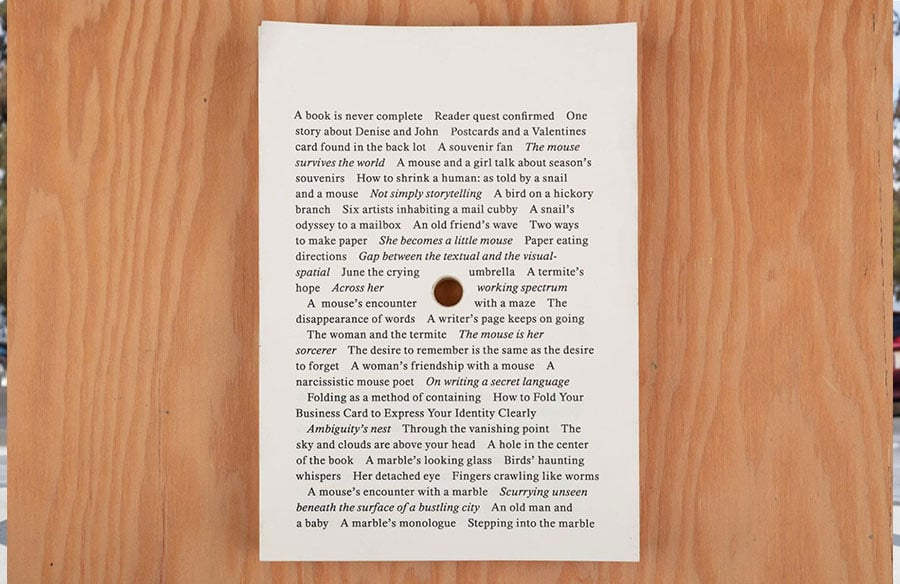
This design philosophy has led to the presentation of her work to international audiences. Her experimental book project, “the mouse is her sorcerer,” has been exhibited from Philadelphia’s Ulises to Tokyo’s ASAHISONOMA art space and Beijing’s postpost space. The book exemplifies Yuan’s experimental approach to book design: a paperback without a traditional cover, bound through a central hole, designed to be read from all four sides. Rather than presenting a fixed sequence, the book transforms reading into a spatial and participatory experience, positioning the reader as an active agent in constructing the narrative.
At the level of content, the book operates as a self-referential loop, repurposing fragments of the designer’s past professional projects into fictional narratives.
Yuan’s unique methodology, which she calls “fictioning,” is key to her creative process. By using imagined narratives to guide structural and visual decisions, she imbues even the most straightforward projects with a deeper, narrative-driven voice. Whether the subject matter is a fairy tale or a technical report, the “fictioning” method ensures a playful, poetic logic governs the design.
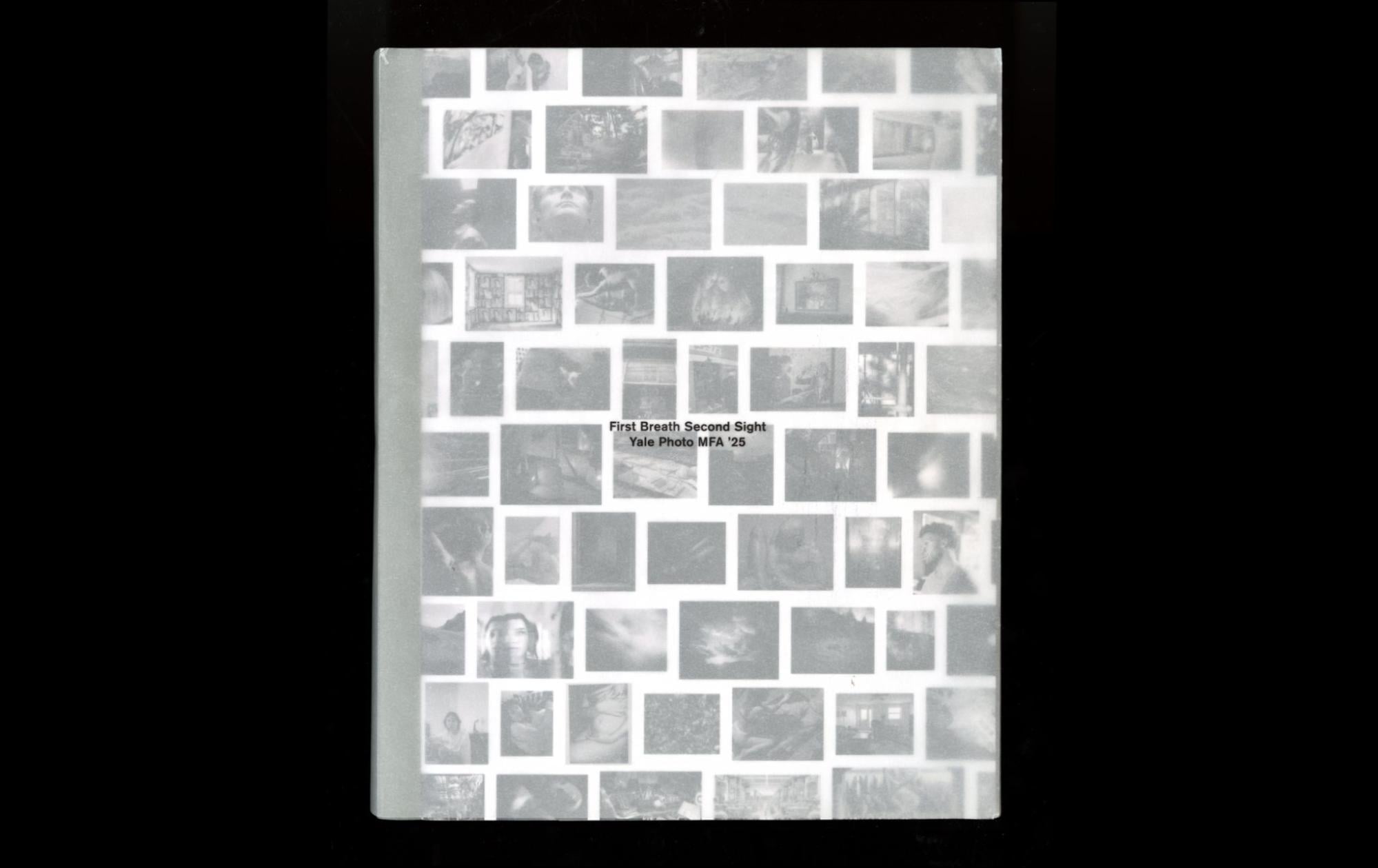 This commitment to experimental structure is perhaps most evident in “First Breath, Second Sight,” a collaborative project between Yuan and Tomáš Hlava, a Yale- and Gerrit Rietveld-trained graphic designer whose work has been recognized through international exhibitions and poster competitions. The project has since entered the collections of the Yale University Robert B. Haas Family Arts Library, one of Yale’s principal collections for art, architecture, and design publications, and has been exhibited at Gladstone Gallery in New York City, an internationally recognized institution within the contemporary art world. The book unfolds as a gradual act of revelation: pages progressively expose underlying images and text, echoing the title’s themes of perception, memory, and discovery.
Yuan’s expertise in design is underscored by a rigorous technical foundation. Trained across contemporary editorial design, typography, and bookmaking, she moves fluidly between traditional craft and conceptual inquiry. This combination informs her work at Interview Magazine, where she contributes to editorial design and visual organization alongside Art Director Jack Vhay and Design Director Richard Turley. There, she maintains and evolves the magazine’s distinctive visual language, balancing the demands of a fast-paced publication with a sensitivity to narrative structure, pacing, and visual storytelling within one of fashion and culture’s most influential magazines.
Working within a highly collaborative editorial environment, Yuan balances fashion credits, editorial priorities, and production constraints while ensuring that stories remain coherent within the magazine’s broader visual language.
Her work at Interview Magazine underscores the importance of hierarchy and rhythm; the same tools she uses in her art books, albeit applied within the constraints of a major commercial publication. Across both contexts, her practice reflects an interest in how structure shapes the experience of reading and viewing, from editorial layouts to experimental book structures that challenge conventional modes of reading.
 Looking ahead, Yuan is currently applying her expertise to a forthcoming photo book by fine art photographer Malerie Marder. Known for her raw explorations of intimacy and vulnerability, Marder’s new project centers on a series of black-and-white photographs from the 1990s, which have previously remained unseen in public exhibitions.
In an era where “content” is often treated as a commodity, Yuan’s work highlights the physical form of the book as an intellectual achievement in its own right; a way to preserve, present and challenge the ways we look at the world.
Whether working with fiction, photography, or editorial content, Coco Shiya Yuan continues to demonstrate that designing a book is not about filling a container; it is about constructing a world. Through structure, sequence, and material form, she transforms reading into an act of discovery—one spread at a time.
By Margaret Wright
Published June 8, 2026