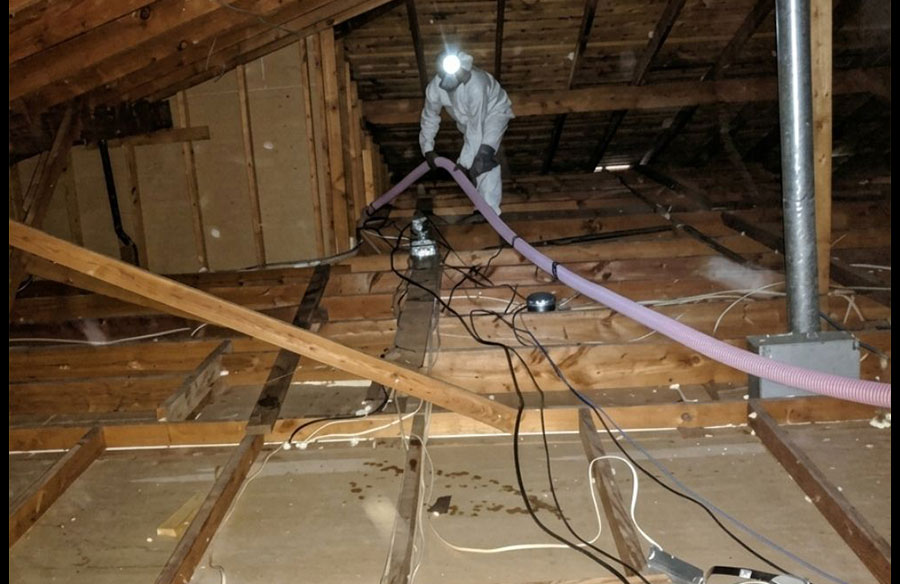
Right now, a microscopic war is raging just inches above your ceiling. While you relax in a meticulously climate-controlled smart living room, the attic—often the most neglected architectural space in modern homes—might be acting as a breeding ground for a structural and biological disaster. When warm, humid air rises from the living spaces below and collides with the cooler underside of your roof deck, the physics of condensation takes over.
The result isn’t just a harmless water stain. It is the insidious birth of toxic black mold (Stachybotrys chartarum), accelerated wood rot, and severe structural degradation. Left unchecked, this trapped moisture weakens roof trusses, destroys the R-value of your insulation, and introduces hazardous biological spores into your HVAC system, triggering Sick Building Syndrome throughout the house. It is a ticking time bomb of structural failure and respiratory illness. You cannot ignore it, and simply hoping for the best is no longer a viable architectural strategy.
The Fallacy of Passive Ventilation
For decades, the construction industry relied on a simple equation: soffit vents plus ridge vents equals a dry attic. This passive ventilation model belongs in the past. Today’s homes are built incredibly airtight to maximize energy efficiency, effectively trapping moisture inside. Coupled with increasingly erratic climate patterns and extreme temperature swings, passive airflow simply cannot keep up with the sheer volume of moisture generated by daily human activities like showering, cooking, and doing laundry.
Relying solely on the wind to dry out your attic is like relying on an open window to cool a massive data server room. To truly protect the structural integrity and health of a building, we must shift from passive hope to active, technology-driven climate control. Here is how modern smart home technology is revolutionizing moisture management in the attic.
1. IoT Climate Sensors and Predictive Monitoring
The first rule of defeating an invisible enemy is making it visible. Smart attic sensors have revolutionized how we monitor building health. Instead of discovering a mold infestation months after it has bloomed, IoT-enabled sensors (from advanced smart-home brands) track humidity, temperature, and, most importantly, the dew point in real-time.
These compact devices communicate directly with your smartphone via Wi-Fi or dedicated smart home hubs. If the humidity level crosses the dangerous 60% threshold, or if atmospheric conditions are ripe for immediate condensation, you receive an instant push notification. This predictive data allows homeowners and facility managers to intervene, applying precise climate control before a single fungal spore has the chance to germinate.
2. AI-Driven Smart Ventilation Systems
When sensors detect a spike in moisture, the building needs to exhale. Enter automated, smart ventilation. Traditional attic fans operate on simple, outdated thermostats, turning on only when the space gets dangerously hot during the summer. Smart exhaust systems, however, are wired with built-in humidistats and AI-driven algorithms.
They constantly analyze both the internal attic climate and the external weather conditions. If the attic humidity hits 65%, but it is pouring rain outside, a smart fan knows better than to pull in saturated exterior air. Instead, it waits for the optimal atmospheric window to activate, purging the damp indoor air and replacing it with dry outdoor air. This seamlessly regulates the microclimate without requiring any human intervention or guesswork.
3. Commercial-Grade Smart Dehumidification
In regions with high ambient humidity, ventilation alone will not cut it. Pushing humid air out only to pull equally humid air back in is a zero-sum game. The ultimate technological safeguard is a smart, high-capacity dehumidifier specifically engineered for the harsh, fluctuating conditions of an attic space.
Unlike flimsy portable units, these heavy-duty systems can extract tens of gallons of water from the air per day. Crucially, they are designed for complete, maintenance-free automation. Equipped with built-in condensate pumps, they continuously push the extracted water through a designated drain line directly to the home’s exterior or main plumbing system. Integrated into your smart home network, these units run independently, maintaining a bone-dry environment while you monitor their efficiency and energy consumption right from your tablet.
4. Advanced Polyurethane and Airtight Envelopes
Technology isn’t just about microchips and algorithms; it is also about advanced material science. One of the most effective ways to stop attic moisture is to prevent the collision of contrasting temperatures entirely. For instance, when upgrading attic insulation experiencing dramatic seasonal temperature swings—professionals increasingly rely on closed-cell spray polyurethane foam (SPF), which represents the pinnacle of modern insulation technology.
By applying this high-tech foam directly to the underside of the roof deck, architects create an impermeable, airtight thermal envelope. This effectively brings the attic inside the conditioned space of the home, eliminating the extreme temperature variances that cause condensation in the first place. When paired with active HVAC integration, SPF ensures that moisture simply has no physical opportunity to form on the wood.
The Integrated Smart Home Ecosystem
The true power of these technological solutions lies in their seamless integration. A modern, resilient home doesn’t operate in isolated silos. Through platforms like Apple HomeKit, Google Home, or dedicated architectural management systems, these devices communicate to form a unified defense system.
The IoT sensor detects the rising humidity and signals the smart hub, which in turn evaluates the real-time external weather data. The hub then makes an automated decision: either trigger the smart exhaust fan or activate the heavy-duty dehumidifier. This creates a living, breathing building—an organic machine capable of self-diagnosing and self-healing its internal climate before a homeowner ever realizes there was a threat.
Engineering a Resilient Future
The attic is no longer just an empty, passive void meant for storing forgotten holiday decorations; it is a critical component of your home’s structural health and energy efficiency. Allowing moisture to silently rot your roof from the inside out is an architectural failure we no longer have to accept.
By embracing advanced IoT sensors, automated ventilation, smart dehumidification, and high-tech material science, we can banish the fear of mold and structural decay forever. The future of housing is not just about building smarter living rooms; it is about engineering intelligent, resilient spaces from the foundation all the way up to the highest peak of the roof.